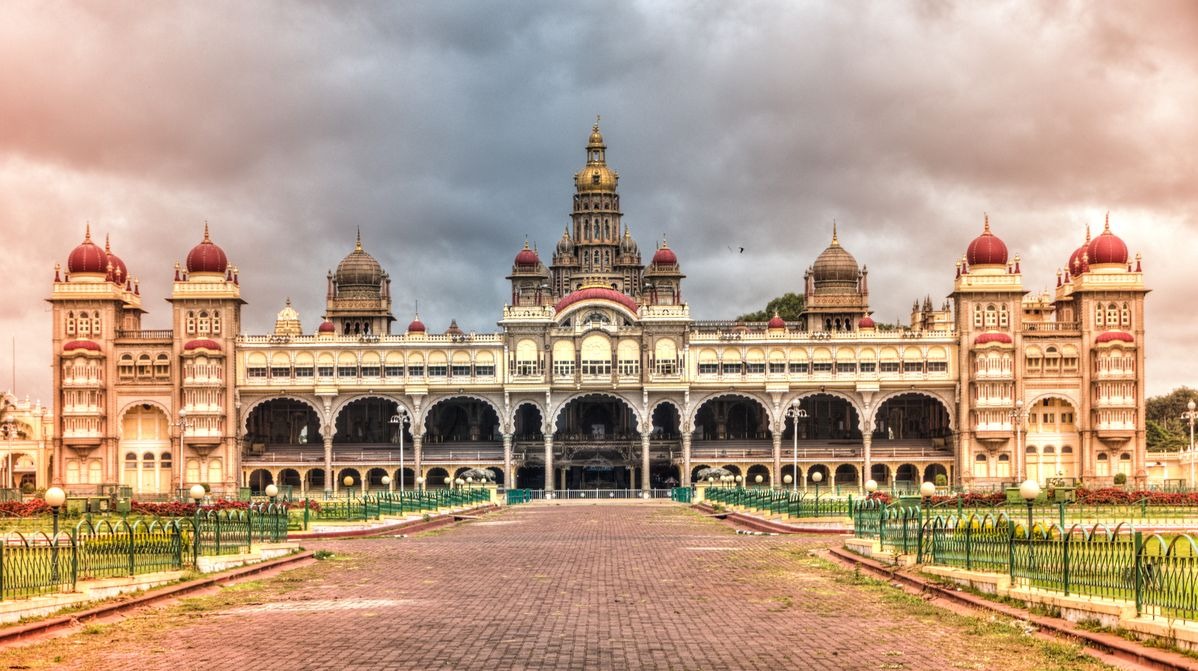
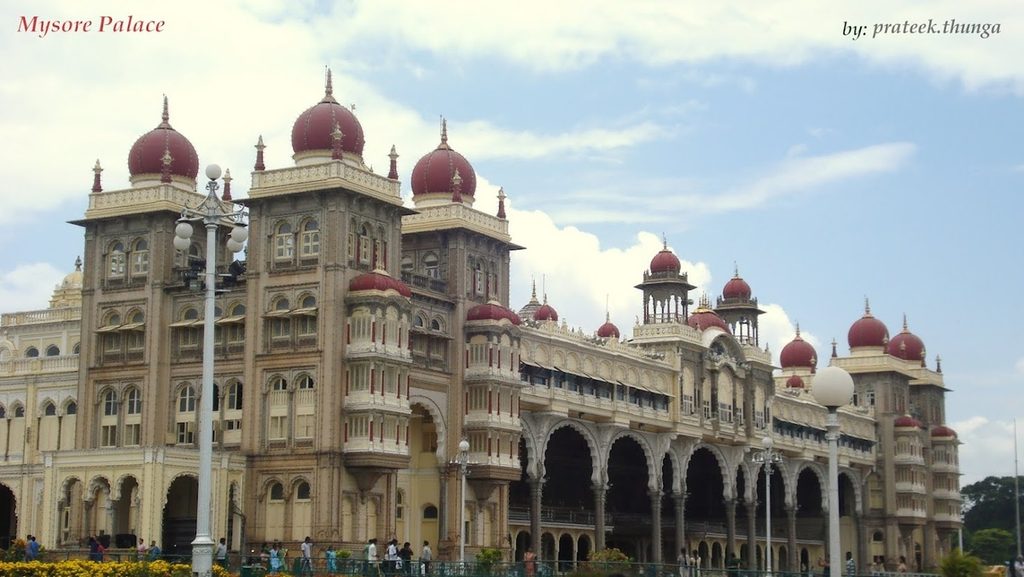
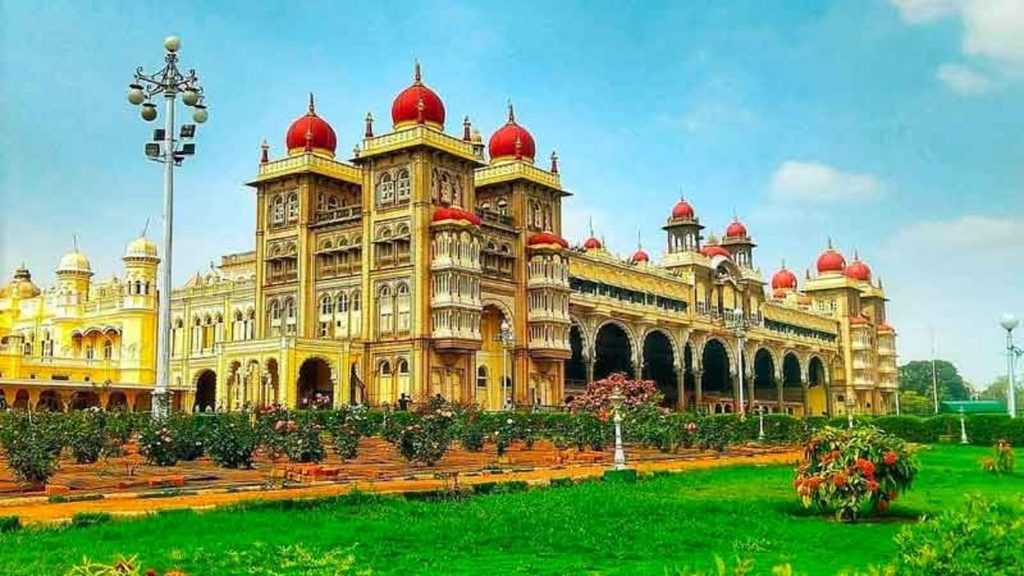
Mysore Palace is one of Karnataka’s most celebrated landmarks and one of the finest reminders of India’s royal past. Standing in the heart of Mysuru, the grand residence of the Wadiyar dynasty combines Indo-Saracenic architecture with richly decorated interiors, ceremonial halls and an enormous cultural legacy. Its domes, arches and illuminated façade make it an unforgettable sight, especially when the city celebrates its famous Dasara festival.
Yet the real fascination lies beyond the palace’s appearance. The present structure emerged from a long royal history shaped by succession, fire, architectural change and the changing political landscape of southern India. Walking through its courtyards and halls offers a glimpse into how the Wadiyars lived, celebrated important occasions and preserved traditions that continue to influence Mysuru today.
Mysore Palace Location and Royal Setting
The palace stands in the central area of Mysuru, formerly known as Mysore, in southern Karnataka. Its location makes it convenient to combine with other major attractions in the city, including the Devaraja Market, St Philomena’s Church, Jaganmohan Palace and the Chamundi Hills.
The complex is associated with the Wadiyar dynasty, which ruled the Kingdom of Mysore for much of its later history. The palace grounds contain several structures and ceremonial spaces, but the main building is the principal attraction for visitors.
| Palace detail | Information |
| City | Mysuru, Karnataka |
| Historical dynasty | Wadiyar dynasty |
| Architectural style | Indo-Saracenic |
| Major construction period | 1897 to 1912 |
| Famous festival | Mysuru Dasara |
| Main setting | Historic city centre |
Mysore Palace Architecture and Design
The present palace is a striking example of Indo-Saracenic architecture, a style that brought together elements associated with Indian, Islamic, Rajput and European architectural traditions. The building uses granite and other materials to create a monumental appearance, while its domes and ornamental details give it a distinctive silhouette.
Inside, the decorative treatment becomes even more elaborate. Visitors encounter painted ceilings, carved doors, ornamental columns, stained glass and detailed flooring. The Durbar Hall is particularly notable for its scale and ceremonial character. It was designed as a formal space where the ruler could hold court and receive important guests.
A Palace Built for Ceremony
The Ambavilasa, often described as the private audience hall, is among the most richly decorated areas. The Kalyana Mantapa, or marriage hall, is also known for its ornamental work and coloured glass.
The architecture was not simply intended to impress. Royal buildings were designed around ceremony, hierarchy and movement, with different spaces serving particular social and political functions.
Mysore Palace History
The history of the royal residence stretches back well before the present building. Earlier palaces occupied the same general site, reflecting the long connection between the Wadiyar rulers and Mysuru.
The Wadiyar dynasty came to prominence in Mysore in 1399, traditionally associated with Yaduraya and Krishnaraya. Over subsequent centuries, the kingdom developed into an important regional power. The political history of Mysore changed dramatically during the eighteenth century under Hyder Ali and Tipu Sultan, although the Wadiyar dynasty remained central to the kingdom’s royal identity.
After Tipu Sultan was defeated and killed at Srirangapatna in 1799, the Wadiyar dynasty was restored to the throne. The capital shifted back to Mysuru, and a new phase of royal development began.
The earlier palace on the site was destroyed by a devastating fire during the 1890s. Following the disaster, a new royal residence was commissioned. British architect Henry Irwin designed the present structure, and construction began in 1897. The building was completed in 1912.
This chronology is important because the palace visitors see today is not an untouched medieval structure. It is the result of a major rebuilding project undertaken at the beginning of the twentieth century while preserving the city’s royal traditions.
| Period or year | Historical significance |
| 1399 | Traditional beginning of Wadiyar rule in Mysuru |
| 1799 | Wadiyar dynasty restored after Tipu Sultan’s defeat |
| 1890s | Earlier palace destroyed by fire |
| 1897 | Construction of the present palace begins |
| 1912 | New palace completed |
| 1974 | Mysuru Dasara celebrations continue under a modern public format |
| Present day | Palace remains a major cultural and tourism landmark |
Mysore Palace Royal Traditions and Dasara
The palace is inseparable from Mysuru Dasara, one of Karnataka’s most important cultural celebrations. The festival has deep royal connections and historically centred on the worship of Goddess Chamundeshwari, the presiding deity associated with the Chamundi Hills.
During the Dasara season, the palace becomes the centre of elaborate cultural activity. The illuminated building provides one of the city’s most recognizable festival scenes, while processions and traditional performances connect modern celebrations with the former royal court.
The festival’s history also reflects the relationship between monarchy, religion and public culture. What began as a royal tradition has evolved into a major public celebration representing Mysuru’s cultural identity.
Mysore Palace Interiors and Main Highlights
The interior is where the scale of royal decoration becomes especially clear. Rather than presenting a single architectural style, the building brings together multiple influences through colour, ornamentation and craftsmanship.
Durbar Hall
The Durbar Hall was designed for formal royal assemblies. Its large proportions, decorated columns and elevated ceremonial character reveal the importance of public court rituals.
Ambavilasa
This richly decorated hall served as a private audience space. Ornamental details and elaborate craftsmanship make it one of the most impressive interiors in the complex.
Kalyana Mantapa
The marriage pavilion is known for its decorative glasswork and colourful geometric patterns. It demonstrates how ceremonial architecture was closely connected with royal celebrations.
Best Time to Visit Mysore Palace
Mysuru can be visited throughout the year, but the most comfortable sightseeing conditions are generally found during the cooler months from October to February. The period around Dasara is particularly atmospheric because the city takes on a festive character.
| Travel period | Experience |
| October to February | Comfortable weather for sightseeing |
| March to May | Hotter conditions, especially during daytime |
| June to September | Monsoon season with greener surroundings |
| Dasara season | Major cultural celebrations and palace illumination |
If you prefer quieter sightseeing, visiting outside major festival dates can make it easier to appreciate the palace interiors and surrounding attractions without the large crowds associated with Dasara.
How to Reach Mysore Palace
Mysuru is well connected with major cities in Karnataka and neighbouring states. The city has its own railway station, while road connections make it accessible from Bengaluru and other parts of southern India.
Bengaluru is the main gateway for many travellers arriving by air. From there, visitors can continue to Mysuru by road or rail. Within the city, taxis, auto-rickshaws and local transport services provide practical options for reaching the palace.
Because the palace is centrally located, it can also be incorporated into a wider walking or sightseeing itinerary covering several attractions in the historic core.
Things to See Near Mysore Palace
The palace works particularly well as the centrepiece of a full-day Mysuru itinerary. The nearby Devaraja Market offers a lively introduction to local commerce, flowers, spices and traditional products.
Jaganmohan Palace is another important cultural stop. It houses an extensive art collection and has its own connection to the Wadiyar period. Chamundi Hills provides a different perspective on the city and is closely connected with the religious traditions of Mysuru.
St Philomena’s Church, one of the city’s prominent landmarks, can also be included when planning a broader sightseeing route.
Visitor Tips for Mysore Palace
Allow enough time to explore both the exterior and interior rather than treating the palace as a quick photography stop. The architectural details become easier to appreciate when you slow down and examine the ceilings, doors, columns and ceremonial halls.
Visitors should follow current photography, security and entry instructions because rules can change. Comfortable footwear is useful when combining the palace with several nearby attractions.
For a deeper understanding of the building, pay attention to its historical sequence. The contrast between the earlier royal residence, the nineteenth-century fire and the construction completed in 1912 explains why the present palace looks both traditional and distinctly modern for its period.
FAQs About Visiting the Royal Palace
How old is the present royal residence?
The present building was constructed between 1897 and 1912. Earlier royal structures occupied the site before the current palace was built.
Who designed the present building?
British architect Henry Irwin is credited with designing the present palace, which combines several architectural influences under the Indo-Saracenic tradition.
Why is Dasara important in Mysuru?
Dasara has deep royal and religious connections with Mysuru. The celebrations are associated with Goddess Chamundeshwari and remain one of the city’s most important cultural events.
What other attractions can be visited nearby?
Travellers can explore Jaganmohan Palace, Devaraja Market, Chamundi Hills and St Philomena’s Church as part of a wider Mysuru itinerary.
Is the palace worth visiting outside the festival season?
Yes. Outside Dasara, visitors can often focus more closely on the architecture, interiors and historical character of the building while enjoying a less festival-focused atmosphere.
Conclusion
Mysuru’s great royal residence is far more than an impressive façade. Its architecture records a period when traditional Indian design was being combined with new influences, while its history reflects centuries of Wadiyar rule, political change and royal ceremony. The rebuilding that followed the nineteenth-century fire gave the city a palace that continues to represent its royal identity more than a century later.
For travellers, the best way to experience the site is to look beyond its photographs and understand the story behind its halls, traditions and architecture. Combine the palace with the city’s historic markets, religious landmarks and Chamundi Hills, and Mysuru becomes a much richer destination than a single sightseeing stop.
Read More:Somnath Temple: A Complete Guide to History, Faith and Travel

I am a travel enthusiast who loves exploring India’s beautiful destinations, culture, history, food, and hidden places. Through my travel website, I aim to help travelers discover amazing places in India and plan memorable trips with useful travel information and tips.