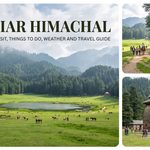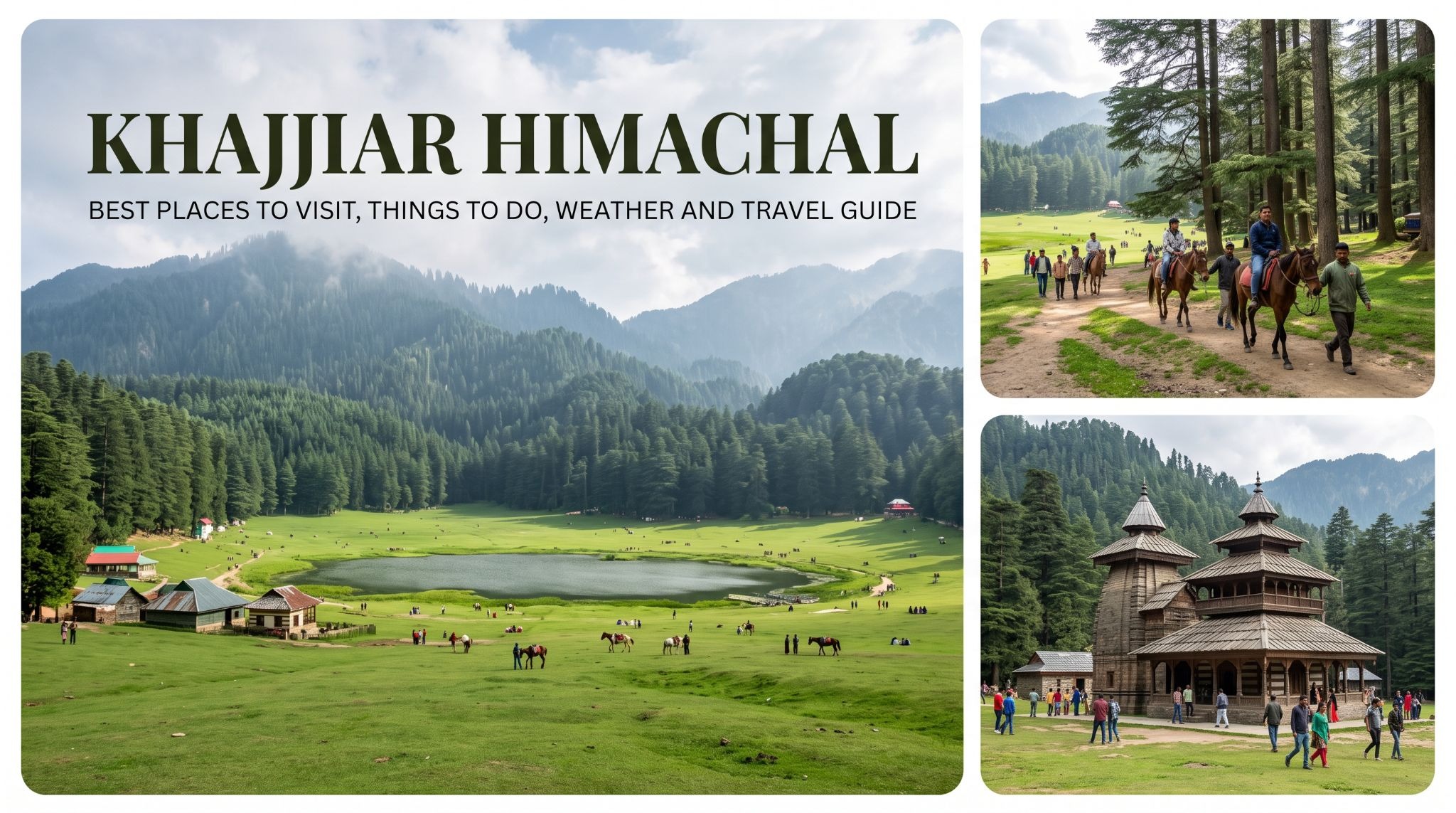
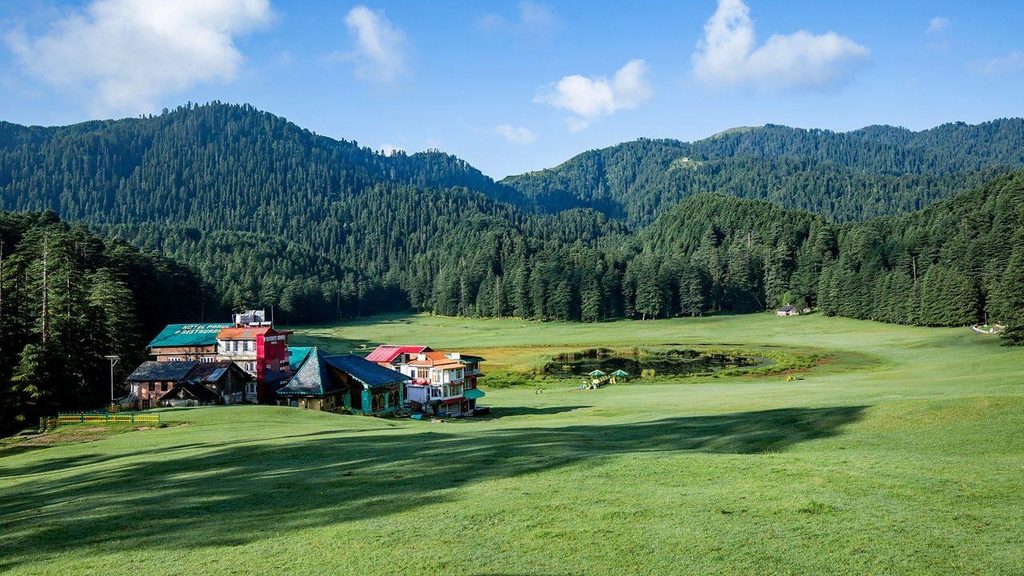
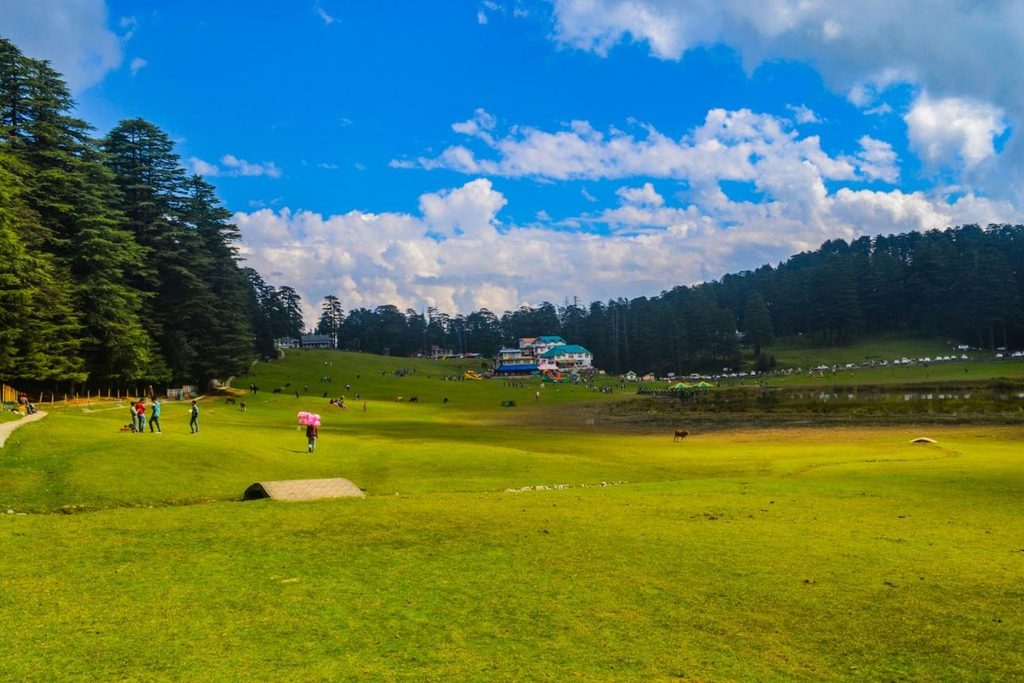
Khajjiar, tucked into the green hills of Himachal Pradesh near Dalhousie, is the kind of destination where the landscape itself becomes the main attraction. A wide meadow stretches between forested slopes, tall deodar trees frame the surrounding mountains, and a small lake adds a distinctive touch to the open scenery. Often called the Mini Switzerland of India, Khajjiar has a charm that goes beyond its famous nickname. Its appeal lies in the contrast between open grassland and dense woodland, with the mountains providing a dramatic backdrop throughout the changing seasons.
Planning a trip to Khajjiar Himachal involves more than deciding where to take photographs. Travelers also need to consider the best season, road conditions, accommodation, nearby attractions, and how much time to spend exploring the area. Whether you are planning a family holiday, a romantic escape, or a quiet mountain break with friends, this guide covers the essential sights, worthwhile experiences, practical travel options, and local details that can help you make the most of your visit.
Why Khajjiar Is One of Himachal Pradesh’s Most Distinctive Destinations
Khajjiar stands out because its landscape feels different from the steep valleys and crowded hill-town streets found elsewhere in Himachal Pradesh. Instead of looking down into a deep valley, visitors arrive at a broad, bowl-shaped meadow surrounded by tall deodar and pine forests. The open grassland gives the area a spacious, almost park-like atmosphere, while distant mountain views add depth to the scenery.
The destination lies in the Chamba district at an elevation of approximately 1,950 metres above sea level. Its popular nickname, Mini Switzerland of India, reflects the resemblance people see between its meadow and European alpine landscapes. The association was formally marked during a visit by the Swiss ambassador in 1992.
Yet Khajjiar has its own identity. The surrounding Himalayan forests, the historic Khajji Nag Temple, the changing mountain weather and the nearby cultural attractions of Chamba make it more than a scenic photo stop.
For travelers who enjoy nature without committing to a demanding trek, it is an appealing destination. Families can enjoy the open space, couples can find peaceful corners away from the busiest part of the meadow, and photographers can work with changing light throughout the day.
Best Places to Visit in Khajjiar Himachal
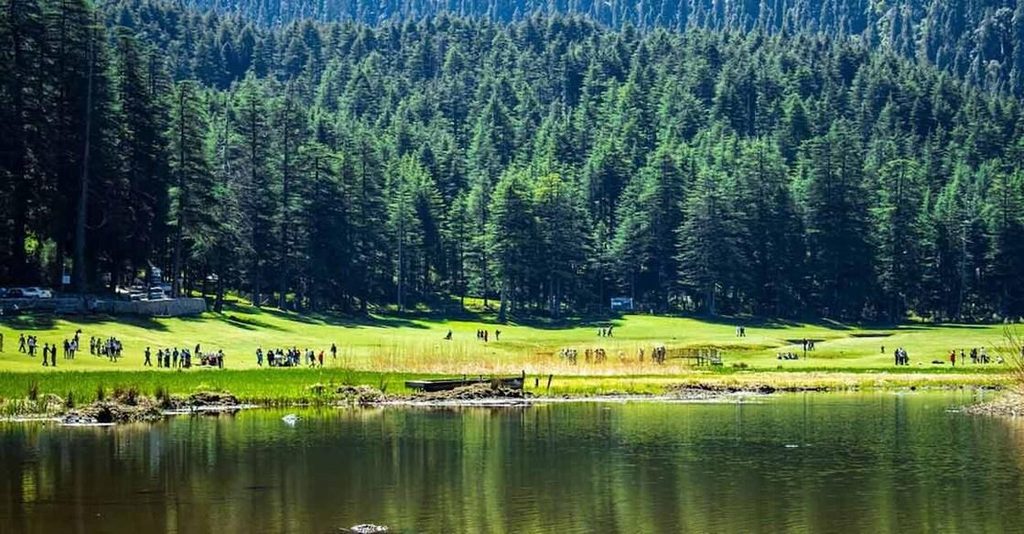
The main attractions in Khajjiar are relatively close together, which makes exploring the area straightforward. However, each spot offers a different experience, from open landscapes to traditional architecture and quiet woodland surroundings.
Khajjiar Meadow
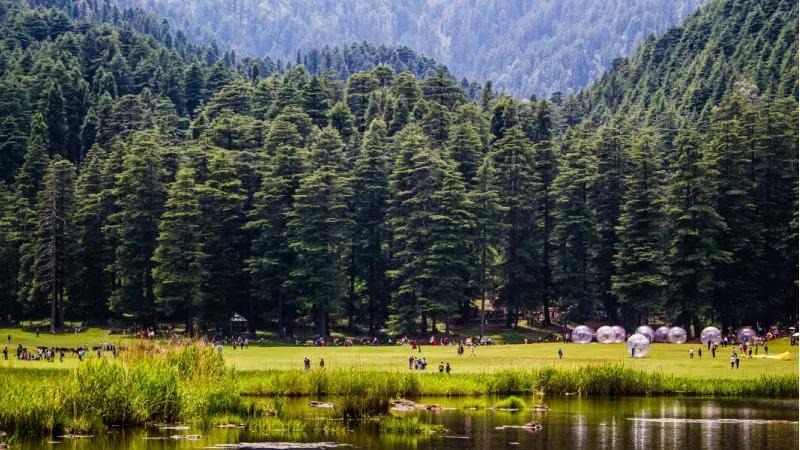
The meadow is the heart of the destination. Its open grassland, forested edges and central pond create the landscape most travelers associate with Khajjiar.
Walk slowly around the accessible areas rather than spending the entire visit in one spot. The view changes depending on where you stand: some angles emphasize the lake, while others frame the meadow against tall trees and mountain ridges.
The area is popular for picnics, family photographs and relaxed outdoor time. During busy periods, the central meadow can feel crowded, so exploring earlier in the day usually makes for a more comfortable visit.
Khajjiar Lake
Khajjiar Lake sits within the meadow and adds a distinctive focal point to the otherwise open landscape. Its appearance changes with the season, rainfall and vegetation, so it may look quite different on separate visits.
The lake is best appreciated as part of a leisurely walk around the meadow. Keep expectations realistic, however: it is a small natural feature rather than a large boating lake or a destination for water sports.
Khajji Nag Temple
Located beside the meadow, Khajji Nag Temple provides a cultural dimension to the visit. The historic shrine is associated with the local worship of the serpent deity, and its traditional wooden architecture stands apart from the surrounding natural scenery.
The temple is generally dated to the medieval period, with official district tourism information describing its historical significance and distinctive carved wooden interiors.
Visitors should dress respectfully, follow local instructions and avoid treating the shrine simply as a photography backdrop.
Forest Edges and Woodland Paths
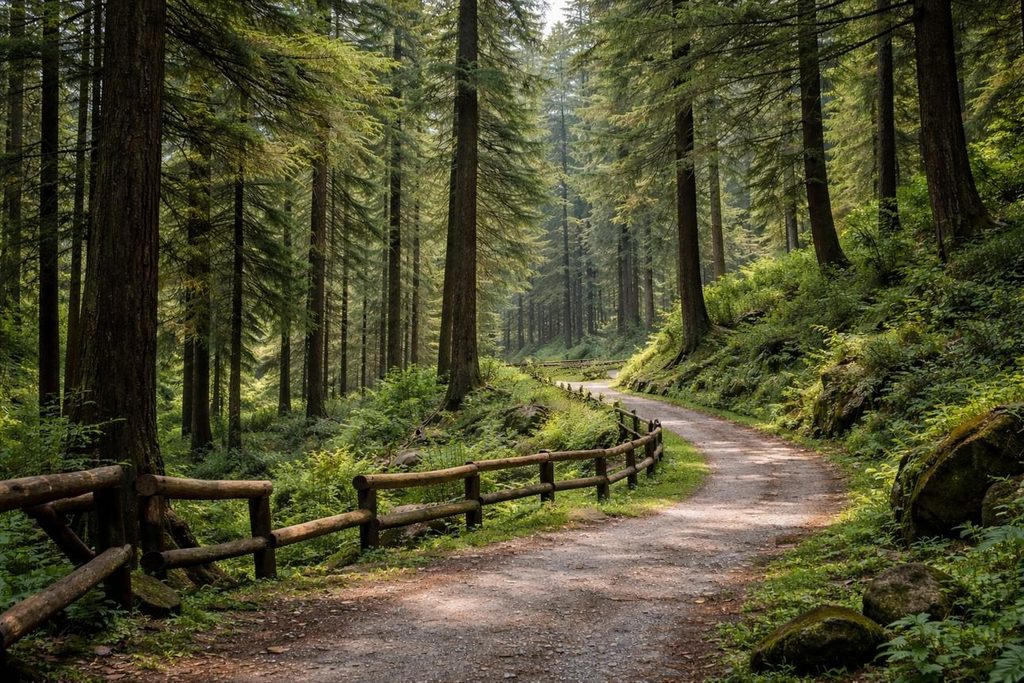
The deodar forests around Khajjiar are worth appreciating in their own right. Their shaded atmosphere offers a contrast to the bright meadow, especially on warm afternoons.
Stick to established paths and avoid entering dense woodland without suitable directions. Travelers interested in longer forest walks can consider the nearby Kalatop area, where the landscape becomes more wooded and the experience shifts from open scenery to a forest excursion.
Things to Do in Khajjiar Beyond Taking Photographs
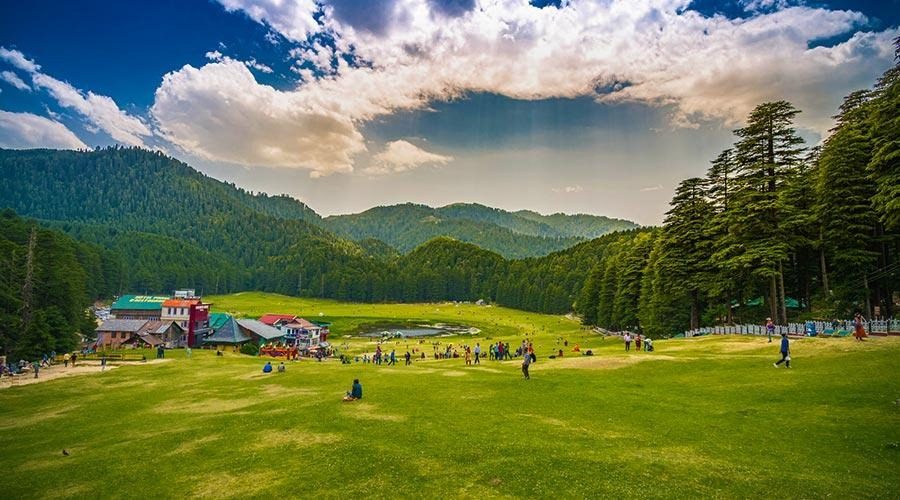
Although Khajjiar is famous for its scenery, the best visit does not have to revolve around photographs alone. Its relatively compact setting makes it possible to combine gentle outdoor activities, relaxation and cultural sightseeing in one outing.
Walk Across the Meadow
Walking is the simplest way to experience the landscape. Allow time to explore different viewpoints, notice the forest boundary and enjoy the changing atmosphere as clouds move across the mountains.
The ground may be muddy or uneven after rain, and the open grassland can become slippery in winter. Comfortable walking shoes are more useful than fashionable footwear, particularly for families with children or older travelers.
Try Seasonal Adventure Activities
Depending on local operators, weather and current conditions, visitors may find activities such as horse riding, zorbing or other recreational experiences around the meadow.
Availability is not guaranteed throughout the year. Before paying, confirm the price, duration, safety arrangements and any restrictions. Adventure activities are optional rather than essential to enjoying Khajjiar; the natural setting remains the main attraction.
Enjoy a Slow Picnic
A short break beside the meadow can be one of the most satisfying parts of the day. Bring water and a light snack, choose an appropriate designated spot and take all packaging away with you.
Avoid leaving food waste behind or disturbing grazing animals. Khajjiar’s appeal depends heavily on its open landscape, and careless littering quickly diminishes the experience for everyone.
Watch the Changing Light
The meadow looks different in the morning, under midday sunshine and during cloudy weather. Early visits often provide softer light and fewer people, while later in the day can bring atmospheric shadows across the surrounding trees.
Photographers should be prepared for shifting cloud cover rather than expecting uninterrupted mountain views.
Best Time to Visit Khajjiar Himachal
The best time to visit depends on whether you prefer green meadows, comfortable walking weather, autumn scenery or the possibility of snowfall. Spring and early summer are generally convenient for sightseeing, while autumn can offer a quieter mountain atmosphere.
| Season | What to expect | Best suited to |
| March to June | Pleasant daytime conditions in many periods, increasingly green scenery and good opportunities for outdoor sightseeing | Families, first-time visitors and general sightseeing |
| July to September | Monsoon rain, mist, wet paths and potentially disrupted road journeys | Travelers comfortable with flexible plans |
| October to November | Cooler air, autumn colours in the surrounding woodland and potentially clearer views between weather systems | Couples, photographers and peaceful getaways |
| December to February | Cold conditions and the possibility of snowfall, frost or snow-related road disruption | Winter enthusiasts prepared for changing access |
These are broad seasonal patterns, not a forecast for particular travel dates. Weather in the mountains can change quickly, and snowfall is never guaranteed on a specific day. Official Himachal tourism guidance also identifies summer as a popular period for visiting the Dalhousie–Khajjiar area.
For most first-time visitors, April to June is a practical starting point. If you prefer fewer crowds, consider a weekday outside major holiday periods.
During the monsoon, check the weather and road situation before departure. In winter, confirm that the approach road is open and ask your accommodation or local driver about current conditions before setting out.
How to Reach Khajjiar in Himachal Pradesh
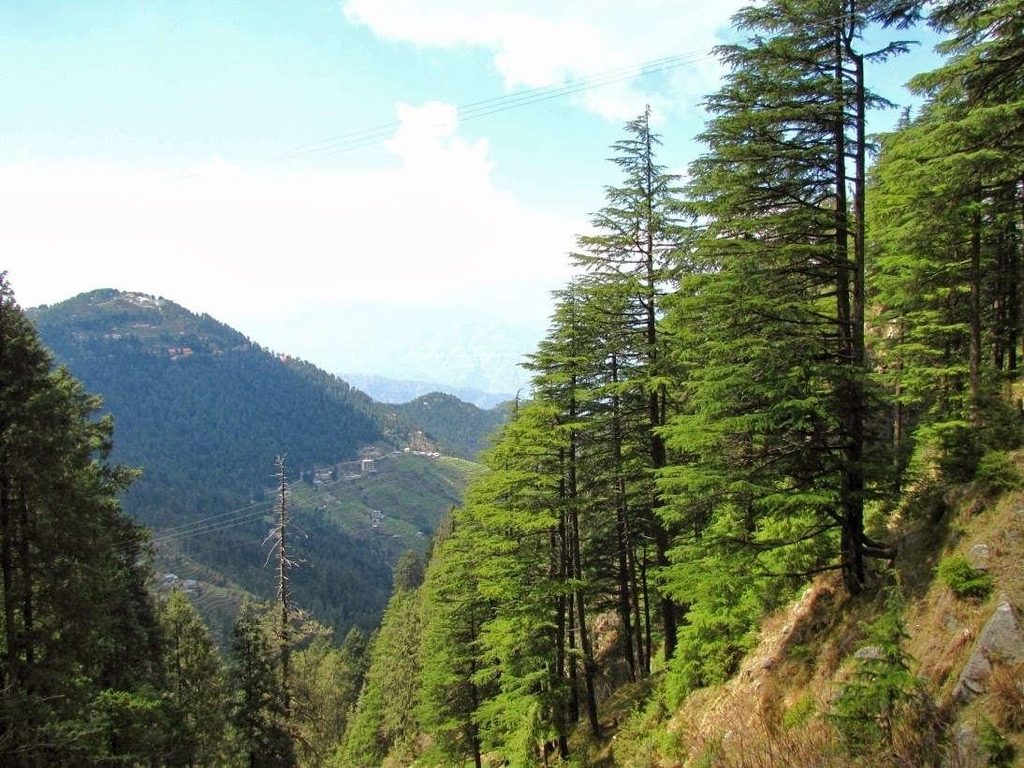
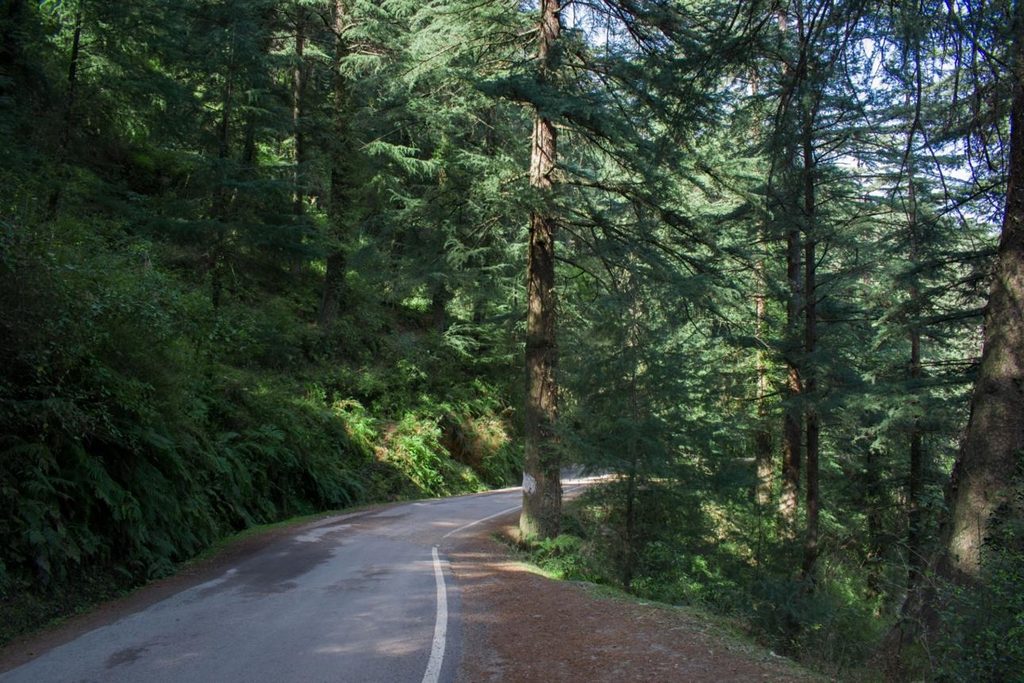
Khajjiar is reached by road, usually from Dalhousie or Chamba. The drive is part of the experience, with forested hills, winding mountain roads and occasional openings in the trees that reveal the surrounding landscape.
By Road from Dalhousie
Dalhousie is one of the most convenient bases for visiting Khajjiar. The road distance is approximately 22–24 km, depending on the point of departure and route details.
A taxi or private vehicle provides flexibility for stopping at scenic points where it is safe to do so. Local buses may also be available, but services and departure times should be checked before travel.
Allow extra time for narrow roads, traffic, rain and winter conditions rather than planning the journey around a fixed online estimate.
By Road from Chamba
Khajjiar can also be reached from Chamba, another worthwhile destination in the district. The road distance is commonly listed at approximately 24 km, although the exact journey depends on the route and starting point.
This approach can suit travelers who want to combine the meadow with Chamba’s temples, traditional architecture and local cultural attractions.
By Train
Pathankot is a practical railway gateway for many visitors traveling from other parts of India. From the station, continue by road toward Dalhousie, Chamba or Khajjiar, using a bus or taxi according to your schedule.
By Air
Travelers can consider Kangra’s Gaggal Airport, but the remaining journey to Khajjiar is still substantial and must be completed by road. Check current flight availability before building an itinerary around the airport.
| Travel option | Best use | Planning consideration |
| Taxi or private car | Flexible sightseeing and family travel | Agree on the itinerary and return arrangements in advance |
| Public bus | Budget-conscious travel | Confirm current routes, frequency and last return service |
| Train to Pathankot | Reaching the region from distant cities | Arrange onward road transport before arrival |
| Flight to Gaggal | Reducing the long-distance journey for suitable routes | Verify flight schedules and allow for the mountain road transfer |
For most travelers, the easiest plan is to reach Dalhousie first, stay overnight and visit Khajjiar during the following day.
Nearby Attractions Worth Adding to Your Trip
Khajjiar works particularly well as part of a wider Chamba district itinerary. The nearby attractions offer different experiences, so you can balance open meadows with forest walks, mountain viewpoints and local history.
Kalatop Wildlife Sanctuary
Kalatop is a natural choice for travelers who want to spend more time among Himalayan trees. The sanctuary is known for its forest cover and wildlife habitat, including several species of mammals and birds.
A visit is particularly appealing to nature lovers and photographers who enjoy woodland scenery. Wildlife sightings are never assured, so appreciate the forest itself rather than approaching animals or expecting a particular species to appear.
Check local access arrangements and trail conditions before setting out.
Dainkund Peak
Dainkund is known for its elevated viewpoints and broad mountain panoramas. It provides a different perspective from Khajjiar’s enclosed meadow, making it a worthwhile addition for visitors who enjoy scenic walks and high viewpoints.
Weather conditions determine how much of the surrounding mountain range is visible. Carry a warm layer even when the lower areas feel comfortable.
Chamera Lake
Chamera Lake, formed by the backwaters of the Chamera Dam on the Ravi River, offers a contrasting landscape of water and surrounding hills. Boating and other recreational activities may be available under local operating conditions.
Because the lake is not immediately beside the Khajjiar meadow, plan the visit around your route rather than trying to squeeze every attraction into a short afternoon.
Chamba Town
Chamba is an excellent option for travelers interested in regional culture. The town’s historic temples, traditional craftsmanship and local museums offer more context about the wider region than a quick stop in the meadow can provide.
If you have an additional day, Chamba can turn a simple scenic holiday into a more rounded cultural trip.
| Nearby destination | Main appeal | Ideal for |
| Kalatop Wildlife Sanctuary | Forest scenery and nature walks | Nature lovers and hikers |
| Dainkund Peak | Elevated viewpoints and mountain panoramas | Photographers and walkers |
| Chamera Lake | Reservoir scenery and seasonal water activities | Families and relaxed sightseeing |
| Chamba town | Historic temples, museums and local culture | Culture-focused travelers |
Distances and journey times vary with the route, weather and road conditions, so confirm the most practical order of visits locally.
Where to Stay Around Khajjiar
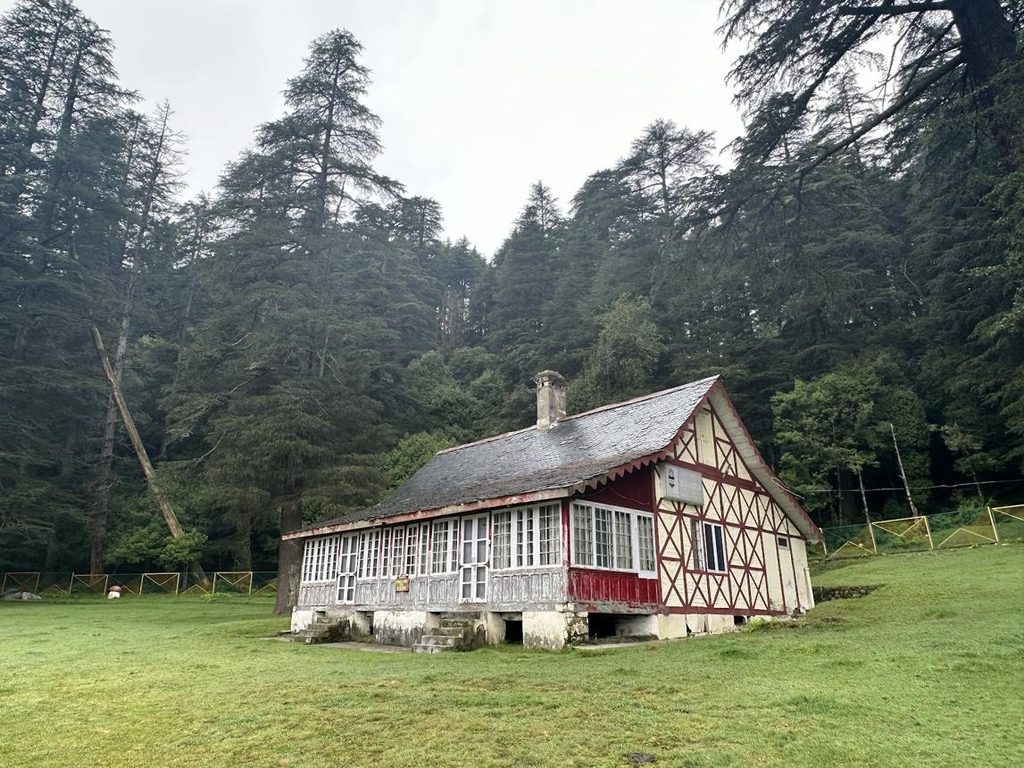
Choosing where to stay depends on whether you want to wake up near the meadow or prefer a larger selection of services and restaurants. Khajjiar has accommodation options, but availability can be more limited than in nearby Dalhousie, particularly during busy holiday periods.
Staying in Khajjiar
Staying close to the meadow is a good choice for travelers who want to experience the landscape outside the busiest sightseeing hours. You can enjoy the surroundings early in the morning and avoid making the return drive immediately after a full day outdoors.
Before booking, check whether the property has reliable heating in winter, suitable hot-water facilities, meal arrangements and convenient vehicle access. Ask about the current road conditions if you are visiting during snowfall or heavy rain.
Staying in Dalhousie
Dalhousie is generally the more versatile base for travelers who want a wider choice of accommodation, dining and transport arrangements. It also makes it easier to combine Khajjiar with nearby viewpoints and other attractions.
The trade-off is the daily drive. If your main goal is to photograph the meadow in changing light or enjoy a quieter morning, staying closer to Khajjiar may be worth considering.
For a short holiday, two nights in Dalhousie with a dedicated Khajjiar excursion is a practical arrangement. Travelers who prefer a slower pace can divide their stay between the two places, subject to available accommodation.
Local Food and Culture to Experience
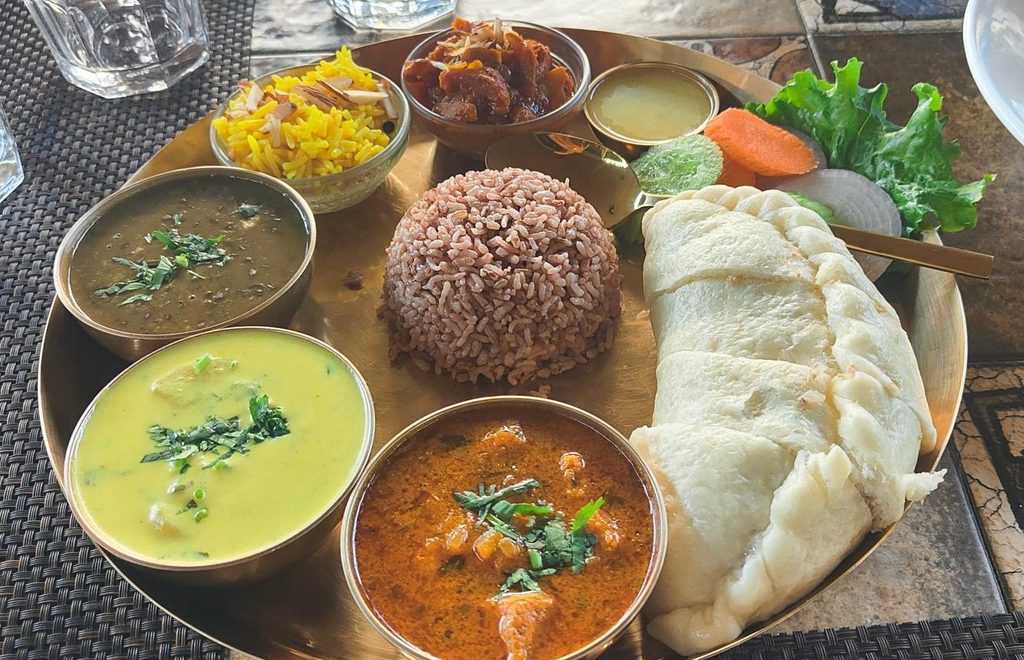
Khajjiar’s food experience is best approached as part of the wider Chamba and Himachal Pradesh region. The available menus around the meadow may be geared toward tourists, while Dalhousie and Chamba can provide more opportunities to explore regional dishes.
Try Himachali Cuisine
If you see traditional Himachali food on a menu, consider trying dishes such as madra, a preparation commonly made with pulses and yogurt-based gravy, or siddu, a regional steamed bread found in parts of Himachal Pradesh.
Dishes and recipes vary between communities and establishments, so do not assume that every restaurant will serve the same specialities. Simple meals, tea and familiar North Indian options are also useful choices after a day outdoors.
Learn About the Region Through Its Heritage
The nearby Khajji Nag Temple offers an introduction to local religious traditions and historic wooden architecture. Chamba adds another layer through its temples, traditional crafts and regional history.
These cultural experiences are worth approaching with curiosity and respect. Ask before photographing worshippers, follow instructions inside religious spaces and consider buying locally made crafts from legitimate sellers rather than treating the region as merely a scenic backdrop.
A Simple Two-Day Khajjiar and Dalhousie Itinerary
Two days provide a comfortable introduction to the area without turning the trip into a race between viewpoints. The following itinerary assumes that you are staying in Dalhousie and can adjust the schedule according to weather and transport.
Day One: Explore Dalhousie
Arrive in Dalhousie, settle into your accommodation and spend the afternoon exploring the town. Walk along suitable sections of its roads and viewpoints, visit a church or another cultural attraction, and leave time for a relaxed meal.
If you arrive late, avoid trying to fit in several distant attractions. A mountain holiday becomes much more enjoyable when the first day allows for travel delays and rest.
Day Two: Spend Time in Khajjiar
Leave Dalhousie early enough to reach Khajjiar before the busiest part of the day. Start with a walk around the meadow and lake, then visit Khajji Nag Temple respectfully.
Take a break for refreshments and enjoy the forest surroundings. If time and weather permit, add Kalatop or another nearby attraction after checking the route and allowing enough time for the return journey.
For a more cultural version of the trip, replace the extra forest stop with Chamba on a separate day. Trying to cover every attraction in one outing can leave little time to appreciate any of them properly.
Photography Tips for Capturing Khajjiar’s Landscape
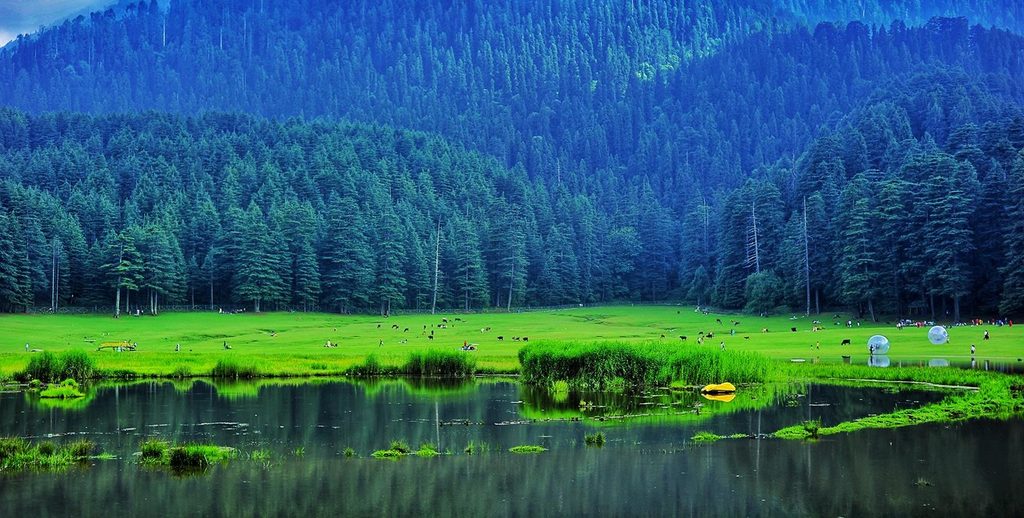
Khajjiar is especially rewarding for photographers who enjoy landscapes rather than relying only on close-up portraits. The open meadow creates a natural foreground, while the tree line and distant hills provide layers that help a photograph feel more spacious.
Early morning is often a useful time to begin. There may be fewer people in the frame, and soft light can bring out the textures of the grass and surrounding trees. On cloudy days, wait for changes in the light rather than assuming the weather has spoiled the opportunity.
Try several perspectives. A wide-angle photograph can show the relationship between the meadow, pond and forest, while a tighter composition can emphasize tree trunks, reflections or seasonal details.
During busy periods, patience matters more than equipment. Wait for gaps in foot traffic, avoid blocking paths and never step into restricted or sensitive areas for a better angle.
In winter, protect your camera or phone from moisture and cold. If the meadow is covered in snow, exposed highlights can make images appear washed out, so review the results and adjust exposure where possible.
Essential Travel Tips for a Smooth Visit
A little preparation can make the difference between a relaxed visit and an uncomfortable day on the mountain roads.
- Check road conditions before leaving. Rain, snowfall, fallen branches and roadwork can affect access, especially in winter and during the monsoon.
- Carry layers of clothing. Temperatures can change quickly with cloud cover, wind and time of day.
- Wear comfortable shoes. Grassland paths and forest edges may become muddy or uneven.
- Bring some cash. Do not assume every small vendor or local service accepts digital payments.
- Keep children close to adults. Supervise them around the pond, uneven ground, roads and any paid activities.
- Respect the environment. Use bins where available, carry away your rubbish and avoid damaging grassland or vegetation.
- Confirm activity prices in advance. For horse rides or adventure activities, clarify the full cost and safety arrangements before agreeing.
- Plan your return journey. Check the last available public transport service or arrange a return taxi rather than relying on finding a vehicle at the last minute.
- Allow extra driving time. Mountain roads require patience, and poor weather can make a short distance take considerably longer.
- Check accommodation details before booking. Confirm heating, meals, parking and cancellation conditions that matter for your season of travel.
Khajjiar is not a destination that requires an elaborate schedule. In fact, leaving some unplanned time is often the best way to enjoy it.
Is Khajjiar Worth Visiting for Families and Couples?
Khajjiar suits several kinds of travelers, although the best experience depends on expectations.
For families, the open meadow provides space to walk, relax and enjoy the outdoors. Parents should supervise younger children carefully, particularly near water, on uneven ground and around horses or other recreational activities. The destination can be busy during holidays, so an early arrival often makes the visit easier.
Couples may appreciate the forest surroundings, changing mountain light and the opportunity to combine scenic walks with a comfortable stay in Dalhousie. A quiet weekday visit can feel quite different from a crowded weekend afternoon.
Solo travelers can also enjoy Khajjiar, especially when using established paths and arranging transport in advance. Those interested in hiking or wildlife should research the route and current conditions rather than assuming every forest trail is suitable for an independent walk.
For travelers seeking nightlife, extensive shopping or a packed range of urban attractions, Khajjiar may feel limited. Its strength is the landscape and the slower pace it encourages.
The most rewarding approach is to treat the meadow as a place to spend time rather than a location to photograph quickly before moving on.
FAQs
Is Khajjiar worth visiting?
Yes. Khajjiar is worth visiting for its open meadow, small lake, deodar forests and historic temple. It is particularly appealing to nature lovers, families, couples and photographers who enjoy peaceful mountain scenery.
How many days are enough for Khajjiar?
One full day is enough to explore the main meadow, lake and temple. Two days are preferable if you also want to visit Dalhousie, explore nearby forest areas or enjoy a slower itinerary.
What is the best month to visit Khajjiar?
April to June is generally a good period for comfortable sightseeing and green landscapes. September to November can also be rewarding, although weather and scenery vary. For snowfall, consider winter, but check road conditions and remember that snow is not guaranteed.
Is Khajjiar suitable for a family trip?
Yes. Families can enjoy the meadow, short walks, scenic drives and nearby attractions. Comfortable footwear, warm clothing and supervision around the lake and recreational activities are important.
Can Khajjiar be visited as a day trip from Dalhousie?
Yes. Khajjiar is approximately 22–24 km from Dalhousie by road, making it a popular day-trip destination. Starting early allows more time for the meadow, Khajji Nag Temple and nearby attractions without rushing the return journey.
Conclusion
Khajjiar offers something increasingly valuable in a busy travel world: a reason to slow down. Its meadow, forest-framed lake and surrounding Himalayan scenery create an experience that does not depend on a packed itinerary or expensive activities. A simple walk, a quiet viewpoint and time spent appreciating the landscape can be enough to make the journey memorable.
For the best experience, visit with realistic expectations, check the weather before travelling and allow time to explore beyond the main meadow. Combine Khajjiar with Dalhousie, Kalatop or Chamba if your schedule permits, and leave room for the unexpected moments that make mountain journeys special.
Read More: Munsiyari Uttarakhand: Best Places to Visit, Things to Do, Weather and Travel Guide

I am a travel enthusiast who loves exploring India’s beautiful destinations, culture, history, food, and hidden places. Through my travel website, I aim to help travelers discover amazing places in India and plan memorable trips with useful travel information and tips.