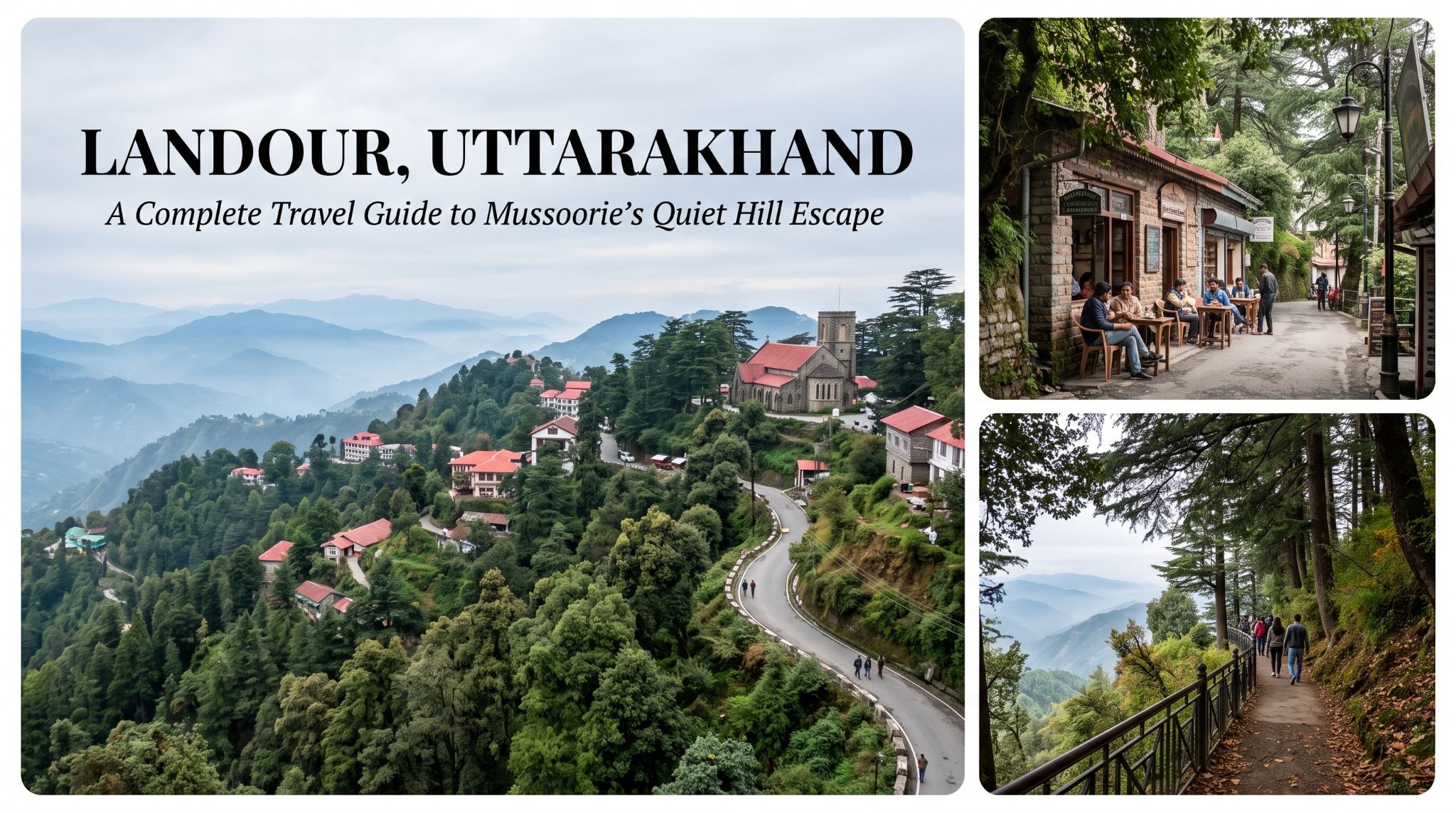
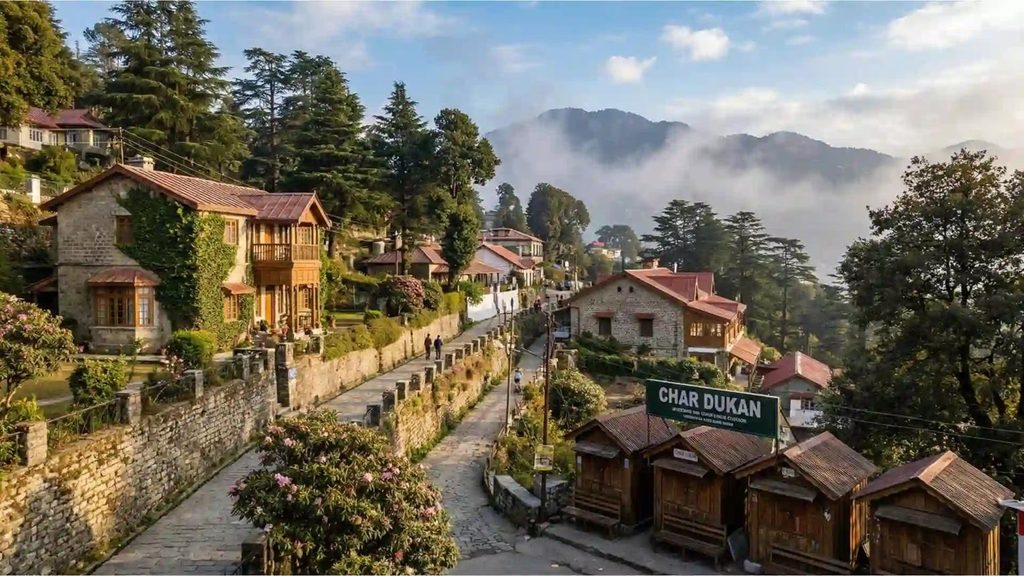
Landour Uttarakhand sits above the familiar hill-station bustle of Mussoorie, offering a different kind of mountain getaway. Narrow roads wind past old colonial-era buildings, tall deodar trees, quiet hillside homes, and small cafés where a cup of coffee can become the best part of an unhurried afternoon. The views stretch across forested slopes and distant Himalayan peaks when the weather is clear, while drifting clouds can transform the landscape within minutes.
What makes Landour worth exploring is not a long list of attractions but the way its individual experiences come together. You can walk along the historic Char Dukan area, visit the surroundings of St. Paul’s Church, look for mountain views from Lal Tibba, sample local bakery treats, and spend time discovering the area’s literary and architectural character. Whether you are planning a peaceful weekend, a couple’s retreat, or a longer trip through Uttarakhand, this guide covers the best places to visit, things to do, seasonal considerations, transport options, food, accommodation, and practical advice for planning your stay.
Why Landour Uttarakhand Deserves a Place on Your Travel List
Landour is a small cantonment town adjoining Mussoorie in the Garhwal region of Uttarakhand. Although the two places are closely connected, their atmospheres can feel noticeably different. Mussoorie has busy shopping streets, hotels, restaurants, and established tourist attractions. Landour is better known for its wooded lanes, old houses, modest cafés, and quieter walking routes.
Its character is closely tied to its history. The British developed Mussoorie and Landour as hill retreats during the colonial period, and Landour retains architectural reminders of that era. The name itself is associated with Llanddowror, a village in Wales. Today, the area combines this heritage with the everyday life of a mountain community.
The appeal is especially strong for travelers who do not want every hour of a holiday scheduled around sightseeing. You can explore a lane, stop for breakfast, read in a café, or simply wait for the clouds to lift. The experience rewards patience rather than speed.
Landour is particularly suitable for couples, solo travelers, photographers, readers, and anyone who enjoys walking through historic neighborhoods. Families can enjoy it too, provided they are comfortable with sloping roads, uneven paths, and a more relaxed style of sightseeing.
Best Places to Visit in Landour
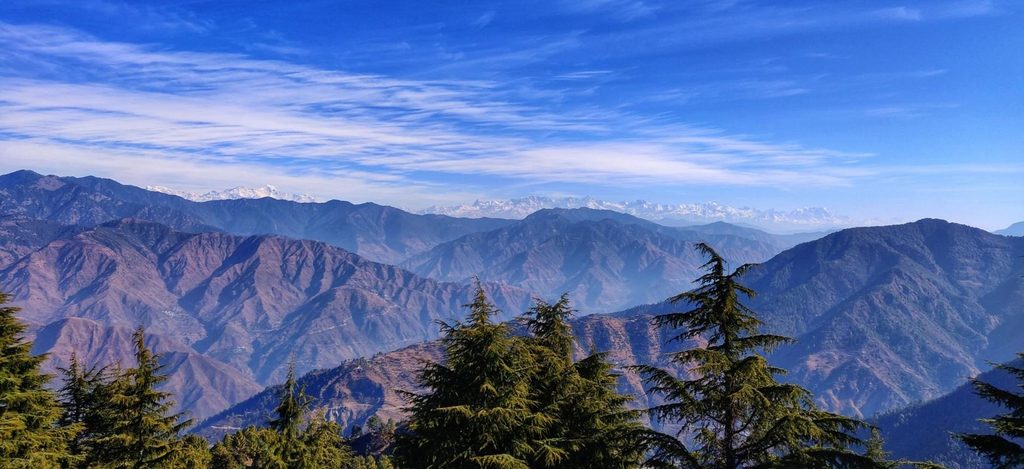
The most rewarding way to explore Landour is to visit a handful of distinctive places without trying to cover everything in a single rush. Its principal sights are relatively close within the hill area, although the steep terrain makes distances feel different from those on flat ground.
Lal Tibba
Lal Tibba is one of Landour’s best-known viewpoints and a major reason travelers make the journey uphill from Mussoorie. Located in the Depot Hill area, it is celebrated for views toward the Himalayan ranges.
On a clear day, the distant snow-covered peaks create a striking contrast with the green hills nearer to town. Early morning is often a good time to try for mountain views, before haze and clouds obscure the horizon. Visibility is never guaranteed, however, so it is worth enjoying the surrounding scenery even if the highest peaks remain hidden.
Char Dukan
Char Dukan is a small cluster of eateries near St. Paul’s Church. Its name means “four shops,” reflecting the original group of shops that gave the place its identity.
Travelers come here for breakfast, tea, coffee, pancakes, omelettes, and simple snacks. The setting is as much a part of the experience as the food: mountain air, nearby trees, and a relaxed pace encourage visitors to sit longer than they intended.
Landour Bazaar
Landour Bazaar provides a glimpse of the area’s everyday commercial life. It is a useful place to look for small shops, local provisions, and the older streetscape that distinguishes Landour from Mussoorie’s busier tourist center.
Rather than expecting a large shopping district, arrive with the intention of exploring slowly and noticing the buildings, shopfronts, and changing views along the road.
Walks, Churches, and Colonial-Era Architecture
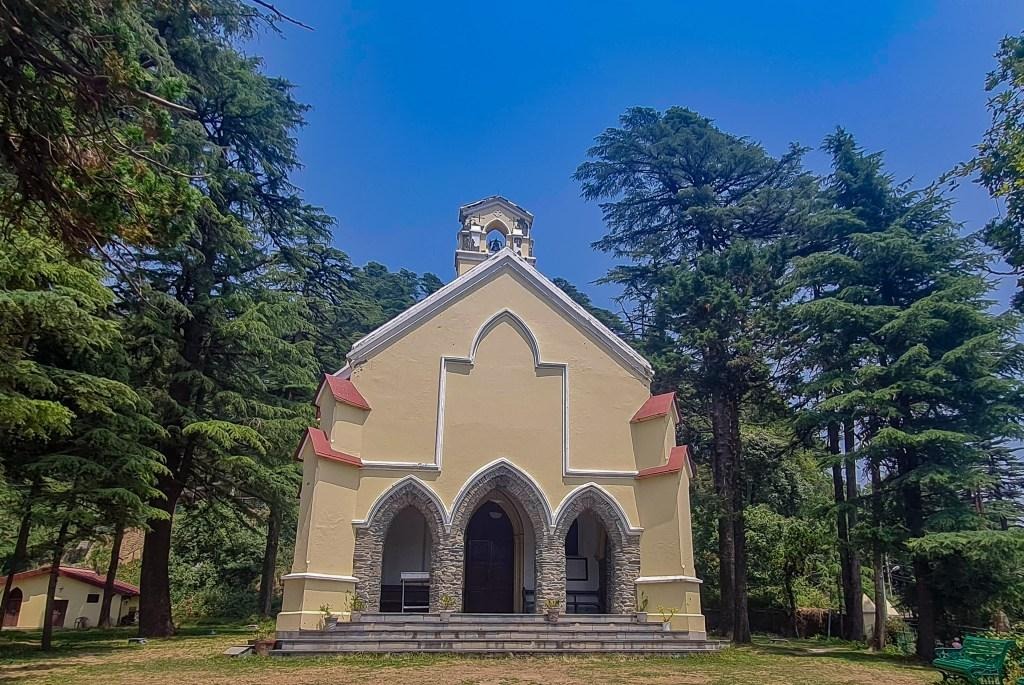
Landour’s historic atmosphere is best appreciated on foot. The old buildings, wooded surroundings, and narrow roads make the journey between places an important part of the visit.
St. Paul’s Church
Near Char Dukan, St. Paul’s Church is a notable landmark associated with Landour’s colonial-era heritage. Its relatively peaceful setting makes it a natural stop while exploring the surrounding lanes.
Visitors should be respectful if services or other religious activities are taking place. Access arrangements can vary, so check locally before planning to enter.
Kellogg Memorial Church and its surroundings
The area around Kellogg Memorial Church is another useful point of interest for travelers who appreciate heritage architecture and quieter corners. It also provides a natural link to the nearby Sisters’ Bazaar area.
Take time to notice the contrast between older buildings, forest vegetation, and the steep mountain terrain. These details help explain why Landour feels different from a conventional commercial hill station.
The circular walk
Rather than driving between every sight, consider a walking circuit that links the main Landour lanes, Char Dukan, nearby churches, and the Sisters’ Bazaar area. The exact route depends on road conditions and where you begin.
Wear shoes with good grip, leave room for uphill stretches, and avoid blocking narrow roads while taking photographs. Some sections are shared with vehicles, so stay alert even when the surroundings feel peaceful.
Things to Do in Landour Beyond Sightseeing
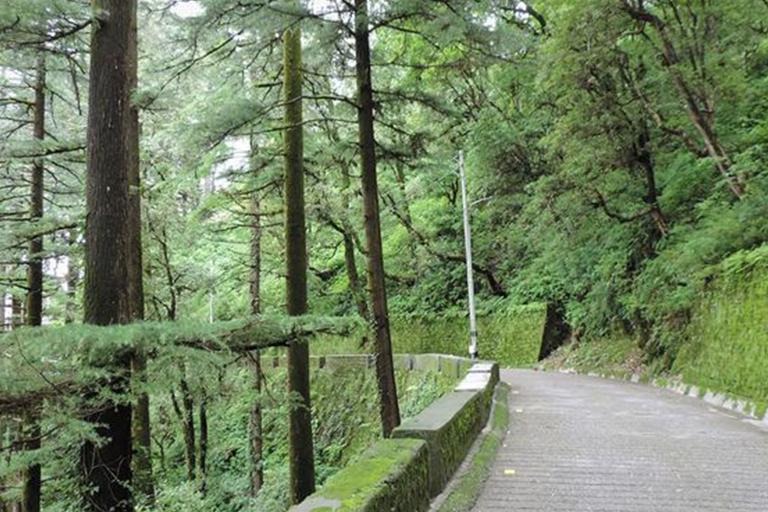
Landour’s best activities are often simple, and that is part of its appeal. The area suits travelers who would rather spend meaningful time in a few places than collect a long list of attractions.
- Take a slow morning walk. Start early, when the roads are quieter, and notice the changing light through the trees.
- Spend time at a café. Choose a place for breakfast or a warm drink and allow yourself an unhurried break.
- Explore the old lanes. Look at the architecture, gardens, stone boundaries, and forested slopes without entering private property.
- Watch the changing weather. Mist, shifting clouds, and sudden patches of sunshine can transform the same hillside throughout the day.
- Enjoy a reading break. Landour’s association with writers and its peaceful surroundings make it a natural destination for book lovers.
- Photograph the details. Old doors, winding roads, tree branches, rooftops, and distant ridges can be just as interesting as wide mountain panoramas.
Landour is not primarily an adventure destination with a large selection of organized activities. Visitors seeking extensive shopping, nightlife, or high-adrenaline attractions may prefer to spend additional time in Mussoorie.
Local Food, Cafés, and Bakery Stops
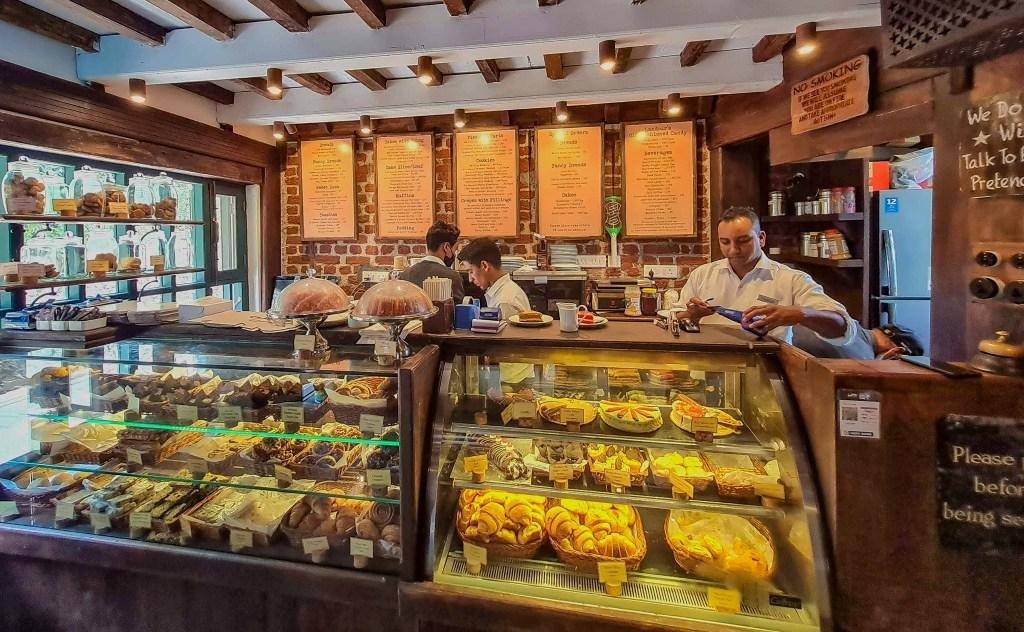
Food is an enjoyable part of a Landour visit, particularly for people who like combining a walk with a relaxed meal. The café culture is informal, and many travelers plan their route around a breakfast stop or a bakery visit.
What to try
Char Dukan is associated with breakfast dishes such as pancakes and omelettes, alongside tea, coffee, and other café-style refreshments. It is a practical stop before continuing toward Lal Tibba or exploring the nearby lanes.
Landour Bakehouse is another familiar name for visitors interested in baked goods and café treats. The Sisters’ Bazaar area is also worth exploring for small shops and food stops.
Menus, prices, and opening hours can change, particularly during quieter seasons. Check current details locally rather than assuming every establishment will be open when you arrive.
Eating well without overplanning
You do not need a restaurant reservation for every meal in Landour. A simple approach is to have breakfast at a local café, carry water and a small snack for longer walks, and return to Mussoorie if you want a wider selection of dining options.
During weekends and holiday periods, popular cafés may be busy. Arriving earlier can make it easier to find a seat and enjoy the surroundings without feeling rushed.
Vegetarian travelers generally have options at cafés and restaurants, but anyone with allergies or strict dietary requirements should confirm ingredients directly with staff.
Best Time to Visit Landour Uttarakhand
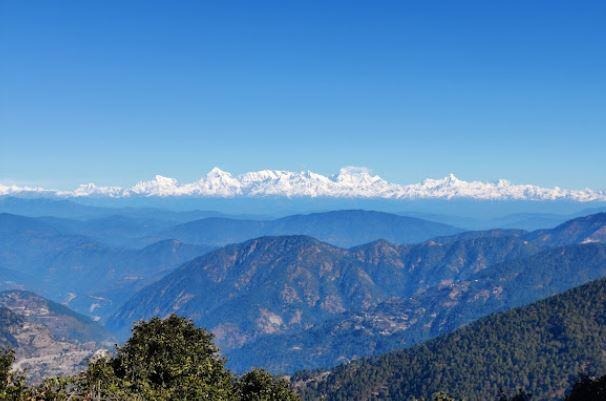
Landour can be visited throughout the year, but the most suitable season depends on whether you prefer comfortable walking weather, green hills, autumn clarity, or a cold-weather escape. Conditions change quickly at altitude, so check the forecast shortly before traveling.
| Season | What to expect | Best suited for |
| March to June | Generally pleasant for outdoor exploration, with busier holiday periods | First-time visitors, families, walking |
| July to September | Monsoon greenery, mist, and potentially wet or slippery roads | Travelers who enjoy clouds and lush landscapes |
| October to November | Often clearer skies and crisp mountain scenery, though weather varies | Photography, walks, Himalayan views |
| December to February | Cold conditions, occasional frost, and possible snowfall in the wider hill area | Winter scenery and peaceful stays |
Spring and summer
Spring brings fresh vegetation and increasingly comfortable conditions for walking. Summer attracts visitors escaping the heat of the plains, so popular cafés and roads can become crowded, especially on weekends.
Reserve accommodation ahead of time if you are traveling during school holidays or long weekends.
Monsoon
The rainy season makes the surrounding forest especially green, but heavy rain can reduce visibility and make steep roads slippery. Landslides or temporary road disruptions are possible in mountain regions during periods of intense rainfall.
Keep your itinerary flexible and avoid setting out on unfamiliar trails during poor weather.
Autumn and winter
Autumn is often attractive for travelers hoping to see distant mountain peaks, although clear views depend on atmospheric conditions. Winter brings a colder, quieter mood, with the possibility of frost or snow during suitable weather systems rather than a guarantee of snowfall.
Pack warm layers, especially if you plan to walk early in the morning or remain outside after sunset.
How to Reach Landour from Dehradun and Mussoorie
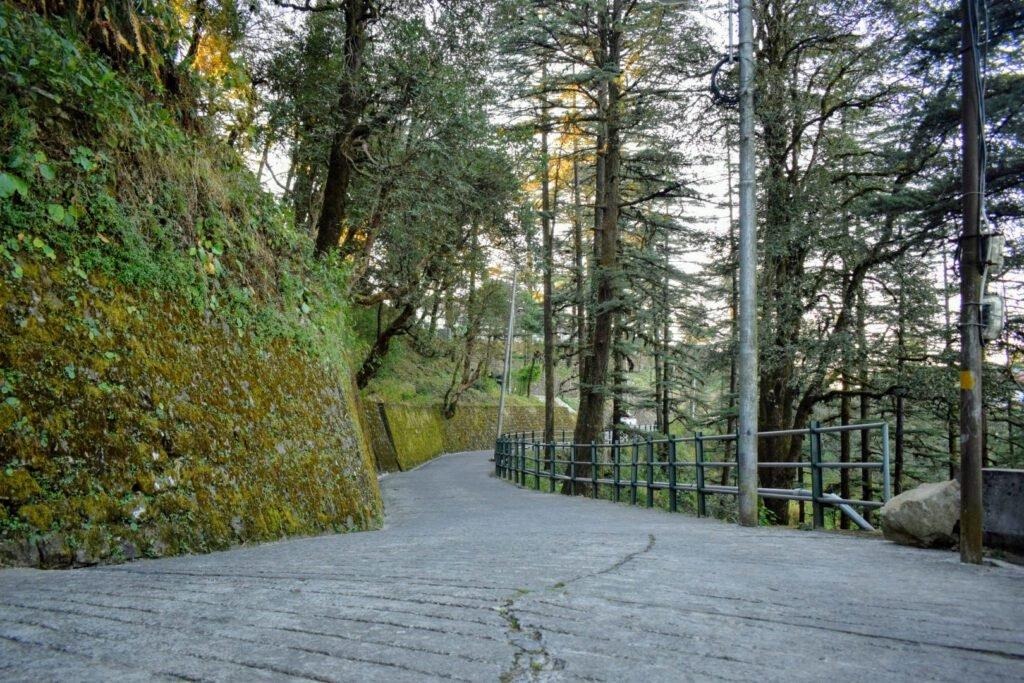
Landour is reached by road through Mussoorie, making Dehradun the main transport gateway for most travelers arriving from other parts of India. You can travel by train, bus, or air to Dehradun and then continue uphill by road.
The Uttarakhand Tourism website identifies Jolly Grant Airport and Dehradun railway station as the main nearby air and rail connections for the Mussoorie area.
| Travel option | How it works | Practical advice |
| By air | Fly to Jolly Grant Airport near Dehradun, then arrange road transport | Confirm the onward taxi journey before arrival |
| By train | Travel to Dehradun railway station, then take a taxi or bus toward Mussoorie | Check current train schedules and onward connections |
| By bus | Take a bus to Dehradun or Mussoorie, depending on the service | Verify the arrival point and final connection to Landour |
| By private car or taxi | Travel uphill from Dehradun through the Mussoorie area | Allow extra time for traffic and winding roads |
From Dehradun
A taxi offers the simplest door-to-door option, particularly if you have luggage or are traveling with family. Public transport can reduce costs, but you may need to change vehicles or arrange a local taxi for the final section.
Travel time depends on traffic, weather, and the exact starting point. Weekend congestion and holiday traffic can make the journey considerably slower than expected.
From Mussoorie
If you are already staying in Mussoorie, Landour can be explored as a half-day or full-day excursion. A local taxi can help with the uphill journey, while walking is suitable for travelers who are comfortable with the terrain.
Before driving, confirm parking arrangements with your accommodation. Landour’s narrow roads and limited space in some areas can make spontaneous parking inconvenient.
Where to Stay in Landour
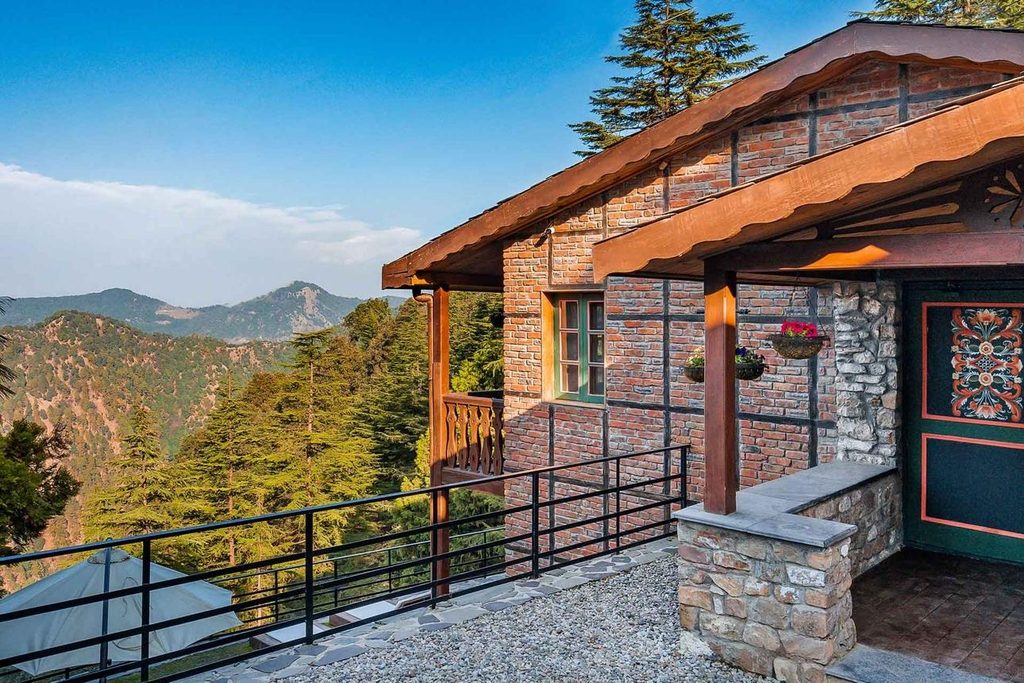
Choosing accommodation depends on the experience you want. Staying in Landour gives you more opportunity to enjoy quiet mornings and explore the area before day visitors arrive. Staying in Mussoorie can be more convenient if you want access to a wider range of hotels, restaurants, shops, and transport options.
Heritage cottages and boutique stays
Landour is known for its older buildings and hillside cottages, some of which have been adapted for hospitality. These stays may appeal to couples and travelers looking for a quieter setting with architectural character.
Check whether the property has heating, reliable hot water, convenient vehicle access, and staff available when you arrive. Older buildings can have different facilities from modern hotels.
Guesthouses and homestays
A guesthouse or homestay can be a practical choice for a relaxed trip. Confirm the walking distance to the places you want to visit rather than relying only on a map, since steep roads affect how easy a short journey feels.
Staying in Mussoorie instead
Mussoorie is worth considering if your trip includes children, several sightseeing stops, or a preference for more transport and dining options. You can visit Landour during the day and return to your hotel in the evening.
For weekends, holidays, and winter travel, book in advance and check the cancellation policy. Do not assume a property has mountain views simply because it is located in the hills.
Nearby Places to Explore Around Landour
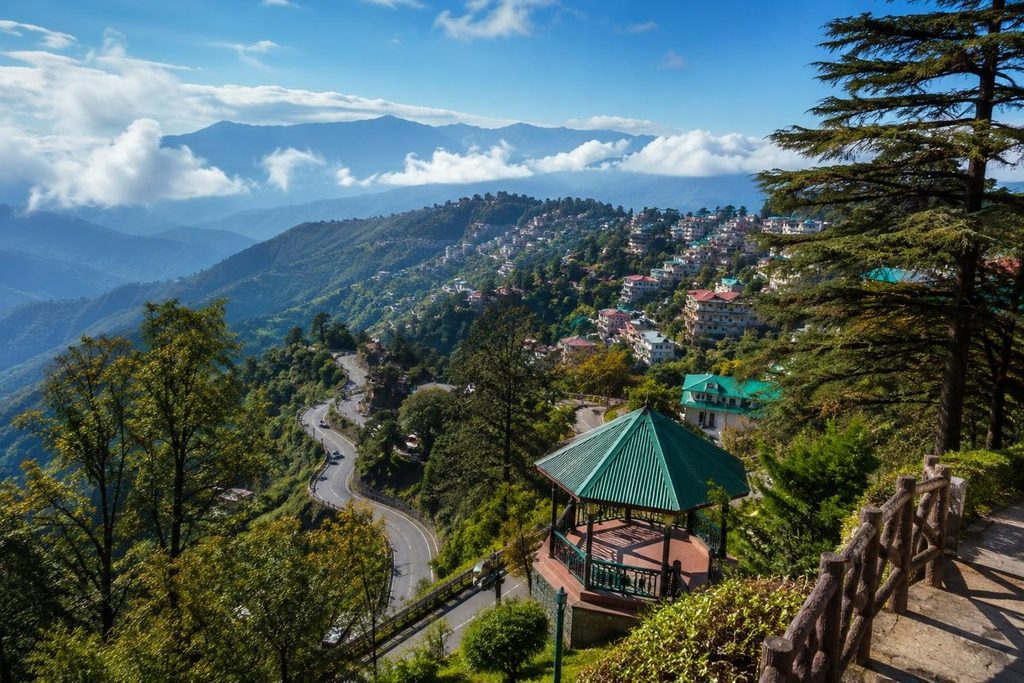
Landour works well as part of a wider Mussoorie holiday. If you have more than a day available, the surrounding region offers additional viewpoints, walking routes, and cultural attractions.
Mussoorie Mall Road
Mall Road is a useful contrast to Landour’s quiet lanes. It is better suited to browsing shops, enjoying a wider selection of restaurants, and experiencing the energy of a traditional hill station.
You can combine a relaxed morning in Landour with an afternoon in central Mussoorie, although road traffic may affect the transfer.
Camel’s Back Road
Camel’s Back Road is known for walking and views across the surrounding mountain landscape. It provides a good alternative for travelers who want more time outdoors without planning a demanding mountain trek.
George Everest House
The historic estate associated with Sir George Everest lies outside central Mussoorie and is a separate excursion rather than a quick stop within Landour. The remains of the building and its setting attract visitors interested in history, landscape, and photography.
Allow sufficient time for the journey, and check access and local conditions before setting out.
A Practical One-Day or Two-Day Landour Itinerary
You can experience the main character of Landour in one day, but staying overnight allows you to enjoy the area when the roads are quieter. The best itinerary leaves enough room for walking, meals, and changes in weather.
| Time | One-day plan | Two-day plan |
| Morning | Arrive and explore the main lanes | Take a quiet morning walk near your accommodation |
| Late morning | Breakfast at Char Dukan | Visit Lal Tibba when visibility is favorable |
| Afternoon | Explore nearby churches and Sisters’ Bazaar | Enjoy a relaxed lunch and browse Landour Bazaar |
| Late afternoon | Return toward Mussoorie | Explore additional walking routes or relax at a café |
| Evening | Travel back or stay overnight | Enjoy an early dinner and a peaceful evening |
For a one-day visit, prioritize Char Dukan, Lal Tibba, and a walk through the historic neighborhood. Add other stops only if time and road conditions allow.
With two days, you can spread the sightseeing across different parts of the day. Use the first afternoon to settle in and explore nearby lanes, then leave the next morning for the viewpoint and a longer walk. If clouds cover the mountains, switch the order of activities rather than trying to force a particular view.
Travelers arriving from Dehradun should allow enough time for the uphill road journey. A tight schedule can make a relaxing destination feel unnecessarily rushed.
Photography Tips, Safety, and Responsible Travel
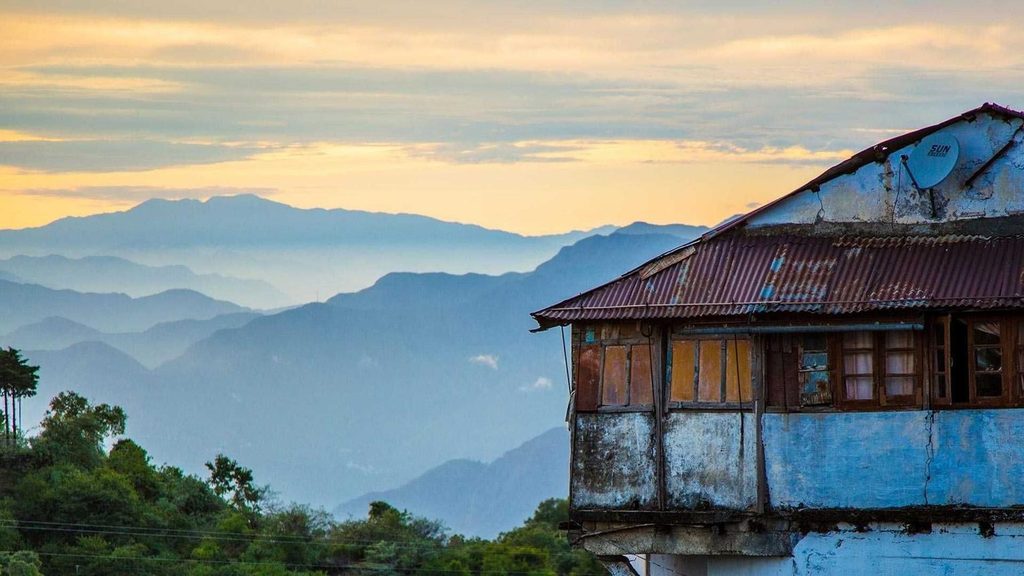
Landour is particularly rewarding for photographers who enjoy natural light, layered landscapes, and architectural details rather than only famous viewpoints. The scenery changes with the weather, so a little flexibility can make a difference.
Getting better photographs
Early morning can provide soft light and quieter roads. For mountain panoramas, keep your schedule flexible and watch for clear intervals between clouds. If the peaks are hidden, photograph the forest, old buildings, winding roads, and mist moving through the trees.
A phone camera is sufficient for most everyday travel photography. A zoom lens or binoculars may help with distant peaks, but atmospheric haze can limit visibility regardless of equipment.
Staying safe on the hills
Landour’s roads can be steep, narrow, and shared with vehicles. Walk on the safest available side, stay alert around bends, and avoid stepping into the road to frame a photograph.
Keep these practical points in mind:
- Carry a light rain jacket and a warm layer, even when the weather looks pleasant.
- Wear comfortable footwear with a good grip.
- Check local weather and road updates during the monsoon and winter.
- Carry water, especially if you plan a longer walk.
- Avoid wandering onto private land or entering restricted cantonment areas.
- Keep noise low near homes, churches, and residential properties.
- Dispose of waste responsibly and avoid feeding wild animals.
Families with young children should take particular care around steep edges and roads without broad pavements. Visitors with limited mobility may find some sections challenging, so it is sensible to plan shorter routes and confirm vehicle access beforehand.
Frequently Asked Questions About Landour Uttarakhand
Is Landour worth visiting?
Yes, particularly if you enjoy quiet mountain walks, historic architecture, small cafés, and scenic viewpoints. It is less suited to travelers seeking nightlife, large shopping areas, or a packed schedule of adventure activities.
How many days are enough for Landour?
One day is enough to see the principal highlights, including Char Dukan and Lal Tibba. Two days allow a more relaxed experience, with time for additional walks, cafés, and changing mountain views.
What is the best month to visit Landour?
March to June is popular for comfortable sightseeing, while October and November can be attractive for mountain views. Each season has different advantages, and visibility depends on the weather.
Can I visit Landour from Mussoorie in one day?
Yes. Landour is close to Mussoorie and makes a convenient day excursion. You can visit the main viewpoint, enjoy a meal at Char Dukan, and explore the surrounding lanes before returning.
Is Landour suitable for a family trip?
Yes, for families who enjoy nature, relaxed sightseeing, and short walks. However, the steep terrain, narrow roads, and potentially cold weather require sensible footwear, warm clothing, and extra supervision for children.
Conclusion
Landour Uttarakhand is a destination best enjoyed without trying to do too much. Its appeal lies in the combination of forest-lined roads, historic buildings, Himalayan viewpoints, welcoming cafés, and the freedom to spend an afternoon without a strict plan. Even familiar sights can feel different as the light changes and clouds move across the hills.
For the most rewarding trip, visit Lal Tibba when visibility is favorable, make time for breakfast at Char Dukan, explore the old neighborhood on foot, and leave room for unexpected discoveries along the way. Check the weather, arrange your transport and accommodation thoughtfully, and remember that the quieter atmosphere is part of what makes Landour special.
Read More: Yumthang Valley: Best Time to Visit, Things to Do, Travel Tips and Complete Guide

I am a travel enthusiast who loves exploring India’s beautiful destinations, culture, history, food, and hidden places. Through my travel website, I aim to help travelers discover amazing places in India and plan memorable trips with useful travel information and tips.