The Masai Mara sits like a crown jewel in Kenya’s southwestern corner, and honestly, it’s one of those destinations that changes how you see the world. When you think about the Masai Mara, you probably imagine endless plains, dramatic wildlife moments, and that feeling of being completely disconnected from everything back home. The reality? Even better than you’re picturing.
What makes the Masai Mara truly special isn’t just the famous Big Five or the annual wildebeest migration. It’s the unexpected encounters, the quiet sunrise moments, and the genuine connection you feel with one of Earth’s most untouched ecosystems. This comprehensive Masai Mara safari guide will take you beyond the typical tourist hotspots and show you what makes this reserve genuinely remarkable.
Understanding the Masai Mara Ecosystem
The Masai Mara isn’t just a wildlife reserve. It’s a living, breathing landscape that has supported human communities and incredible biodiversity for centuries. Spanning roughly 1,500 square kilometers, the Masai Mara forms part of the greater Serengeti ecosystem, creating a seamless wildlife corridor that stretches into Tanzania.
What you need to understand about the Masai Mara is that it’s fundamentally different depending on when you visit. During the dry season, you’ll witness concentrated wildlife populations around remaining water sources. The wet season transforms the landscape into an emerald paradise with lush vegetation and dispersed animal groups. Both experiences offer completely different safari advantages.
The ecosystem supports over 95 species of mammals, including lions, leopards, elephants, giraffes, zebras, and wildebeest. But here’s what catches most travelers off guard: the bird watching is phenomenal. Over 400 bird species call the Masai Mara home, making it equally thrilling for ornithology enthusiasts as it is for big game hunters with cameras.
The Great Migration: Nature’s Most Epic Event
The annual wildebeest migration through the Masai Mara represents nature at its most dramatic and unforgiving. Between July and November, roughly two million wildebeest, zebras, and gazelles traverse between the Serengeti in Tanzania and the Masai Mara in Kenya, creating one of Earth’s most spectacular natural events.
The migration follows patterns that haven’t changed for millennia. Animals respond to rainfall patterns and grass availability, creating a predictable (though not perfectly timed) annual circuit. Watching a river crossing where crocodiles wait below and thousands of wildebeest plunge into churning water is absolutely surreal. Your heart actually pounds watching it happen in person.
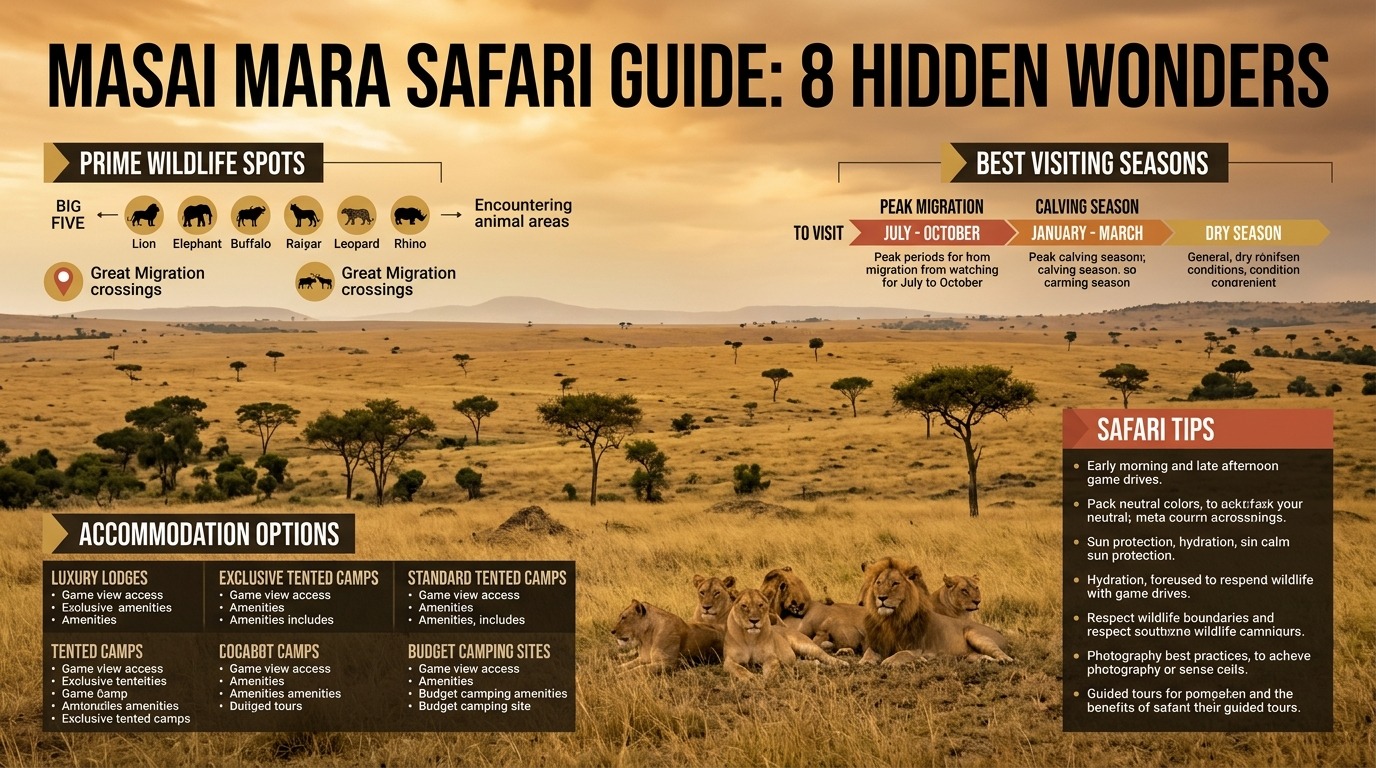
Timing your visit around the migration requires strategy. July and August typically bring the largest concentrations to the Masai Mara, with river crossings occurring frequently along the Mara River. September and early October still offer excellent viewing, though the herds gradually disperse. If you arrive during peak migration season, prepare for crowded viewpoints and higher accommodation prices, but understand you’re witnessing something most people only see in documentaries.
Hidden Wonder #1: The Mara River Crossings
Most travelers expect to see river crossings during the migration season, but few understand the intense drama happening beneath the surface. The Mara River contains some of Africa’s largest crocodile concentrations, with individuals reaching over 15 feet in length. These predators don’t just passively wait. They actively hunt during crossings, creating moments of genuine life-and-death struggle.
Position yourself at a crossing point early in the morning or late afternoon when light is perfect and animals tend to cross. The sound alone is overwhelming: hooves thundering, animals bleating in confusion, water splashing everywhere. It’s primal nature stripped of all Hollywood softness.
The river also rewards patient observers with exceptional wildlife moments beyond crossings. Hippopotamus pods gather in deeper pools. Elephants wade across during water shortages. Predators position themselves strategically along banks. Spend a full day near the Mara River during migration season and you’ll collect footage and memories that justify the entire trip.

Hidden Wonder #2: The Olmoti Crater and Leopard Territory
Beyond the main reserve, the Olmoti Crater offers a genuine escape from safari crowds. This extinct volcanic caldera sits at 2,650 meters and contains a freshwater lake that attracts wildlife year-round. The crater walls create natural corridors for predators, making leopard sightings surprisingly common in this area.
What makes Olmoti special is accessibility. Unlike many exclusive lodges, day trips from major Masai Mara accommodation work perfectly. The drive takes roughly two hours from central locations. Hiking around the rim rewards you with panoramic views across the reserve and often delivers close wildlife encounters that main safari routes never provide.
The leopards inhabiting this territory are particularly active during cooler months. They hunt baboons among the rocky outcrops and take advantage of the concealment that crater vegetation provides. Early morning hikes significantly increase your chances of leopard encounters compared to standard safari drives.
Hidden Wonder #3: The Talek River Ecosystem
The Talek River creates its own microecosystem within the Masai Mara, supporting wildlife populations and vegetation communities distinct from surrounding areas. Unlike the famous Mara River, the Talek remains less crowded even during peak season, making it an exceptional location for those seeking authentic safari experiences minus the tourist concentrations.
Waterbirds congregate at Talek throughout the year. Kingfishers, cormorants, and fish eagles create spectacular photography opportunities. During the dry season, the river becomes a major wildlife attraction drawing elephants, buffalo herds, and various antelope species for essential water access.
The river’s banks provide excellent camping and lodge locations that put you directly within wildlife corridors. Settling into a riverside location and simply observing behavior over several hours often yields more memorable experiences than rapidly driving between viewpoints.
Hidden Wonder #4: Serengeti Black Maned Lions
The Masai Mara’s lion population represents some of Africa’s most impressive specimens, with male lions sporting particularly impressive manes during the cooler seasons. These aren’t just bigger cats. They’re apex predators displaying complex social behavior that researchers continue studying.
The reserve’s lions organize into distinct prides, each maintaining territories within the broader ecosystem. If you spend time in specific areas for multiple days, you can track individual prides and observe behavioral patterns. Some prides actively hunt while you watch. Others rest and interact within family units, displaying social complexity most people never witness.
Lion tracking with experienced guides dramatically increases sighting success. Local guides maintain current knowledge about pride locations and hunting patterns. They know which areas typically hold visible lions and can position vehicles to capture behavioral moments rather than just passing glimpses.
Hidden Wonder #5: Night Safari Adventures
Most safari planning focuses on daytime drives, but honestly, nighttime transforms the Masai Mara into an entirely different landscape. Night safaris reveal animals you’ll never encounter during daylight hours. Nocturnal predators including hyenas, leopards, and servals become active. Aardvarks emerge from burrows. Porcupines navigate the plains.
The experience feels genuinely adventurous compared to standard daytime operations. Spotlight beams cutting through darkness create dramatic encounters. The sounds alone are fascinating. Hyena calls, distant lion roars, bird calls from perched animals. Your senses heighten when visibility drops.
Night safari guides use specialized training and knowledge of animal behavior patterns. They know where nocturnal hunters typically patrol. They understand which animals respond to spotlights and which vanish deeper into darkness. Booking night drives through established lodges ensures knowledgeable guides and proper safety protocols.
Hidden Wonder #6: Masai Culture and Community Integration
The Masai Mara’s name itself honors the Masai people who have inhabited these lands for centuries. Despite being a wildlife reserve, the Masai continue maintaining pastoral traditions within the ecosystem. Many lodges incorporate cultural experiences allowing travelers to engage authentically with Masai communities.
Visiting a Masai village provides context that enriches your entire safari experience. You meet pastoralists whose livelihoods depend on understanding wildlife behavior and coexisting with predators. You see how traditional knowledge about animal patterns connects to scientific observations. You gain perspective on conservation challenges and human-wildlife coexistence solutions.
Responsible cultural tourism supports local communities economically while funding conservation efforts. Many lodges partner directly with villages, ensuring that tourism revenue reaches community members equitably. Before booking experiences, research lodge partnerships to ensure authentic engagement and fair compensation for community members.
Hidden Wonder #7: Photography and Professional Workshops
For serious photographers, the Masai Mara offers unmatched opportunities for capturing African wildlife at its most dramatic. Professional photography workshops specifically designed for the reserve put you alongside experienced guides who understand both animal behavior and photography composition.
The landscape’s diverse habitats provide varied photographic challenges and opportunities. Golden hour light across the savanna creates stunning backdrops. Predator-prey interactions deliver action sequences. Landscape photography captures the reserve’s scale and beauty. Macro work focuses on insects, birds, and smaller creatures often overlooked.
Timing your visit around optimal light conditions and wildlife activity maximizes photographic success. Peak migration seasons concentrate animals, simplifying wildlife location. Dry seasons offer better visibility compared to wet season vegetation density.
Hidden Wonder #8: Adventure Beyond Traditional Safaris
While game drives dominate safari experiences, the Masai Mara offers adventure options that create completely different connections with the landscape. Hot air balloon safaris provide panoramic perspectives impossible from ground level. You witness entire ecosystem patterns, migration routes, and landscape features that ground-based viewing never reveals.
Walking safaris with armed guides deliver intimate encounters impossible from vehicles. Moving slowly through the landscape on foot sharpens your observation skills. You notice details: tracks indicating recent animal passage, vegetation patterns showing water sources, sounds revealing animal locations. Walking safaris require solid fitness and proper guide knowledge, but they transform your reserve experience completely.
Horseback riding, mountain biking, and even fishing excursions supplement traditional game drives at various facilities. These options appeal to adventure travelers seeking more active engagement with the landscape compared to vehicle-based observation.

Planning Your Masai Mara Safari: Practical Travel Tips
Preparing for a Masai Mara adventure requires attention to logistical details that significantly impact your experience. The reserve sits roughly six hours by road from Nairobi, Kenya’s capital. Most travelers fly directly from Nairobi to airstrips within or near the reserve, arriving via chartered or scheduled aircraft. This investment of time and money rewards you with immediate immersion in the ecosystem.
Accommodation options range from luxury lodges offering world-class amenities to mobile tent camps providing authentic bush experiences. Budget considerations significantly influence your choice, but understand that even budget camps maintain professional safety standards and guide quality. Your daily schedule revolves around early morning drives capturing animals during active hunting and movement periods, followed by midday breaks during peak heat, then afternoon and evening drives as temperatures cool and wildlife activity resumes.
Packing requires balancing luggage weight with practical necessities. Layering becomes essential since early morning and evening temperatures drop significantly below midday heat. Neutral-colored clothing helps during wildlife viewing, reducing visibility to cautious animals. Binoculars are absolutely essential. A quality pair with 10×42 magnification captures details impossible with naked eye observation. Camera equipment decisions depend on your photography commitment, but even smartphone cameras capture remarkable wildlife moments.
Vaccination recommendations include yellow fever, typhoid, and routine immunizations. Malaria prevention typically involves antimalarial medication started before arrival and continued during and after your stay. Consult your doctor at least six weeks before departure to complete all health preparations. Travel insurance specifically covering safari activities and medical evacuation ensures you’re protected against unexpected situations.
Understanding Wildlife Safety and Conservation
Your safety during safari activities depends completely on guide expertise and proper vehicle protocols. Professional guides understand animal behavior deeply, maintaining safe distances while positioning you for optimal viewing and photography. Staying within vehicles except during specifically designated walking safari excursions is non-negotiable. Animals perceive stationary vehicles differently than moving humans, allowing closer approach compared to ground-level encounters.
Conservation directly impacts what wildlife you encounter during your visit. The Masai Mara’s protection relies on tourism revenue funding ranger patrols, anti-poaching efforts, and ecosystem management. Choosing lodges committed to conservation practices ensures your tourism contribution supports reserve protection rather than exploitation.
Responsible wildlife viewing practices matter enormously. Maintaining proper distances prevents animal stress. Respecting breeding seasons and denning areas protects vulnerable populations. Supporting community-based conservation initiatives creates incentives for local protection and coexistence. Your individual choices during your visit collectively shape the reserve’s future.
FAQS
What’s the best time to visit the Masai Mara for wildlife viewing?
The dry season from July to October offers peak wildlife viewing, especially during the Great Migration when animals concentrate around water sources. However, the wet season from November to June provides excellent experiences with fewer crowds, lush landscapes, and incredible bird watching. Your preference depends on whether you prioritize volume of wildlife sightings or smaller group experiences with rich vegetation.
How long should I spend in the Masai Mara for a meaningful safari experience?
A minimum of three to four days allows sufficient time for multiple game drives capturing diverse wildlife encounters and experiences. This duration provides reasonable odds for Big Five sightings and adjustment time for early mornings and extended drives. Seven to ten days significantly increases your chances for rare predator behaviors, deeper ecosystem understanding, and authentic cultural interactions.
Is a Masai Mara safari safe for solo travelers?
Yes, solo travelers regularly visit the reserve safely. Professional lodges cater to solo visitors, often arranging shared game drives when preferred. Group excursions within established facilities eliminate isolation concerns. Ensure proper travel insurance, share your itinerary with contacts at home, and follow all lodge safety protocols without exception.
Can I visit the Masai Mara during the wet season?
Absolutely. While wildlife concentrations decrease during wet months, the landscape transforms beautifully with fresh vegetation. Bird watching peaks during wet season nesting periods. Accommodation rates drop significantly. Fewer tourists mean more personal guide attention and peaceful wildlife observation moments.
What’s included in typical Masai Mara safari packages?
Most packages include accommodation, daily game drives, knowledgeable guides, and meals at your lodge. Typically excluded: international flights, visas, personal equipment, tips for guides and staff, and activities outside scheduled game drives. Review specific package details before booking to understand what’s covered versus what requires separate payment.
Conclusion
The Masai Mara extends an invitation to experience Africa as few places on Earth allow. Beyond the iconic migration and famous predators lies a landscape of extraordinary depth, surprising adventures, and genuine connection to wild nature. Planning around these eight hidden wonders creates an experience far richer than typical safari itineraries deliver.
Whether you’re tracking lions through territories they’ve defended for generations, exploring volcanic craters where leopards hunt, or sharing tea with Masai communities maintaining traditions within the ecosystem, every moment in the Masai Mara shapes how you understand wild places and human-nature relationships. Start planning your Masai Mara safari adventure today and discover why this reserve consistently ranks among travelers’ most transformative experiences.

I am a travel enthusiast who loves exploring India’s beautiful destinations, culture, history, food, and hidden places. Through my travel website, I aim to help travelers discover amazing places in India and plan memorable trips with useful travel information and tips.