Planning a trip to Kenya’s most iconic wildlife destination? Knowing the best time to visit Masai Mara can completely transform your safari experience. Whether you’re chasing the Great Migration, seeking optimal wildlife viewing, or hoping for favorable weather conditions, timing is everything.
The best time to visit Masai Mara depends on what you want to experience. Each season brings something unique to this legendary reserve, from massive animal migrations to intimate wildlife encounters. In this guide, I’ll break down exactly when to go, what to expect, and how to make the most of your African adventure.
Why Timing Matters for Your Masai Mara Experience
Most travelers don’t realize how dramatically the Masai Mara changes throughout the year. The reserve transforms from a lush, green landscape into a dry savanna and back again. These seasonal shifts directly influence wildlife behavior, animal density, and your chances of witnessing unforgettable moments.
The Impact on Wildlife Viewing
The best time to visit Masai Mara isn’t just about seeing animals. It’s about experiencing them during their most active and visible periods. When conditions align, you’ll witness behaviors that remain etched in your memory forever. From predator-prey interactions to massive herds gathering at water sources, nature’s drama unfolds differently depending on when you arrive.
Seasonal changes affect where animals congregate. During dry months, wildlife concentrates around water sources, making sightings almost guaranteed. In rainy seasons, animals disperse across wider areas, requiring more patience but offering intimate encounters.
Safari Comfort and Accessibility
Your safari comfort also depends on seasonal factors. Weather patterns affect road conditions, temperatures, and accommodation availability. Some seasons offer fewer tourists, meaning more exclusive wildlife viewing. Others bring peak activity that creates incredible photo opportunities but also crowds.
Temperature swings, rainfall patterns, and cloud cover all influence your daily experience. The best time to visit Masai Mara for comfort depends on your tolerance for heat, cold, and occasional rain.
The Great Migration Season (July to September)
Peak Migration and Unforgettable Moments
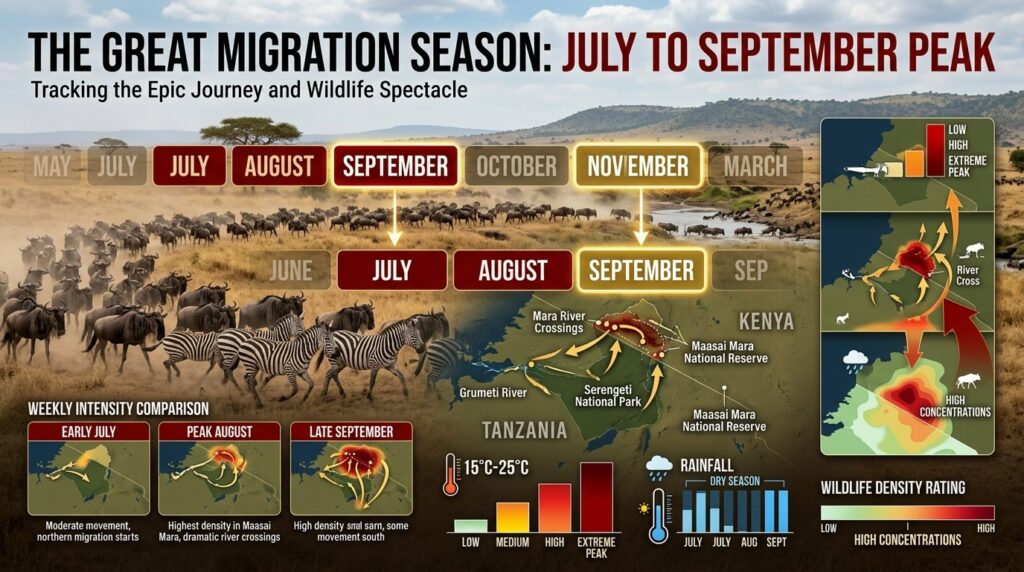
The Great Migration is the world’s most spectacular wildlife event, and July through September is when the action reaches its climax in Masai Mara. Millions of wildebeest and zebras cross from Tanzania’s Serengeti into the reserve, creating scenes of raw nature that no documentary can fully capture.
During these months, the best time to visit Masai Mara is when you want maximum action. The Mara River crossings attract massive crocodiles and hungry lions waiting for their moment. The sheer number of animals concentrated in one area creates unparalleled viewing opportunities.
July typically marks the arrival of the first herds, though the peak intensity occurs in August and September. The migration isn’t a single event but a flowing procession that continues through late September. Witnessing thousands of animals moving together is an experience that fundamentally shifts your perspective on nature.
Weather During Peak Migration
Don’t expect dry conditions during peak migration season. July and August can bring afternoon showers, though rainfall remains lighter than in the long rainy season. Mornings are typically clear and crisp, perfect for early game drives.
Temperatures hover between 15°C at night and 25°C during the day. You’ll need layered clothing to adapt to temperature swings, but the climate remains quite comfortable for safari activities. The dry grass from previous seasons makes spotting wildlife easier despite occasional rain.
Visibility is generally excellent. The occasional cloud cover provides relief from intense sun without completely obscuring views. Early morning and late afternoon offer the best conditions for both wildlife viewing and photography.
Accommodation and Tourist Crowds
This is the busiest time to visit Masai Mara. Accommodation books up months in advance, and prices peak significantly. Mid-range and budget lodges fill quickly, while luxury camps sometimes have higher rates during these months. If you’re considering this season, book 6 to 9 months ahead.
The increased tourism does impact your experience. Popular crossing points get crowded with safari vehicles. Early morning game drives give you better solitude than mid-day excursions. The trade-off is clear: you’ll see more animals but share the experience with more people.
Costs during peak migration can be 40 to 60 percent higher than shoulder seasons. If budget matters, this may not be your ideal time despite the incredible wildlife activity.
The Shoulder Months (April to June)
Lush Landscape and Exceptional Wildlife
The months from April through June offer something special that many travelers overlook. The long rains have ended, transforming the reserve into a verdant landscape dotted with wildflowers. Green grass attracts herbivores across the plains, and predators follow their prey.
The best time to visit Masai Mara for many experienced safari-goers is actually these shoulder months. Wildlife disperses across the wider reserve rather than concentrating around water sources. This means more diverse viewing and less crowded game drives. You’ll see calves born during the rainy season, adding memorable moments to your safari photos.
Lion sightings peak during these months. With prey scattered across lush grasslands, lions hunt across their territory rather than congregating at specific locations. Cheetahs, leopards, and wild dogs also become more active as they take advantage of abundant prey populations.
Pleasant Weather and Comfortable Conditions
April and May can still receive afternoon showers, particularly early in April. June transitions to drier conditions as the short rains conclude. Temperatures range from 13°C in early mornings to 27°C in afternoons, making the weather quite pleasant for outdoor activities.
The best time to visit Masai Mara for weather preferences leans toward these months. You avoid the heavy rains and the extreme cold of dry season mornings. Cloud cover provides occasional relief from intense sun, and the air smells fresh and clean after rainfall.
Humidity levels are moderate, and vegetation remains lush enough to provide natural shade during midday game drives. Early mornings feel refreshing rather than freezing, making sunrise game drives genuinely enjoyable.
Budget-Friendly Season with Fewer Tourists
Book rates drop significantly during these months. Accommodation availability is excellent, giving you freedom to choose your preferred lodge or camp. Prices can be 30 to 40 percent lower than peak migration season. The combination of exceptional wildlife viewing and comfortable pricing makes this an excellent time.
Game drives feel more intimate. You’ll encounter other vehicles at major sightings, but exploration feels less hectic. Safari guides have more time for detailed interpretations without rushing to multiple locations. Personalized service improves when lodges aren’t at capacity.
Booking 4 to 6 months in advance still gets you good options, but flexibility exists. If you find good flight deals, these months reward spontaneity better than peak season.
The Dry Season (September to October and January to February)
Optimal Wildlife Viewing Conditions
The dry seasons, particularly September through October and January through February, create ideal wildlife viewing conditions. Animals concentrate around permanent water sources, making sightings nearly guaranteed. The drier landscape means less vegetation obscures your views.
September and October offer a unique window. The Great Migration may still be present in early September, while the landscape begins drying. If you time it right, you get both migration viewing and optimal predator-prey dynamics. The best time to visit Masai Mara for combining these factors is mid to late September.
January and February bring similar advantages without the migration element. Lions become more visible as prey concentrates, and predator activity intensifies. The nitrogen-rich ash from grass fires attracts herbivores, creating feeding opportunities that draw predators.
Wildlife density peaks during dry seasons. You might see three or four lion prides in a single day. Cheetah sightings have become regular rather than rare. Wild dogs, hyenas, and jackals appear more frequently as the ecosystem concentrates around water.
Temperature and Photographic Conditions
The dry season brings cooler mornings, with temperatures dropping to 5°C to 8°C before dawn. Daytime temperatures reach 28°C to 30°C. This temperature variation demands proper packing, but many photographers prefer this period for the clear skies and golden light.
Early morning and late afternoon game drives produce spectacular photographs. The low-angle sunlight creates dramatic shadows and highlights that bring out details in animal coats and landscape textures. Visibility is typically excellent, and wildlife is most active during these cooler hours.
Clear blue skies dominate the horizon. Dust from the dry landscape creates beautiful atmospheric effects during sunrise and sunset. Photographers often rank dry season as the premium time for capturing images.
Managing Crowds and Secondary Peak Pricing
January and February represent a secondary peak season with moderate-to-high prices and noticeable tourism. September and October offer better value with fewer tourists than peak migration season. If you’re flexible, late September provides fewer crowds than early September.
Early January can feel crowded due to holiday travel. Mid-January through late January offers better balance between wildlife activity and tourist density. February remains relatively quiet compared to peak season while maintaining excellent viewing conditions.

The Rainy Seasons (Late March to May and November to December)
The Long Rains (Late March to May)
Late March through May brings the long rainy season. These months receive the heaviest rainfall, particularly April. Many consider this the challenging time to visit Masai Mara, but it offers unique advantages if you prepare properly.
Access to certain areas becomes difficult due to muddy roads. Some lodges close temporarily, and game drive accessibility decreases. However, the reserve reveals its most stunning landscape during this period. Everything is green, and bird watching enthusiasts find this season extraordinary as migratory birds arrive.
The best time to visit Masai Mara to avoid crowds is absolutely during the long rains. Minimal tourism means your safari feels like a private expedition. You’ll encounter other vehicles rarely, and guides have complete attention for your group.
Budget Advantages and Unique Experiences
Accommodation rates plummet during rainy seasons, sometimes dropping 50 percent below peak season prices. You get superior service from staff who aren’t stretched thin across multiple guests. Guides are more flexible and willing to spend extended time with specific animal sightings.
Wildlife still thrives during rainy seasons, though animals roam more widely. You need patience and skilled guides, but sightings remain regular. Newborn calves are visible, adding to the experience’s emotional depth. Bird watching reaches its peak with colorful migratory species throughout the reserve.
The landscape’s natural beauty is at its absolute best. Vegetation is lush, wildflowers bloom across grasslands, and water features showcase pristine conditions. For photographers seeking different perspectives, rainy season offers completely unique opportunities.
The Short Rains (November to December)
November brings the short rains, typically lighter than the long rainy season. December usually transitions toward drier conditions. The best time to visit Masai Mara for combining some rainfall with improving visibility is this shoulder period.
November offers interesting dynamics. The short rains reinvigorate dried grasslands, attracting some herbivore herds northward from Tanzania. This can create mini-migrations in early November. Late November and December become progressively drier and attract more tourists and wildlife.
These months are underrated for safari quality. You experience comfortable temperatures, fewer tourists than peak season, and excellent wildlife activity. It’s an excellent time for repeat visitors seeking a different perspective on the reserve.
Planning Your Masai Mara Trip by Season
Choosing Your Ideal Season Based on Priorities
The best time to visit Masai Mara depends on your priorities. Create a checklist of what matters most: seeing the migration, avoiding crowds, accessing wildlife easily, photographing in ideal light, or traveling on a budget. Your answer shapes your perfect timing.
For pure migration spectacle, July through September is non-negotiable. For intimate wildlife viewing with fewer people, April through June or November through December work beautifully. For guaranteed wildlife sightings with favorable conditions, September through October or January through February deliver.
Budget considerations often influence timing. Off-season travel in March, May, or November offers exceptional value. You’ll spend 30 to 50 percent less on accommodation and enjoy better personalized service from guides and staff.
Strategic Booking Timelines by Season
Peak migration season requires booking 6 to 9 months in advance. Shoulder seasons like April, May, September, and October need booking 4 to 6 months ahead. Off-seasons like March, November, and the rainy months allow more flexibility, though booking 2 to 3 months ahead ensures good options.
Flight availability affects timing choices too. Booking flights 3 months in advance gives better rates than last-minute bookings. Build in this consideration when selecting your season. International flights to Kenya are typically cheaper when booked during shoulder seasons.
Create a timeline working backward from your preferred travel dates. This prevents disappointment and ensures you secure the best accommodation at reasonable prices.
Essential Packing by Season
Regardless of when you visit, pack layers. Mornings are cooler than afternoons in all seasons. Waterproof jackets are essential year-round, though more critical during rainy months. Sun protection is non-negotiable regardless of season.
Binoculars, a good camera with zoom capability, and quality walking shoes serve you well regardless of timing. Neutral-colored clothing helps you blend in during game drives, improving wildlife viewing without disturbing animals.
Bring insect repellent for all seasons, particularly rainy months. Motion sickness medication helps if you’re sensitive to vehicle movement on bumpy roads. A headlamp is useful for early morning departures before sunrise.
Maximizing Your Masai Mara Experience
Game Drive Strategies Throughout the Year
Early morning game drives consistently deliver better wildlife sightings regardless of season. Animals are most active during cooler hours. Starting your drive before sunrise positions you perfectly for predator activity and unique lighting.
During peak migration, scheduled game drives around known crossing points. Talk with your guides about recent herd movements. The best time to visit Masai Mara’s river crossing locations is often early morning or late afternoon when temperatures cool and animals move toward water.
In shoulder seasons and dry months, work with guides to find concentrated wildlife. Discussing animal patterns the previous night helps guides plan optimal routes. This collaborative approach yields better results than repeating standard circuits.
Beyond Traditional Game Drives
Hot air balloon safaris provide completely different perspectives and often coincide well with travel timing. These early morning flights work particularly well during dry seasons when visibility is optimal. They’re available year-round but create the most impressive results September through February.
Walking safaris, often overlooked, work beautifully in all seasons except peak migration months. These intimate experiences reveal details that vehicle-based tours miss. Guides point out tracks, explain ecosystem interactions, and share cultural insights about Maasai traditions.
Night game drives reveal nocturnal predators and create thrilling experiences. Hyenas, leopards, and other nighttime hunters become visible. This activity is available year-round and creates wonderful memories regardless of your chosen season.
Cultural Immersion and Maasai Connection
Visiting nearby Maasai villages enriches your understanding of coexistence between people and wildlife. These visits work well throughout the year, though dry seasons allow more comfortable village exploration. Cultural exchanges happen year-round, connecting you to communities that have shared this landscape for generations.
Guides from local Maasai communities often provide deeper insights than external guides. Their perspectives on wildlife behavior, seasonal patterns, and ecosystem relationships add profound value to your experience, whatever season you choose.
Common Questions About Timing Your Visit
Is the best time to visit Masai Mara based solely on the migration? Not necessarily. While the migration is spectacular, many experienced travelers find other seasons equally rewarding for different reasons. Consider what specific experiences matter most to you.
Can you see wildlife during the rainy seasons? Absolutely. Animals are present year-round. Rainy season viewing requires patience and flexibility, but sightings happen regularly. Guides know where to look when rainfall spreads animals across the reserve.
What if you visit Masai Mara twice? Many safari enthusiasts visit during different seasons to experience the reserve’s full range. Spring visits reveal lush landscapes and calves. Migration months showcase nature’s drama. Dry months offer concentrated wildlife viewing. Each experience offers distinct rewards.
FAQs
What is the absolute best time to visit Masai Mara for the Great Migration?
July through September is when the Great Migration concentrates in Masai Mara. August and September are peak months for the dramatic river crossings. However, book accommodation well in advance as these are the most popular months, with prices at their highest and limited availability.
When is the best time to visit Masai Mara if I want fewer tourists and lower prices?
March, May, and November offer the best value with minimal crowds. These shoulder seasons provide excellent wildlife viewing but with significantly reduced tourism. You’ll enjoy more personalized service and better opportunities for exclusive wildlife moments. Accommodation prices drop 30 to 50 percent compared to peak season.
Is it possible to visit Masai Mara during the rainy season, and should I bother?
Yes, you can visit during rainy seasons (late March to May and November to December). Many travelers skip these months, making them ideal for budget-conscious explorers seeking solitude. The landscape is most beautiful, and wildlife is present and active. Weather can be challenging, but the rewards are exceptional.
Which season offers the best conditions for wildlife photography at Masai Mara?
September through February provides the best light and clearest visibility for photography. The low-angle morning and evening sunlight creates dramatic conditions. Dry season months offer the most consistent clear skies, though dry season game drives mean encountering other photographers at popular sighting locations.
Can you see lions and other big cats throughout the year, or are there specific best times?
Lions and other big cats are present year-round, but visibility varies by season. Dry season (September to February) concentrates them around water sources, improving sighting chances. The long rainy season (April-May) disperses them more widely, requiring more searching but offering intimate encounters. Lion sightings increase during all seasons compared to other African reserves.
Conclusion
The best time to visit Masai Mara depends on what you call it. Whether you’re chasing the thunderous hooves of migrating wildebeest, seeking intimate wildlife encounters in empty grasslands, or hoping to experience this iconic reserve without fighting tourist crowds, the answer exists somewhere in the calendar.
What makes Masai Mara legendary isn’t just its wildlife or landscape. It’s the reserve’s ability to transform itself throughout the year, offering completely different experiences depending on when you arrive. July’s migration spectacle bears no resemblance to November’s serene solitude. September’s predator activity differs from April’s verdant beauty. Each season tells its own story.
Your ideal timing depends on honest answers to three questions. First, what experiences matter most to you? Second, when can you realistically travel? Third, how much are you willing to invest? Answer these genuinely, and your perfect timing becomes clear.
Don’t overthink it. The best time to visit Masai Mara is ultimately whenever you can get there. Animals are present year-round. The landscape shifts with seasons, but nature’s drama unfolds constantly. Even during “off-season” months, Masai Mara delivers moments that change travelers forever.
Start planning now. Book your flights, reserve your accommodation, and prepare yourself mentally for an experience that will reshape how you see the natural world. Africa’s greatest reserve is waiting for you.
Read More: Lake Resorts for Relaxing Waterfront Vacation Experiences Together

I am a travel enthusiast who loves exploring India’s beautiful destinations, culture, history, food, and hidden places. Through my travel website, I aim to help travelers discover amazing places in India and plan memorable trips with useful travel information and tips.