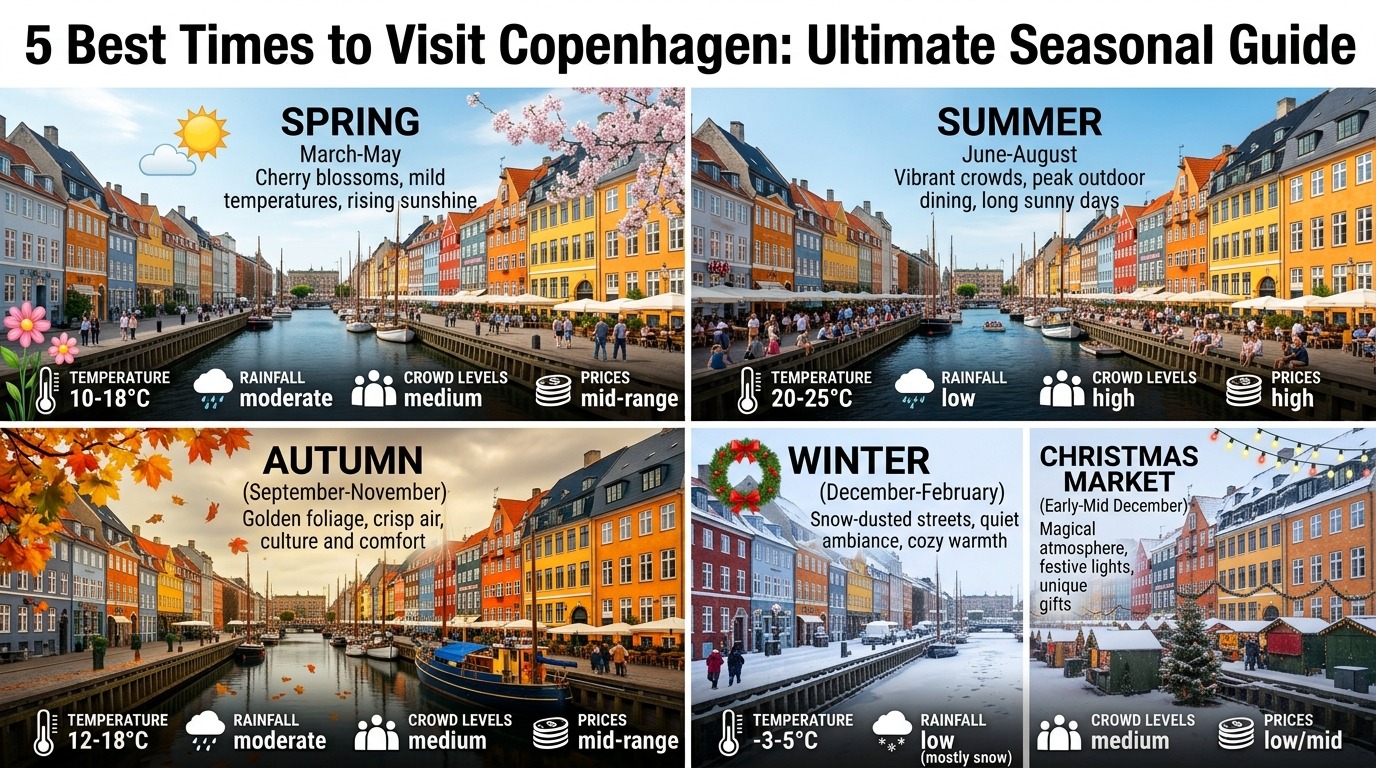
Copenhagen is one of Europe’s most enchanting destinations, but knowing when to visit can transform your trip from good to absolutely unforgettable. Whether you’re a budget traveler or someone seeking the perfect photo opportunity, the best time to visit Copenhagen depends entirely on what experience you’re after.
Understanding Copenhagen’s Climate
Before we dive into the best times to visit Copenhagen, let’s talk about what you’ll actually encounter throughout the year. Denmark’s capital sits at around 55 degrees north latitude, which means summers are beautifully long and daylit, while winters bring that dramatic Nordic darkness everyone talks about.
The weather patterns here follow a predictable rhythm. Spring arrives tentatively around April, summer explodes into life from June through August, autumn creeps in during September, and winter settles in from December onwards. Each season offers distinct advantages and challenges for travelers.
Copenhagen experiences moderate temperatures year-round. Summer peaks around 20-21°C (68-70°F), while winter dips to 0-3°C (32-37°F). Rainfall is fairly consistent throughout the year, with no single “rainy season” to avoid. This means you can plan around other factors like crowds, costs, and specific events.
Spring (April to May): The Awakening Season
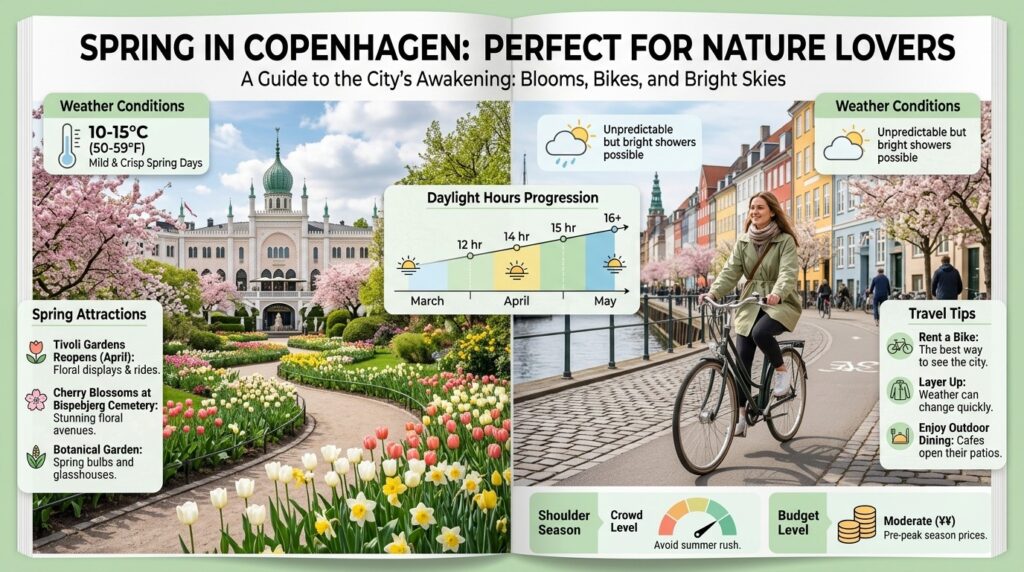
Spring is when Copenhagen shakes off winter and comes alive with possibility. Many travelers consider late April through May as the best time to visit Copenhagen if you want pleasant weather without the summer crush.
During spring, Copenhagen’s parks explode with color. Tivoli Gardens opens for its spring season, with fresh flowers blooming everywhere you look. The city feels rejuvenated, and locals emerge from their homes with genuine excitement about the warmer months ahead.
Temperatures range from 10-15°C (50-59°F), which means you’ll want layers but won’t freeze. Spring is surprisingly sunny compared to other seasons. The daylight hours extend significantly, giving you more time to explore before darkness falls around 9 PM in late May.
Spring Travel Benefits
The biggest advantage of visiting Copenhagen in spring is escaping the peak season crowds. Tourist numbers haven’t exploded yet, so you’ll actually enjoy outdoor cafes without feeling squeezed. Restaurant reservations are easier to secure, and accommodation prices sit in a comfortable middle ground, not budget-level but not peak-season expensive either.
Spring is perfect for cycling, which is essentially the unofficial sport of Copenhagen. The mild temperatures make pedaling through Nyhavn or towards the Louisiana Museum of Modern Art genuinely pleasant rather than a sweaty ordeal.
Spring Drawbacks
The trade-off is weather unpredictability. Spring in Copenhagen can be moody. You might get glorious sunshine one day and grey skies with rain the next. Always pack a waterproof jacket, no exceptions. Some shorter days mean you’ll lose daylight around 9 PM in early May, though this gradually improves as the month progresses.
Also, late spring accommodations can be limited if you’re traveling during school holidays or popular weekends. Planning ahead becomes important for securing the best rates and availability.
Summer (June to August): The Peak Season
Summer is unquestionably when most people visit Copenhagen, and for good reason. Long daylight hours, warm weather, and vibrant cultural events make summer the most popular choice. But is summer really the best time to visit Copenhagen? That depends on your priorities.
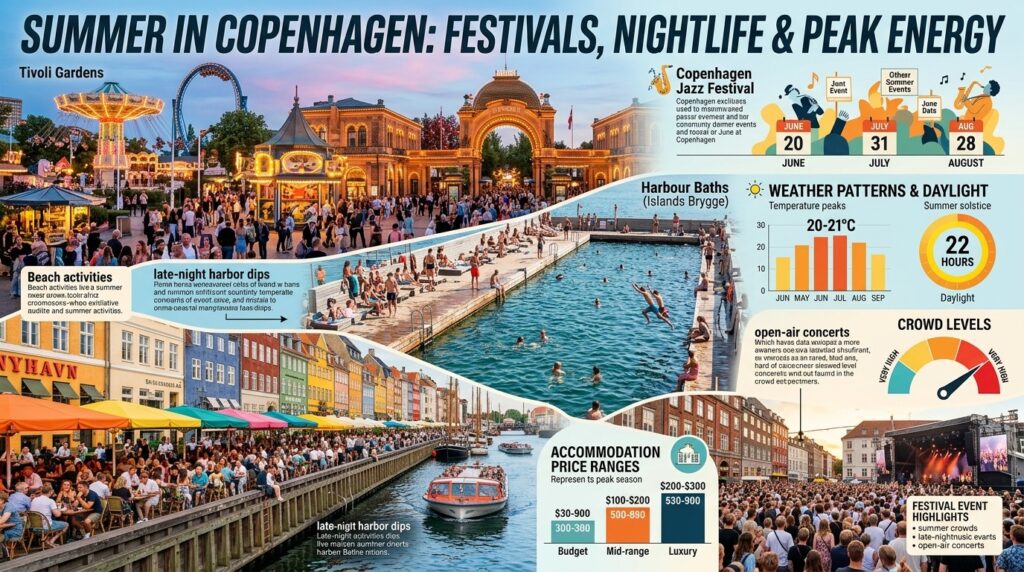
From June through August, you get nearly round-the-clock daylight. In late June, sunset doesn’t occur until nearly 11 PM. This extended daylight means you can pack incredible amounts of exploration into each day. Everything feels possible when darkness doesn’t fall until late evening.
Temperatures reach their peak at around 20-21°C (68-70°F), which feels pleasantly warm for Scandinavian standards. This is ideal weather for outdoor activities, beach visits, and rooftop bar hopping in the trendy neighborhoods.
Summer’s Magnetic Appeal
Summer brings Copenhagen’s festival season to life. Roskilde Festival typically happens in late June and becomes a pilgrimage for music lovers. The Copenhagen Food Festival in August showcases Nordic cuisine at its finest. Smaller street festivals pop up constantly throughout the summer months.
The beaches become genuinely swimmable. Amager Beach Park fills with sunbathers and swimmers. It won’t feel like Mediterranean waters, but the temperature climbs enough for a proper beach experience. Many locals actually swim in the harbor too, and the Harbour Baths provide a unique urban swimming experience.
Outdoor dining reaches peak perfection. Restaurant patios overflow with people. The vibrant street culture comes alive. Shopping in Stroget, the main pedestrian shopping street, becomes a full sensory experience with street performers and buskers adding energy to every corner.
The Summer Tradeoff: Crowds and Costs
Here’s the reality: summer is crowded. Accommodation prices spike significantly. A decent hotel room that costs 150 EUR in spring might run 250+ EUR in July. Popular attractions feature long queues, especially Tivoli Gardens and the Round Tower.
Popular restaurants require reservations weeks in advance. If you try walk-in dining at trendy spots, expect 45-minute waits. This level of crowding can diminish the Copenhagen experience if you prefer a more intimate exploration.
Summer weather, while warm, isn’t guaranteed to be perfect. You might encounter rainy spells lasting several days. The upside? Cooler temperatures make rain more refreshing than unpleasant.
Autumn (September to October): The Hidden Gem Season
If you asked Copenhagen locals when the best time to visit Copenhagen actually is, many would whisper: autumn. September and October offer something rare: the “sweet spot” that experienced travelers desperately seek.
Temperatures drop to a comfortable 12-17°C (54-63°F). This range means you can comfortably walk all day without overheating. Layers work perfectly here. The summer crowds have largely dispersed, but weather remains pleasant enough for serious exploration.
Autumn light in Copenhagen deserves its own poetry. The quality of sunlight changes subtly, becoming softer and more golden. Photographers and artists swear by autumn light for capturing the city’s true character. This golden hour extends beautifully through afternoon hours.
Why Autumn Travelers Love Copenhagen
Accommodation prices drop noticeably from summer peaks. You can secure excellent hotels at reasonable rates. Restaurants return to manageable wait times. Popular attractions become genuinely enjoyable again without overwhelming crowds queuing everywhere.
The cultural season kicks into high gear. Copenhagen Film Festival happens in September, attracting cinephiles globally. The city’s many museums and galleries buzz with new exhibitions. Copenhagen Fashion Week occasionally aligns with autumn, bringing creative energy throughout the city.
Autumn festivals bring unique Danish traditions. Restaurant Week offers incredible value menus at top establishments. The food scene reaches new creative heights as chefs celebrate seasonal ingredients. This is genuinely one of the best eating seasons in the city.
Autumn’s Subtle Challenges
Daylight decreases noticeably. September offers reasonable hours, but by late October, sunset arrives around 6 PM. This doesn’t sound dramatic until you realize how much this compresses your sightseeing window compared to summer.
Weather becomes increasingly unpredictable. Autumn rain increases compared to spring. Wind picks up frequently. You’ll need proper waterproof jackets and sometimes accept that outdoor plans get adjusted due to weather.
Some smaller attractions have reduced hours or close for the season. A few outdoor activities become less appealing as temperatures drop and daylight shrinks.
Winter (November to February): The Nordic Romance
Winter divides Copenhagen travelers into two camps: those who find the Nordic darkness depressing and those who find it atmospheric and magical. Winter is definitely not the best time to visit Copenhagen for everyone, but for the right person, it’s absolutely perfect.
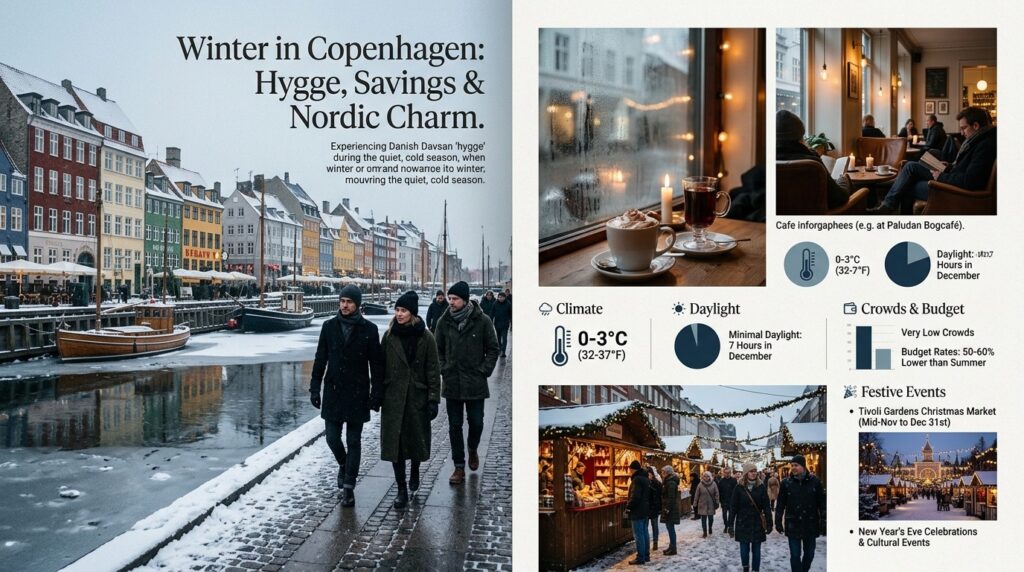
From November through February, temperatures drop to 0-3°C (32-37°F). Snow isn’t guaranteed, but when it appears, Copenhagen transforms into something from a storybook. The city’s historic architecture looks particularly dramatic dusted with snow. Frozen canals and frost-covered parks create scenes of stunning beauty.
Daylight becomes scarce. December brings only about 7 hours of daylight. This massive reduction takes adjustment, but it creates the cozy Nordic atmosphere that defines Danish culture.
Winter’s Unexpected Magic
Winter is when Copenhagen feels most authentically Danish. Hygge, that untranslatable concept of cozy comfort, reaches its peak. Locals huddle in cafes with hot chocolate. Candlelit interiors glow warmly against dark exteriors. This is when you experience Copenhagen’s true soul.
Christmas markets transform the city into a winter wonderland. Tivoli’s Christmas season runs from mid-November through early January with incredible decorations, special entertainment, and holiday markets. Stroget gets decked out with dramatic holiday displays. The festive atmosphere genuinely rivals anything you’ll find elsewhere.
Winter hotel rates hit their lowest point of the year. Accommodation can cost half what you’d pay in summer. Flights often drop significantly too. If budget is your primary concern, winter is hands-down the best time to visit Copenhagen economically.
Cultural activities flourish indoors. Museums, galleries, theaters, and concert halls offer world-class programming. The Royal Theatre season kicks into high gear. This is the best time to catch performances of The Nutcracker and other seasonal productions.
Winter Reality Check
The darkness is legitimately intense. If you’re sensitive to reduced daylight, winter in Copenhagen can hit hard. Seasonal Affective Disorder becomes a real consideration for some travelers. The psychological impact of only 7 hours of daylight shouldn’t be underestimated.
Winter weather means you need proper cold-weather gear. Standard jackets don’t cut it. Thermal layers, quality boots, and wind-resistant outerwear become non-negotiable. The dampness of the Baltic winter cold penetrates differently than dry continental cold.
Some outdoor attractions operate on limited schedules or close entirely. Beach activities essentially disappear. Open-water harbour swimming becomes strictly for the brave. Cycling, while possible, becomes unpleasant in icy conditions.
The Absolute Best Time: Our Expert Recommendation
After analyzing weather, crowds, costs, and experiences, we’d argue that late September through early October represents the best time to visit Copenhagen for most travelers.
Here’s why: You get genuine autumn weather that’s perfectly comfortable for exploring (12-17°C), you dodge the summer crowds entirely, accommodation prices drop significantly from peak season, cultural events reach an exciting crescendo, and the city maintains enough daylight for thorough exploration without the midnight sun intensity of summer.
If summer cultural events are your priority, June represents the best time to visit Copenhagen for festival enthusiasts, despite the crowds. If budget is paramount, January through February offers maximum savings. If you want the most daylight hours possible, late May through June provides nearly 22-hour daylight.
The key insight: there is no single “best” time universally. The best time to visit Copenhagen depends entirely on your priorities and what experience you’re seeking.
Planning Your Copenhagen Visit
Booking Accommodation
Accommodation in Copenhagen ranges from budget hostels around 25-40 EUR per night to luxury hotels exceeding 400 EUR per night. Mid-range hotels (100-150 EUR) offer genuine quality for most travelers.
Book at least 2-3 months in advance for summer travel. For shoulder seasons (spring and autumn), 4-6 weeks advance booking typically suffices. Winter travel often allows booking just 2-3 weeks ahead without significant price premiums.
Transportation Around the City
Copenhagen’s public transportation system is genuinely world-class. The metro, buses, and trains connect efficiently. A Copenhagen Card provides unlimited transportation plus museum entries. Most travelers find cycling the most authentic transportation experience. Bike rentals run 10-15 EUR daily.
Budget Considerations
Daily budgets vary dramatically by season. Summer travelers should budget 80-120 EUR daily for mid-range experiences. Spring and autumn travelers can comfortably manage 60-90 EUR daily. Winter travelers might spend 50-80 EUR daily thanks to reduced accommodation and dining costs.
Restaurant meals range from casual lunch spots at 15-25 EUR to fine dining exceeding 80 EUR per person. Museum entries typically cost 12-18 EUR.
FAQs
When is the absolute cheapest time to visit Copenhagen?
January through February offers rock-bottom prices. Winter accommodation prices drop 50-60% from summer levels. This appeals strongly to budget-conscious travelers who can handle the cold and darkness.
What’s the best time for nice weather in Copenhagen?
Summer (June-August) guarantees the warmest temperatures around 20-21°C. Late spring (May) and early autumn (September) offer pleasant 15-17°C weather without summer crowds. Both represent excellent compromises for weather quality.
Is Copenhagen worth visiting in winter?
Absolutely, if you appreciate Nordic culture and festive atmospheres. Winter brings Christmas markets, holiday decorations, lower prices, and genuine hygge experiences. The darkness and cold aren’t drawbacks for everyone; many travelers find them atmospheric and romantic.
Should I visit Copenhagen during summer despite the crowds?
If you want maximum daylight hours (22 hours in June), cultural festivals, beach swimming, and outdoor dining at its peak, then yes. Just book everything in advance and expect crowds and higher costs as the trade-off.
What month has the best balance of weather, prices, and crowds?
September represents the sweet spot for most travelers. It offers comfortable temperatures (12-17°C), significantly lower prices than summer, dispersed crowds, excellent cultural events, and enough daylight for full-day exploration without summer’s intensity.
Conclusion
The best time to visit Copenhagen ultimately reflects your personal priorities. Weather perfectionists should target late May or September. Festival enthusiasts belong in June. Budget travelers thrive in winter. Beach lovers maximize July and August.
Copenhagen rewards multiple visits across different seasons. Each season reveals distinct facets of this enchanting city’s character. Whether you chase midnight sun, autumn gold, winter sparkle, or spring awakening, Copenhagen delivers unforgettable experiences throughout the year.
Start planning your Copenhagen adventure today. The question isn’t whether to visit, but when to experience this remarkable Danish capital at its absolute best for you.

I am a travel enthusiast who loves exploring India’s beautiful destinations, culture, history, food, and hidden places. Through my travel website, I aim to help travelers discover amazing places in India and plan memorable trips with useful travel information and tips.