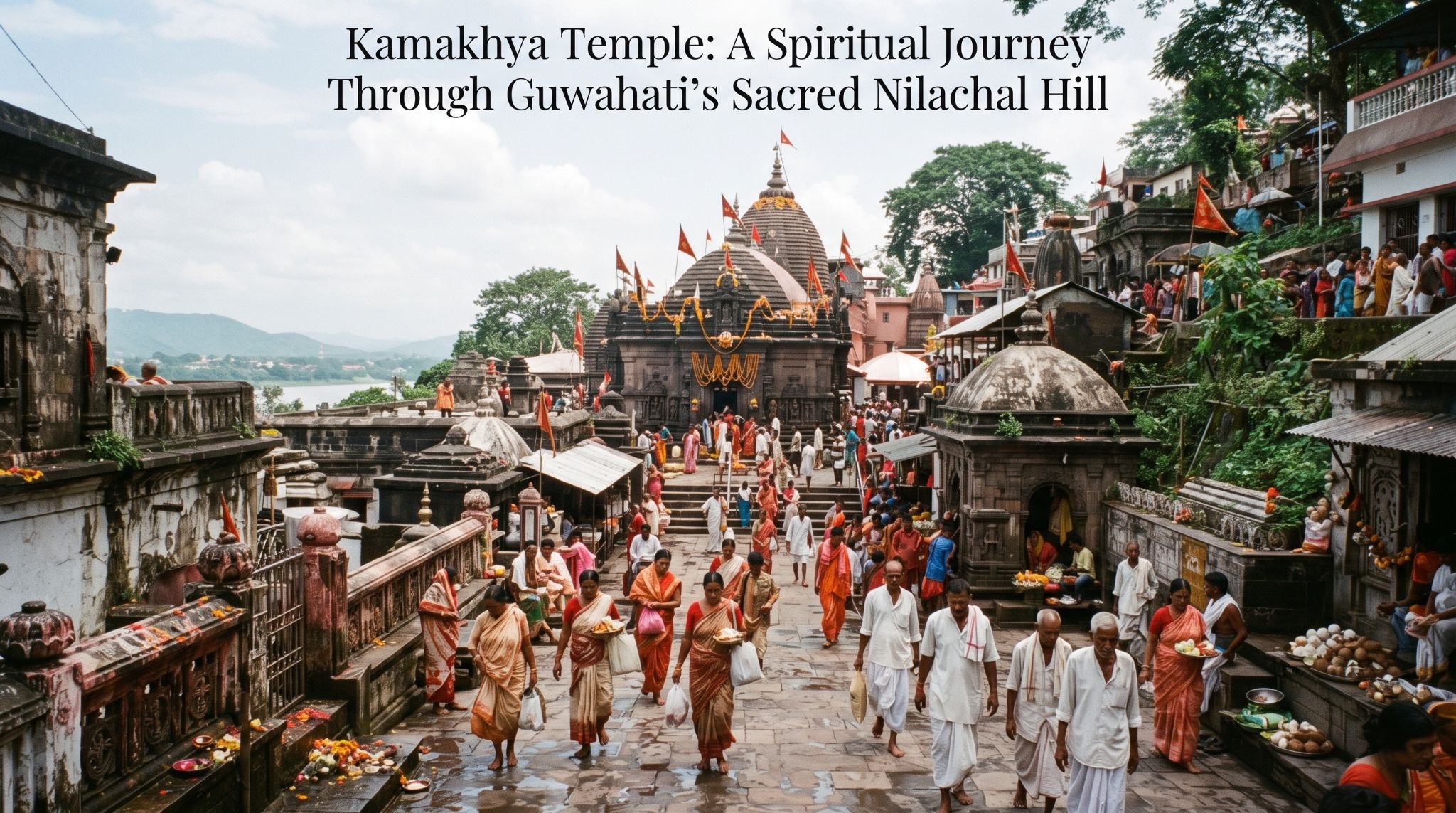
High above the busy streets of Guwahati, Nilachal Hill offers a very different atmosphere—one shaped by devotion, ancient traditions, quiet rituals, and the steady movement of pilgrims. At the heart of this sacred hill stands one of Assam’s most important religious landmarks, a place where mythology, Shaktism, Tantric traditions, and the cultural identity of the region come together.
What makes this shrine particularly distinctive is that the presiding goddess is not represented by a conventional idol. Instead, devotees worship a naturally formed stone associated with the yoni, kept within the sanctum and nourished by an underground spring. For travellers, the visit is therefore about much more than seeing a historic building; it is an opportunity to experience a living centre of faith that remains deeply connected to Assam’s traditions.
Where Is the Temple Located?
The shrine stands on Nilachal Hill in the western part of Guwahati, Assam. Its elevated position gives the surrounding area a distinctly different character from the city below, while its location within Guwahati makes it relatively convenient to include in a wider city itinerary.
The hill is not home to only one shrine. The wider complex includes several temples associated with the ten Mahavidyas as well as a number of Shiva temples, making the area particularly significant for devotees interested in Shaktism and related traditions.
The History Behind the Sacred Hill
The history of the site is closely intertwined with legend, religious literature, and later historical rebuilding. References to the deity and sacred site appear in several religious texts, while traditions also suggest influences from older local and tribal practices.
The present structure has a clearly documented medieval history. It was rebuilt in 1565 during the reign of Koch king Naranarayan, using remains associated with an earlier structure at the site. The reconstruction produced an architectural style that later became known as the Nilachala style.
The Legend of Sati
One of the best-known traditions surrounding the shrine comes from the story of Sati and Shiva. According to religious tradition, after Sati’s death, Shiva carried her body, and Vishnu used his discus to divide it into parts. The places where those parts are believed to have fallen became associated with Shakti Peethas.
At this site, tradition identifies the sacred yoni with the place where part of Sati’s body fell. The story remains central to the religious identity of the shrine, although it belongs to sacred tradition rather than verifiable historical record.
What Makes the Shrine Unique?
The most striking feature for many visitors is the form in which the goddess is worshipped.
There is no conventional statue of the presiding deity in the inner sanctum. Instead, the sacred object is a yoni-shaped stone associated with the goddess, accompanied by a natural underground spring. This distinctive form of worship is an important expression of Shakti—the divine feminine principle.
The shrine is also strongly associated with Tantric Shaktism. The surrounding hill contains shrines connected with several forms of the Divine Mother.
Visitors who are unfamiliar with these traditions may find the experience quite different from visiting a conventional temple. It is best approached with patience, respect, and an understanding that the rituals are primarily religious practices rather than tourist performances.
Architecture of the Nilachala Style
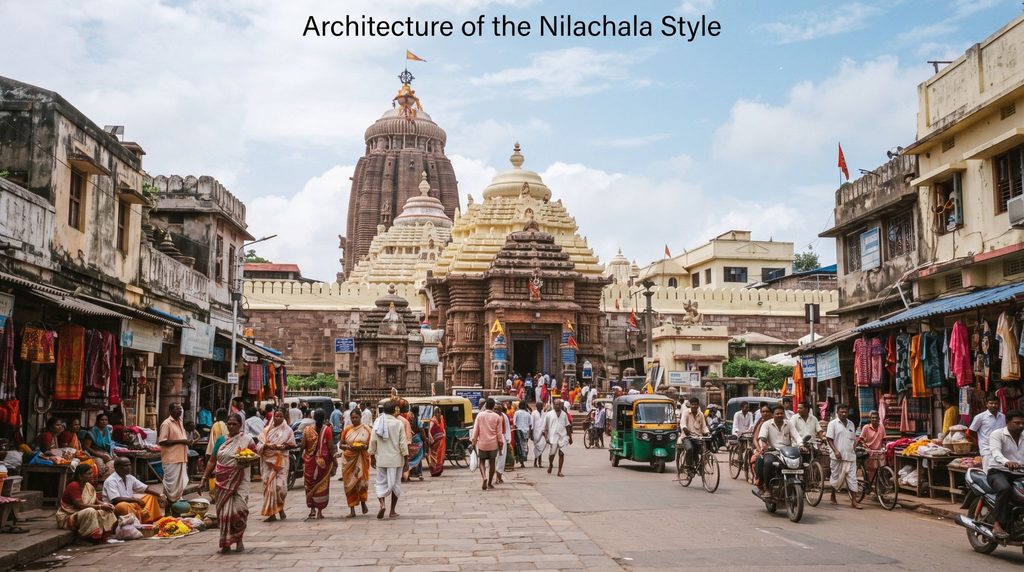
The temple’s architecture is as distinctive as its religious traditions. The present structure combines elements associated with North Indian Nagara architecture and a dome form influenced by Saracenic techniques. This combination is known as the Nilachala style.
Its beehive-like central superstructure immediately sets it apart from many other major Hindu temples in India. The architectural character reflects the rebuilding undertaken during the Koch period, while later additions and renovations have contributed further layers to the wider complex.
Rather than viewing the building only as a backdrop to the pilgrimage, travellers interested in architecture should spend a few minutes observing its exterior details, proportions, sculptural elements, and distinctive dome.
Ambubachi Mela and the Celebration of Fertility
The annual Ambubachi Mela is the most famous festival associated with the shrine. It is connected with the symbolic menstruation of the goddess and is traditionally understood as a celebration of fertility and the generative power of nature.
During the festival period, the temple observes a period of closure before reopening after the prescribed rituals. The event attracts large numbers of pilgrims and sadhus and transforms the atmosphere around Nilachal Hill.
For travellers considering a visit specifically during Ambubachi, the festival can offer an extraordinary cultural experience, but it is not the easiest time for a relaxed pilgrimage. Crowds, restricted access, and changes to normal arrangements should be expected.
Best Time to Visit
The best time depends largely on what kind of experience you want.
For a quieter visit, consider travelling outside the major festival periods and checking the temple’s current visitor arrangements before setting out. Assam’s climate changes considerably through the year, so weather should also be considered when planning time outdoors around Guwahati.
June is particularly important because of Ambubachi Mela. The festival attracts visitors and pilgrims from many places, but the popularity also means the hill can become extremely busy.
| Travel purpose | What to consider |
| Peaceful pilgrimage | Choose a period outside major festivals and check current temple notices |
| Ambubachi experience | Visit during the festival period, but prepare for very heavy crowds and restricted access |
| Exploring Nilachal Hill | Allow enough time to visit the surrounding shrines as well as the main temple |
| First-time Guwahati trip | Combine the visit with other cultural and riverside attractions in the city |
Because temple schedules and special arrangements can change, checking the latest official notice before travelling is more reliable than depending on an old timetable.
How to Reach the Temple
Guwahati is the main gateway for travellers visiting the shrine.
By Air
Lokpriya Gopinath Bordoloi International Airport serves Guwahati and provides the principal air connection for visitors arriving from other parts of India. From the airport, travellers can continue towards the city and Nilachal Hill by road.
By Train
Guwahati is an important railway destination in northeastern India, and Kamakhya Railway Station is particularly convenient for visitors travelling to the hill. From the railway area, the remaining journey can be completed by local transport or taxi.
By Road
The temple is accessible from different parts of Guwahati by road. Taxis, app-based cabs where available, and local transport can be used depending on where you are staying.
During major festivals, however, traffic and crowd-management arrangements can affect the final approach.
Temples and Places to Explore Around Nilachal Hill
One advantage of visiting the complex is that you can discover several associated shrines in the same broader area.
The Dashamahavidya Temples
The hill contains shrines associated with the ten Mahavidyas, including Kali, Tara, Tripura Sundari, Bhuvaneshwari, Bhairavi, Chhinnamasta, Dhumavati, Bagalamukhi, Matangi, and Kamala.
These shrines provide a deeper understanding of the religious traditions associated with the hill and are worth exploring if you have sufficient time.
Shiva Temples
Several Shiva shrines are also found around Nilachal Hill, including Kameswara, Siddheswara, Kedareswara, Amratokeswara, Aghora, and Kautilinga.
Exploring these smaller temples can make the visit feel less hurried and gives you a broader sense of the sacred landscape.
Places to Visit in and Around Guwahati

A pilgrimage to Nilachal Hill can easily be combined with other attractions in and around Guwahati.
Umananda Temple
Set on Peacock Island in the Brahmaputra, Umananda is a Shiva temple and one of Guwahati’s distinctive religious landmarks.
Navagraha Temple
Located on Chitrachal Hill, the Navagraha Temple is dedicated to the nine planetary deities and offers another interesting stop for travellers exploring Guwahati’s hilltop shrines.
Hajo
For a longer excursion, Hajo offers a remarkable religious landscape where Hindu, Muslim, and Buddhist traditions have historical connections. The Hayagriva Madhava Temple is one of its best-known attractions.
Practical Tips for Visitors
A little preparation can make the pilgrimage considerably easier.
- Dress respectfully. Choose comfortable, modest clothing suitable for a religious setting.
- Allow extra time. Queues and crowd levels can vary, particularly around festivals.
- Check official notices. Special closures, access restrictions, and darshan arrangements may change.
- Be prepared to remove footwear. Follow the temple’s designated footwear arrangements.
- Carry essentials lightly. Avoid bringing unnecessary belongings into crowded religious spaces.
- Respect photography restrictions. Follow instructions from temple authorities.
- Keep expectations realistic. This is an active place of worship first and a tourist attraction second.
Where to Stay
Guwahati provides the widest choice of accommodation, from budget properties and guesthouses to more comfortable hotels. Staying in Guwahati also makes it easier to combine the pilgrimage with sightseeing elsewhere in the city.
If your main priority is an early visit, choosing accommodation with convenient road access towards Nilachal Hill can save time.
FAQs
Is the shrine open every day?
The temple generally operates daily, but opening arrangements can change during festivals, special rituals, and other religious observances. Always check the latest official notice before travelling.
Why is there no conventional idol of the goddess?
The presiding deity is worshipped through a sacred yoni-shaped stone associated with a natural underground spring rather than through a conventional anthropomorphic idol.
What is Ambubachi Mela?
Ambubachi Mela is the major annual festival associated with the shrine. It symbolically marks the menstruation of the goddess and celebrates fertility and the creative forces of nature.
Can visitors explore other temples on Nilachal Hill?
Yes. The wider sacred landscape includes shrines associated with the Dashamahavidyas and several forms of Shiva, so visitors can explore more than the principal shrine.
How much time should I allow for a visit?
A full day is a practical amount of time if you want to experience the principal shrine and explore several surrounding temples without rushing.
Conclusion
A visit to this sacred hilltop shrine is best understood as a journey into one of Assam’s living religious traditions. Its unusual form of worship, layered history, distinctive Nilachala architecture, and surrounding network of shrines make it far more than a single monument to photograph and leave behind.
Whether you arrive as a pilgrim, a traveller interested in Indian culture, or someone exploring Guwahati for the first time, approach the experience with time and respect. Check the latest temple notices, plan around festival crowds when necessary, and leave room to explore the wider hill. That slower approach reveals what makes this place enduringly significant: its traditions are not preserved behind glass—they continue to shape everyday spiritual life.
Read More:Badrinath Temple Travel Guide: A Complete Pilgrimage Journey

I am a travel enthusiast who loves exploring India’s beautiful destinations, culture, history, food, and hidden places. Through my travel website, I aim to help travelers discover amazing places in India and plan memorable trips with useful travel information and tips.