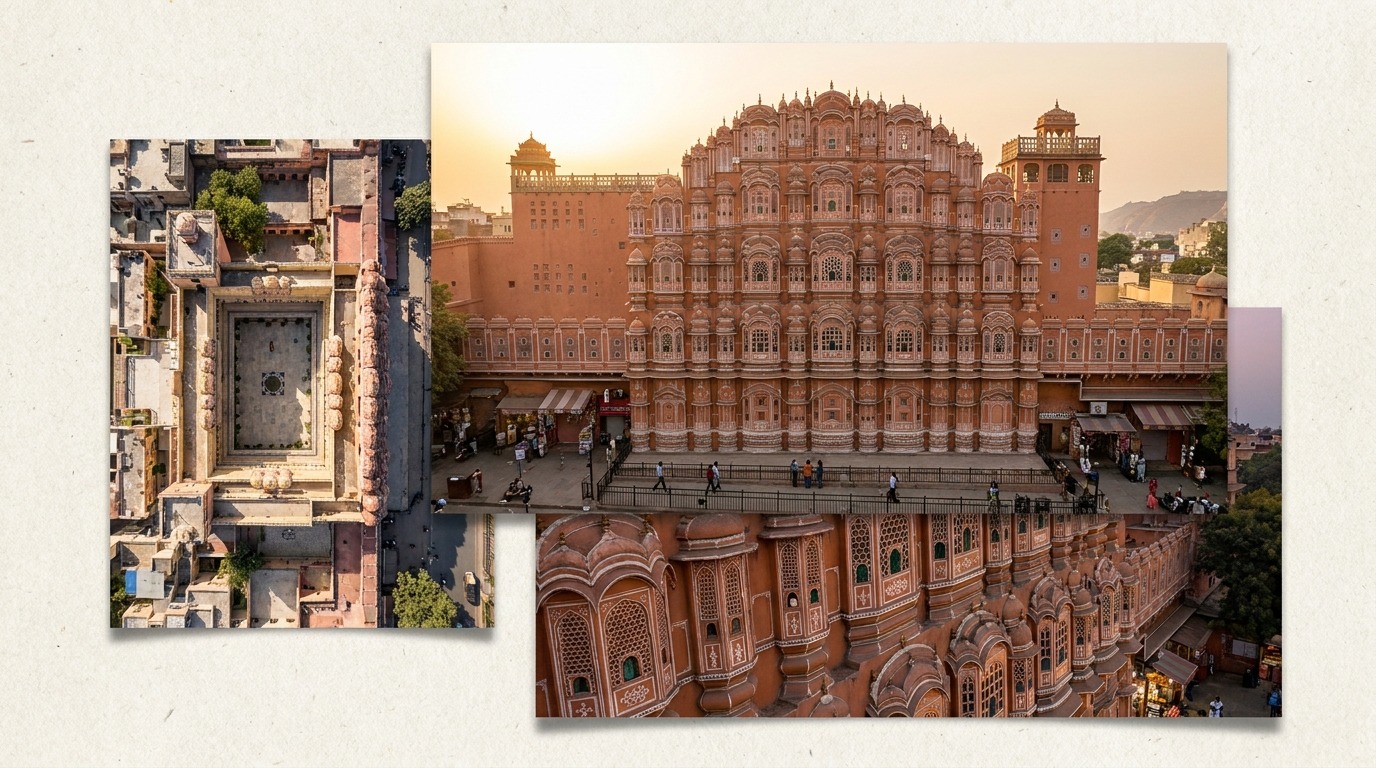
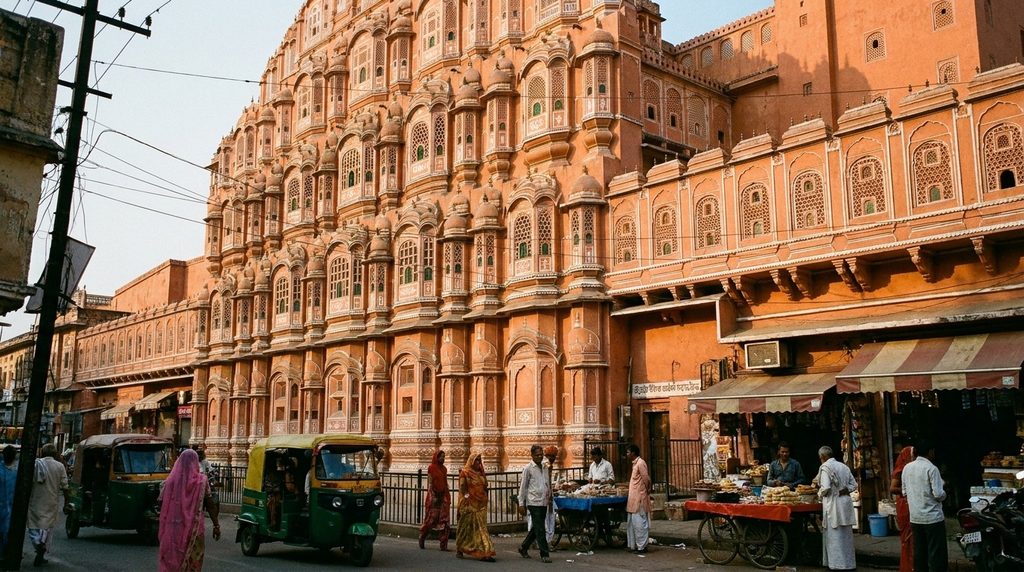
If you have seen photographs of Jaipur, chances are you have already seen the delicate pink façade of Hawa Mahal. With its honeycomb-like appearance, rows of jharokhas and distinctive five-storey design, the Palace of Winds has become one of the defining sights of the Pink City. But Hawa Mahal is more than a beautiful backdrop for photographs. Its design tells an interesting story about royal life, architecture and the way people once experienced Jaipur from behind its screened windows.
Built in 1799 by Maharaja Sawai Pratap Singh, Hawa Mahal was designed to allow women of the royal household to observe everyday life and public celebrations on the streets without being seen from outside. Its many small windows also helped air circulate through the structure, giving the monument its famous name. Today, it remains one of Jaipur’s most recognisable landmarks and fits naturally into a sightseeing day around the historic Pink City.
Hawa Mahal at a Glance
| Travel Detail | Information |
| Location | Jaipur, Rajasthan |
| Also known as | Palace of the Winds |
| Built | 1799 |
| Builder | Maharaja Sawai Pratap Singh |
| Structure | Five-storey façade |
| Main architectural feature | Jharokhas with latticework |
| Main purpose | Royal women could observe street life while remaining screened from view |
| Architecture | A blend of Rajput and Mughal influences |
| Best paired with | City Palace, Jantar Mantar and the old-city markets |
The monument is centrally located in Jaipur’s historic area, making it easy to combine with several other major attractions in the Pink City.
Hawa Mahal History
Hawa Mahal was constructed in 1799 during the reign of Maharaja Sawai Pratap Singh. Rajasthan Tourism describes him as a poet king, and the building served as a retreat as well as a place from which the royal women could watch activity in the streets.
The façade was carefully designed around the traditions of royal privacy. Its numerous jharokhas allowed women of the royal household to look down onto the streets while remaining largely hidden from public view. This was particularly useful during festivals, processions and other occasions when Jaipur’s streets were busy.
The building is also closely associated with Jaipur’s visual identity. Its pink sandstone construction and elaborate façade fit naturally into the architectural character of the old city.
Why Is Hawa Mahal Called the Palace of Winds?
The name Hawa Mahal literally means “Palace of the Winds.” The name comes from the building’s extensive use of small windows and openings, which encourage air movement through the structure. Rajasthan Tourism notes that the ventilation was an important reason for the palace’s name.
This is one of the details that makes Hawa Mahal particularly interesting. The windows were not simply decorative. They were part of the building’s practical design, while the latticework also supported the privacy expected of the royal household.
Hawa Mahal Architecture
The first thing most visitors notice is the extraordinary façade. Seen from the street, Hawa Mahal has a distinctive honeycomb-like appearance created by its repeated windows and ornamental details.
The monument combines elements associated with Rajput and Mughal architecture. Rajasthan Tourism highlights features such as domes, canopies and fluted pillars alongside arches, stone inlay and decorative work. The overall design creates a façade that looks light and intricate despite being part of a substantial historic structure.
The Famous Jharokhas
The jharokhas are the defining feature of Hawa Mahal. These small projecting windows with latticework provided views of the city while helping maintain privacy.
Their arrangement is also responsible for the monument’s instantly recognisable appearance. From a distance, the repeated openings make the façade resemble a carefully patterned honeycomb.
The Krishna Connection
Rajasthan Tourism notes that Hawa Mahal is dedicated to Lord Krishna and that its form is said to resemble Krishna’s crown. This helps explain some of the unusual visual qualities of the building and its decorative character.
What to See Inside Hawa Mahal
Many visitors first experience Hawa Mahal from the street because its famous façade is especially impressive from outside. However, the interior allows you to appreciate the building from another perspective.
You can see the arrangement of the windows and passages more closely and understand how the structure was designed around airflow, privacy and views over the city. Rajasthan Tourism also notes that visitors can climb to the upper levels for views from the windows.
The contrast is worth noticing: the exterior looks richly detailed and almost theatrical, while the interior experience helps explain how the building actually functioned.
Best Time to Visit Hawa Mahal
For a more comfortable Jaipur sightseeing experience, the cooler months are generally the easiest time to explore the city’s historic attractions. Winter is especially popular for visiting Jaipur because daytime sightseeing is more comfortable than during the hottest part of the year.
If you are visiting during warmer months, consider planning your outdoor sightseeing earlier in the day and taking breaks between monuments. Hawa Mahal can also be combined with nearby indoor attractions, shops and cafés to avoid spending long periods walking in the midday heat.
| Season | What to Expect | Travel Tip |
| Winter | Cooler and comfortable for sightseeing | A good choice for exploring the old city on foot |
| Spring | Temperatures gradually rise | Start sightseeing earlier in the day |
| Summer | Very hot conditions can make walking tiring | Prefer morning or later-day sightseeing |
| Monsoon | Occasional rain with generally humid conditions | Keep flexible plans for outdoor sightseeing |
Rather than choosing a time purely for photographs, think about the kind of day you want. A quieter early visit can be better for exploring, while later light can be appealing if photography is a priority.
Hawa Mahal Timings and Tickets
Opening hours and ticket arrangements can change, so travellers should check the latest official information before visiting rather than relying on old travel blogs or outdated fare lists.
Rajasthan Tourism currently provides information about Hawa Mahal as a visitor attraction and notes that the monument is maintained by the archaeological department of the Government of Rajasthan.
It is also worth checking official ticket information close to your travel date, particularly during holidays, festivals or periods of heavy tourism.
How to Reach Hawa Mahal
Hawa Mahal is in the heart of Jaipur’s historic city area, so reaching it is relatively straightforward.
Rajasthan Tourism recommends local buses, taxis and auto-rickshaws for getting to Hawa Mahal from elsewhere in Jaipur.
| Transport | Best For | Practical Advice |
| Auto-rickshaw | Short city journeys | Useful for reaching the old-city area |
| Taxi | Comfort and convenience | Handy when visiting several attractions |
| Local bus | Budget-conscious travellers | Check the current route before travelling |
| Walking | Exploring nearby sights | Useful once you are already in the historic centre |
If your itinerary includes City Palace and Jantar Mantar, planning these attractions together can save time because they are all part of the central historic sightseeing area.
Hawa Mahal Photography Tips
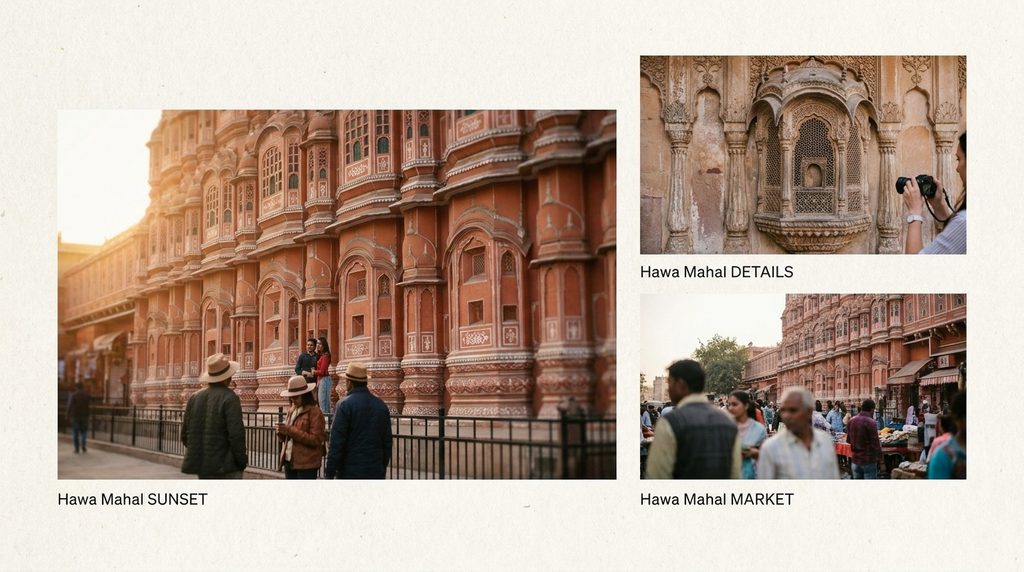
The famous front façade is best appreciated from across the road, where you can see its full pattern of windows and the overall shape of the building.
For photographs, avoid treating the monument as just a quick stop. Look for different angles, details in the latticework and the contrast between the pink façade and the surrounding old-city streets.
Early or later in the day can also offer softer light than harsh midday conditions. If the street is busy, take your time rather than stepping into traffic for a photograph. The best picture is never worth compromising your safety.
Places to Visit Near Hawa Mahal
One of the biggest advantages of visiting Hawa Mahal is its location. It can be incorporated into a wider Jaipur heritage walk or sightseeing route.
City Palace
The City Palace complex is one of the major historic attractions in central Jaipur. Its courtyards, palace buildings and museum collections provide a broader look at the city’s royal history.
Jantar Mantar
Located in the same historic part of Jaipur, Jantar Mantar is a UNESCO World Heritage Site and an astronomical observatory associated with Maharaja Sawai Jai Singh II. It is a particularly worthwhile stop if you are interested in architecture, science and history together.
Jaipur’s Old-City Markets
The streets around Hawa Mahal lead into the lively commercial areas of the old city. Exploring the markets adds a very different dimension to the visit, bringing you closer to the everyday rhythm of Jaipur rather than only its monumental architecture.
Albert Hall Museum
For travellers who want more time indoors, the Albert Hall Museum offers collections covering art, crafts, textiles, sculptures and other historical objects. Rajasthan Tourism includes it among Jaipur’s major attractions.
How to Plan Hawa Mahal in a Jaipur Itinerary
Hawa Mahal does not necessarily need a full day by itself. Its location makes it particularly easy to combine with other central Jaipur attractions.
A simple sightseeing plan could look like this:
| Part of Day | Suggested Plan |
| Morning | Hawa Mahal and the surrounding old-city area |
| Late morning | City Palace |
| Afternoon | Jantar Mantar and lunch break |
| Later afternoon | Markets or Albert Hall Museum |
| Evening | Continue exploring Jaipur’s historic centre |
For a longer Jaipur trip, you can dedicate another day to attractions such as Amber Fort, Jaigarh Fort and Nahargarh Fort instead of trying to fit every major sight into a single day.
What to Know Before Visiting Hawa Mahal
A little preparation makes the visit easier.
Wear comfortable footwear if you plan to combine Hawa Mahal with other old-city attractions. Jaipur sightseeing often involves walking between monuments, markets and busy streets.
Carry water, particularly outside the cooler months, and dress comfortably for the weather. If you are planning to visit several monuments in one day, leave enough time between stops rather than creating an overly packed schedule.
Most importantly, remember that Hawa Mahal is both a tourist attraction and a historic heritage structure. Follow visitor instructions, avoid touching delicate architectural features and be considerate when photographing other visitors.
FAQs
Why is Hawa Mahal famous?
Hawa Mahal is famous for its distinctive five-storey pink sandstone façade, numerous jharokhas and connection with Jaipur’s royal history. Its windows were designed to allow women of the royal household to observe street life without being seen from outside.
When was Hawa Mahal built?
Hawa Mahal was built in 1799 during the reign of Maharaja Sawai Pratap Singh. Rajasthan Tourism identifies it as one of Jaipur’s iconic historic landmarks.
How much time should I spend at Hawa Mahal?
Around one to two hours is a practical amount of time for many visitors, especially if you want to see the structure, explore its interior and take photographs. If you are combining it with City Palace, Jantar Mantar and the old-city markets, allow most of a day for the wider area.
What is the best time to visit Hawa Mahal?
The cooler months are generally more comfortable for exploring Jaipur. During hotter periods, morning or later-day sightseeing can make walking around the historic city easier.
What other places can I visit near Hawa Mahal?
City Palace and Jantar Mantar are natural additions to a Hawa Mahal visit because they are part of Jaipur’s historic centre. You can also explore the old-city markets and visit attractions such as Albert Hall Museum depending on your itinerary.
Conclusion
Hawa Mahal is one of those Jaipur landmarks that deserves more than a quick photograph from the roadside. Its delicate façade, ingenious ventilation, royal history and carefully designed jharokhas reveal how architecture once shaped everyday life inside the royal household. Once you understand why it was built, the familiar pink façade becomes much more interesting.
Whether you are visiting Jaipur for the first time or returning to explore the Pink City more slowly, Hawa Mahal is an easy and rewarding addition to your itinerary. Pair it with City Palace, Jantar Mantar and the surrounding old-city streets, and you get a fuller picture of the history, architecture and living culture that make Jaipur such a distinctive destination.
Read More:Qutub Minar Travel Guide: History, Architecture, Timings, Things to See & Travel Tips

I am a travel enthusiast who loves exploring India’s beautiful destinations, culture, history, food, and hidden places. Through my travel website, I aim to help travelers discover amazing places in India and plan memorable trips with useful travel information and tips.