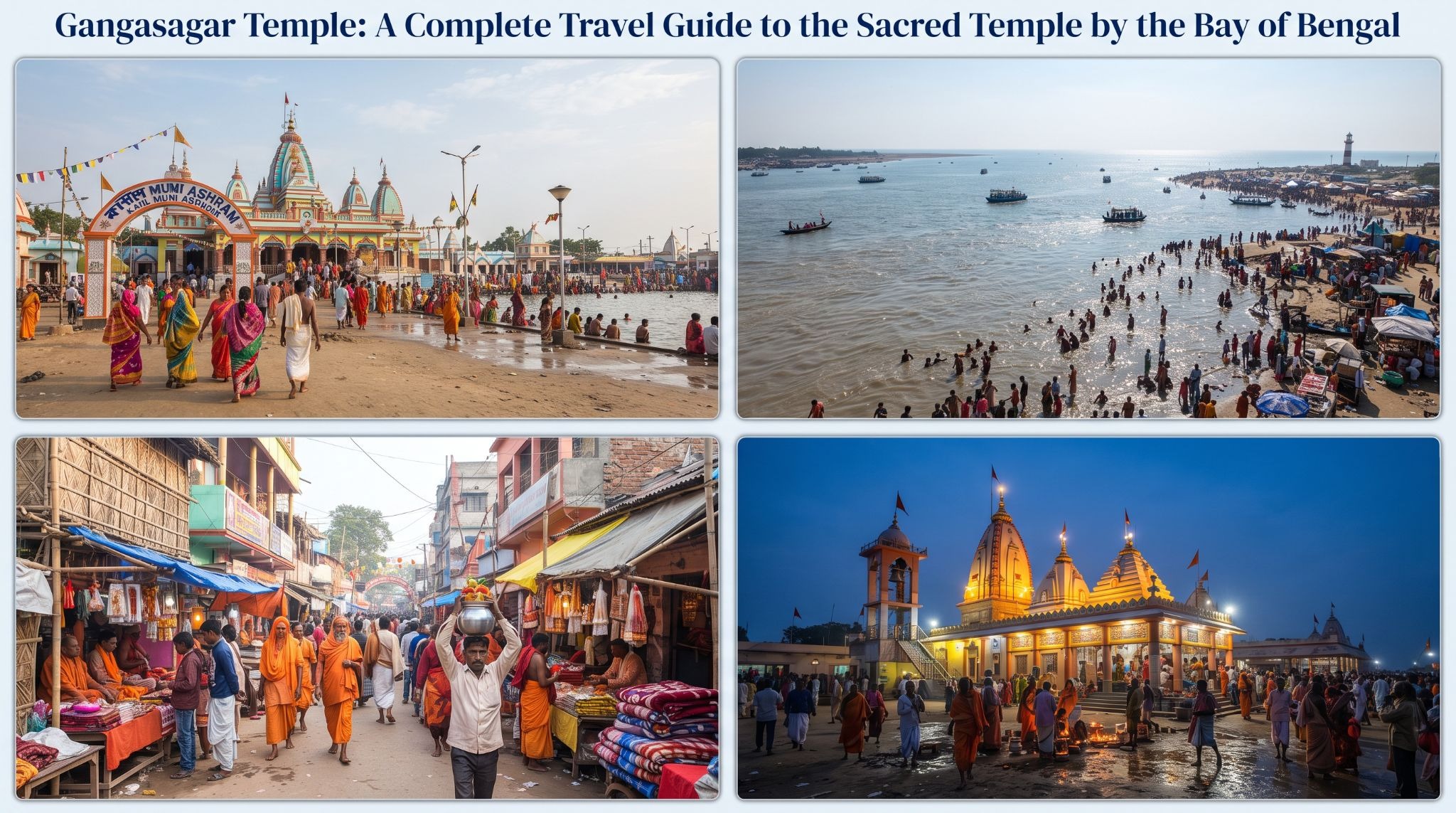
Gangasagar Temple is one of the most important pilgrimage landmarks on Sagar Island in West Bengal. Set near the meeting point of the Ganges and the Bay of Bengal, the temple is closely associated with Kapil Muni and the ancient religious traditions of Gangasagar. For pilgrims, the journey is deeply spiritual. For other travelers, it offers an unusual combination of mythology, coastal scenery, village life, and the peaceful atmosphere of an island destination.
A visit here is about more than reaching a temple. The journey involves crossing waterways, traveling through the island, visiting the sacred bathing area, and experiencing a place that becomes especially vibrant during Makar Sankranti. At quieter times of year, the same destination feels considerably more relaxed, allowing visitors to appreciate its beach, landscape, religious traditions, and slower pace.
Why Visit Gangasagar Temple for a Spiritual Journey
The temple is associated with Kapil Muni, a revered sage in Hindu tradition. West Bengal Tourism identifies the Kapil Muni Ashram as the principal religious attraction of Gangasagar and notes its importance in Hindu mythology. Pilgrims traditionally visit the temple after taking a sacred dip at the confluence of the Ganges and the Bay of Bengal.
The religious importance of the site is particularly visible during Makar Sankranti in January, when large numbers of devotees gather on Sagar Island. The annual Gangasagar Mela combines pilgrimage with a major cultural gathering and is one of the most significant religious events in West Bengal.
For first time visitors, the most memorable part can be the atmosphere surrounding the temple rather than the building alone. Devotees arrive with flowers and offerings, families travel together, and the nearby sacred landscape gives the visit a distinctive sense of place.
History and Religious Significance of Gangasagar Temple
The spiritual identity of Gangasagar is rooted in Hindu mythology and its connection with Kapil Muni. The Kapil Muni Ashram is believed by devotees to be associated with the sage and remains the focal point of pilgrimage on the island.
The wider Gangasagar pilgrimage is connected with the belief that the Ganges reaches the sea at this sacred location. This is why the confluence has long attracted pilgrims seeking to perform a holy bath before offering prayers.
The Kapil Muni Tradition
Kapil Muni occupies an important place in Hindu religious tradition, and the temple dedicated to him gives the pilgrimage its central focus. The site is especially meaningful for visitors who come to Gangasagar for religious observance rather than sightseeing alone.
| Spiritual experience | What visitors can expect |
| Kapil Muni Temple | Prayer and devotional offerings |
| Sagar Sangam | Sacred bathing area at the river and sea confluence |
| Gangasagar Mela | Major annual pilgrimage gathering |
| Island pilgrimage | A journey combining road, water and religious travel |
Top Places to See Near Gangasagar Temple
A trip to the temple can easily become a broader exploration of Sagar Island. The surrounding area has a coastal character that feels different from the urban centers of West Bengal.
The Sagar Sangam is the natural highlight. Here, visitors can experience the landscape where the river meets the Bay of Bengal. The beach provides a quieter setting away from the temple, particularly outside major pilgrimage periods.
Another attraction is the lighthouse area, which West Bengal Tourism highlights for its views of the surrounding landscape and for sunrise and sunset experiences.
Sagar Island and Its Coastal Landscape
Sagar Island is part of the Ganges delta and combines religious importance with beaches, waterways, agricultural areas, and coastal scenery. The island is also associated with mangrove landscapes and birdlife, giving nature lovers another reason to explore beyond the main pilgrimage area.
| Place | Best suited for | Experience |
| Kapil Muni Temple | Pilgrims | Prayer and religious observance |
| Sagar Sangam | Pilgrims and sightseers | Confluence and coastal scenery |
| Sagar Island Beach | Leisure travelers | Beach walks and peaceful views |
| Lighthouse area | Sightseers | Wider views and sunsets |
Things to Do Around Gangasagar Temple
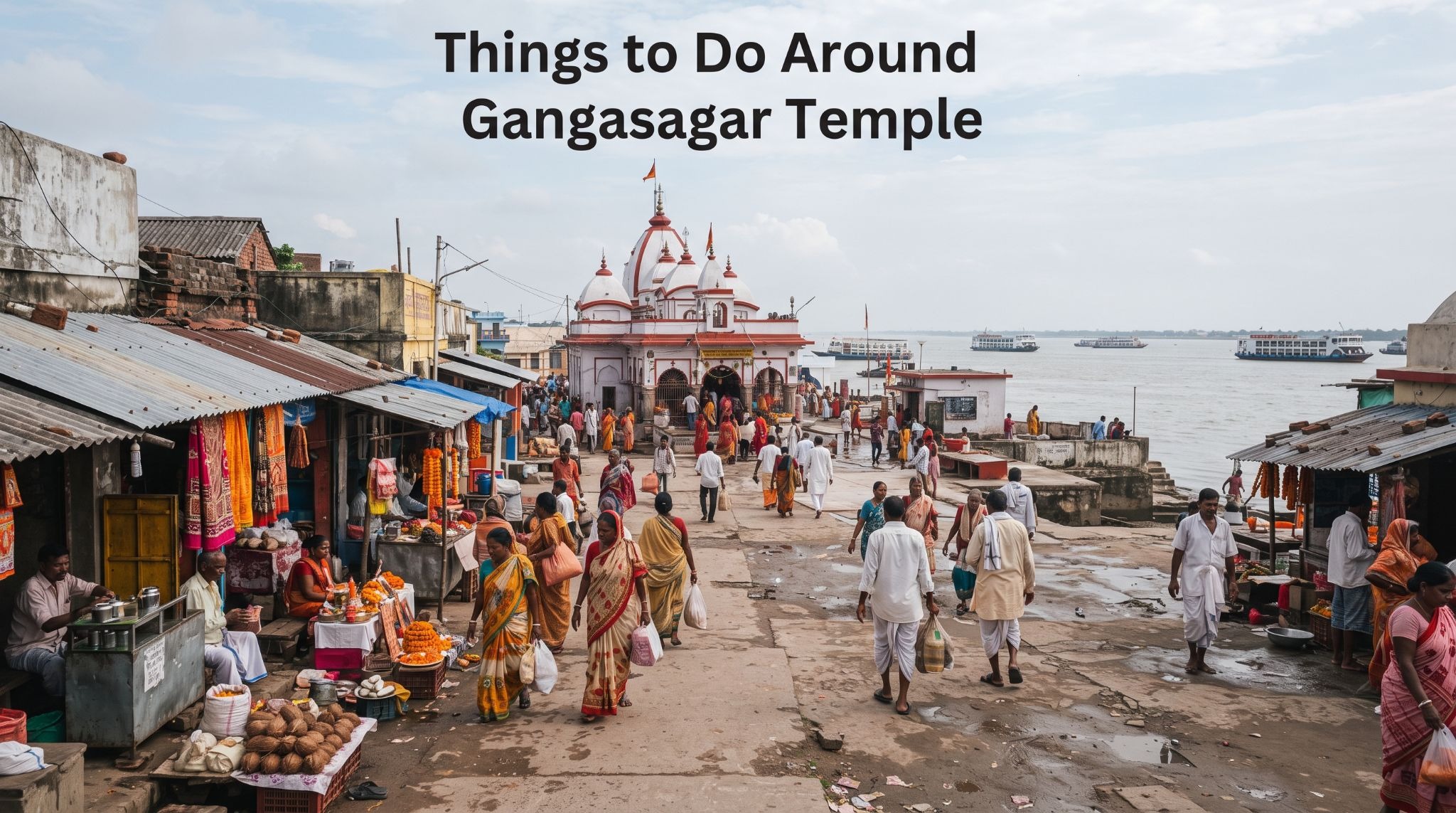
The most meaningful way to experience the destination is to avoid treating the temple as a quick stop. Give yourself enough time to experience the pilgrimage route and the island environment.
Start with the temple and, if it forms part of your religious practice, visit the confluence afterward. You can then spend time near the beach and explore the surrounding area at a relaxed pace.
Visitors interested in local culture can also observe the simple rhythm of island life. Bengali food, small local markets, religious stalls, and the movement of pilgrims add character to the experience.
During Makar Sankranti, the atmosphere changes dramatically. The Gangasagar Mela brings together pilgrims from across India and beyond, creating an enormous temporary gathering around the sacred site.
Best Time to Visit Gangasagar Temple
The best time depends on whether your priority is religious participation or a quieter holiday. January is particularly important for pilgrims because Makar Sankranti brings the annual Gangasagar Mela. It is the most significant period for experiencing the destination as a major pilgrimage center, but it is also the busiest.
Travelers looking for a calmer experience may prefer a period outside the main festival season. The island can then be appreciated more slowly, with time for the temple, beach, confluence, and surrounding scenery.
| Travel period | Experience | Planning consideration |
| Makar Sankranti in January | Major pilgrimage and festival atmosphere | Expect very large crowds |
| Cooler months outside the festival | More relaxed sightseeing | Suitable for combining temple and island visits |
| Warmer or unsettled periods | Quieter surroundings | Check local travel and ferry conditions |
Because ferry and water transport are an important part of reaching the island, visitors should check current local arrangements before setting out. Conditions and schedules can change.
How to Reach Gangasagar Temple from Kolkata
Travel to Sagar Island generally involves a combination of road or rail travel and a ferry crossing. West Bengal Tourism lists Netaji Subhas Chandra Bose International Airport in Kolkata as the nearest major airport and describes routes through Kakdwip, Namkhana, Harwood Point, and Kachuberia.
One common route is to travel from Kolkata toward the ferry point and cross the Muriganga distributary to Sagar Island. From Kachuberia, road transport continues toward the Gangasagar area. Train travelers can use the southern railway route toward Kakdwip and Namkhana, followed by the appropriate onward ferry and road connection.
Travel Route at a Glance
| Starting point | Main route | Key connection |
| Kolkata by road | Kolkata to ferry point to Sagar Island | Boat or ferry crossing |
| Kolkata by train | Sealdah South route toward Kakdwip or Namkhana | Ferry and onward road travel |
| Kolkata by air | Fly to Netaji Subhas Chandra Bose International Airport | Continue by road and ferry |
Ferry arrangements can be influenced by water and tidal conditions, so checking the latest local information before departure is a sensible part of planning. West Bengal Tourism specifically advises travelers to check ferry schedules in advance in its Gangasagar package information.
Where to Stay Near Gangasagar Temple
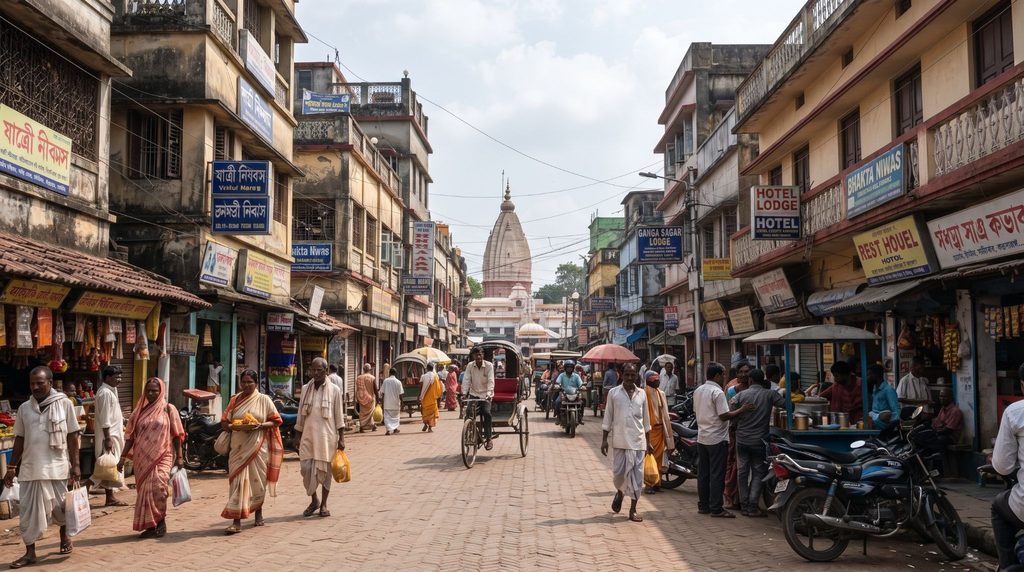
Accommodation is available in the Gangasagar area, while the West Bengal Tourism Department also operates tourism accommodation on Sagar Island.
The right choice depends on your travel style. Pilgrims may prefer accommodation close to the temple and main pilgrimage area so that early morning visits are easier. Leisure travelers may want a quieter place with convenient access to the beach and local transport.
During the Makar Sankranti period, advance planning becomes especially important because visitor numbers increase substantially.
Practical Tips for Visiting Gangasagar Temple
A little preparation can make the journey much easier. Wear comfortable clothing and footwear because the trip involves walking as well as transfers between road and water transport.
If you plan to take part in religious rituals, carry the items you personally need rather than assuming everything will be available exactly as you prefer. Keep valuables secure, especially in crowded areas during the festival season.
It is also wise to keep some flexibility in your schedule. Sagar Island is reached partly by water, so transport conditions can affect the timing of your journey. Travelers should follow current local instructions and ferry arrangements rather than relying only on an old itinerary.
FAQs
What is Gangasagar Temple famous for?
The temple is primarily associated with Kapil Muni and the important pilgrimage tradition of Sagar Island. Devotees commonly visit the temple after a sacred bath at the Ganges and Bay of Bengal confluence.
Where is the temple located?
It is located on Sagar Island in South 24 Parganas district of West Bengal, near the sacred confluence of the Ganges and the Bay of Bengal.
When is the busiest time to visit?
The busiest period is around Makar Sankranti in January, when the annual Gangasagar Mela attracts large numbers of pilgrims.
How do visitors reach Sagar Island?
Visitors can travel from Kolkata by road or train and then use ferry or boat services to cross to Sagar Island. From Kachuberia, road transport continues toward the Gangasagar area.
Is Gangasagar suitable for travelers who are not pilgrims?
Yes. Although the destination is strongly religious, visitors can also enjoy the beach, coastal scenery, island environment, sunrise and sunset views, and local culture.
Conclusion
A journey to this sacred island is rewarding because it combines faith, landscape, and the experience of traveling through a distinctive riverine region. The Kapil Muni shrine gives the destination its spiritual heart, while the confluence, beach, waterways, and island surroundings add a quieter dimension to the trip.
Whether you arrive for Makar Sankranti or choose a less crowded period, the best approach is to travel patiently and leave enough time to experience more than the temple itself. Gangasagar is not simply a destination to check off a list. It is a pilgrimage landscape whose meaning becomes clearer as you experience the journey, the people, and the place around it.
Read More: Murudeshwar Temple: History, Architecture, Mythology and Complete Travel Guide

I am a travel enthusiast who loves exploring India’s beautiful destinations, culture, history, food, and hidden places. Through my travel website, I aim to help travelers discover amazing places in India and plan memorable trips with useful travel information and tips.