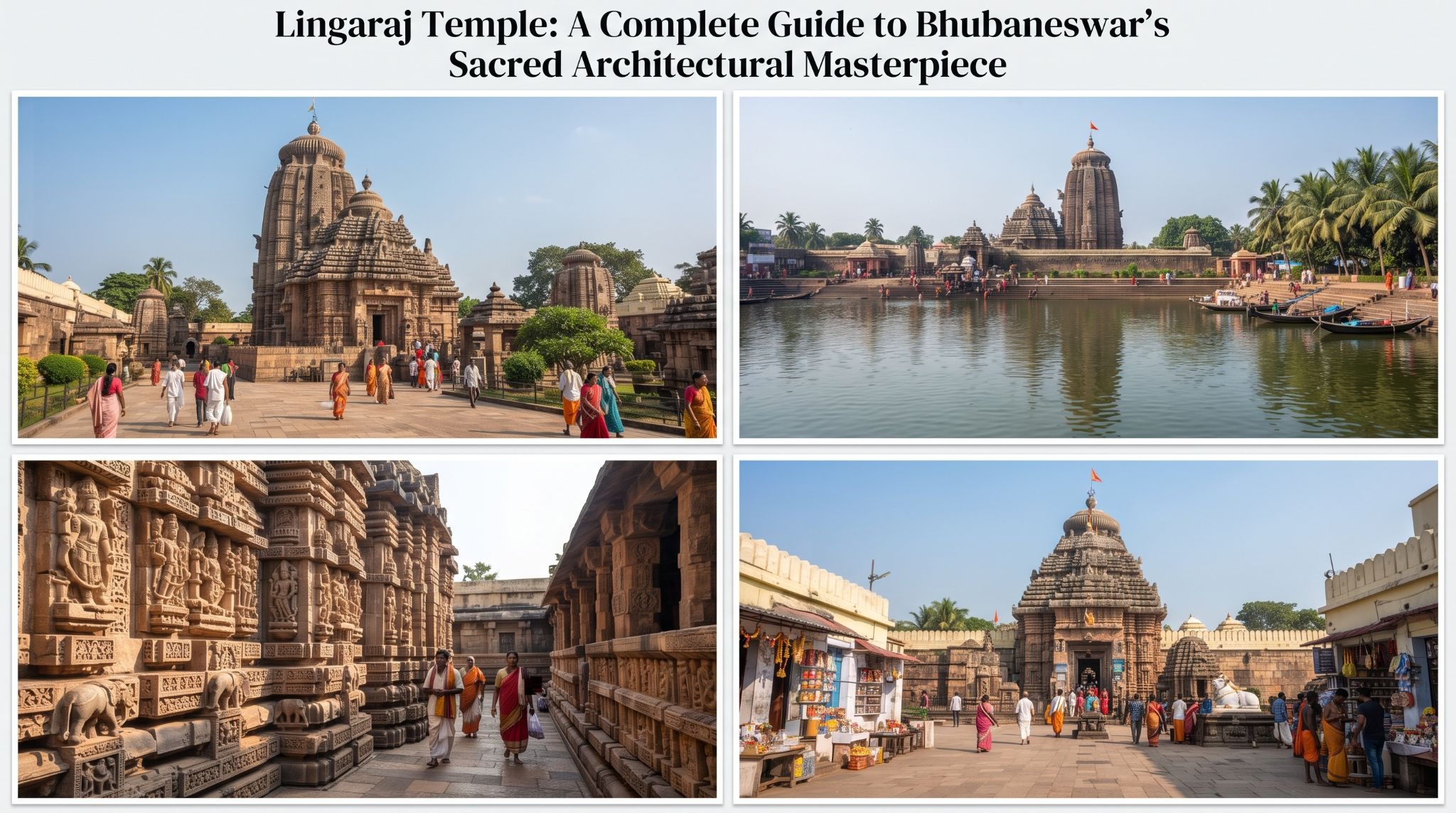
Lingaraj Temple stands at the heart of Bhubaneswar’s old temple district, where centuries of worship, craftsmanship and living traditions continue to shape the character of the city. Rising prominently above the surrounding streets, this celebrated shrine is dedicated to Lord Shiva and is regarded as one of the finest expressions of Odisha’s Kalinga temple architecture. The atmosphere around the temple is deeply connected with the religious life of Bhubaneswar, making a visit about much more than admiring an ancient monument.
For travelers interested in history, architecture and Indian culture, the temple offers a fascinating introduction to the heritage of Odisha. Its soaring stone tower, detailed carvings, subsidiary shrines and connection with nearby Bindusagar Lake create a remarkable heritage landscape. Visitors can also use the surrounding Old Town area as a starting point for discovering several other historic temples and cultural attractions.
Why Lingaraj Temple Is Important
The temple is one of the defining landmarks of Bhubaneswar and an important centre of Shaivite worship. Odisha Tourism describes the principal deity as a Swayambhu or self-originated Shivling. It is also known as Hari Hara, reflecting the blending of Shaivite and Vaishnavite traditions associated with the shrine.
The importance of the site extends beyond religion. The temple complex represents the development of Kalinga architecture, a distinctive style recognized for its carefully planned structures and richly carved stone surfaces. The wider area around the shrine has long served as a centre of religious and cultural activity.
| Feature | What visitors should know |
| Location | Old Town area of Bhubaneswar, Odisha |
| Main deity | Lord Shiva in the form of Lingaraj |
| Architectural tradition | Kalinga temple architecture |
| Historical period | Mainly associated with the 11th century |
| Nearby landmark | Bindusagar Lake |
| Religious character | Active Hindu temple and pilgrimage centre |
History and Architecture of Lingaraj Temple
The present temple is associated with the 11th century and is traditionally regarded as one of the great achievements of Odisha’s temple-building tradition. Odisha Tourism places the main temple in the 11th century and describes its height as about 180 feet.
A Landmark of Kalinga Architecture
The most striking feature is the towering stone structure above the sanctum. Its vertical form, detailed exterior carvings and carefully arranged architectural elements demonstrate the sophistication reached by temple builders in medieval Odisha.
The larger complex contains numerous subsidiary shrines, adding to the sense of scale. Odisha Tourism’s heritage material notes around 150 subsidiary shrines within the complex.
Rather than viewing the building only as an isolated monument, take time to notice the carved figures, stone surfaces and relationship between the different structures. These details help explain why Bhubaneswar is often described as a temple city.
What to See at Lingaraj Temple
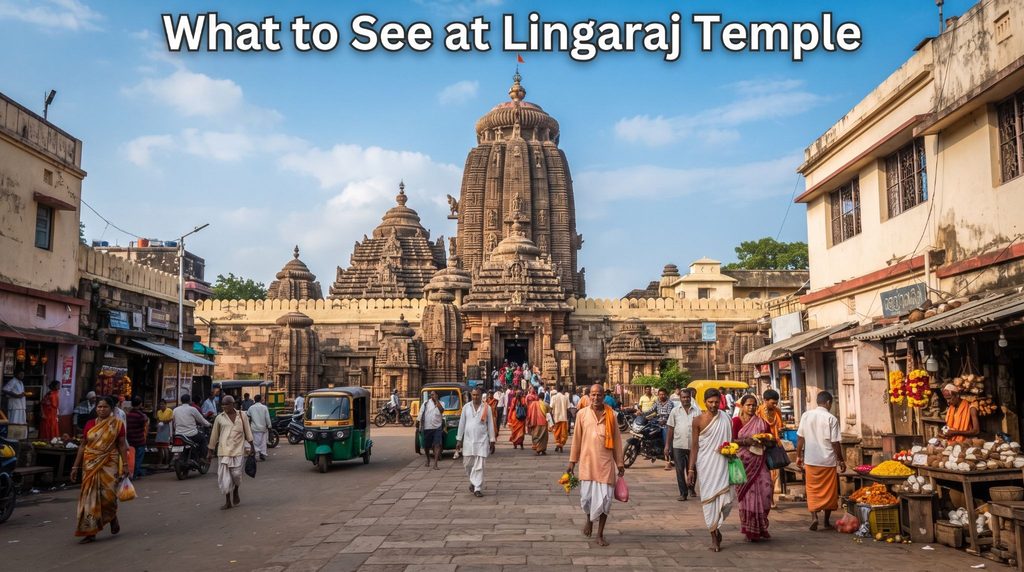
The main sanctuary naturally receives the greatest attention, but the surrounding complex deserves careful observation. The towering central structure immediately dominates the skyline, while smaller shrines create a layered architectural setting around it.
Stone Carvings and Temple Details
The exterior stonework contains representations connected with religious traditions as well as scenes and motifs reflecting aspects of everyday life. These carvings are particularly valuable for travelers interested in how architecture once communicated stories, beliefs and cultural ideas.
Bindusagar Lake
Bindusagar lies just north of the temple and forms an important part of the sacred landscape of Old Town. The lake is closely associated with temple activities and religious festivities. Its presence also provides a useful contrast to the vertical stone architecture of the shrine.
| Area | Why it matters |
| Main temple tower | A major example of Kalinga architectural design |
| Temple carvings | Show detailed stone craftsmanship and religious imagery |
| Subsidiary shrines | Add depth and scale to the complex |
| Bindusagar Lake | Important nearby sacred and cultural landmark |
| Temple viewing platform | Provides a view for visitors who cannot enter the complex |
Best Time to Visit Lingaraj Temple
The cooler months are generally more comfortable for exploring Bhubaneswar’s temples, particularly when you plan to walk through the Old Town area and visit several heritage sites in one day. Winter and the milder parts of the surrounding seasons can make outdoor sightseeing easier than the hotter months.
Festival periods can offer a very different experience. Shivaratri is one of the major celebrations associated with the shrine, while Rukuna Ratha Yatra takes place around Ashokastami and attracts large crowds.
| Travel period | Experience |
| Cooler months | Comfortable for heritage walks and sightseeing |
| Hotter months | Outdoor exploration can be more tiring |
| Shivaratri period | Major religious celebration and very busy atmosphere |
| Rukuna Ratha Yatra | Important traditional chariot festival with large crowds |
If your priority is peaceful sightseeing rather than participating in major festivities, it is sensible to plan outside the busiest festival periods.
How to Reach Lingaraj Temple
Bhubaneswar is well connected with major cities and is an important transport centre in Odisha. Once you arrive in the city, the temple can be incorporated into a wider sightseeing itinerary covering the historic Old Town and other nearby monuments. Odisha Tourism also includes the shrine in organized Bhubaneswar temple itineraries.
For a first visit, combining several nearby attractions can make better use of your day. Mukteswar Temple, Rajarani Temple and other historic sites are commonly included with the temple in Bhubaneswar heritage tours.
Planning Your Local Visit
Allow enough time to appreciate the surrounding area rather than arriving only for a quick photograph. The temple district contains a concentration of historic structures, and walking between nearby attractions gives you a better sense of Bhubaneswar’s architectural character.
Visiting Lingaraj Temple: Rules and Practical Tips
The shrine remains an active place of worship, so visitors should approach it respectfully. One important restriction is that non-Hindus are not permitted inside the temple complex. Odisha Tourism states that non-Hindu visitors can instead view the complex from a specially provided raised platform outside.
Photography and electronic gadgets are also restricted inside the premises according to Odisha Tourism. Conditions and practical arrangements can change, so checking current local guidance before visiting is sensible.
Dress modestly, avoid disturbing worshippers and be prepared for a religious environment rather than treating the site simply as a historical monument. Early planning is particularly useful during important festivals when the area becomes considerably busier.
Nearby Places to Visit After Lingaraj Temple
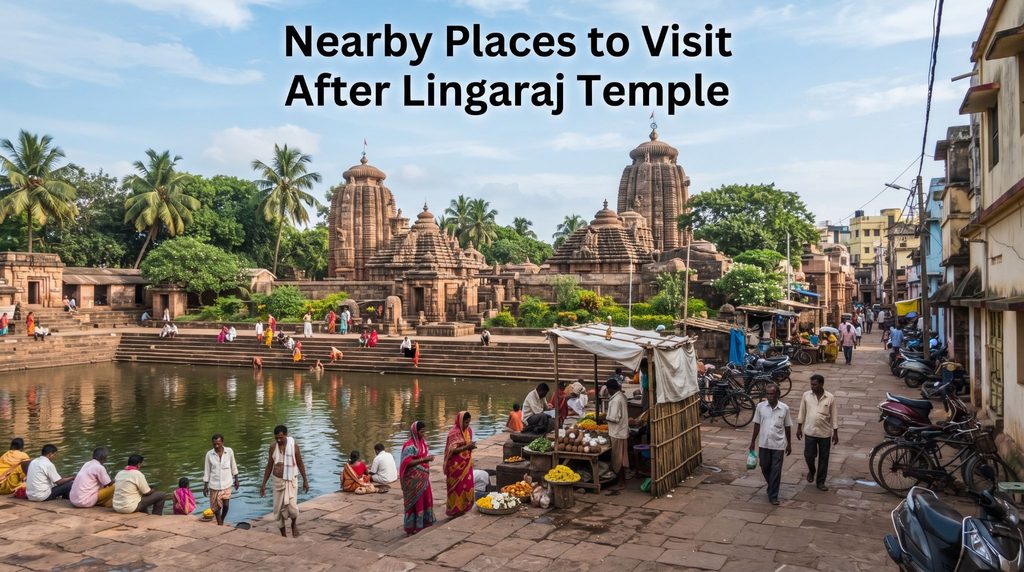
One of the advantages of visiting this part of Bhubaneswar is the concentration of heritage attractions nearby. Mukteswar Temple is particularly notable for its architectural craftsmanship, while Rajarani Temple is another important example of Odisha’s stone temple tradition. Udayagiri and Khandagiri Caves offer a different perspective on the region’s ancient heritage.
Ekamra Van and Ananta Basudeva Temple
Ekamra Van lies on the western side of Bindusagar and contains plants traditionally associated with Hindu deities as well as spiritual and medicinal traditions. Ananta Basudeva Temple, situated beside the lake, provides another important religious landmark and is notable for its Vaishnavite dedication.
| Nearby attraction | Best suited for |
| Mukteswar Temple | Architecture and detailed carvings |
| Rajarani Temple | Heritage and temple photography from permitted areas |
| Bindusagar Lake | Sacred landscape and local atmosphere |
| Ananta Basudeva Temple | Vaishnavite heritage |
| Udayagiri and Khandagiri Caves | Ancient history and archaeology |
| Ekamra Van | Gardens, plants and cultural surroundings |
FAQs
Is the temple open to non-Hindu visitors?
Non-Hindu visitors are not permitted inside the temple complex. A raised viewing platform outside provides an opportunity to see the temple from a distance.
What is the temple famous for?
It is especially known for its association with Lord Shiva, its 11th-century heritage and its impressive Kalinga architectural style. Its religious traditions also reflect a connection between Shaivism and Vaishnavism.
Can visitors take photographs inside?
Photography and electronic gadgets are not allowed inside the temple premises according to Odisha Tourism. Visitors should follow the current rules and use permitted viewing areas instead.
What else can I see nearby?
Bindusagar Lake, Mukteswar Temple, Rajarani Temple, Ananta Basudeva Temple and other historic attractions can be combined into a Bhubaneswar heritage itinerary.
Is Shivaratri a good time to visit?
Shivaratri is an important celebration at the shrine and offers a strong cultural and religious experience. However, it also brings very large crowds, so travelers seeking quieter sightseeing may prefer another period.
Conclusion
A visit to this historic shrine offers a window into the living heritage of Bhubaneswar. Its immense tower, intricate stonework, sacred traditions and relationship with Bindusagar Lake reveal how architecture, religion and everyday culture have remained closely connected in Odisha.
For travelers exploring Bhubaneswar, the experience becomes even richer when combined with the city’s surrounding temples and heritage sites. Take time to observe the details, respect the religious setting and explore the Old Town beyond the main landmark. That slower approach allows the history and character of the temple district to become part of the journey rather than simply another stop on an itinerary.
Read More: Gangasagar Temple: A Complete Travel Guide to the Sacred Temple by the Bay of Bengal

I am a travel enthusiast who loves exploring India’s beautiful destinations, culture, history, food, and hidden places. Through my travel website, I aim to help travelers discover amazing places in India and plan memorable trips with useful travel information and tips.