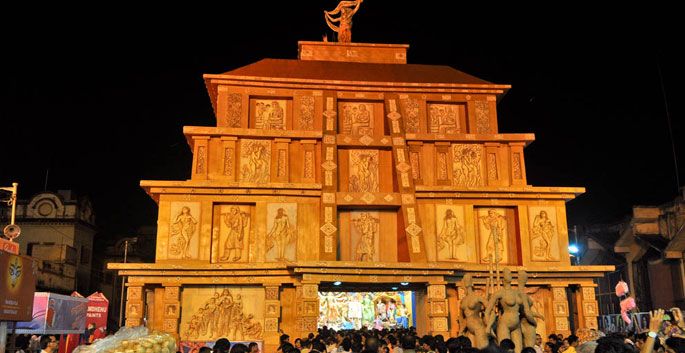
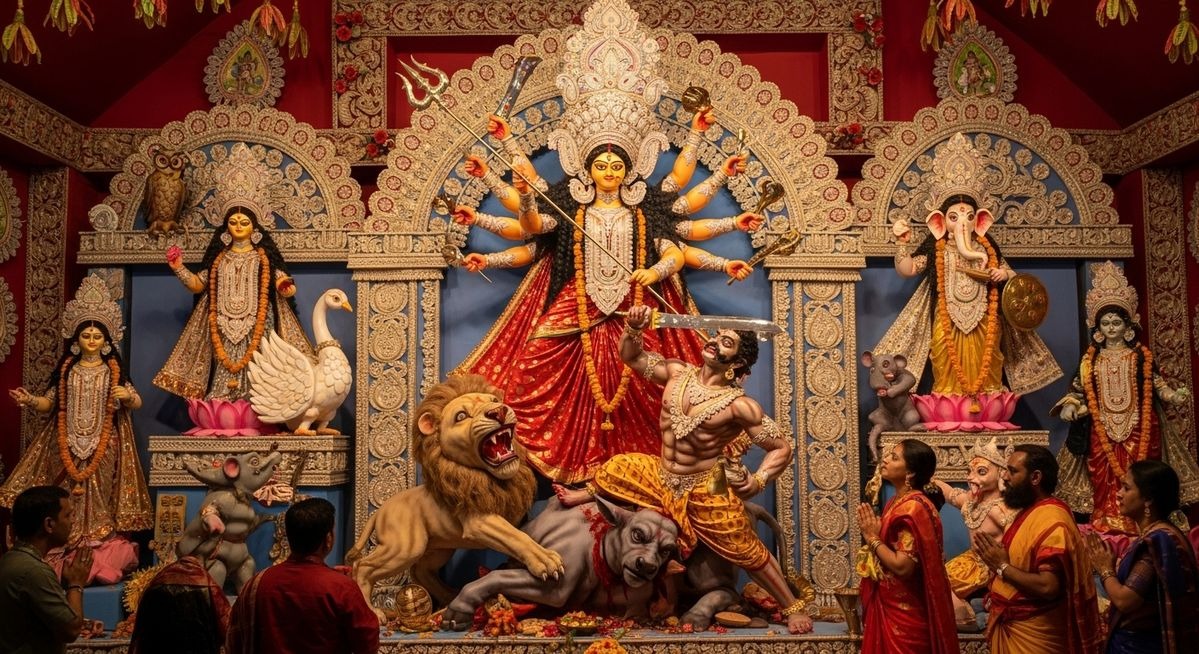
Dura puja is best known as Durga Puja, one of the most important Hindu festivals celebrated across India and especially associated with West Bengal. During the autumn season, cities and towns come alive with beautifully decorated pandals, artistic idols, devotional ceremonies, traditional music and festive food. The celebration honours Goddess Durga and commemorates her victory over the demon Mahishasura, symbolising the triumph of good over evil.
Although the festival has deep religious roots, experiencing it is also a wonderful way to discover local culture. In Kolkata, for example, entire neighbourhoods become part of the celebration, with communities spending months preparing elaborate installations and cultural programmes. From traditional family ceremonies to spectacular public displays, each place offers its own character and atmosphere.
Dura puja and the Meaning Behind the Festival
The central story of the celebration comes from Hindu mythology. Goddess Durga is revered as the divine force that defeats Mahishasura after a battle between good and evil. Her image is commonly shown with several arms holding different weapons, accompanied by her children and the lion or tiger associated with her.
The festival is especially significant in eastern India, where the goddess is welcomed as a daughter returning to her parental home. This gives the celebration an emotional dimension beyond its religious rituals.
In Bengal, the arrival of Durga is marked by several days of worship, cultural activity and community gatherings. The final day, Vijayadashami, brings the farewell to the goddess and the immersion of idols in water.
| Festival element | Meaning or role |
| Durga idol | Represents the goddess and her victory over Mahishasura |
| Pandal | Temporary structure where the idol is installed and worshipped |
| Dhak | Traditional drum strongly associated with Bengali celebrations |
| Anjali | Devotional offering of flowers during worship |
| Immersion | Farewell ceremony marking the end of the festival |
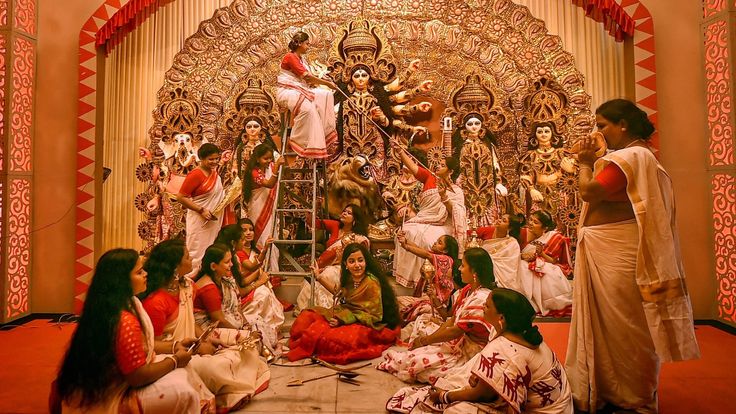
Dura puja and the Famous Pandal Tradition
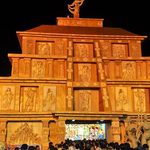
One of the most distinctive aspects of the festival is the creation of pandals. These temporary structures can be simple and traditional or highly elaborate works of art. Community organisers often choose a theme and transform the surrounding space into an immersive setting.
In major cities, visitors commonly spend several evenings moving from one neighbourhood to another to see different installations. Some focus on traditional Bengali designs, while others draw inspiration from architecture, history, nature or contemporary art.
Traditional and Contemporary Designs
The variety is part of the attraction. A traditional pandal may recreate familiar architectural forms, while a contemporary installation can look completely different from anything nearby. This mixture of devotion and creativity has helped make the festival an important cultural event as well as a religious celebration.
Dura puja and the Celebration in Kolkata
Kolkata is perhaps the most internationally recognised destination for experiencing the festival. During the main days, the city takes on a distinctive atmosphere as neighbourhoods, streets and public spaces become filled with decorations and temporary shrines.
North Kolkata is particularly interesting for travellers interested in older traditions and historic family celebrations. Shobhabazar, Bagbazar and Kumartuli are among the areas associated with the city’s long festival heritage.
South Kolkata offers another experience, with numerous community celebrations known for creative pandals and large public gatherings.
| Kolkata area | What makes it interesting |
| Kumartuli | Traditional centre for idol making |
| Shobhabazar | Historic family puja traditions |
| Bagbazar | Long-established community celebration |
| Ballygunge | Large urban neighbourhood celebrations |
| Gariahat | Festival atmosphere, shopping and food |
The best approach is not to attempt every famous location. Choose clusters of nearby celebrations and explore them at a relaxed pace. Crowds can become extremely heavy during peak evenings.
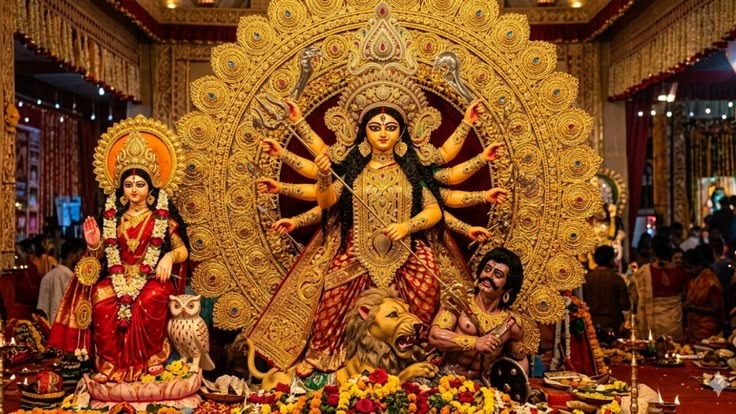
Dura puja and the Art of Making Durga Idols
The artistry begins long before the festival itself. In Kolkata, Kumartuli is closely associated with artisans who create clay idols for celebrations across the city and beyond.
The process involves shaping the figure, applying layers of clay, preparing the surface and completing the painting and decoration. The final appearance can be remarkably detailed, but the craftsmanship is just as interesting as the finished idol.
Visitors who explore artisan areas should remember that workshops are working environments. Photography should be done respectfully and only where it is appropriate.
Why Kumartuli Is Worth Visiting
A visit to the artisan quarter gives travellers a different perspective on the festival. Instead of seeing only the finished decorations, you can understand some of the skilled work and preparation that happens behind them.
Dura puja and the Main Days of Celebration
The festival follows the Hindu lunar calendar, so its dates change each year. The principal celebrations generally unfold across several days, beginning with Maha Shashti and continuing through Maha Saptami, Maha Ashtami, Maha Navami and Vijayadashami.
Different days have their own rituals and traditions. Maha Ashtami is particularly important for worshippers, while Vijayadashami marks the farewell and immersion of the idols.
The exact rituals and schedules can vary between communities and locations. Visitors interested in attending a particular ceremony should check local arrangements rather than assuming that every celebration follows an identical programme.
| Festival day | General significance |
| Maha Shashti | Main public festivities begin |
| Maha Saptami | Worship and community celebrations continue |
| Maha Ashtami | Major devotional rituals and offerings |
| Maha Navami | Final major day of worship |
| Vijayadashami | Farewell ceremonies and idol immersion |
Best Time to Visit Dura puja
The most rewarding time to visit is during the main festival days when the city or town is fully immersed in celebrations. For travellers interested in illuminated pandals and the lively evening atmosphere, nights can be particularly memorable.
However, the busiest hours can also be the most difficult for moving between locations. Daytime visits may offer more space to appreciate architectural details, while evenings provide the atmosphere created by lighting, crowds and performances.
Because festival dates change every year, travellers should confirm the dates before booking transport and accommodation.
Dura puja and Bengali Food Traditions
Food is an important part of the wider festival experience. During the celebration, families prepare traditional dishes while restaurants and street food stalls become busy with visitors.
Bengali favourites such as luchi, alur dom, shorshe preparations and kosha mangsho can be found in different forms. Sweets are another essential part of the culinary experience, with sandesh and mishti doi among the familiar choices.
Festival food can vary considerably from one household, neighbourhood or restaurant to another. That variety is worth embracing rather than searching for one fixed menu.
Food Beyond the Pandal
Pandal hopping provides plenty of opportunities to sample snacks between visits. Puchka and kathi rolls are popular street food choices in Kolkata, although travellers should select busy and hygienic food stalls and use their own judgement.
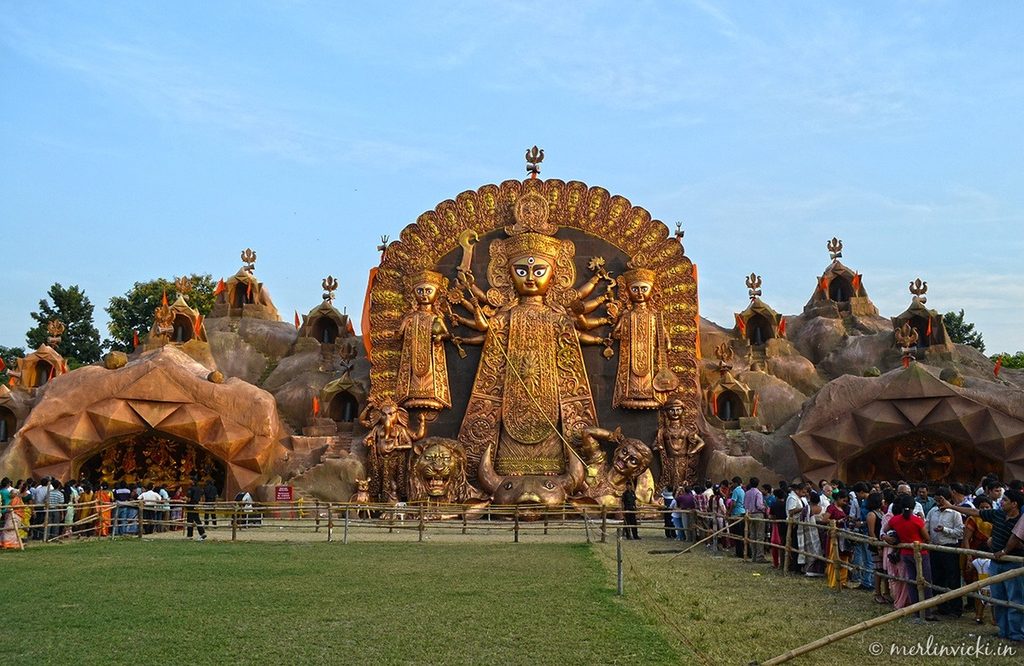
Dura puja and Cultural Experiences Beyond Worship
The festival is deeply connected with music, dance, clothing, art and community life. The sound of dhak drums is one of its most recognisable features, while cultural programmes often accompany public celebrations.
For visitors, this makes the experience broader than simply visiting a shrine. You may see families dressed in traditional clothing, artists performing on temporary stages and neighbourhood groups organising events for local residents.
The celebration also provides an opportunity to understand how religious traditions can become part of a city’s social identity.
Dura puja and Travel Planning
Large festival destinations can become exceptionally busy. Accommodation should be arranged well in advance, particularly in cities where the celebration attracts visitors from other parts of India and abroad.
Public transport can be useful, but routes and journey times may be affected by festival crowds and temporary traffic arrangements. Walking between nearby pandals is often practical once you reach a concentrated area.
| Planning point | Recommended approach |
| Accommodation | Book early in popular festival destinations |
| Transport | Combine public transport with walking |
| Footwear | Choose comfortable shoes for extended walking |
| Photography | Follow restrictions at religious and private celebrations |
| Evening visits | Expect larger crowds and slower movement |
| Route planning | Group nearby pandals together |
Dura puja and the Immersion Ceremony
Vijayadashami marks the emotional conclusion of the celebration. After the final rituals, idols are carried in processions for immersion in water.
In Kolkata and other major cities, immersion processions can become significant public events. Music, crowds and decorated vehicles contribute to the atmosphere as communities say farewell to the goddess.
For travellers, this is a meaningful time to observe rather than simply photograph. Follow crowd-control instructions and respect the religious importance of the ceremony.
Dura puja and the Best Places to Experience It
West Bengal is the most famous region for the celebration, with Kolkata offering one of the largest and most visually varied experiences. However, important celebrations also take place in other parts of India.
Delhi, Mumbai, Assam, Odisha, Tripura and other regions have their own traditions. Each destination reflects local culture while retaining the central themes of devotion and the victory of good over evil.
Choosing a destination depends on what you want from the trip. Kolkata is ideal for large-scale pandals and Bengali cultural traditions, while smaller communities can offer a more intimate atmosphere.
Dura puja Travel Tips for First Time Visitors
A little preparation can make the experience much more enjoyable. Wear comfortable clothing and footwear because festival sightseeing can involve several hours of walking. Carry only what you need and keep valuables secure in crowded areas.
Do not plan an unrealistic number of stops in one evening. A smaller route allows you to appreciate the artwork, observe the rituals and enjoy local food without constantly checking the clock.
Respect religious spaces, follow instructions from volunteers and avoid entering restricted areas. If a particular pandal is extremely crowded, consider moving to another nearby celebration rather than pushing through the crowd.
Most importantly, remember that this is a religious festival first and a tourist attraction second. Approaching it with curiosity and respect will make the experience much more rewarding.
FAQs
When does the festival usually take place?
It is generally celebrated during the autumn months, with dates changing each year according to the Hindu lunar calendar.
Which city is most famous for the celebration?
Kolkata is widely regarded as one of the most important destinations for experiencing the festival, particularly because of its community pandals and distinctive Bengali traditions.
What is a pandal?
A pandal is a temporary structure created for the installation and worship of the goddess. Designs can range from traditional structures to highly creative artistic installations.
Can visitors see how the idols are made?
Yes. Kumartuli in Kolkata is well known for its community of traditional idol makers. Visitors should respect workshop rules and ask before taking photographs.
What happens on the final day?
The final day is Vijayadashami. After concluding rituals and celebrations, the idols are taken in processions for immersion, marking the end of the festival.
Conclusion
The celebration offers travellers something that few festivals can match so completely. It combines devotion with artistry, neighbourhood traditions with contemporary creativity, and ancient stories with the everyday life of modern Indian cities.
Whether you spend your evenings exploring Kolkata’s famous pandals, visit an artisan workshop in Kumartuli or experience a smaller community celebration elsewhere, the most valuable part of the journey is taking time to understand the traditions behind what you see. Approach the festival with patience and respect, and it becomes far more than a colourful event. It becomes an unforgettable window into India’s living cultural heritage.
Read More:Leh Ladakh: A Complete Travel Guide to Mountains, Monasteries and Adventures

I am a travel enthusiast who loves exploring India’s beautiful destinations, culture, history, food, and hidden places. Through my travel website, I aim to help travelers discover amazing places in India and plan memorable trips with useful travel information and tips.