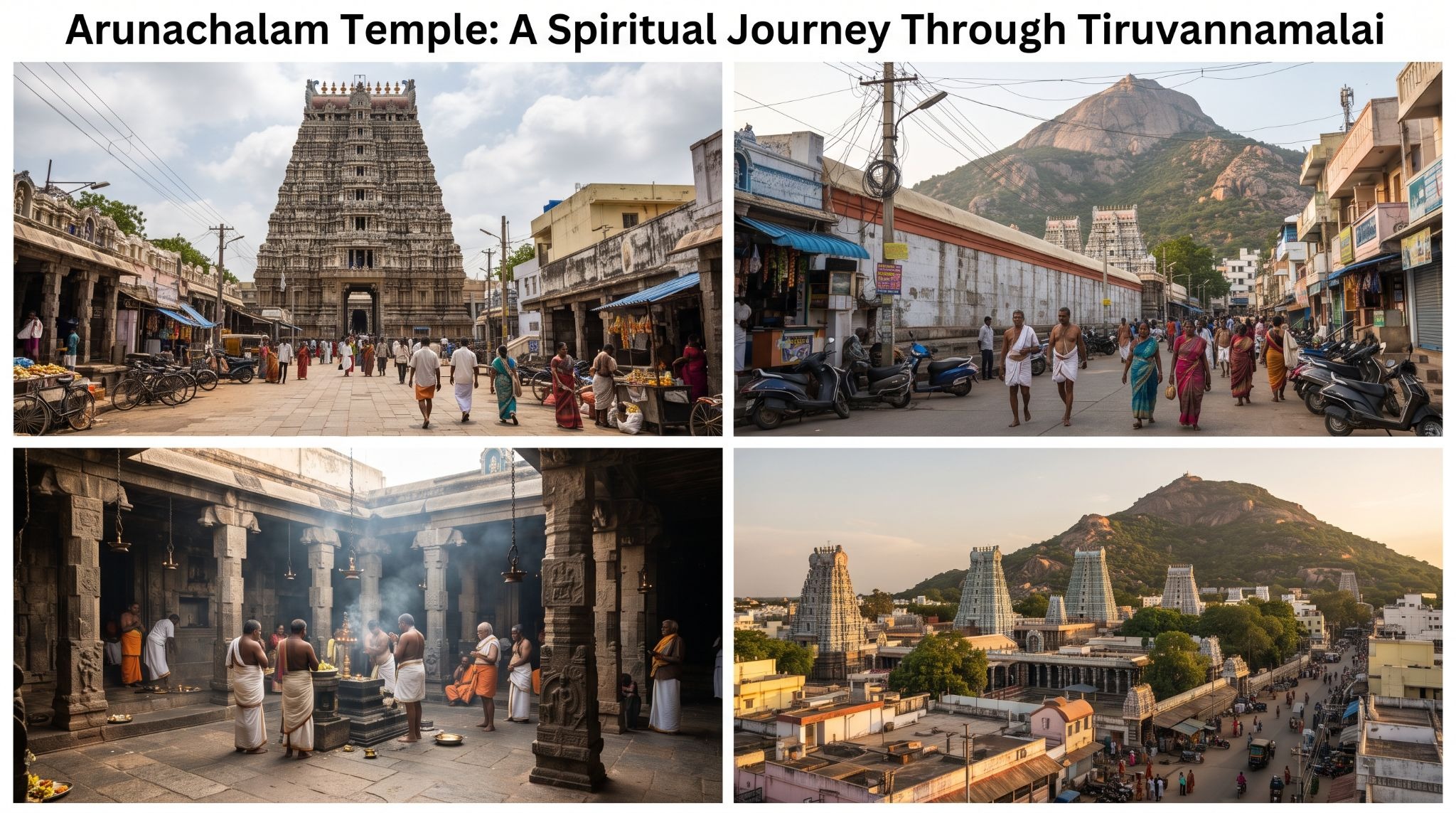
At the foot of the sacred Arunachala Hill in Tamil Nadu stands Arunachalam Temple, more formally known as Arunachaleswarar Temple. For centuries, pilgrims have travelled to Tiruvannamalai to worship Lord Shiva here and experience the spiritual atmosphere surrounding the mountain. The temple is one of the Pancha Bhoota Sthalas associated with the fire element, making it an important destination in the Shaivite tradition.
A visit is about more than entering a historic temple. The towering gopurams, vast courtyards, stone architecture and nearby hill create a setting that feels closely connected to the landscape. For many visitors, the experience also includes Girivalam, the traditional walk around Arunachala Hill, especially on full moon days. The combination of worship, architecture, local culture and quiet reflection gives Tiruvannamalai a character that is difficult to understand from photographs alone.
Why Visit Arunachalam Temple
Arunachalam Temple is deeply connected with the religious identity of Tiruvannamalai. In Hindu tradition, Arunachala represents Shiva in the form of fire. The temple is therefore regarded as the Agni or fire shrine among the Pancha Bhoota Sthalas.
The sacred hill behind the temple is equally important. Devotees traditionally regard Arunachala itself as a manifestation of Shiva rather than simply a natural landmark. This relationship between the temple and mountain shapes much of the pilgrimage experience.
The temple also appeals to travellers interested in South Indian architecture. Its enormous entrance towers, stone halls, sculptural details and spacious temple complex demonstrate the artistic traditions that developed across several periods of Tamil history.
History of Arunachalam Temple
The history of the temple stretches back many centuries. According to the Tiruvannamalai district administration, the Annamalaiyar temple was developed over roughly 1,100 years, with contributions from different ruling dynasties and later patrons. Chola, Pandya, Sambuvaraya, Vijayanagara and Nayaka influences are among those associated with the temple’s architectural history.
A Temple Shaped Over Centuries
Rather than being the creation of a single ruler, the complex grew gradually. Inscriptions found in the region provide evidence of donations and activities connected with different periods of its history. This layered development helps explain why the temple contains architectural features from more than one era.
The result is a large sacred complex where history is visible in stone. Walking through its spaces gives visitors a sense of how religious institutions, craftsmanship and royal patronage shaped Tamil Nadu over generations.
Spiritual Significance of Arunachalam Temple
The central spiritual story concerns Shiva appearing as an infinite column of fire before Brahma and Vishnu. The legend teaches that the divine cannot be measured or limited by human pride. Arunachala is traditionally understood as the earthly form of that divine fire.
This symbolism explains why fire occupies such an important place in the religious identity of Tiruvannamalai. It also provides the background to Karthigai Deepam, the celebrated festival during which a great beacon is lit on the hill. The district administration describes the festival as one of the region’s major annual events, attracting very large crowds.
| Feature | What it means for visitors |
| Agni tradition | The shrine represents the fire element |
| Arunachala Hill | A sacred landscape closely associated with Shiva |
| Shaivite heritage | An important centre of Shiva worship |
| Karthigai Deepam | Major festival centred on sacred fire and light |
| Girivalam | Traditional circumambulation of the hill |
Architecture of Arunachalam Temple
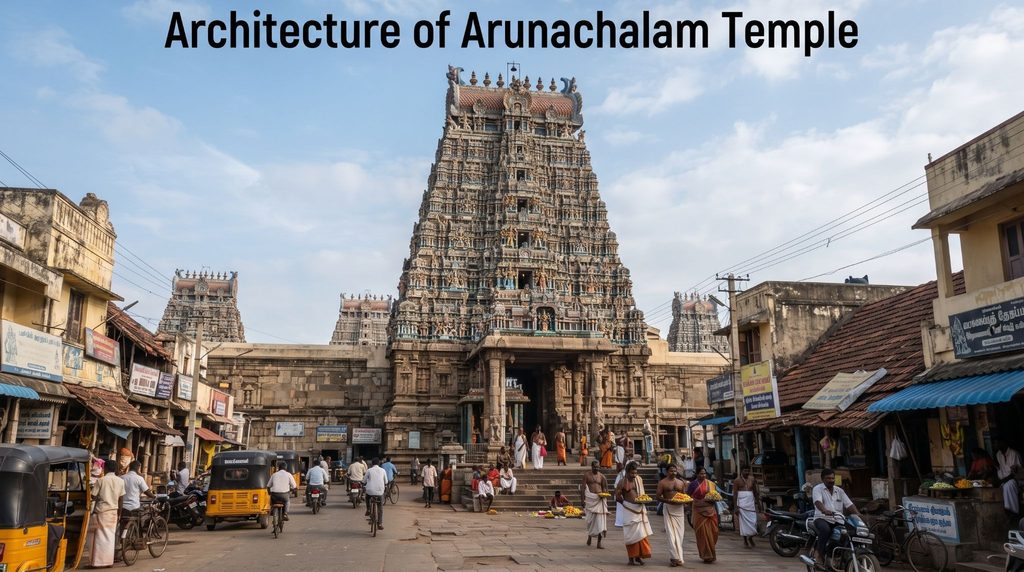
The temple is an impressive example of South Indian Dravidian architecture. Its towering gopurams are among the first features visitors notice as they approach the complex. Inside, expansive courtyards and stone structures create a remarkable sense of scale.
Gopurams and Stone Work
The architecture deserves time rather than a hurried glance. Look closely at the carved pillars, gateways and sculptural details as you move through the complex. Different sections reflect the temple’s long history and the contributions of successive rulers and patrons.
The scale can initially feel overwhelming. A slower visit makes it easier to appreciate how religious symbolism and practical temple design work together.
Girivalam and Arunachalam Temple
Girivalam is one of the defining experiences associated with Tiruvannamalai. It involves walking around Arunachala Hill along the circumambulation route. The district administration records the route as approximately 14 kilometres long. Full moon days are especially significant, when large numbers of devotees undertake the walk.
For visitors planning to participate, comfortable footwear, drinking water and sensible pacing are important. The experience can become particularly demanding when crowds are large or weather conditions are warm.
Walking Around the Sacred Hill
Girivalam is not simply a sightseeing walk. For devotees, it is an act of worship and meditation. Visitors who are not participating for religious reasons should still approach the practice respectfully and remain aware of the spiritual significance it holds for others.
| Girivalam planning point | Practical approach |
| Route length | About 14 km around the hill |
| Best known occasion | Full moon days |
| Walking style | Take a steady pace and allow breaks |
| Clothing | Comfortable and respectful clothing |
| Essentials | Water and suitable walking footwear |
Best Time to Visit Arunachalam Temple
The best time depends on whether you want a quieter temple visit or wish to experience major religious gatherings. Cooler parts of the year are generally more comfortable for exploring Tiruvannamalai on foot, while festival periods offer a much more energetic atmosphere.
Karthigai Deepam is particularly important and takes place during the Tamil month of Karthigai, generally falling around November or December. The celebration culminates with the lighting of the sacred beacon on Arunachala Hill.
Full moon days are another significant period because of Girivalam. They can also mean substantial crowds, so travellers seeking a calmer experience may prefer a different date.
| Visit period | Experience |
| Cooler months | More comfortable for exploring and walking |
| Full moon | Strong devotional atmosphere and busy Girivalam route |
| Karthigai Deepam season | Major festival atmosphere and very large crowds |
| Regular weekdays | Generally more suitable for a less crowded visit |
How to Reach Arunachalam Temple
Tiruvannamalai is a well-known pilgrimage town in Tamil Nadu and the temple is located within the city, making it relatively straightforward to reach once you arrive in the area.
Travellers can plan their journey by road or rail depending on their starting point. Bus services connect Tiruvannamalai with other parts of Tamil Nadu, while railway connections provide another option for reaching the town. From within Tiruvannamalai, local transport can be used to reach the temple area.
Because transport schedules can change, it is sensible to check current services before travelling rather than relying on an old timetable.
Places to Explore Near Arunachalam Temple

The temple is only one part of the wider Tiruvannamalai experience. Arunachala Hill dominates the landscape and forms the centre of many local spiritual traditions.
Ramana Maharshi Ashram
The ashram associated with Sri Ramana Maharshi is another important spiritual place in Tiruvannamalai. His teachings on self-inquiry attracted seekers from India and abroad, and his connection with Arunachala remains an important part of the town’s modern spiritual history.
Arunachala Hill
Even if you do not undertake the full Girivalam route, spending time around the hill gives you a better understanding of why the landscape is so important to local religious life. The district administration notes that the hill rises to about 800 metres and is visible from considerable distances around the town.
Visitor Tips for Arunachalam Temple
A little preparation can make the visit much more comfortable. Dress respectfully because this is an active place of worship rather than simply a historical monument. Keep valuables secure, particularly during busy festival periods.
If you plan to combine temple worship with Girivalam, allow enough time rather than trying to fit everything into a rushed schedule. Full moon and festival days can be exceptionally busy, so accommodation and transport should be planned well in advance.
Temple procedures and opening arrangements can vary, particularly during festivals. Check the latest information from the district administration or temple authorities before travelling. The official district page also provides temple-related updates and information for devotees.
FAQs
What is the temple famous for?
It is especially known as a major Shiva temple and as the fire element shrine among the Pancha Bhoota Sthalas.
What is Girivalam?
Girivalam is the traditional practice of walking around Arunachala Hill. The route is approximately 14 kilometres long and is particularly popular on full moon days.
When is Karthigai Deepam celebrated?
Karthigai Deepam is celebrated during the Tamil month of Karthigai, generally around November or December. The major event includes lighting a sacred beacon on Arunachala Hill.
Is Tiruvannamalai suitable for a spiritual trip?
Yes. The town combines temple worship, the sacred hill, Girivalam and other spiritual centres, making it an important destination for pilgrims and travellers interested in Indian religious traditions.
How long should I spend in Tiruvannamalai?
A full day can cover the main temple experience, while two or more days allow more time for the hill, Girivalam, nearby spiritual sites and a slower exploration of the town.
Conclusion
A journey to Tiruvannamalai offers much more than a visit to an ancient place of worship. The temple, Arunachala Hill, traditional pilgrimage practices and centuries of Tamil heritage are woven together into one distinctive destination. Whether you arrive for prayer, architecture, cultural discovery or quiet reflection, the experience becomes richer when you take time to understand the meaning behind the surroundings.
For first-time visitors, the best approach is simple: plan carefully, travel respectfully and leave enough time to experience the town without rushing. The enduring appeal of this sacred landscape lies not only in its impressive monuments but also in the living tradition that continues around them.
Read more:Arunachalam Temple Travel Guide: A Sacred Journey to Tiruvannamalai

I am a travel enthusiast who loves exploring India’s beautiful destinations, culture, history, food, and hidden places. Through my travel website, I aim to help travelers discover amazing places in India and plan memorable trips with useful travel information and tips.