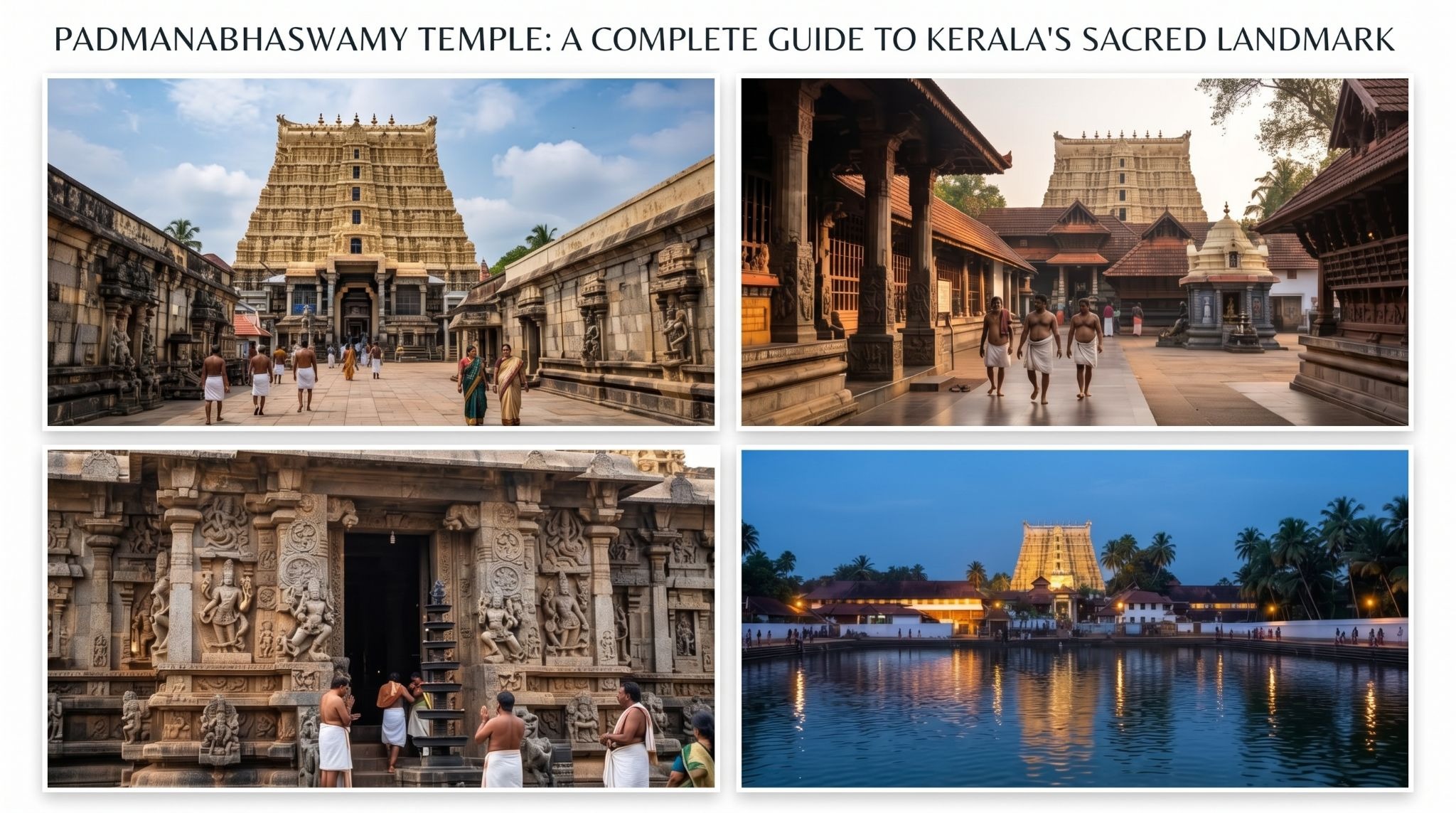
In the heart of Thiruvananthapuram, the Padmanabhaswamy Temple rises behind the historic walls of East Fort as one of Kerala’s most revered religious landmarks. Dedicated to Lord Vishnu in his reclining form on the serpent Anantha, the temple is admired not only for its spiritual importance but also for its distinctive blend of Kerala and Dravidian architecture. Its towering entrance, detailed stonework, murals and centuries of tradition give the surrounding area an atmosphere that feels deeply connected to the history of the city.
For travelers, visiting the Padmanabhaswamy Temple is very different from checking another attraction off a sightseeing list. It is an active place of worship with strict traditions, a specific dress code and entry restrictions. Understanding these customs before arriving makes the experience smoother and more respectful. The temple also provides an excellent starting point for exploring the heritage, markets and cultural attractions of central Thiruvananthapuram.
Why Padmanabhaswamy Temple Is Historically Important
The history of the shrine reaches back many centuries, with references associated with the temple dating to at least the 8th century. It is also counted among the 108 Divya Desams, which are sacred Vishnu temples celebrated in the Tamil Vaishnava tradition.
The temple took its present architectural form largely through major renovations carried out during the reign of Maharaja Marthanda Varma of Travancore. In 1750, he dedicated the kingdom of Travancore to Lord Padmanabha and adopted the title Padmanabha Dasa, meaning servant of the Lord. This tradition shaped the relationship between the Travancore royal family and the temple for generations.
| Historical feature | Why it matters |
| Ancient origins | The temple has a history associated with the early medieval period |
| Divya Desam | It is one of the 108 sacred Vishnu temples in the Vaishnava tradition |
| Marthanda Varma | His reign brought major changes to the temple and its administration |
| Travancore connection | The royal family has traditionally served the deity as Padmanabha Dasa |
What to See at Padmanabhaswamy Temple
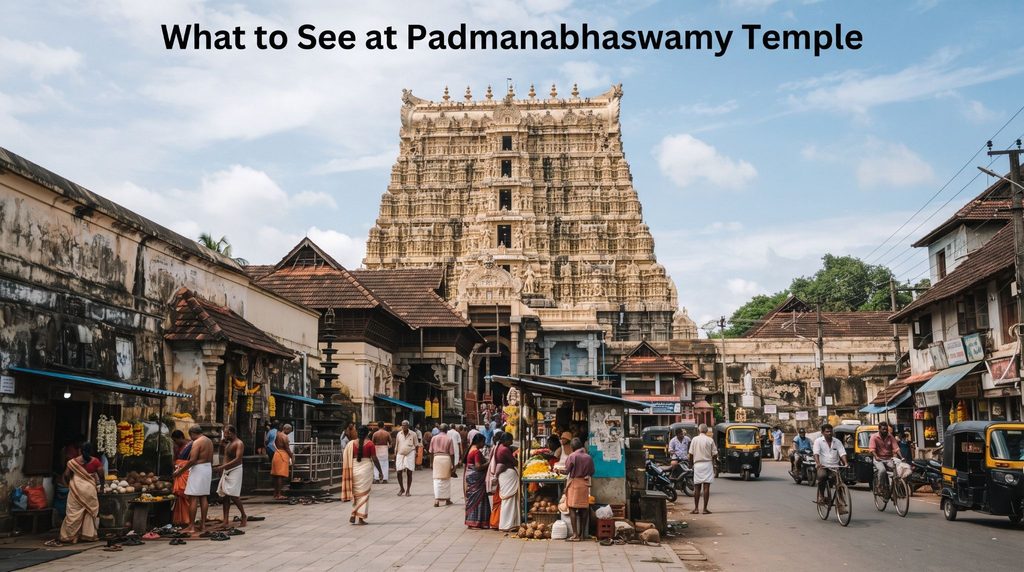
The most important sight is the principal deity, Lord Vishnu reclining on Anantha. The idol is traditionally described as containing 12,008 salagramams, sacred stones associated with Vishnu worship. The temple interiors also feature murals and detailed works in stone, bronze and wood.
The Temple Architecture
The building reflects a fascinating meeting of Kerala and Dravidian architectural traditions. Its monumental eastern entrance is one of the most recognizable features of the complex, while the detailed carvings reward visitors who take time to look closely.
Padma Theertham
Near the temple is Padma Theertham, a sacred temple tank whose name is associated with the lotus. The tank adds to the traditional character of the East Fort surroundings and forms an important part of the temple landscape.
Best Time to Visit Padmanabhaswamy Temple
Thiruvananthapuram has a tropical climate, so travelers should consider both weather and temple activity when planning a visit. The temple can be especially atmospheric during major festival periods, although worship schedules can change during festivals.
For a quieter sightseeing experience around the city, it is sensible to avoid planning your entire visit around a festival unless you specifically want to experience the celebrations. The temple celebrates major festivals including Alpasi Utsavam and Painkuni Utsavam. Alpasi falls around October and November, while Painkuni is held around March and April.
| Period | What travelers can expect |
| October to November | Alpasi Utsavam period |
| March to April | Painkuni Utsavam period |
| Other periods | Regular temple worship with schedules subject to change |
| Festival days | Larger religious activity and possible changes to normal timings |
Padmanabhaswamy Temple Timings and Entry Rules
Temple worship takes place during several morning and evening periods rather than continuously throughout the day. Kerala Tourism currently lists morning worship periods beginning as early as 3:30 AM and evening worship continuing into the evening. These timings may change during festivals, so checking current information before setting out is important.
Entry is restricted to Hindus. Visitors who are permitted to enter must also follow the temple’s traditional dress requirements. Men are expected to wear a mundu or dhoti and cannot enter wearing a shirt. Women may wear a sari, set-mundu, skirt and blouse or half-sari. Dhotis are available for rent at the entrance, and Kerala Tourism notes that men may wear a dhoti over trousers and women may wear a churidar underneath where permitted by the current rules.
| Visitor | Traditional requirement |
| Men | Mundu or dhoti, without a shirt |
| Women | Sari, set-mundu, skirt and blouse or half-sari |
| Dhoti rental | Available at the temple entrance |
| Temple entry | Restricted to Hindus |
How to Reach Padmanabhaswamy Temple
The temple is located inside East Fort in central Thiruvananthapuram, making it convenient to combine with other city attractions.
Thiruvananthapuram Central railway station is approximately 1 kilometer from the temple. Thiruvananthapuram International Airport is approximately 6 kilometers away. Because the temple sits within a busy historic part of the city, travelers should allow additional time for local traffic and finding suitable parking or drop-off arrangements.
For visitors arriving by train, the short distance from the central railway station makes the temple particularly accessible. Those arriving by air can reach the city center by local taxi or other available city transportation.
Things to Do Around Padmanabhaswamy Temple
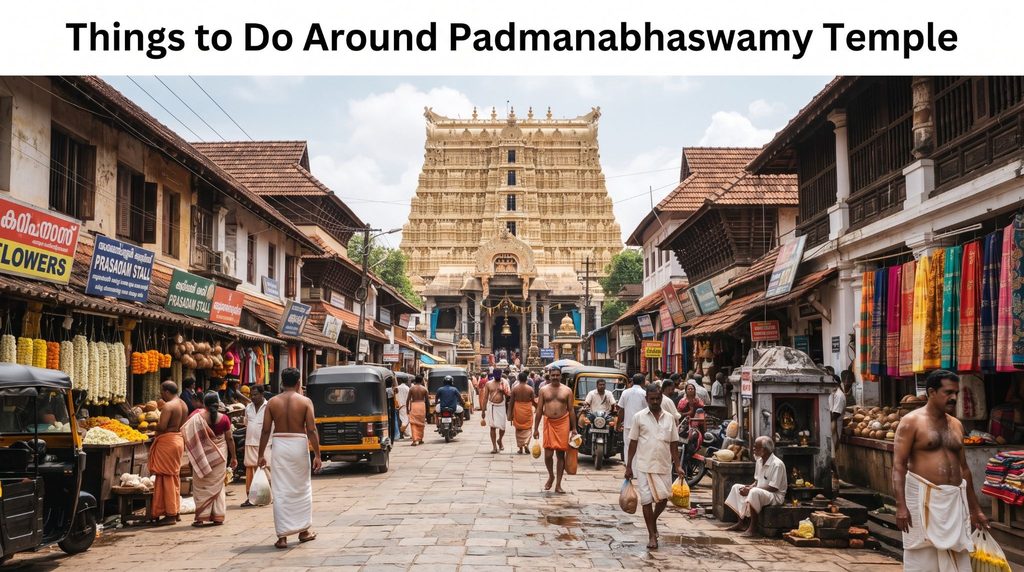
A visit does not need to end at the temple entrance. East Fort and central Thiruvananthapuram offer several opportunities to experience the city’s history and everyday culture.
Explore East Fort
East Fort provides a glimpse into the historic core of the former Travancore capital. Walking through the area gives travelers a better sense of how the temple has long been connected with the city’s identity.
Discover Local Culture
The streets around the temple are useful for experiencing traditional Kerala life, local shopping and the rhythm of the old city. Take your time rather than rushing between attractions.
Visit During a Festival
If your travel dates coincide with Alpasi or Painkuni Utsavam, the surrounding area can offer a particularly memorable cultural experience. The celebrations include traditional rituals and processions, although visitors should always follow instructions from temple authorities.
Practical Tips for Visiting Padmanabhaswamy Temple
The most important preparation is understanding that this is a functioning religious institution rather than a conventional tourist attraction.
Arrive appropriately dressed or be prepared to obtain the required clothing at the entrance. Keep your visit respectful and follow directions from temple officials. Since worship timings can change, verify the current schedule before traveling, particularly during festival periods.
It is also worth leaving enough time for the surrounding heritage area. The temple itself is only one part of the historical character of East Fort.
What Makes Padmanabhaswamy Temple Unique
Few landmarks combine religion, royal history, architecture and living tradition as closely as this shrine. Its association with the Travancore royal family, its distinctive reclining Vishnu image and its architectural mixture make it an important part of Kerala’s cultural landscape.
The temple is also widely known for the enormous wealth associated with its underground vaults, which brought international attention to the shrine. However, reducing the temple to its treasures misses much of what makes it significant. Its deeper importance lies in its continuing religious traditions and its role in the history of Thiruvananthapuram.
FAQs
Is the temple open to everyone?
No. Entry into the temple is restricted to Hindus. Visitors who are permitted to enter must also follow the prescribed dress code.
What should men wear when visiting?
Men should wear a mundu or dhoti and are not permitted to enter wearing a shirt. Dhotis are available for rent near the entrance.
What should women wear?
Women may wear a sari, set-mundu, skirt and blouse or half-sari according to the temple’s stated dress requirements.
Can visitors take photographs inside?
Travelers should follow the temple’s current photography and visitor rules rather than assuming that normal tourist photography is allowed. Religious areas can have restrictions, so follow instructions from temple authorities.
How long should I plan for the visit?
The time needed depends on worship schedules, queues and the purpose of your visit. Allowing extra time is sensible, especially if you also want to explore East Fort and the surrounding historic area.
Conclusion
A visit to this celebrated shrine is best approached with patience and respect. Its importance comes from much more than its architecture or legendary wealth. The temple remains a living center of worship shaped by centuries of Vaishnava tradition, Travancore history and Kerala’s distinctive cultural heritage.
For travelers exploring Thiruvananthapuram, the experience becomes more meaningful when you understand the customs before arriving. Dress appropriately, check the current worship schedule and take time to appreciate the historic surroundings. Rather than treating the temple as simply another sightseeing stop, approach it as a place where the past and present continue to meet.
Read More:Arunachalam Temple: A Spiritual Journey Through Tiruvannamalai

I am a travel enthusiast who loves exploring India’s beautiful destinations, culture, history, food, and hidden places. Through my travel website, I aim to help travelers discover amazing places in India and plan memorable trips with useful travel information and tips.