Wayanad has a way of making a journey feel slower in the best possible sense. Roads wind through forested hills, coffee and spice plantations appear between stretches of green, waterfalls emerge after the monsoon, and mist often settles over the Western Ghats as though the landscape has been deliberately softened. But the appeal of Wayanad goes far beyond scenery. Ancient rock carvings, wildlife sanctuaries, mountain trails, lakes, temples and indigenous heritage give the district a remarkable variety of experiences.
The best Wayanad places are not all designed for the same kind of traveler. Some reward an early start and a willingness to hike, while others are easy to combine with a relaxed family holiday. There are places for wildlife watching, quiet mornings by the water, history, photography and simply getting away from busy city life. This guide brings those experiences together so you can decide what deserves a place on your own Wayanad itinerary.
Why Wayanad Is Worth Exploring
Wayanad occupies a highland region of Kerala within the Western Ghats, with landscapes shaped by forests, valleys, plantations, rivers and mountain ranges. Its name is associated with Vayal Nadu, or “land of paddy fields,” reflecting the area’s agricultural character.
What makes a trip here particularly rewarding is the variety within a relatively compact destination. You can spend one day exploring prehistoric engravings at Edakkal Caves, another looking for elephants in a wildlife sanctuary, and another walking around a lake or trekking through the hills.
Wayanad also has a strong cultural dimension. Indigenous communities including the Paniyas, Kurichiyas and Kurumbas have long been part of the region’s social and cultural fabric, while historic temples, Jain heritage and colonial-era stories add further layers to the landscape.
Best Wayanad Places to Visit
There is no single “best” attraction in Wayanad. Your ideal choices depend on whether you prefer adventure, wildlife, history, scenery or a slower holiday.
| Place | Best for | Experience | Effort level |
| Edakkal Caves | History and archaeology | Prehistoric rock engravings and hill scenery | Moderate |
| Chembra Peak | Trekking | Mountain views and the famous heart-shaped lake | High |
| Banasura Sagar Dam | Landscapes and boating | Reservoir views and mountain surroundings | Easy to moderate |
| Pookode Lake | Families and relaxed outings | Lakeside scenery and boating | Easy |
| Wayanad Wildlife Sanctuary | Wildlife | Forests, birds and chances of seeing large mammals | Moderate |
| Kuruva Island | Nature | Riverine landscape, bamboo rafting and walking | Easy to moderate |
| Soochipara Waterfalls | Waterfalls and nature | Forest setting and cascading water | Moderate |
| Thirunelli Temple | Culture and spirituality | Ancient temple in a forested mountain setting | Easy |
| Wayanad Heritage Museum | Culture | Indigenous artefacts and regional history | Easy |
| Lakkidi View Point | Photography | Valley and mountain panoramas | Easy |
Edakkal Caves
Among all the attractions in Wayanad, Edakkal Caves stand apart because they connect the present landscape with a very distant human past. Located in the Ambukuthi Hills, the site contains prehistoric rock carvings and markings that provide evidence of early human activity in the region.
Reaching the caves involves an uphill walk, so comfortable shoes are worthwhile. The attraction is particularly rewarding for travelers who enjoy archaeology, history and places that feel different from conventional sightseeing stops.
Do not think of Edakkal as simply a cave visit. The climb itself gives you a sense of the terrain, while the carvings make the destination one of the most culturally significant places to see in Wayanad.
Chembra Peak
For travelers who want to experience Wayanad on foot, Chembra Peak is one of the most memorable choices. It is the highest peak in Wayanad and is known for its trekking landscape and the heart-shaped lake associated with the route.
The trek requires considerably more effort than a viewpoint or lakeside attraction. Conditions and access arrangements can also vary, so travelers should check current permissions and trekking rules before setting out.
The reward is not simply reaching a high point. As the trail climbs, the surrounding valleys and layers of the Western Ghats gradually open up, making the journey itself part of the experience.
Banasura Sagar Dam
Banasura Sagar is one of the most recognizable landscapes in Wayanad. The large reservoir is surrounded by hills and forms an attractive setting for sightseeing, photography and outdoor activities. Kerala Tourism identifies it as India’s largest earthen dam.
The surrounding landscape changes noticeably with weather and season. On clear days, the combination of water, hills and scattered greenery makes it especially appealing to photographers.
It is also a useful stop for travelers who want scenic surroundings without committing to a demanding trek.
Pookode Lake
Pookode Lake is one of the easier Wayanad attractions to include in a relaxed itinerary. The freshwater lake sits amid the hills around Vythiri and is associated with boating and peaceful lakeside scenery.
Families often find this type of attraction easier to enjoy than a strenuous hiking destination, while photographers can make the most of the surrounding greenery. It works particularly well as part of a day exploring the Vythiri and Lakkidi side of Wayanad.
Wayanad Places for Wildlife and Forest Adventures

Wayanad becomes a very different destination once you enter its forests. The district forms an important part of the wider Nilgiri landscape, and its wildlife areas support elephants, tigers, leopards, deer, gaur and numerous bird species.
Wayanad Wildlife Sanctuary
The Wayanad Wildlife Sanctuary is divided into the Muthanga and Tholpetty ranges and is part of the Nilgiri Biosphere Reserve. Established in 1973, the sanctuary is an important conservation landscape as well as a major wildlife attraction.
A safari is not a guaranteed wildlife checklist, and that is worth remembering. Forest animals move according to their own rhythms. The real pleasure lies in entering the habitat, watching the changing vegetation and perhaps catching sight of an elephant, deer, gaur or one of the area’s many birds.
Early morning and late afternoon are generally favored for wildlife viewing, although the best experience depends on conditions and current sanctuary arrangements.
Tholpetty Wildlife Sanctuary
Tholpetty forms the northern section of Wayanad Wildlife Sanctuary and is particularly appealing to visitors who want a forest-focused experience. It lies near Mananthavady and Thirunelli and offers opportunities for jeep safaris, trekking and birdwatching.
Because this is a protected forest, visitors should follow all entry requirements and wildlife guidelines. Current safari availability, permits and regulations can change, so checking official information before traveling is important.
Muthanga Wildlife Sanctuary
Muthanga, in southern Wayanad, is the other major section of Wayanad Wildlife Sanctuary. It is known for its forest habitat and elephant conservation landscape.
Muthanga is a good choice if wildlife is a central reason for your trip. Give yourself enough time rather than trying to squeeze a safari into an already crowded sightseeing day.
Waterfalls, Islands and Outdoor Escapes
Wayanad’s natural attractions become especially dramatic during and after the monsoon, although heavy rain can affect access and outdoor activities.
Soochipara Waterfalls
Soochipara, also known as Sentinel Rock Waterfalls, is one of Wayanad’s better-known waterfall destinations. The attraction combines a forested setting with a prominent cascade and is particularly appealing to travelers who want to spend time outdoors rather than simply stop for a photograph.
Waterfall conditions can change considerably with rainfall. During wet periods, rocks and trails may become slippery, and access restrictions can be introduced when conditions are unsafe. Always follow local instructions rather than treating a waterfall visit as a casual walk.
Kuruva Island
Kuruva Island, commonly known as Kuruvadweep, offers a quieter kind of nature experience. The cluster of riverine islands is surrounded by the waters of the Kabini system and is known for greenery, walking and nature-oriented activities such as bamboo rafting.
Its appeal is less about seeing a single spectacular landmark and more about spending a few unhurried hours among trees and waterways.
Meenmutty Waterfalls
Meenmutty is another major waterfall destination in Wayanad and is associated with a more adventurous outing. Kerala Tourism describes the waterfall as a large multi-tiered cascade and highlights the surrounding trekking experience.
The route and access conditions can vary, so this is one place where current local guidance matters more than relying on an old itinerary.
Historic and Cultural Places in Wayanad
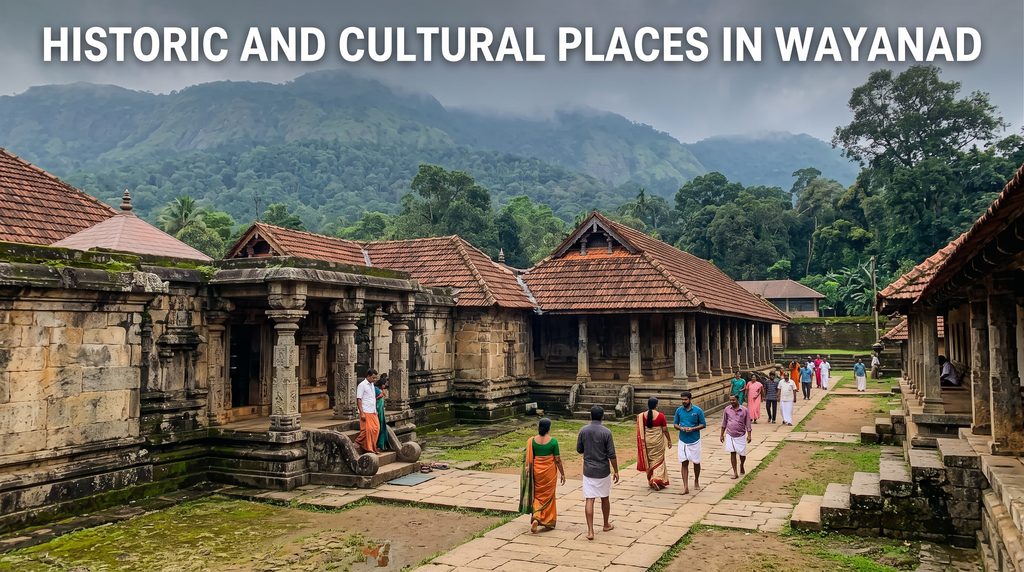
Wayanad’s history is not confined to museums. It is visible in caves, temples, monuments and the continuing cultural presence of indigenous communities.
Wayanad Heritage Museum
The Wayanad Heritage Museum at Ambalavayal is a useful stop for travelers who want context before exploring the district more deeply. Its exhibits provide insight into indigenous communities, traditional tools, artefacts and regional history.
It is particularly worthwhile when traveling with children or anyone interested in understanding the human story behind Wayanad’s landscapes.
Thirunelli Temple
Set amid the Brahmagiri Hills near the northern forests, Thirunelli Temple is one of Wayanad’s important pilgrimage sites. Its setting is a major part of its character: forested hills surround the temple, creating an atmosphere very different from an urban religious complex.
Visitors should treat it as an active religious site, observing local customs and dress expectations rather than approaching it purely as a sightseeing attraction.
Pazhassi Tomb
The Pazhassi Tomb in Mananthavady commemorates Pazhassi Raja, an important figure in Kerala’s resistance history. It provides a useful historical counterpoint to Wayanad’s nature-focused attractions.
If your itinerary already includes Tholpetty or other northern Wayanad attractions, adding Mananthavady’s historical sites can create a more balanced day.
Scenic Wayanad Places for Photography
Wayanad is unusually generous to photographers because the scenery changes constantly with altitude, weather and light.
| Photography setting | What makes it special | Best approach |
| Lakkidi View Point | Valley and Western Ghats scenery | Early morning or late afternoon |
| Banasura Sagar | Water, hills and broad landscapes | Allow time for changing light |
| Pookode Lake | Reflections and forested surroundings | Calm mornings work well |
| Chembra route | Mountain scenery and changing perspectives | Photograph along the trail |
| Edakkal Caves | Ancient carvings and rocky landscape | Focus on details as well as wide views |
| Wildlife sanctuary | Forests and wildlife | Use patience rather than chasing sightings |
Lakkidi and Neelimala are among the viewpoints highlighted by Kerala Tourism for their valley and mountain vistas.
For wildlife photography, remember that the subject’s welfare comes first. Keep appropriate distance, follow guide instructions and avoid trying to attract animals for photographs.
The Best Time to Visit Wayanad Places
Wayanad can be visited across much of the year, but the experience changes significantly with the seasons.
The monsoon brings intense greenery and fuller waterfalls, yet rain can make trekking trails slippery and may affect access to outdoor attractions. The cooler months are generally comfortable for sightseeing and outdoor activities, while warmer periods can be useful for wildlife viewing because animals may gather near water sources. Kerala Tourism specifically notes October to May as a favorable period for visiting Tholpetty, while its wildlife guidance also highlights seasonal differences in viewing conditions.
| Season | What to expect | Best suited to |
| October–February | Cooler weather, green landscapes and comfortable outdoor conditions | Sightseeing, trekking, wildlife |
| March–May | Warmer days, with wildlife often easier to look for near water | Wildlife and shorter outdoor outings |
| June–September | Heavy monsoon rain, lush scenery and powerful waterfalls | Rain lovers, photographers and flexible travelers |
If trekking is your priority, check the latest trail status rather than choosing dates based solely on a seasonal guide.
How to Reach Wayanad
Wayanad does not have its own major railway station or commercial airport, so most visitors approach it by road from neighboring parts of Kerala or Karnataka.
Calicut (Kozhikode) is a commonly used gateway, with Kerala Tourism listing Calicut Railway Station and Calicut International Airport among the nearest major transport points. Kannur International Airport is another useful option depending on where you plan to stay and which side of Wayanad you want to explore.
| Travel option | Practical choice | Best for |
| Road from Kozhikode | Convenient gateway into western Wayanad | Travelers arriving by train or air |
| Road from Kannur | Useful for northern Wayanad | Tholpetty and Mananthavady side |
| Road from Mysuru/Karnataka | Convenient for travelers approaching from Karnataka | Northern and eastern routes |
| Private car/taxi | Flexible between attractions | Families and small groups |
| Local buses/taxis | Useful for selected routes | Budget travelers |
Travel times vary with the starting point, route, traffic and road conditions, so it is better to plan by destination zone rather than assuming every attraction is close to every other one.
Where to Stay and How to Plan Your Days
Wayanad is spread across a sizeable area, so choosing accommodation based on your sightseeing plans can save considerable road time.
Kalpetta and surrounding areas work well as a central base for travelers combining several parts of the district.
Vythiri and Lakkidi are convenient for Pookode Lake, viewpoints and the western hill landscapes.
Sultan Bathery is useful for southern attractions, including Edakkal Caves and access toward Muthanga.
Mananthavady makes more sense for travelers concentrating on northern Wayanad, Tholpetty and Thirunelli.
Rather than attempting every attraction in two days, choose a region each day. Wayanad rewards slower travel because some of its best moments happen between major stops.
A Practical Three-Day Wayanad Itinerary
A three-day trip can cover a good range without turning the holiday into a race.
Day 1 – Hills and heritage: Start around Edakkal Caves, explore the Ambalavayal area and continue toward Sultan Bathery. If energy allows, add a nearby cultural or historical stop.
Day 2 – Vythiri and western Wayanad: Explore Pookode Lake and Lakkidi, then spend time around the surrounding hills. Keep the afternoon flexible rather than packing in too many distant attractions.
Day 3 – Wildlife and forests: Choose either Muthanga or Tholpetty according to your accommodation and route. Combine the wildlife experience with nearby attractions rather than crossing the entire district several times.
If trekking is the main purpose of the trip, restructure the itinerary around Chembra and allow adequate time for the hike instead of treating it as a quick sightseeing stop.
Food and Local Flavors to Look For Wayanad Places

A trip through Wayanad is also a chance to experience the food culture of northern Kerala. Look for Kerala-style meals served with rice, vegetable preparations, curries, coconut-based flavors and locally available ingredients.
Wayanad is also associated with coffee, spices, tea and agricultural products.
Rather than searching only for elaborate tourist restaurants, travelers can pay attention to small local eateries and traditional Kerala meals. When buying packaged spices, coffee or other regional products, choosing reputable local producers and checking labeling is a sensible approach.
Smart Travel Tips for Wayanad
Wayanad is easy to enjoy when you plan around its terrain and weather rather than trying to force every attraction into one schedule.
- Wear comfortable shoes for caves, viewpoints and uneven trails.
- Carry water and sun protection even when the weather feels cool.
- Keep a rain layer available, particularly during the wetter months.
- Check current access rules before visiting wildlife sanctuaries, waterfalls or trekking areas.
- Start early for popular outdoor activities and longer drives.
- Do not expect guaranteed wildlife sightings.
- Respect forest boundaries and never feed wild animals.
- Treat temples and indigenous cultural spaces with appropriate respect.
- Keep some flexibility in your itinerary because rain can alter outdoor plans.
- Avoid rushing between attractions simply to increase the number of places on your list.
The most important tip is to think geographically. Wayanad’s attractions are spread across different parts of the district, and grouping nearby places together will make the trip considerably more enjoyable.
Which Wayanad Places Are Best for Different Travelers?
There is a simple way to narrow the list if you are short on time.
For first-time visitors: Edakkal Caves, Pookode Lake, Banasura Sagar Dam and one wildlife experience provide a good introduction to the region.
For adventure travelers: Chembra Peak, Meenmutty, Soochipara and forest-based activities deserve priority.
For families: Pookode Lake, selected viewpoints, the heritage museum and easier sightseeing stops are generally more manageable.
For wildlife enthusiasts: Choose either Muthanga or Tholpetty and give the experience enough time.
For history and culture lovers: Edakkal Caves, Wayanad Heritage Museum, Thirunelli Temple and Pazhassi Tomb create a strong cultural route.
For photographers: Lakkidi, Banasura Sagar, Pookode Lake, waterfalls and mountain trails offer the greatest variety.
FAQs
What are the best places to visit in Wayanad for a first trip?
Edakkal Caves, Pookode Lake, Banasura Sagar Dam, a Wayanad Wildlife Sanctuary experience and a scenic viewpoint make a well-rounded first visit. Add Chembra Peak if trekking is a priority.
How many days are enough to explore Wayanad?
Three days is a useful starting point for seeing several major attractions without rushing constantly. Four or five days are better if you want to combine wildlife, trekking, waterfalls and cultural sites at a comfortable pace.
Which part of Wayanad is best to stay in?
Kalpetta is a practical central base, while Vythiri suits travelers interested in the western hills. Sultan Bathery works well for southern attractions, and Mananthavady is convenient for northern Wayanad and Tholpetty.
Is Wayanad suitable for a family trip?
Yes. Many attractions require little physical effort, including Pookode Lake, viewpoints and museums. Families should plan more carefully for trekking routes, waterfalls and activities where terrain or weather can make conditions difficult.
Is Wayanad worth visiting during the monsoon?
It can be, particularly if you enjoy lush landscapes, mist and dramatic waterfalls. However, heavy rain can affect trekking, road conditions and access to some outdoor attractions, so a flexible itinerary is important.
Conclusion
Wayanad is at its best when you resist the temptation to treat it as a checklist of tourist attractions. Its real character emerges from the combination of experiences: an ancient carving site in the morning, a winding road through plantations, a quiet lake in the afternoon and forest sounds somewhere beyond the road.
Choose the places that match the kind of trip you want rather than trying to see everything. Whether that means climbing into the hills, watching for elephants, exploring Wayanad’s deep history or simply finding a peaceful corner among the forests, the district offers enough variety to make a carefully planned journey feel genuinely rewarding.
Read More: Dudhsagar Falls: Complete Travel Guide to Goa’s Legendary Waterfall

I am a travel enthusiast who loves exploring India’s beautiful destinations, culture, history, food, and hidden places. Through my travel website, I aim to help travelers discover amazing places in India and plan memorable trips with useful travel information and tips.