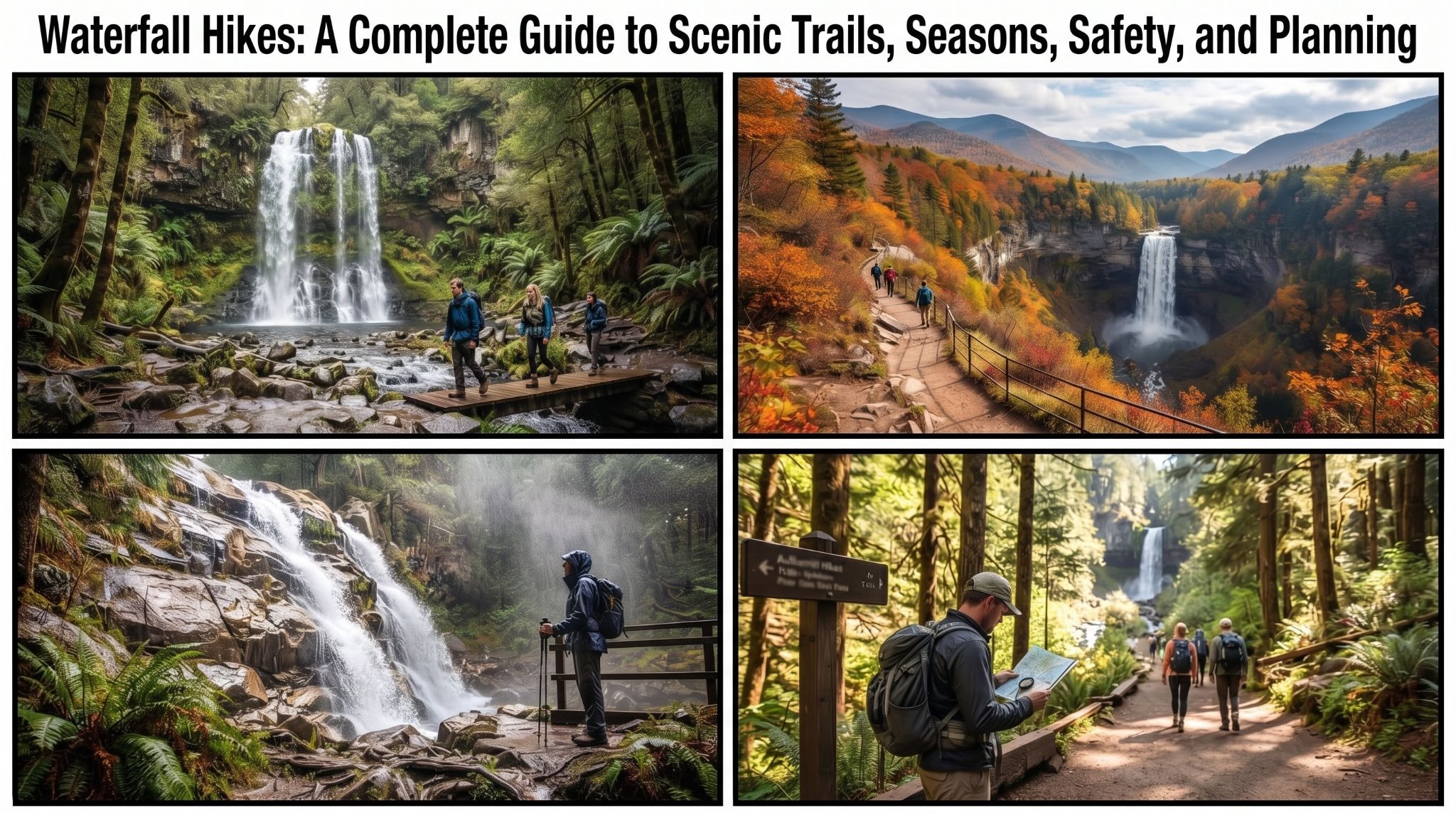
Waterfall hikes combine two of the most rewarding parts of outdoor travel: the quiet rhythm of a trail and the dramatic arrival at a cascade of falling water. Unlike a simple sightseeing stop, a hike to a waterfall turns the journey itself into part of the experience. Forest paths, rocky streams, mountain views, and changing landscapes can make even a relatively short walk memorable.
The best waterfall hikes are not always the longest or most difficult. Some follow gentle woodland trails and end at an easily accessible viewpoint, while others involve steep climbs, river crossings, slippery rocks, and changing weather. Choosing the right trail depends on the season, your fitness level, trail conditions, and how much time you want to spend outdoors. With sensible preparation, waterfall walks can be enjoyable for beginners and experienced hikers alike.
Why Waterfall Hikes Are Worth Exploring
A waterfall offers a natural destination, but the real attraction is often everything encountered along the way. Trails frequently pass through forests, valleys, cliffs, streams, and other landscapes that are easy to overlook from a road or vehicle.
Waterfall hikes can also suit different styles of travel. A short trail may work well for families or travelers with limited time, while a longer route can become a full-day adventure. The sound of rushing water provides a natural reward at the end of the journey, and many falls look completely different depending on rainfall and season.
| Trail feature | What it can offer | What to consider |
| Forest trail | Shade, wildlife, peaceful surroundings | Mud and slippery roots after rain |
| Mountain trail | Panoramic scenery and elevation | Steeper climbs and changing weather |
| Streamside route | Water views throughout the walk | Wet rocks and possible crossings |
| Short access trail | Easier visit with less time required | May be busier than remote routes |
Choosing Waterfall Hikes for Your Experience Level
Not every trail should be judged by distance alone. A two-mile route with steep elevation gain can be more demanding than a longer trail across relatively level ground. Look at elevation, terrain, expected trail conditions, and the time required rather than focusing only on mileage.
Beginner Friendly Trails
For a first waterfall walk, choose a clearly marked route with modest elevation gain and reliable access. Trails with maintained surfaces and established viewpoints are generally easier to manage. Beginners should still wear suitable footwear because damp ground and rocks can become slippery.
More Challenging Routes
Experienced hikers may prefer routes involving significant elevation changes, rough terrain, stream crossings, or longer distances. These trails require more planning, particularly when weather can change quickly. A challenging route should never be selected simply because its waterfall photographs look impressive.
| Experience level | Suitable trail characteristics | Useful preparation |
| Beginner | Short distance, maintained path, modest elevation | Water, comfortable shoes, basic navigation |
| Intermediate | Moderate climbs, uneven terrain | Trail map, extra water, weather check |
| Experienced | Long routes, steep sections, remote terrain | Navigation tools, emergency supplies, detailed planning |
Best Time to Visit Waterfall Hikes
The best season depends heavily on the location and the type of experience you want. Spring can bring strong water flow in many regions because of seasonal rainfall or snowmelt. Summer often provides longer daylight hours, although some areas can become hot or crowded.
Autumn can offer cooler hiking conditions and colorful foliage in temperate regions. Winter creates a very different experience, with frozen or partially frozen waterfalls possible in cold climates, but ice and shorter daylight can make trails significantly more difficult.
Rain can transform a waterfall dramatically, but hiking immediately after heavy rainfall may also increase the risk of flooding, unstable ground, and slippery surfaces. Always check local conditions before setting out.
| Season | Potential advantages | Possible challenges |
| Spring | Strong flows, fresh vegetation | Mud and wet trails |
| Summer | Long daylight, generally easier access | Heat and crowds |
| Autumn | Cooler conditions, seasonal scenery | Changing weather |
| Winter | Ice and snow scenery in cold areas | Short daylight and hazardous surfaces |
What to Pack for Waterfall Hikes
Good preparation does not require carrying an enormous backpack. The essentials should match the length, remoteness, and conditions of the trail.
Water is the first priority. Carry enough for the planned hike and more when conditions are hot or the route is demanding. Snacks can help maintain energy on longer walks. A small first aid kit, charged phone, navigation aid, weather-appropriate clothing, and a light rain layer are also sensible additions.
Footwear deserves particular attention. Trails around waterfalls are frequently wet, muddy, or rocky. Shoes with dependable traction can make a significant difference.
For remote trails, consider carrying a flashlight or headlamp, extra food, and basic emergency equipment. Let someone know your planned route when hiking somewhere isolated.
Staying Safe on Waterfall Hikes
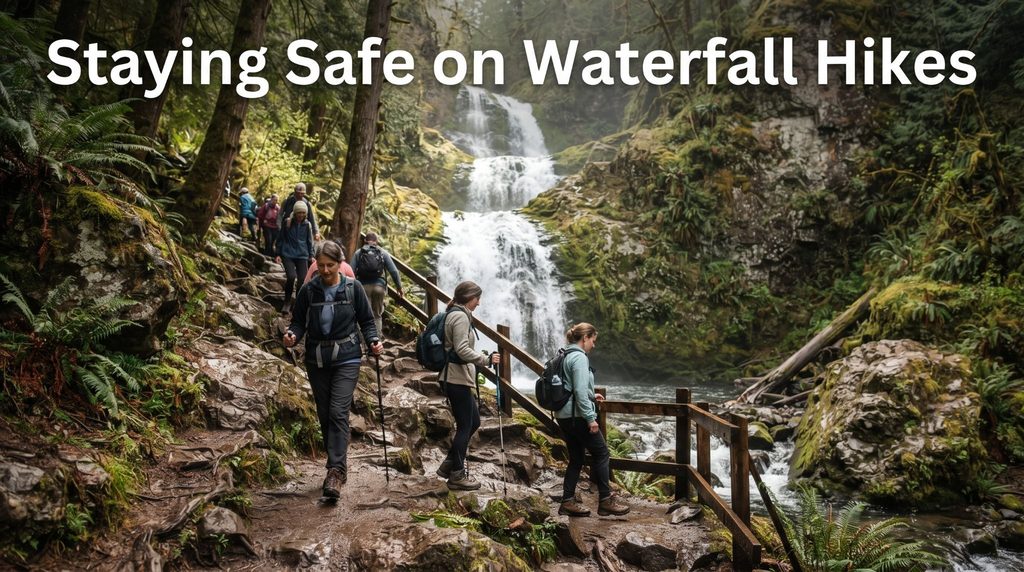
Waterfalls are beautiful but can also create serious hazards. Wet rocks can be extremely slippery, and the safest route is not always the one that leads closest to the water. Never assume that a calm-looking pool is safe for swimming, and avoid climbing directly around a waterfall unless the route is specifically designed and permitted for it.
Fast-moving water deserves extra caution after storms. Water levels can rise quickly, and rocks or river crossings that appear manageable under normal conditions may become dangerous.
Stay on marked paths where possible and respect barriers and warning signs. If conditions become unsafe, turning around is a sensible hiking decision rather than a failure to complete the trail.
How to Plan Waterfall Hikes Efficiently
Start by researching the official trail information for the destination. Check whether the route is open, whether permits or reservations are required, and whether seasonal restrictions apply. Conditions can change even when a trail is officially open.
Plan around daylight rather than assuming the hike will take exactly the advertised time. Allow additional time for photographs, rest stops, navigation, and unexpected delays.
Before leaving, check the weather forecast and consider how recent rainfall may affect the trail. Download or carry appropriate navigation information if mobile coverage may be unreliable.
A Simple Trail Planning Checklist
- Check the current trail status.
- Review distance and elevation gain.
- Look at recent weather conditions.
- Carry sufficient water and food.
- Wear footwear suited to wet or uneven terrain.
- Start early enough to finish safely in daylight.
- Tell someone about your plans for remote routes.
Photographing Waterfall Hikes
Waterfalls naturally attract photographers, but you do not need expensive equipment to capture memorable images. The most important factor is finding a safe viewpoint with a clear composition.
Try photographing the entire landscape rather than focusing only on the falling water. Including trees, rocks, a trail, or surrounding mountains can give the image a stronger sense of place.
Early or later daylight can produce softer light in many outdoor settings. Overcast conditions can also work well because they reduce harsh contrast around bright water and darker surroundings.
Never step beyond a barrier or onto unstable rocks simply to get a better photograph. A slightly less dramatic image is always preferable to an unnecessary risk.
Nearby Experiences Around Waterfall Hikes
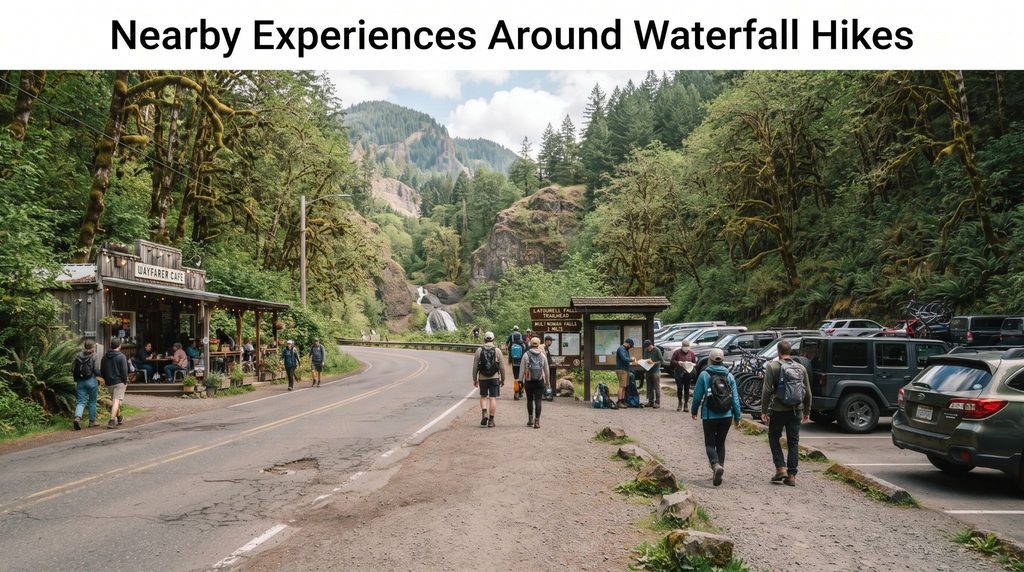
A waterfall trail can often become part of a broader day outdoors. Depending on the destination, nearby attractions may include viewpoints, forests, lakes, historic sites, villages, scenic roads, or other hiking routes.
Consider combining a waterfall walk with a nearby cultural or natural attraction rather than rushing from one location to another. This approach gives you more time to appreciate the landscape and can make a short trail feel like a complete travel experience.
Local communities can also add another dimension to the journey. Restaurants, markets, guides, and small businesses near popular hiking areas may provide useful information about current conditions and regional traditions.
Responsible Travel for Waterfall Hikes
Popular waterfalls can experience considerable visitor pressure, particularly during weekends and peak seasons. Responsible hiking helps protect these places for future visitors.
Stay on established trails instead of creating shortcuts. Take rubbish with you, avoid disturbing wildlife, and leave rocks, plants, and other natural features where you find them. Keep noise reasonable, especially in quiet natural areas.
If a destination has specific rules about swimming, drones, fires, camping, or photography, follow them. Regulations vary from one location to another and may exist to protect both visitors and the environment.
Making Waterfall Hikes More Memorable
The most rewarding waterfall hikes are not necessarily the ones with the biggest cascade. A quieter trail through a forest, a mountain route with changing views, or a secluded stream can be just as memorable.
Give yourself time to enjoy the journey. Listen to the changing sound of water as you approach the falls, notice how the landscape changes with elevation, and take breaks without turning the entire experience into a race.
For travelers building a hiking itinerary, variety is often better than collecting as many waterfalls as possible. Pair a demanding trail with an easier walk, or combine a waterfall with another nearby attraction. The result is a more balanced and enjoyable outdoor trip.
FAQs
Are waterfall trails suitable for beginners?
Yes. Many destinations have short and relatively easy routes suitable for beginners. Choose a well maintained trail with clear information and avoid routes involving difficult terrain until you have more hiking experience.
What shoes are best for a waterfall trail?
Shoes or hiking boots with good traction are generally useful because paths near waterfalls can be wet, muddy, and uneven. The best choice depends on the terrain and weather conditions.
Is it safe to swim near a waterfall?
Not necessarily. Strong currents, slippery rocks, submerged hazards, and changing water levels can make waterfall pools dangerous. Only swim where local authorities clearly permit it and conditions are considered safe.
Should I hike after heavy rain?
Extra caution is needed after heavy rain. Trails can become slippery and streams can rise quickly. Check local warnings and current trail conditions before deciding whether to go.
How much water should I take on a hike?
The amount depends on distance, temperature, elevation, and access to reliable water sources. Carry enough for the planned outing rather than assuming natural water along the trail is safe to drink.
Conclusion
A great waterfall adventure is about more than reaching the falls. The trail, surrounding landscape, changing weather, and quiet moments along the way all become part of the experience. Choose a route that matches your abilities, prepare for the conditions, and treat the natural environment with care. Whether you prefer a gentle forest walk or a demanding mountain route, the right waterfall trail can turn an ordinary day outdoors into a memorable journey.
Read More: Hidden Waterfalls: Secret Natural Escapes Worth Discovering

I am a travel enthusiast who loves exploring India’s beautiful destinations, culture, history, food, and hidden places. Through my travel website, I aim to help travelers discover amazing places in India and plan memorable trips with useful travel information and tips.