On the island of Rameswaram in Tamil Nadu, an ancient Shiva shrine stands at the centre of one of India’s most important pilgrimage landscapes. The setting is unusual: sea, sacred bathing sites, monumental architecture, and stories from the Ramayana all meet within a relatively compact island destination. For many visitors, the journey feels as much like entering a living tradition as visiting a historic monument. (Incredible India)
The principal attraction is the Ramanathaswamy Temple, revered as one of the twelve Jyotirlinga shrines dedicated to Lord Shiva. Its immense corridors, sculpted pillars, sacred wells, and connection with Lord Rama give the pilgrimage a distinctive character. Beyond the temple itself, Rameswaram offers Pamban Bridge, Agni Theertham, Kothandaramaswamy Temple, and other places that help travelers understand the island’s religious and cultural landscape. (Incredible India)
The Spiritual Story Behind the Shrine
The religious identity of Rameswaram is closely connected with the Ramayana. According to traditional belief, Lord Rama worshipped Shiva at this sacred location before continuing his journey toward Lanka. The shrine’s name, Ramanathaswamy, is associated with Shiva as the Lord of Rama. (Incredible India)
The temple therefore occupies a special place in both Shaiva and Vaishnava religious traditions. Its importance is not limited to one story or one community of pilgrims; the site has become part of a much wider sacred geography associated with Rama, Shiva, the sea, and the legendary journey toward Lanka.
A Living Record of South Indian Architecture
The scale of the temple is one of the first things visitors notice. Towering gopurams lead into an expansive complex filled with long corridors, carved stone pillars, shrines, and ceremonial spaces.
The third corridor is particularly famous. India’s official tourism portal describes it as measuring about 197 metres from east to west and 133 metres from north to south. The same source highlights the temple’s elaborate pillars and architectural detailing. (Incredible India)
Rather than rushing through the complex, travelers should take time to observe how the pillars change in appearance, how light moves through the corridors, and how the architecture creates a sense of extraordinary depth.
The Famous Corridors and Pillared Halls
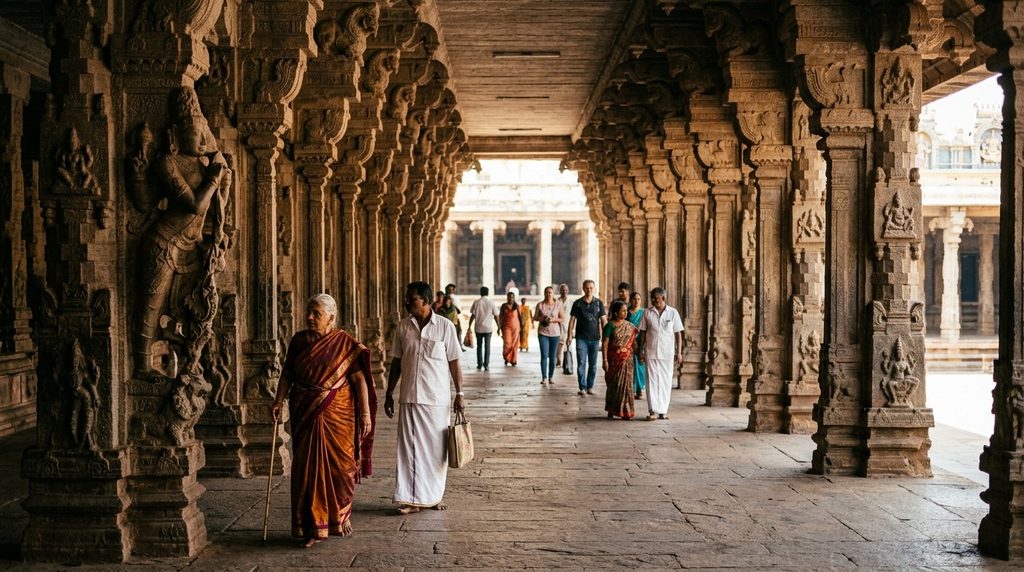
The long passageways are among the defining features of the pilgrimage experience. Incredible India describes the temple as having about 1,212 sculpted pillars, creating an almost continuous rhythm of stone columns through the complex. (Incredible India)
These corridors are impressive not only because of their length but because of their repetition and symmetry. Looking along a corridor from one end can produce a striking perspective, while closer observation reveals individual carvings and decorative details.
For travelers interested in South Indian temple architecture, this is one of the strongest reasons to spend unhurried time inside the complex.
The 22 Sacred Theerthams
Another distinctive feature is the presence of 22 theerthams, or sacred water sources, within the temple. Traditional pilgrimage practice associates these waters with spiritual purification, and bathing in the theerthams forms an important part of the religious experience for many devotees. (Incredible India)
Visitors should understand that these are active religious spaces rather than ordinary tourist attractions. Procedures, access, and arrangements can vary, particularly during busy pilgrimage periods.
| Temple Feature | Why It Matters |
| 22 Theerthams | Sacred water sources associated with pilgrimage traditions |
| Long corridors | Notable feature of the temple’s Dravidian architecture |
| Sculpted pillars | Showcase detailed stone craftsmanship |
| Main sanctum | Houses the revered Shiva shrine |
| Gopurams | Monumental gateways defining the temple complex |
Agni Theertham and the Sea Connection
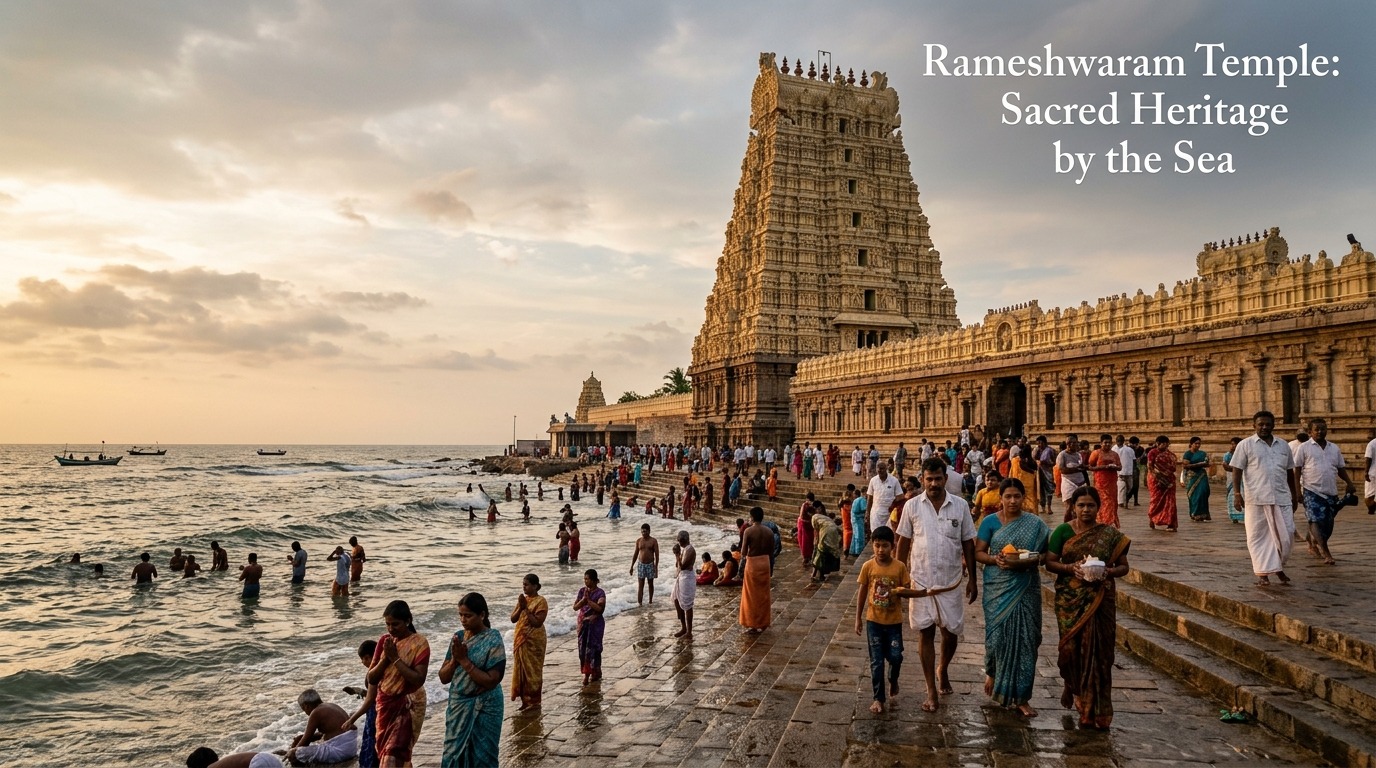
The sea is an important part of the Rameswaram pilgrimage landscape. Agni Theertham, located close to the temple, is traditionally associated with sacred bathing and forms part of the wider religious experience of the town. Official tourism material places the seashore immediately alongside the temple experience. (Incredible India)
The relationship between the temple and the coast gives Rameswaram a character that differs from many inland pilgrimage towns. A visitor can move from monumental stone corridors to an open seafront within a short journey.
If you plan to visit the shore for religious purposes, follow local instructions and current conditions rather than treating the area simply as a beach attraction.
The Deities and Shrines Within the Complex
Lord Shiva is the principal deity, worshipped as Ramanathaswamy. The temple also has important shrines dedicated to Goddess Vishalakshi and other deities, including Vinayaka, Subrahmanya, and Parvathavardhini. (Incredible India)
Traditional accounts also speak of two lingams connected with Rama and Hanuman. The principal one is associated with Ramalingam, while another is traditionally known as Vishvalingam. The story adds another layer to the temple’s connection with the Ramayana. (Incredible India)
For first-time visitors, learning these names beforehand can make the complex easier to understand instead of experiencing it as a series of unfamiliar shrines.
Best Time to Visit
Rameswaram has a warm coastal climate, so the weather can be an important consideration when planning a pilgrimage. The cooler part of the year is generally more comfortable for combining temple visits with outdoor sightseeing and trips around the island.
Religious occasions can bring significantly larger crowds. If your priority is experiencing major devotional activity, festival periods can be rewarding, but they require greater patience and advance planning.
Travelers who prefer a quieter experience may find ordinary weekdays outside major religious occasions more manageable. Before booking, check current temple information, local weather, and any festival-related arrangements.
How to Reach the Island
Rameswaram is connected to mainland India by road and rail, with the railway station serving as an important arrival point for pilgrims. Madurai International Airport is identified by India’s official tourism portal as the nearest airport. (Incredible India)
The approach to the island is itself part of the travel experience. Pamban Bridge is one of the region’s best-known landmarks and provides the visual transition between mainland Tamil Nadu and Rameswaram Island.
Because train services, road conditions, and transport schedules can change, travelers should confirm current services before departure.
| Travel Option | Practical Information |
| Air | Madurai International Airport is the nearest listed airport |
| Rail | Rameswaram has its own railway station |
| Road | The island is connected to mainland Tamil Nadu by road |
| Local sightseeing | Auto-rickshaws, taxis, and other local transport can be useful |
| Festival periods | Allow additional travel time because of heavier visitor movement |
Pamban Bridge and the Journey to Rameswaram

Pamban Bridge is more than a transport link for travelers arriving on the island. It has become one of Rameswaram’s recognizable landmarks and forms a memorable part of the approach to the destination.
India’s official tourism portal notes that the historic Pamban railway bridge was India’s first sea bridge. The wider Rameswaram destination is closely associated with the bridge’s dramatic setting over the waters surrounding the island. (Incredible India)
If your itinerary allows, consider giving the bridge and surrounding area separate time rather than treating them as something to glimpse only during arrival or departure.
Nearby Places Worth Adding to Your Trip
Rameswaram is compact enough to combine several important sites in one journey, but each has a different character.
Panchmukhi Hanuman Temple is associated with local traditions surrounding Hanuman and is known for displays of stones traditionally connected with the Ram Setu story. Gandamadana Parvatham, located on a hillock, is another important religious site associated with the footprints of Lord Rama according to local belief. (Incredible India)
Kothandaramaswamy Temple is another worthwhile addition for travelers interested in the Ramayana traditions of the island. The official tourism portal includes it among the key attractions of a spiritual Rameswaram itinerary. (Incredible India)
Dr. A.P.J. Abdul Kalam Memorial
A visit to Rameswaram does not have to be exclusively religious. The Dr. A.P.J. Abdul Kalam Memorial provides a different perspective on the island’s history by remembering the life and achievements of India’s former president and renowned scientist.
The memorial includes exhibits related to Kalam’s career, including displays and audiovisual material about his work in India’s missile and space programs. Official tourism information lists its opening hours as 10:00 AM to 5:00 PM, though travelers should verify current arrangements before visiting. (Incredible India)
Including the memorial alongside the area’s temples creates a more rounded itinerary, connecting Rameswaram’s spiritual heritage with its modern national history.
Customs and Practical Temple Etiquette
A pilgrimage site deserves a different approach from an ordinary tourist attraction. Dress modestly, follow instructions from temple staff, and be respectful around worshippers and ritual areas.
Photography rules and access arrangements can vary inside religious complexes, so visitors should follow the rules in force on the day of their visit. Avoid treating sacred bathing areas or active worship spaces as photo opportunities.
It is also wise to keep your schedule flexible. A temple visit may take longer than expected because of queues, rituals, or crowd levels, especially during important religious periods.
What Makes the Pilgrimage Memorable
The strongest impression often comes from the way several elements fit together. The story of Rama, the worship of Shiva, the sacred waters, the immense stone corridors, and the surrounding sea are not isolated attractions; they form one interconnected pilgrimage landscape.
That combination gives Rameswaram a sense of place that photographs cannot fully capture. Walking through the long corridors and then encountering the coastal landscape outside makes the transition from temple architecture to sacred geography particularly striking.
For travelers willing to slow down, the destination offers more than a famous temple. It provides an opportunity to see how mythology, architecture, ritual, and geography continue to shape a living Indian pilgrimage centre.
Conclusion
Rameswaram is best approached as a destination where spiritual tradition and coastal geography meet. The Ramanathaswamy shrine provides the central experience, but the long corridors, 22 theerthams, Agni Theertham, Pamban Bridge, and nearby sacred sites give the journey much greater depth.
Good planning makes the visit easier. Check current temple information, allow enough time for queues and local travel, dress respectfully, and avoid trying to compress every attraction into a rushed schedule. The island rewards travelers who leave room for observation.
For anyone interested in South Indian heritage, Shaiva pilgrimage, Ramayana traditions, or monumental temple architecture, Rameswaram offers a journey that remains memorable long after leaving the island.
FAQs
What is the main deity worshipped at the temple in Rameswaram?
The principal deity is Lord Shiva, worshipped as Ramanathaswamy. The shrine is recognized as one of the twelve Jyotirlinga sites associated with Shiva worship. (Incredible India)
How many theerthams are inside the temple?
There are 22 theerthams within the temple complex. They hold important religious significance for pilgrims and are traditionally associated with sacred bathing. (Incredible India)
Why is the temple famous for its corridors?
The complex is renowned for its exceptionally long corridors and large number of sculpted pillars. The third corridor is particularly notable for its impressive dimensions and architectural detailing. (Incredible India)
What are the best places to see near the temple?
Popular nearby attractions include Agni Theertham, Pamban Bridge, Panchmukhi Hanuman Temple, Kothandaramaswamy Temple, Gandamadana Parvatham, and the Dr. A.P.J. Abdul Kalam Memorial. (Incredible India)
How long should I spend in Rameswaram?
A full day can cover the principal temple and several nearby attractions, but two days provide a more relaxed experience. This gives travelers time for the shrine, coastal sites, nearby temples, and the memorial without rushing.
Read more:Karthigai Deepam: The Sacred Festival of Tiruvannamalai

I am a travel enthusiast who loves exploring India’s beautiful destinations, culture, history, food, and hidden places. Through my travel website, I aim to help travelers discover amazing places in India and plan memorable trips with useful travel information and tips.