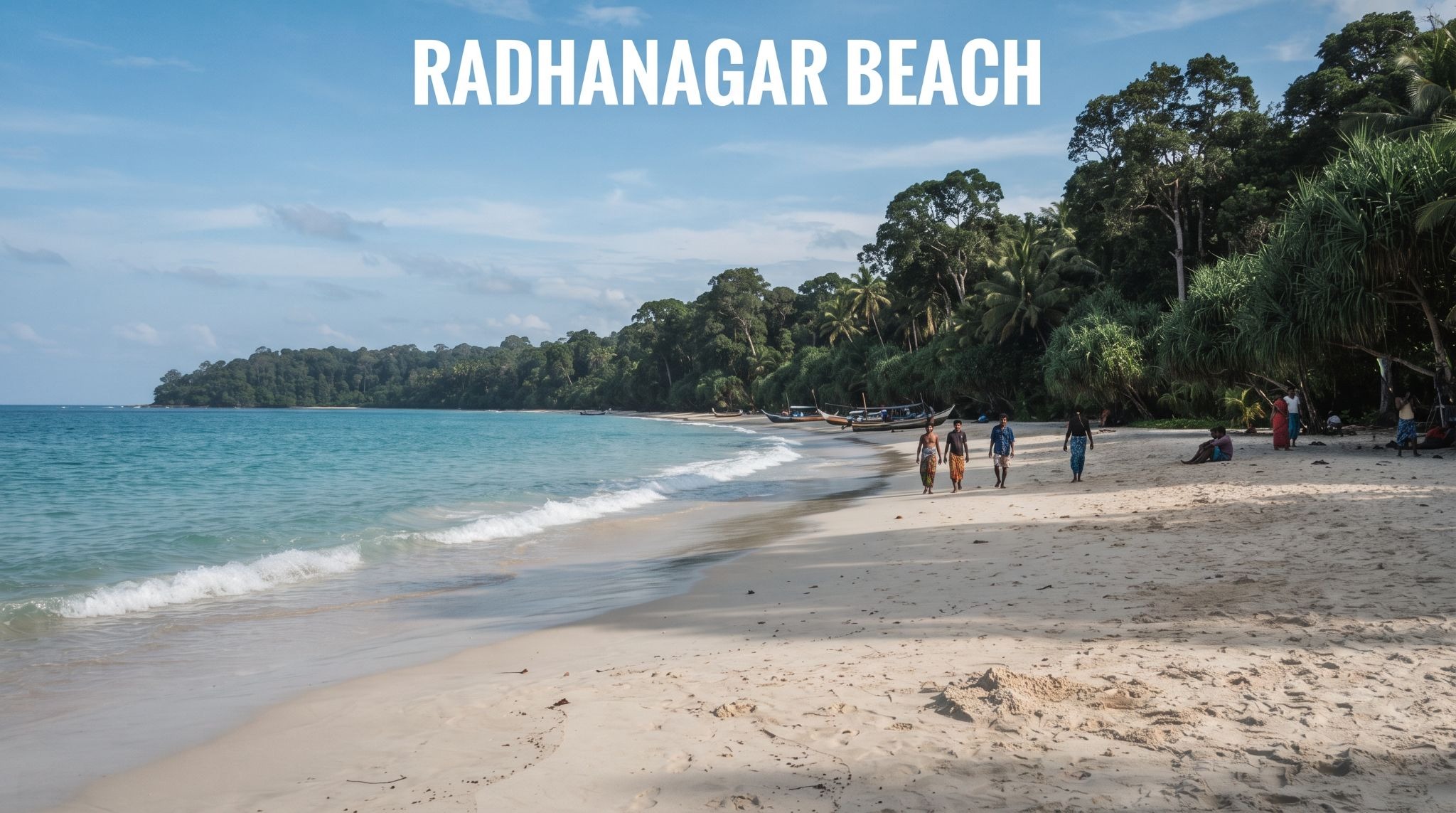
Radhanagar Beach is the kind of place where the landscape does much of the talking. Set on Swaraj Dweep, formerly known as Havelock Island, in the Andaman and Nicobar Islands, it combines soft white sand, clear blue-green water and dense tropical forest in a setting that feels remarkably spacious. The beach is also known as Beach No. 7 and has long been one of the signature attractions of the Andamans.
Yet the appeal goes beyond beautiful scenery. A visit can be as active or as unhurried as you want: swimming in designated areas, walking along the shoreline, watching the changing colours of the evening sky, photographing the meeting point of forest and sea, or simply spending a few quiet hours beside the water. This guide covers what makes Radhanagar Beach special, the best ways to experience it, when to go, how to reach it and what to know before planning your visit.
What Makes Radhanagar Beach Special?
The first impression is the combination of scale and simplicity. Rather than being surrounded by a dense strip of commercial development, the beach is backed by greenery, allowing the natural setting to remain the main attraction.
The sand is pale and fine, while the water can take on shades ranging from turquoise to deeper blue depending on weather, light and sea conditions. The broad shoreline also gives visitors room to spread out, making the beach suitable for both relaxed walks and quiet stretches of sitting by the sea.
Its reputation is not new. In 2004, TIME included Beaches No. 5 and No. 7 on Havelock Island among its “Best Beaches You Can Get To” in its Best of Asia issue.
Radhanagar has also received Blue Flag certification, a recognition associated with environmental management, cleanliness, visitor safety and related standards.
The Landscape Around Radhanagar Beach
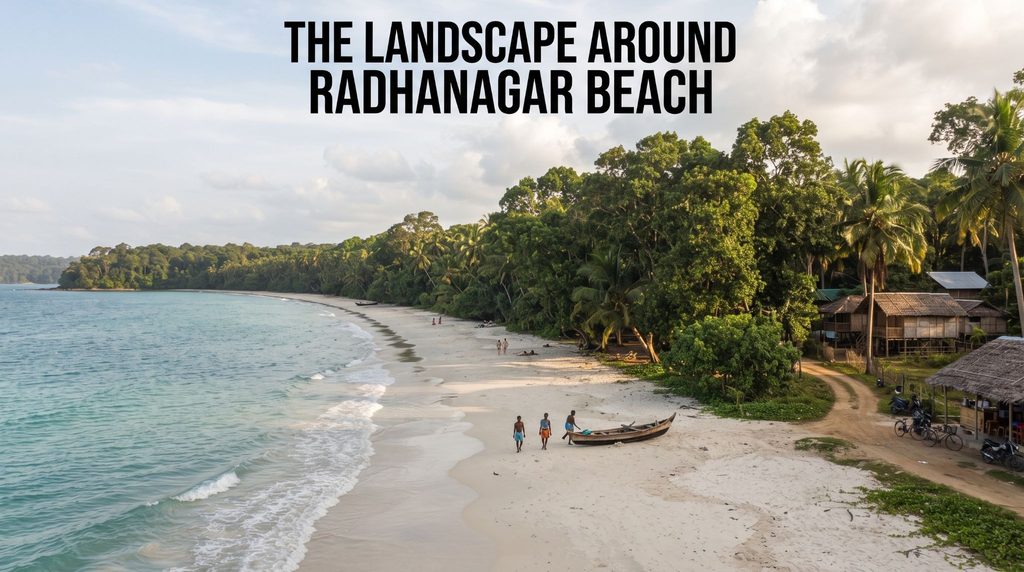
What makes the setting memorable is the contrast between several natural elements.
On one side is the open Bay of Bengal, while behind the beach is thick tropical vegetation. The wide strip of sand creates a visual transition between the two, particularly striking in the softer light of early morning and late afternoon.
The shoreline is especially attractive for photographers because the wet sand can reflect the sky, while the forest provides a strong green backdrop. Instead of looking for one single viewpoint, it is worth walking along the beach and seeing how the composition changes.
For travellers who enjoy nature without needing a demanding trek, this combination is one of the beach’s strongest advantages.
Best Things to Do at Radhanagar Beach
Radhanagar Beach is not primarily about a long list of attractions. Its appeal comes from a handful of experiences that work particularly well in this landscape.
Swim and Relax by the Water
Swimming is one of the simplest ways to enjoy the beach, with designated swimming areas provided for visitors. Conditions can change, however, so follow local instructions and avoid entering the sea when authorities or lifeguards indicate that it is unsafe.
Walk the Shoreline
A long beach walk is one of the easiest ways to appreciate Radhanagar. The scenery changes subtly as you move, with different views of the forest, water and open shoreline.
Watch the Sunset
Sunset is one of the beach’s defining experiences. As the afternoon fades, the bright tropical colours soften and the sand and water take on warmer tones.
Arriving before sunset rather than at the last minute gives you time to walk, choose a comfortable place and watch the light change.
Photograph the Landscape
The beach offers several natural photography subjects: turquoise water, wet reflective sand, forest edges, palm vegetation and evening skies. Early morning can be particularly useful for quieter compositions, while late afternoon offers warmer light.
When Is the Best Time to Visit Radhanagar Beach?
The most popular travel period generally falls during the drier months, when beach activities and island travel are easier to plan. Official tourism information commonly identifies October to May as the favourable period for visiting the Andamans, although conditions can vary from year to year.
The monsoon can bring more unsettled weather, heavier rain and rougher sea conditions. That does not necessarily make the islands unattractive, but it can affect ferry schedules, outdoor activities and the experience of spending time on the beach.
| Travel period | What to expect | Best suited to |
| October–November | Generally pleasant island conditions with improving weather | Beach walks, photography and relaxed sightseeing |
| December–February | Popular travel season with comfortable conditions | First-time visitors and beach-focused trips |
| March–May | Warmer and increasingly humid, but still popular | Swimming, beach time and island exploration |
| Monsoon months | More rain and potentially unsettled sea conditions | Travellers comfortable with flexible plans |
Because weather and marine conditions can change, check current local conditions before travelling rather than treating a seasonal guide as a guarantee.
How to Reach Radhanagar Beach
For most travellers, the journey begins in Sri Vijaya Puram, formerly Port Blair, where Veer Savarkar International Airport serves as the main air gateway to the Andaman Islands. From there, visitors can travel onward to Swaraj Dweep by ferry or other available island transport. The Andaman and Nicobar Tourism Department lists both government ferry services and private boats for inter-island connectivity.
Once on Swaraj Dweep, Radhanagar Beach is reached by road from the island’s jetty area. The official beach management plan places the beach approximately 12 kilometres from Swaraj Dweep Jetty.
| Journey stage | Main option | Planning note |
| Mainland India → Sri Vijaya Puram | Flight | Sri Vijaya Puram is the main air gateway to the islands |
| Sri Vijaya Puram → Swaraj Dweep | Government ferry or private cruise | Travel time varies by service and sea conditions |
| Swaraj Dweep Jetty → Radhanagar Beach | Road transport | Taxis, hired two-wheelers and other local transport are used |
| Beach entrance → shoreline | Walk | Vehicles are not permitted directly into the beach area |
Ferry services and schedules can change because of weather, operational conditions and seasonal demand, so confirm the current service before setting a tight itinerary.
Getting Around Swaraj Dweep
Swaraj Dweep is relatively straightforward to explore once you arrive. Visitors commonly use taxis, auto-rickshaws, buses or rented two-wheelers depending on their plans and accommodation.
The road journey to Radhanagar is part of the island experience, with tropical vegetation appearing along the route. If you hire a scooter or motorcycle, drive cautiously and allow extra time rather than planning around an overly tight schedule.
For beach days, remember that the final approach to Radhanagar is pedestrian rather than a drive-on beach experience. The official management plan notes that vehicles are kept outside the beach area and parking is provided near the approach road.
Radhanagar Beach and Sunset Photography
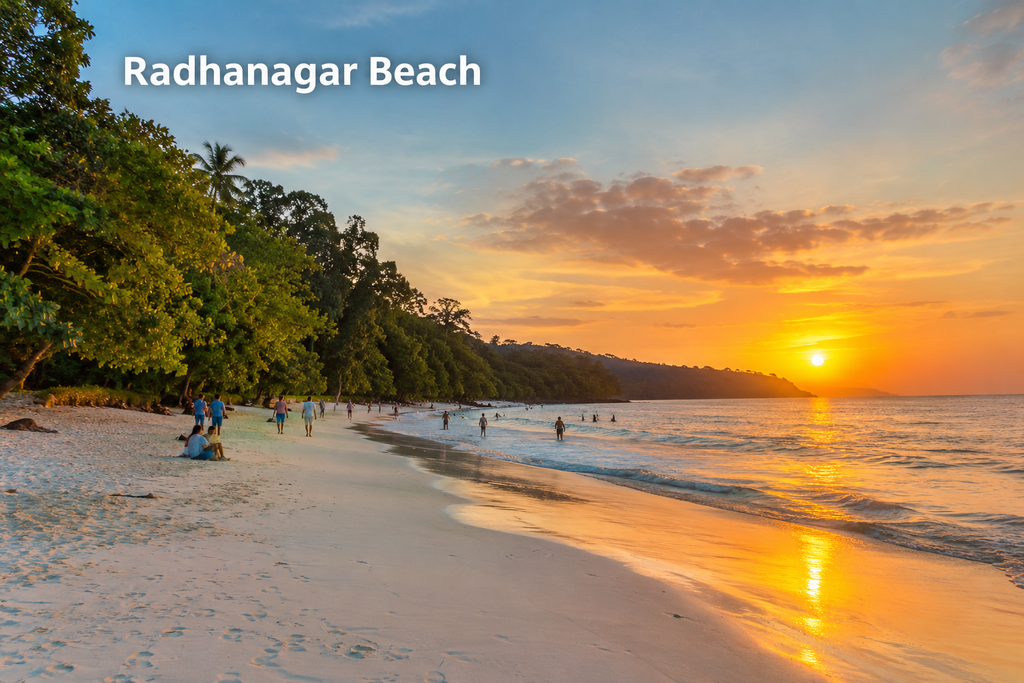
Sunset is arguably the easiest time to understand why the beach has become such a famous stop on Andaman itineraries.
The light changes quickly. Bright white sand can become warm and golden, while the water reflects deeper shades as the sun drops. Rather than concentrating only on the horizon, look for reflections on wet sand, silhouettes near the shoreline and the contrast between the open sea and darkening vegetation.
For photographers using a phone, a simple approach often works best: clean the lens, avoid excessive digital zoom and take several frames as the light changes. The beach itself provides enough visual variety without needing heavy editing.
Nearby Places to Add to Your Itinerary
Radhanagar works especially well as part of a wider Swaraj Dweep itinerary rather than as an isolated day trip.
Elephant Beach is another major attraction on the island and is particularly associated with snorkeling and water-based activities. The official tourism site describes access by boat as well as a forest trekking route, although conditions and access arrangements should be checked locally.
Kalapathar Beach offers a different atmosphere, with a quieter coastal setting and a landscape suited to photography and relaxed exploration.
The following comparison can help when deciding how to divide your time:
| Place | Main appeal | Ideal for |
| Radhanagar Beach | Wide sandy shoreline, swimming and sunset | First-time visitors, couples, families and photographers |
| Elephant Beach | Snorkeling and water activities | Adventure and marine experiences |
| Kalapathar Beach | Scenic coastline and quieter atmosphere | Photography and slower exploration |
If your schedule allows, giving each beach a different part of the day can make the island feel much more varied.
Where to Stay Near Radhanagar Beach
Staying on Swaraj Dweep is the most practical choice for travellers who want to enjoy Radhanagar without depending on a same-day return from another island.
Accommodation is available in different parts of the island, from resorts and hotels to simpler stays. When choosing where to stay, do not look only at the property’s distance from the beach. Consider how easily you can reach the jetty, restaurants, other beaches and local transport.
For a short visit, staying somewhere with straightforward transport access can be more valuable than choosing accommodation solely because it appears closest to Radhanagar.
It is also sensible to confirm current accommodation availability and facilities before travelling, particularly during busy holiday periods.
Food and Local Dining
A beach trip to Swaraj Dweep is also a chance to explore the island’s seafood and broader Indian food scene. Depending on where you stay, menus can include seafood, North Indian, South Indian and other familiar choices for visitors.
Fresh seafood is an obvious attraction for many travellers, but it is worth choosing establishments with good hygiene practices and a steady flow of customers. If you have dietary restrictions or allergies, communicate them clearly before ordering.
Rather than expecting a single signature dish to define the destination, think of food here as part of the wider island experience: simple meals after swimming, fresh seafood after a day outdoors and cold drinks during the warmer parts of the afternoon.
Is Radhanagar Beach Good for Families and Couples?
Yes, provided the trip is planned around the conditions of the day.
Families can enjoy the open beach, shoreline walks and supervised swimming areas, while couples often appreciate the combination of scenery and sunset. Older travellers who prefer sightseeing without strenuous activities can also enjoy the beach because much of the experience requires little more than walking and relaxing.
Parents should keep children close to the water, follow designated swimming arrangements and pay attention to changing sea conditions. A beautiful beach should never be treated as automatically safe in every weather or tide condition.
For couples, the best part may simply be timing: arriving in the afternoon, walking the shoreline, finding a comfortable place to sit and staying through sunset creates an easy, unhurried experience without needing a packed activity schedule.
A Simple One-Day Radhanagar Beach Plan
A flexible day works better than trying to fit too many activities around the beach.
Morning: Arrive on the beach area early enough to enjoy the quieter atmosphere and take a relaxed walk.
Late morning: Spend time swimming where permitted or simply relax beneath the surrounding greenery.
Afternoon: Have lunch and take a break during the warmer part of the day. If you are staying elsewhere on the island, allow plenty of time for transport.
Late afternoon: Return to the beach, explore a different stretch of shoreline and prepare for sunset.
Evening: Watch the sunset, take photographs and leave the beach within the permitted visiting period.
The official beach management plan states that access is regulated between sunrise and sunset, so visitors should not plan on remaining at the beach after dark.
Practical Tips for a Better Visit
A little preparation can make a beach day considerably easier.
- Carry drinking water and sun protection.
- Wear footwear that is comfortable for walking.
- Bring a towel and a change of clothes if you plan to swim.
- Keep valuables secure and avoid leaving phones or wallets unattended on the sand.
- Follow designated swimming areas and local safety instructions.
- Do not remove coral, shells or other natural material as souvenirs.
- Carry reusable bags for your belongings and take rubbish with you.
- Keep a flexible schedule when using ferries or planning connections between islands.
- If travelling during a busy period, arrange accommodation and transport in advance.
- Check current weather and sea conditions before setting out.
One of the easiest ways to preserve the character of Radhanagar is also the simplest: leave the beach looking the way you found it.
How Long Should You Spend at Radhanagar Beach?
For most travellers, several hours is enough to experience the beach without rushing. If you mainly want to swim, walk and photograph the scenery, a half-day visit can work well.
Those staying on Swaraj Dweep can take a slower approach and return on another day. This is particularly useful if photography, beach walks or simply having unstructured time are important to you.
A common mistake is trying to judge the beach entirely by how long you can stay there. Radhanagar rewards a slower pace. The landscape changes with the light, and sunset can feel very different from the bright midday scene.
Is Radhanagar Beach Worth Visiting?
Radhanagar earns its reputation because its strongest qualities work together rather than competing with one another. The sand is striking, the sea creates a vivid contrast, the forest keeps the setting feeling natural and the broad shoreline leaves room for both activity and quiet.
It is not necessary to fill every hour with water sports or sightseeing. In fact, doing less may be the better way to experience it. Walk, swim where conditions allow, watch the changing light and give yourself enough time to notice the landscape.
For travellers visiting the Andaman Islands for the first time, Radhanagar is an easy place to understand the appeal of Swaraj Dweep. For returning visitors, it can be equally rewarding simply because the beach never looks exactly the same under changing weather and light.
FAQs
1. Where is Radhanagar Beach located?
Radhanagar Beach is on Swaraj Dweep in the Andaman and Nicobar Islands. Swaraj Dweep was formerly known as Havelock Island, and Radhanagar is also commonly identified as Beach No. 7.
2. What is the best time to visit Radhanagar Beach?
October to May is generally considered a favourable period for visiting the Andaman Islands because conditions are usually more suitable for outdoor and beach activities. Weather can vary, so check current conditions before travelling.
3. Can you swim at Radhanagar Beach?
Swimming is permitted in designated areas, but visitors should always follow local safety instructions and current sea conditions. Conditions can change, particularly during unsettled weather.
4. How far is Radhanagar Beach from Swaraj Dweep Jetty?
The official beach management plan places Radhanagar Beach approximately 12 kilometres from Swaraj Dweep Jetty. Local road transport is used to reach the beach entrance.
5. Can you visit Radhanagar Beach after sunset?
No. Beach access is regulated between sunrise and sunset, so visitors should plan to leave within the permitted visiting period rather than staying after dark.
Conclusion
Radhanagar Beach is at its best when treated less like a checklist attraction and more like a place to slow down. Its wide shoreline, tropical forest, clear coastal scenery and memorable sunsets make it one of the defining experiences of Swaraj Dweep, while its relatively simple activities mean that almost any traveller can enjoy it at their own pace.
If you are planning an Andaman trip, allow enough time to experience the beach without rushing through it. Come prepared for the weather, respect the local rules, keep the shoreline clean and stay long enough to see the landscape change with the light. That combination of natural beauty and unhurried island time is what makes the visit memorable.
Read More: Wayanad Kerala: A Complete Travel Guide to Hills, Wildlife, Waterfalls and Hidden Experiences

I am a travel enthusiast who loves exploring India’s beautiful destinations, culture, history, food, and hidden places. Through my travel website, I aim to help travelers discover amazing places in India and plan memorable trips with useful travel information and tips.