There’s a reason people describe Mongolia as one of the last truly wild places left to travel. Mongolia tourism isn’t about ticking off famous landmarks. It’s about waking up in a ger camp with nothing but grassland in every direction, riding a horse across land that hasn’t changed much in centuries, and sitting down to milk tea with a nomadic family who still lives the way their grandparents did.
This guide covers what actually makes a Mongolia trip worthwhile, where to go, what it costs, and what to expect once you’re out past Ulaanbaatar.
Why Mongolia Tourism Feels Different From Everywhere Else
Most countries build their tourism around cities, monuments, or beaches. Mongolia’s biggest draw is the opposite: space. It’s one of the least densely populated countries on earth, and once you leave the capital, you can drive for hours without seeing another vehicle.
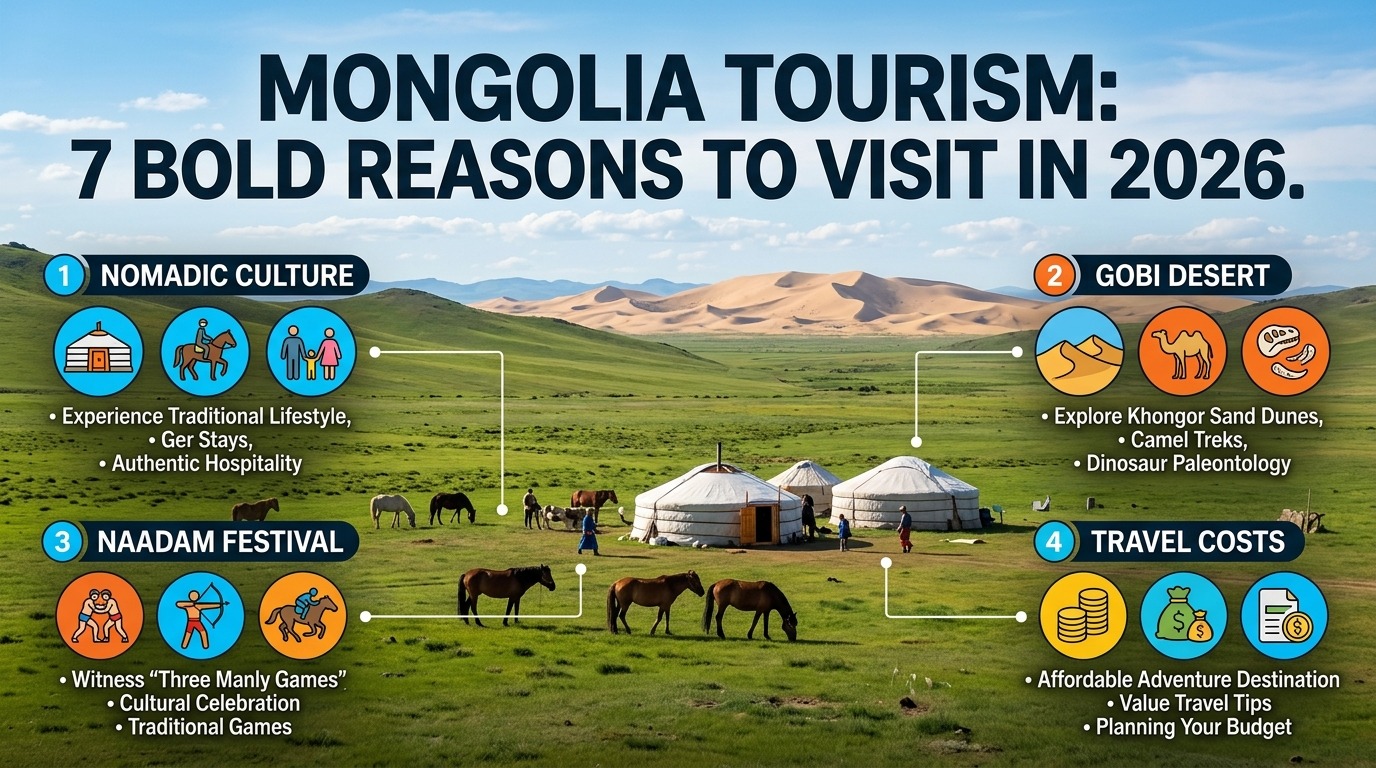
That emptiness is exactly the appeal. Travelers come for the Gobi Desert’s sand dunes, the wide open steppe, and a nomadic culture that’s still very much alive rather than staged for tourists. It’s not a trip for people who want fast Wi-Fi and room service. It’s a trip for people who want to feel far from everything familiar.
Ulaanbaatar: The Gateway to the Country
Almost every trip starts in Ulaanbaatar, home to roughly half the country’s population. It’s a strange mix of Soviet era buildings, modern glass towers, and Buddhist monasteries, all within a few blocks of each other. Gandantegchinlen Monastery is worth a visit before heading out to the countryside, along with the National Museum of Mongolia, which gives useful context on nomadic history before you see it firsthand.
The Gobi Desert and Central Mongolia
The Gobi Desert isn’t the endless sand sea people often picture. It’s a mix of rocky terrain, sand dunes, canyons, and even dinosaur fossil sites, since parts of the Gobi are where some of the most significant paleontological discoveries were made.
Khongoryn Els, known as the singing dunes, is one of the most popular stops, with dunes reaching several hundred meters high. Yolyn Am, a narrow canyon that holds ice well into summer in some years, offers a striking contrast to the desert heat just a short drive away.
Staying With Nomadic Families
One of the most memorable parts of Mongolia tourism is staying in a ger, the traditional round felt tent that nomadic families still use today. Many tour operators arrange homestays where you can help with daily herding tasks, try airag, a fermented mare’s milk drink, and get a real sense of a lifestyle built entirely around livestock and the seasons.
Northern Mongolia and Lake Khovsgol
The north looks almost nothing like the Gobi. Lake Khovsgol, often called the Blue Pearl of Mongolia, holds an enormous share of the country’s fresh water and is surrounded by pine forests and mountains that feel closer to Siberia than the desert south.
This region is also home to the Tsaatan, a small community of reindeer herders in the far north. Visiting requires more effort and planning than the Gobi or central routes, but it’s one of the most distinct cultural experiences left in the country.
Mongolia’s Regions at a Glance
| Region | Known For | Best Time to Visit | Good For |
| Ulaanbaatar | Monasteries, museums, city base | May to September | First and last days of the trip |
| Gobi Desert | Sand dunes, canyons, fossils | June to September | Desert landscapes, camel treks |
| Central Steppe | Nomadic homestays, horse riding | May to September | Ger stays, cultural immersion |
| Lake Khovsgol | Alpine lake, pine forests | June to August | Nature, hiking, cooler weather |
| Far North | Reindeer herders, remote travel | July to August | Deep cultural travel, small groups |
The Naadam Festival and Mongolia’s Culture
If your trip lines up with July, the Naadam Festival is worth planning around. It’s Mongolia’s biggest celebration, built around wrestling, horse racing, and archery, collectively known as the “three manly games,” even though women now compete in archery as well.
Ulaanbaatar hosts the largest opening ceremony on July 11, but smaller local Naadam festivals happen across the countryside throughout the summer, often with a more intimate, community feel than the capital’s version.
Food and Daily Life
Mongolian food leans heavily on meat and dairy, a reflection of the herding lifestyle. Buuz, steamed dumplings filled with mutton or beef, are a staple, along with khorkhog, meat slow cooked with hot stones. Vegetarian travelers should plan ahead, since fresh produce is limited outside the cities, especially in rural areas.
Costs, Logistics, and Practical Tips
Mongolia tourism isn’t the cheapest destination in Asia, mostly because distances are long and much of the countryside requires a driver, guide, and 4×4 vehicle to reach. That said, it remains reasonable compared to organized adventure travel in places like Iceland or Patagonia, especially if you join a small group tour instead of arranging a private one.
Getting Around
Domestic flights connect Ulaanbaatar to a few regional hubs, but most of the countryside is only reachable by road, often on unpaved tracks that take longer than the map suggests. Booking a driver and guide through a local operator is the standard approach for most visitors, since public transport barely exists once you’re outside the capital.
Best Time for Mongolia Tourism
The travel season runs roughly from May through September, with June to August offering the warmest weather and the best access to the countryside. Winters are brutally cold, and most tour operators pause countryside trips entirely once temperatures drop.

FAQs
Is Mongolia good for tourism?
Yes. Mongolia tourism offers wide open landscapes, a living nomadic culture, and experiences like ger stays and the Naadam Festival that are hard to find anywhere else.
How many days do you need in Mongolia?
Ten to twelve days is a reasonable amount of time to cover Ulaanbaatar, the Gobi Desert, and central Mongolia without rushing. Shorter trips of five to seven days can still cover the Gobi highlights.
Is Mongolia expensive to visit?
Mongolia tourism costs more than some Southeast Asian destinations because of long travel distances and the need for a driver and guide, but small group tours help bring the cost down significantly.
What is Mongolia best known for?
Mongolia is best known for the Gobi Desert, its nomadic herding culture, ger camps, and the Naadam Festival held every July.
What is the best time to visit Mongolia?
The main travel season runs from May through September, with June to August offering the warmest weather and the best countryside access.
Conclusion
Mongolia isn’t a destination you rush through. It rewards travelers who are comfortable with long drives, simple accommodations, and a slower pace in exchange for landscapes and cultural encounters that genuinely feel rare. Whether it’s a night in a ger under a sky full of stars or watching wrestlers compete at Naadam, it’s a trip that tends to stick with people long after they’ve left.
Read more:Vietnam Tourism: 8 Powerful Reasons to Visit in 2026

I am a travel enthusiast who loves exploring India’s beautiful destinations, culture, history, food, and hidden places. Through my travel website, I aim to help travelers discover amazing places in India and plan memorable trips with useful travel information and tips.