Quick Answer
A realistic Italy travel budget for 2026 runs $100–$150 per day for budget travelers, $200–$280 per day for mid-range travelers, and $450+ per day for luxury travelers, not including international flights. A one-week trip for one person typically costs $1,400–$2,000 on a budget, $2,800–$3,800 mid-range, or $6,500+ for luxury. The cheapest months to visit are April, May, September, and October, when flights, hotels, and crowds are all lower than peak summer.
Planning a trip to Italy and wondering how much it’s really going to cost you? You’re not alone. Italy has a reputation for being expensive, and while it’s true that Venice gondola rides and five-star hotels in Rome can drain your savings fast, the truth is more nuanced. Your Italy travel budget depends almost entirely on the choices you make, not just the country you’re visiting.
Here’s the good news: thousands of Americans travel through Italy every year on a modest budget and still eat incredible food, see world-famous art, and stay in charming, comfortable places. The key is knowing where your money actually goes and where you can cut costs without cutting the experience short.
In this guide, you’ll get a full breakdown of what things really cost in Italy in 2026, from hotels and trains to pizza and museum tickets. You’ll also get practical tips, a full cost comparison table, and a checklist to help you build a realistic Italy travel budget that fits your style, whether you’re backpacking on $70 a day or splurging on a once-in-a-lifetime trip.
How Much Does a Trip to Italy Really Cost?
Let’s start with the number everyone wants: your daily spending average. This covers food, local transportation, and minor activities, but not flights or intercity trains.
Daily Italy Travel Budget by Travel Style
| Travel Style | Daily Budget (Per Person) | What’s Included |
| Budget/Backpacker | $70–$130 | Hostel or budget guesthouse, street food, public transit, free attractions |
| Mid-Range | $180–$280 | 3-star hotel, sit-down meals, public transit, 1–2 paid attractions |
| Luxury | $450–$700+ | 4–5 star hotel, fine dining, private tours, taxis or private transfers |
Weekly and Two-Week Cost Breakdown
| Trip Length | Budget Traveler | Mid-Range Traveler | Luxury Traveler |
| 7 Days | $1,400–$2,000 | $2,800–$3,800 | $6,500+ |
| 10 Days | $2,000–$2,400 | $4,000–$4,500 | $10,000+ |
| 14 Days | $2,800–$3,300 | $5,600–$6,800 | $14,000+ |
Note: These figures are per person and do not include international flights, which typically add $500–$1,200 round-trip from major U.S. cities, depending on season and how far in advance you book.
Italy Travel Budget Breakdown by Category

Understanding where your money actually goes helps you plan smarter. Here’s a full category-by-category look.
1. Flights
Flights are usually the single biggest expense in any Italy travel budget. Round-trip flights from major U.S. hubs like New York, Boston, or Chicago typically run $500–$900 in low season and $900–$1,400 in peak summer months. Booking 4–6 months ahead usually gets the best prices.
2. Accommodation
Hotel prices vary enormously by city and season.
| City | Budget Hotel/Hostel | Mid-Range Hotel | Luxury Hotel |
| Rome | $30–$60/night | $100–$180/night | $300–$500+/night |
| Florence | $30–$55/night | $90–$170/night | $280–$450+/night |
| Venice | $40–$75/night | $150–$250/night | $350–$600+/night |
| Milan | $35–$65/night | $100–$200/night | $300–$500+/night |
Tip: Venice and the Amalfi Coast typically run 20–40% higher than smaller towns or cities like Naples, Palermo, or Bologna.
3. Food and Drink
Italian food is one of the best values in Europe, even at mid-range prices.
- Espresso at a bar: $1.50–$2.50
- Pizza al taglio (slice): $3–$6
- Casual trattoria meal: $12–$20 per person
- Mid-range sit-down dinner: $25–$45 per person
- Fine dining: $80–$150+ per person
4. Local Transportation
- Public bus or metro ticket: $1.50–$2
- Venice vaporetto (water bus): $9–$10 per ride
- High-speed train (Rome to Florence): $30–$60 if booked in advance
- Taxi within a city: $10–$25 for a short ride
5. Attractions and Activities
- Major museum entry (Uffizi, Vatican Museums): $20–$30
- Colosseum entry: $18–$25
- Guided walking tour: $25–$60 per person
- Cooking class: $70–$120 per person
Image Prompt (Featured Image): A warm, realistic travel photo of a traveler sitting at an outdoor Italian café table with a cappuccino and a small notebook budgeting a trip, cobblestone street and colorful buildings in the background, soft morning light, no visible brand logos.
Best Time to Visit Italy on a Budget
Timing your trip can save you hundreds, sometimes thousands, of dollars.
Cheapest Months to Visit Italy
| Season | Months | Why It’s Cheaper |
| Shoulder Season | April–May, Sept–Oct | Mild weather, lower hotel rates, fewer crowds |
| Off-Season | November–March (except holidays) | Lowest flight and hotel prices, some attractions have shorter hours |
| Peak Season | June–August | Highest prices, biggest crowds, hottest weather |
Quick Tip
May and September often offer the best balance: warm, pleasant weather with prices noticeably lower than the July and August peak.
7 Proven Ways to Save Money on Your Italy Trip
1. Travel During Shoulder Season
Visiting in April, May, September, or October can cut hotel and flight costs by 20–40% compared to peak summer.
2. Book Trains in Advance
Italy’s high-speed trains, like Frecciarossa and Italo, use dynamic pricing. Booking 3–4 months ahead can save up to 60% compared to buying at the station.
3. Eat Lunch as Your Main Meal
Many restaurants offer a discounted “menu del giorno” (menu of the day) at lunch. Eating your biggest meal midday instead of at dinner can cut your food budget significantly.
4. Stay Just Outside City Centers
Hotels two or three metro stops from a city center can be up to 30% cheaper while still being convenient for sightseeing.
5. Use a Travel eSIM Instead of Roaming
An Italy eSIM typically costs a few dollars for 1GB of data, compared to $10–$15 a day for traditional roaming plans through U.S. carriers.
6. Skip the Skip-the-Line Fees When You Can
Some attractions offer free or reduced-price entry on specific days or times. Doing a little research ahead of time can save $20–$40 per person at major sites.
7. Mix Free Attractions Into Every Day
Italy is full of free experiences: church interiors, piazzas, coastal walks, and neighborhood markets. Balancing paid attractions with free ones keeps your daily average lower without sacrificing the experience.
Sample Italy Travel Budget: 7-Day Mid-Range Trip
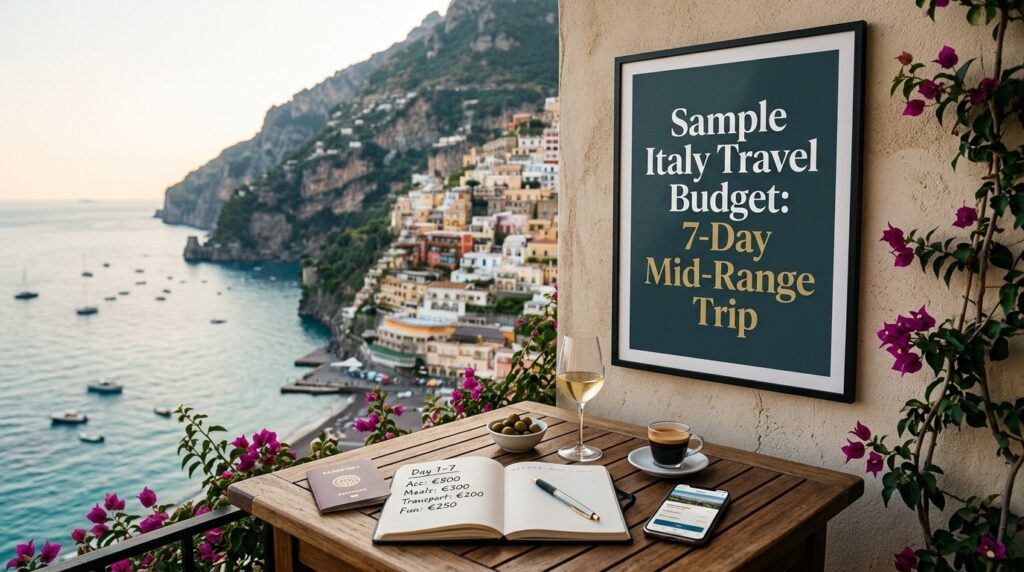
Here’s a realistic mid-range budget for one person visiting Rome, Florence, and Venice for 7 days.
| Category | Estimated Cost |
| Flights (round-trip from US) | $700 |
| Accommodation (7 nights) | $900 |
| Food and Drink | $420 |
| Local Transportation & Trains | $180 |
| Attractions & Tours | $250 |
| Miscellaneous (SIM, tips, souvenirs) | $150 |
| Total | $2,600 |
Pros and Cons of Traveling to Italy on a Budget
| Pros | Cons |
| High-quality food at low prices compared to the US | Popular sites can be crowded and require advance booking |
| Excellent, affordable public transportation | Peak season prices can spike quickly |
| Free attractions like churches and piazzas everywhere | Tourist taxes and entry fees have increased in 2026 |
| Shoulder season offers major savings | Language and payment differences can trip up first-timers |
| Wide range of accommodation options for every budget | Popular cities like Venice run noticeably more expensive |
Common Mistakes That Blow an Italy Travel Budget
- Booking flights and hotels too late. Prices climb fast in the final 6–8 weeks before summer travel dates.
- Eating every meal at tourist-area restaurants. Restaurants near major landmarks often charge double what a local spot two blocks away charges.
- Ignoring city tourist taxes. Many Italian cities charge a nightly per-person tax at hotel checkout, which isn’t always included in the listed room price.
- Not booking Venice access fees in advance. Venice now charges day-trippers a fee on certain peak days, and booking late doubles the cost.
- Overpacking the itinerary. Trying to see five cities in seven days adds extra train tickets, luggage fees, and rushed decisions that cost more money.
- Skipping travel insurance. A missed flight or medical issue without coverage can cost far more than the insurance itself.
Expert Tips for Sticking to Your Italy Travel Budget
- Use ATMs, not currency exchange counters. ATMs typically offer better exchange rates than airport or hotel currency exchange services.
- Notify your bank before you leave. This helps you avoid unexpected card blocks that can leave you stuck without a working payment method.
- Track spending daily. A simple notes app or spreadsheet keeps small purchases from quietly adding up.
- Choose regional trains over cars for city-to-city travel. They’re often cheaper and faster than renting a car and paying for parking and tolls.
- Ask your hotel about the tourist tax upfront. This helps you avoid a surprise charge at checkout.
- Pack layers instead of a full new wardrobe. Fewer checked bags mean lower airline fees on both ends of your trip.
FAQs
How much money do I need for a week in Italy?
A one-week trip to Italy typically costs between $1,400 and $2,000 per person for budget travel, $2,800 to $3,800 for mid-range travel, and $6,500 or more for a luxury trip, not including flights.
Is Italy expensive to visit compared to other European countries?
Italy is considered moderately priced within Europe. It’s generally similar in cost to the UK and often more affordable than France or Switzerland, especially for food and accommodation.
What is the cheapest time of year to visit Italy?
November through March, excluding major holidays, typically offers the lowest flight and hotel prices, though April, May, September, and October offer a better balance of good weather and lower costs.
How much should I budget for food per day in Italy?
A comfortable daily food budget in Italy runs about $30 to $50 per person, covering casual meals, coffee, and the occasional sit-down dinner.
Do I need cash or can I use my credit card in Italy?
Credit cards are widely accepted in hotels, restaurants, and larger shops, but it’s smart to carry $50 to $100 in cash for small cafes, markets, and rural areas that may not accept cards.
Is $100 a day enough to travel in Italy?
Yes, $100 a day is enough for budget travelers who stay in hostels or budget guesthouses, eat casual meals, and rely on public transportation, though it leaves little room for paid attractions or splurges.
How much are train tickets in Italy?
High-speed train tickets between major cities like Rome and Florence typically cost $30 to $60 when booked a few weeks in advance, though booking months ahead can lower that significantly.
Are there hidden costs when traveling in Italy?
Yes, common hidden costs include city tourist taxes charged per night at hotels, entry fees at popular sites like the Trevi Fountain basin, and Venice’s day-tripper access fee on peak dates.
How much does a family of four need to budget for Italy?
A family of four traveling to Italy on a mid-range budget should plan for roughly $3,200 or more for a one-week trip, with accommodation and flights making up the largest share of the cost.
Can I travel Italy on a budget without missing out on the experience?
Absolutely. Budget travelers can still see major landmarks, eat excellent food, and enjoy authentic experiences by mixing free attractions with a few paid highlights and traveling during shoulder season.
Conclusion: Build Your Italy Travel Budget With Confidence
Italy doesn’t have to break the bank. With the right planning, an accurate Italy travel budget, and a few smart choices about when and how you travel, you can experience everything from Roman ruins to Tuscan sunsets without financial stress.
Start by setting your total trip budget, choosing your travel style, and picking your travel dates around the cheaper shoulder seasons. Use the checklist above to stay on track, and remember that some of Italy’s best experiences, like wandering a piazza at sunset or grabbing a slice of pizza from a corner shop, cost almost nothing at all.
Read More: 7 Best Places to Visit in Tuscany Italy: Complete Guide