Planning an Ireland Road Trip is one of the best ways to experience the country’s breathtaking landscapes, charming villages, rugged coastlines, and centuries-old castles at your own pace. Unlike traveling by train or joining guided tours, a self-drive adventure allows you to discover hidden beaches, quiet country roads, and traditional Irish towns that many visitors never get to see. From the lively streets of Dublin to the dramatic Cliffs of Moher and the scenic Ring of Kerry, every mile offers unforgettable views and authentic local experiences. Whether you’re traveling from the United States, the United Kingdom, or elsewhere in Europe, this guide will help you plan a smooth, enjoyable, and memorable journey.
An Ireland Road Trip isn’t simply about driving from one destination to another. It’s about stopping whenever a stunning viewpoint catches your eye, enjoying fresh seafood in a coastal village, chatting with friendly locals in a traditional pub, and exploring ancient ruins surrounded by green countryside. With well-planned routes, practical driving advice, realistic travel costs, and insider tips, you can experience Ireland beyond the typical tourist attractions. This complete 2026 guide covers everything you need to know before setting off, including the best time to visit, driving rules, must-see destinations, accommodation, budgeting, safety tips, and a suggested itinerary that helps you make the most of every day.
Why Choose an Ireland Road Trip in 2026?
An Ireland Road Trip gives you the freedom to experience the country’s spectacular scenery without depending on fixed public transport schedules. Many of Ireland’s most beautiful places are located in rural areas where having your own vehicle makes travel far easier.
Instead of rushing through major cities, you’ll have the flexibility to stop at hidden waterfalls, scenic viewpoints, quiet beaches, historic castles, and welcoming villages whenever you like.
Top Reasons to Take an Ireland Road Trip
- Explore the famous Wild Atlantic Way.
- Visit castles, cliffs, and national parks.
- Discover charming villages away from tourist crowds.
- Enjoy breathtaking coastal drives.
- Experience traditional Irish pubs and live music.
- Create a flexible itinerary.
- Reach hidden attractions inaccessible by train.
- Enjoy some of Europe’s most scenic driving routes.
Where Does an Ireland Road Trip Start?
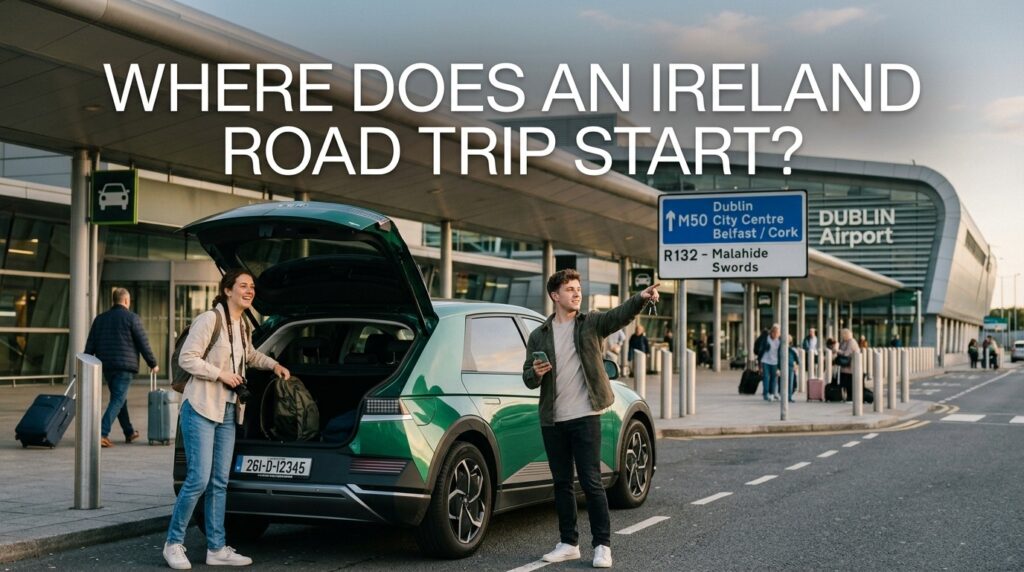
Most international travelers begin their journey in Dublin, which has Ireland’s busiest international airport and excellent rental car facilities.
Depending on your travel plans, you can complete a circular route that includes many of Ireland’s most famous destinations before returning to Dublin for your departure flight.
Popular Ireland Road Trip Route
A classic route includes:
- Dublin
- Rock of Cashel
- Cork
- Killarney
- Ring of Kerry
- Dingle Peninsula
- Cliffs of Moher
- Galway
- Connemara
- Dublin
This itinerary combines historic landmarks, coastal scenery, mountain landscapes, and vibrant cities into one unforgettable journey.
What Is the Best Time for an Ireland Road Trip?
The ideal season depends on your travel style, but most visitors prefer late spring through early autumn.
Spring (April to May)
Spring brings blooming countryside, fewer tourists, and comfortable temperatures for sightseeing and driving. Accommodation prices are often lower than during peak summer.
Summer (June to August)
Summer offers the longest daylight hours, making it perfect for scenic drives and outdoor activities. Although this is the busiest season, it provides the best conditions for exploring Ireland’s coastal routes.
Autumn (September to October)
Autumn is one of the best-kept secrets for road trips. Mild weather, colorful landscapes, and smaller crowds create an excellent balance between comfort and value.
Winter (November to March)
Winter is quieter and more affordable, but shorter daylight hours and frequent rain may limit sightseeing opportunities in rural areas.
How Many Days Do You Need for an Ireland Road Trip?
While it’s possible to see some of Ireland in just a few days, a 7 to 10-day itinerary provides enough time to enjoy the country’s highlights without feeling rushed.
5-Day Trip
Suitable for visitors focusing on Dublin, Cork, Killarney, and the Cliffs of Moher.
7-Day Trip
The most popular option for first-time visitors. It includes major cities, scenic coastal drives, castles, and national parks while allowing enough time for sightseeing.
10 to 14-Day Trip
Perfect for travelers who want to explore lesser-known regions, spend extra time hiking, and experience local culture beyond the major attractions.
What Are the Best Places to Visit on an Ireland Road Trip?
Ireland is packed with incredible destinations, but several places should be included on every first-time itinerary.
Dublin
The capital offers world-famous attractions including Trinity College, Dublin Castle, St. Stephen’s Green, Temple Bar, and the Guinness Storehouse.
Rock of Cashel
One of Ireland’s most impressive medieval landmarks, this spectacular hilltop fortress offers breathtaking views and fascinating history.
Killarney National Park
Known for its lakes, mountains, waterfalls, and scenic walking trails, Killarney is a must-visit destination for nature lovers.
Ring of Kerry
This legendary driving route features dramatic coastlines, charming villages, mountain passes, and panoramic viewpoints around every corner.
Dingle Peninsula
The Dingle Peninsula combines rugged cliffs, sandy beaches, ancient stone huts, and one of Ireland’s most scenic coastal roads.
Cliffs of Moher
Standing over 200 meters above the Atlantic Ocean, these iconic cliffs are among Ireland’s most visited natural attractions.
Galway
Famous for colorful streets, traditional music, lively pubs, and a welcoming atmosphere, Galway is the perfect place to relax after days of driving.
How to Rent a Car for an Ireland Road Trip
Choosing the right rental car is one of the most important decisions you’ll make before starting your Ireland Road Trip. Ireland’s countryside is filled with narrow roads, small villages, and winding coastal routes, so selecting a vehicle that suits the terrain will make your journey far more enjoyable.
Most international visitors collect their rental car from Dublin Airport, where you’ll find major companies including Hertz, Avis, Europcar, Sixt, Enterprise, and Budget.
Should You Rent an Automatic or Manual Car?
Manual transmission cars are more common in Ireland and usually cost less. However, if you’re visiting from the United States or you’re not comfortable driving on the left-hand side of the road, an automatic vehicle is highly recommended.
An automatic car allows you to focus on traffic, road signs, and narrow country lanes instead of changing gears, especially during your first few days.
What Documents Do You Need?
Most rental companies require:
- Valid driver’s license
- Passport
- Credit card in the driver’s name
- Booking confirmation
- International Driving Permit (only if required by your country)
Always check the rental company’s requirements before traveling.
Car Rental Tips
- Book at least two to three months in advance during summer.
- Compare insurance options carefully.
- Inspect the vehicle before leaving.
- Photograph any existing scratches or dents.
- Choose unlimited mileage if planning a longer itinerary.
What Are the Driving Rules for an Ireland Road Trip?

Driving in Ireland is straightforward once you become familiar with the local rules. Roads are generally well maintained, but rural areas often feature narrow lanes where extra caution is needed.
Drive on the Left-Hand Side
One of the biggest adjustments for visitors from North America and many other countries is driving on the left.
A useful trick is to remember:
“Keep your left shoulder closest to the center of the road.”
This simple reminder helps many first-time visitors stay in the correct lane.
Speed Limits
Typical speed limits include:
- Motorways: 120 km/h
- National Roads: 100 km/h
- Regional Roads: 80 km/h
- Urban Areas: 50 km/h
If your route crosses into Northern Ireland, speed limits change to miles per hour (mph) instead of kilometers per hour.
Always pay close attention to road signs near the border.
Understanding the M50 Toll
If you’re driving around Dublin, you’ll likely use the M50 motorway, which has a barrier-free electronic toll system.
Instead of stopping at a toll booth, your vehicle is recorded automatically.
Payment must normally be made by:
- Your rental company
- Online payment
- Participating Payzone outlets
Confirm with your rental company whether M50 toll charges are included in your rental agreement.
Driving Tips
- Slow down on rural roads.
- Watch for sheep in mountainous areas.
- Give way on narrow roads where appropriate.
- Avoid using your phone while driving.
- Fill your fuel tank before entering remote regions.
How Much Does an Ireland Road Trip Cost?
The total cost depends on your travel style, the season, and the type of accommodation you choose. While Ireland isn’t the cheapest destination in Europe, careful planning can make your trip surprisingly affordable.
Budget Travelers
Estimated daily costs:
| Expense | Estimated Cost |
| Hostel or Budget B&B | €40–€80 |
| Food | €20–€35 |
| Fuel | €20–€35 |
| Attractions | €15–€30 |
Estimated daily total: €95–€180
Mid-Range Travelers
Estimated daily costs:
| Expense | Estimated Cost |
| Hotel | €120–€220 |
| Food | €40–€70 |
| Fuel | €25–€40 |
| Attractions | €25–€50 |
Estimated daily total: €220–€380
Luxury Travelers
Expect approximately:
€450+ per day
This typically includes premium hotels, fine dining, luxury vehicle rentals, and private experiences.
Extra Costs to Remember
Budget for:
- Parking fees
- Fuel
- Road tolls
- Travel insurance
- Souvenirs
- Coffee breaks
- Optional guided tours
Planning ahead helps avoid unexpected expenses during your journey.
Where Should You Stay During an Ireland Road Trip?
Accommodation plays a major role in the overall experience. Ireland offers everything from traditional countryside cottages to luxury castle hotels.
Bed and Breakfasts (B&Bs)
B&Bs are one of the most popular choices for road-trippers.
Benefits include:
- Homemade Irish breakfast
- Local hospitality
- Free parking
- Great value
- Helpful travel advice from hosts
Hotels
Hotels provide extra comfort and are ideal for travelers looking for additional amenities such as restaurants, fitness centers, and concierge services.
Self-Catering Cottages
Perfect for families or longer trips, holiday cottages offer kitchens, laundry facilities, and more space while allowing you to prepare your own meals.
Booking Tips
For the best prices:
- Book early for summer travel.
- Stay just outside major tourist centers.
- Compare guest ratings carefully.
- Choose accommodations with free parking whenever possible.
What Should You Pack for an Ireland Road Trip?
Ireland’s weather is famously unpredictable, even during summer. Packing versatile clothing will help you stay comfortable throughout your adventure.
Essential Clothing
Bring:
- Waterproof jacket
- Windproof coat
- Comfortable walking shoes
- Hiking boots
- Warm sweater
- Lightweight layers
- Hat
- Gloves (spring and autumn)
Road Trip Essentials
Don’t forget:
- Phone charger
- Power bank
- Printed driving itinerary
- Universal travel adapter
- Reusable water bottle
- Sunglasses
- First-aid kit
- Camera
- Offline maps
Useful Extras
Many experienced travelers also pack:
- Snacks
- Umbrella
- Binoculars
- Small backpack
- Waterproof phone pouch
Being well prepared means you’ll spend less time worrying about the weather and more time enjoying Ireland’s incredible scenery.
What Is the Best 7-Day Ireland Road Trip Itinerary?
If you’re visiting Ireland for the first time, a 7-day Ireland Road Trip offers the perfect balance between sightseeing, scenic drives, historic landmarks, and authentic local experiences. This route covers many of Ireland’s most famous attractions while leaving enough time to enjoy charming villages, coastal viewpoints, and traditional Irish hospitality.
Day 1: Arrive in Dublin and Explore Ireland’s Historic Capital
Begin your journey in Dublin, Ireland’s lively capital and the country’s main international gateway. After collecting your rental car, it’s often easier to check into your accommodation before exploring the city on foot. Since traffic in central Dublin can be busy, many travelers prefer to leave the car parked and use public transport or simply walk between attractions.
Visit Trinity College
One of Dublin’s most famous landmarks, Trinity College is home to the world-renowned Book of Kells and the stunning Long Room Library. Arriving early helps you avoid the largest crowds and gives you plenty of time to appreciate the historic architecture.
Explore Dublin Castle
Dating back to the 13th century, Dublin Castle has played an important role in Irish history for centuries. Visitors can explore the beautifully restored State Apartments, peaceful gardens, and impressive medieval remains.
Walk Along Grafton Street
Grafton Street is one of Ireland’s most popular shopping streets. Street musicians, cafés, boutiques, and historic buildings create a lively atmosphere throughout the day.
Visit the Guinness Storehouse
No visit to Dublin feels complete without exploring the Guinness Storehouse. Interactive exhibits explain the brewing process before ending with spectacular panoramic views across the city from the Gravity Bar.
Evening in Temple Bar
Temple Bar is famous for its traditional pubs, live Irish music, and energetic atmosphere. While it is one of Dublin’s busiest neighborhoods, it’s also one of the city’s most memorable places to spend your first evening.
Recommended Overnight Stay: Dublin
Day 2: Dublin to Cork via the Rock of Cashel
- Distance: Approximately 260 km
- Driving Time: Around 3 hours (excluding sightseeing stops)
Leave Dublin early and head south towards one of Ireland’s most spectacular historic landmarks before continuing to the charming city of Cork.
Stop at the Rock of Cashel
Perched high above the surrounding countryside, the Rock of Cashel is one of Ireland’s most photographed attractions. This remarkable medieval complex features ancient churches, a round tower, Celtic crosses, and breathtaking panoramic views over County Tipperary.
Allow at least two hours to fully explore the site and learn about its fascinating history.
Lunch Along the Route
Several welcoming cafés and traditional pubs can be found around Cashel, making it an ideal place to enjoy lunch before continuing your drive toward Cork.
Popular choices include:
- Traditional Irish stew
- Fish and chips
- Homemade soup with brown bread
- Fresh local desserts
Arrive in Cork
Often described as Ireland’s culinary capital, Cork offers a wonderful mix of history, food, and culture. The compact city center is easy to explore on foot.
Visit the English Market
The English Market has been serving locals since 1788 and remains one of Ireland’s finest food markets. Browse artisan cheeses, fresh seafood, local meats, baked goods, and handcrafted chocolates while experiencing the city’s vibrant food scene.
Walk Through the City Centre
Take time to explore Patrick Street, St. Patrick’s Street shopping district, and the River Lee. Numerous independent cafés and boutique shops make Cork an enjoyable city for a relaxed afternoon stroll.
Experience Cork’s Live Music Scene
As evening arrives, Cork comes alive with traditional Irish music. Many local pubs host talented musicians performing folk songs and contemporary Irish music in a welcoming atmosphere.
Where to Stay in Cork
Good accommodation options include:
- Boutique hotels in the city centre
- Traditional guesthouses
- Family-run Bed & Breakfasts
- Modern hotels with free parking
Booking accommodation in advance is highly recommended during the busy summer travel season.
Day 3: Cork to Killarney via Kenmare
- Distance: Approximately 160 km
- Driving Time: Around 2.5 to 3 hours
Today’s journey introduces you to some of Ireland’s most spectacular scenery. Rather than driving directly to Killarney, take the coastal route through Kenmare, a picturesque heritage town known for its colorful streets, artisan shops, and welcoming cafés.
Explore Kenmare
Kenmare is one of the prettiest small towns in southwest Ireland and makes an excellent stop for coffee or lunch.
Highlights include:
- Colorful Georgian buildings
- Independent craft stores
- Local art galleries
- Traditional Irish bakeries
- Scenic river walks
Continue to Killarney National Park
From Kenmare, continue toward Killarney National Park, Ireland’s first national park and one of the country’s greatest natural treasures.
The park is home to:
- Lough Leane
- Muckross Lake
- Ancient oak forests
- Red deer
- Mountain landscapes
- Walking and cycling trails
Visit Ross Castle
Located on the shores of Lough Leane, Ross Castle is one of Ireland’s best-preserved medieval tower houses. Guided tours provide fascinating insight into the region’s history.
Discover Muckross House and Gardens
Surrounded by beautifully landscaped gardens, Muckross House offers visitors an opportunity to experience 19th-century Irish country life while enjoying magnificent lake views.
Evening in Killarney
Killarney is famous for its lively atmosphere, traditional pubs, and excellent restaurants. Spend your evening enjoying authentic Irish cuisine before preparing for one of the country’s most scenic drives on the following day.
Recommended Overnight Stay: Killarney
Day 4: Explore the Spectacular Dingle Peninsula
- Distance: Approximately 95 km (Slea Head Drive loop)
- Driving Time: Around 3 to 5 hours, depending on sightseeing stops
Day four is one of the highlights of any Ireland Road Trip. The Dingle Peninsula combines rugged Atlantic cliffs, golden beaches, charming villages, and some of Ireland’s most breathtaking coastal scenery. While many visitors head straight for the Ring of Kerry, experienced travelers often consider the Dingle Peninsula an even more rewarding drive thanks to its quieter roads and spectacular viewpoints.
Drive the Famous Slea Head Drive
Slea Head Drive is a circular coastal route that showcases dramatic sea cliffs, rolling green hills, ancient stone structures, and panoramic views across the Atlantic Ocean.
Along the route you’ll discover:
- Stunning coastal viewpoints
- Historic stone cottages
- Sandy beaches
- Traditional Irish farms
- Ancient beehive huts
- Scenic mountain roads
Allow plenty of time to stop for photographs because there are viewpoints around almost every corner.
Visit Dunquin Pier
One of Ireland’s most photographed locations, Dunquin Pier features a steep winding path leading down to the Atlantic Ocean. From here you can admire views of the Blasket Islands, famous for their rugged beauty and rich cultural history.
Explore Dingle Town
The colorful harbor town of Dingle is the perfect place to spend the afternoon.
Popular attractions include:
- Independent gift shops
- Seafood restaurants
- Ice cream parlors
- Traditional Irish pubs
- Local artisan galleries
- Harbor walks
Fresh seafood is a specialty here, with many restaurants serving locally caught fish and shellfish.
Watch the Sunset Along the Coast
If weather conditions allow, finish the day by watching the sunset from one of the peninsula’s coastal viewpoints. The changing light across the Atlantic Ocean creates unforgettable scenery and incredible photography opportunities.
Recommended Overnight Stay: Dingle or Killarney
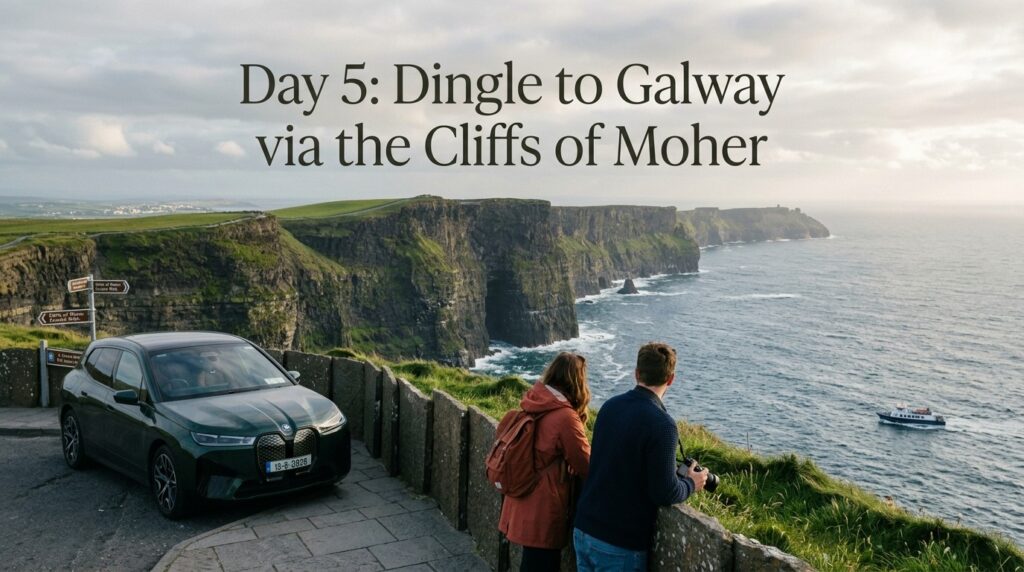
Day 5: Dingle to Galway via the Cliffs of Moher
- Distance: Approximately 300 km
- Driving Time: Around 5.5 to 6 hours
Today’s drive is longer, but it includes one of Ireland’s most iconic natural attractions. Leave early to allow enough time for sightseeing along the way.
Take the Tarbert Ferry
Instead of driving all the way around the Shannon Estuary, many travelers save both time and fuel by taking the Tarbert to Killimer ferry.
Benefits include:
- Scenic ferry crossing
- Reduced driving distance
- Beautiful estuary views
- Relaxing break from driving
Advance booking is recommended during summer.
Visit the Cliffs of Moher
Standing over 200 meters above the Atlantic Ocean, the Cliffs of Moher stretch for approximately 14 kilometers along Ireland’s west coast.
Highlights include:
- O’Brien’s Tower
- Walking trails
- Visitor Centre
- Atlantic Ocean viewpoints
- Seabird colonies
Plan to spend at least two to three hours exploring the area.
Drive Through The Burren
After leaving the cliffs, continue through The Burren, a remarkable limestone landscape unlike anywhere else in Ireland.
The region is famous for:
- Rare wildflowers
- Limestone pavements
- Ancient monuments
- Scenic driving routes
- Small villages
Arrive in Galway
By evening you’ll reach Galway, one of Ireland’s most welcoming cities.
Spend your evening exploring:
- Eyre Square
- Latin Quarter
- Quay Street
- Spanish Arch
- Traditional Irish pubs
Galway’s lively atmosphere and excellent restaurants make it an ideal place to relax after a full day of driving.
Recommended Overnight Stay: Galway
Day 6: Discover Connemara and Kylemore Abbey
- Distance: Approximately 160 km round trip
- Driving Time: Around 3 to 4 hours
Today’s journey takes you into Connemara National Park, one of Ireland’s wildest and most beautiful regions.
Drive Through Connemara
Connemara is known for:
- Mountain landscapes
- Peat bogs
- Crystal-clear lakes
- Quiet country roads
- Traditional villages
The scenery changes constantly, making every section of the drive enjoyable.
Visit Kylemore Abbey
One of Ireland’s most beautiful historic buildings, Kylemore Abbey sits beside a peaceful lake surrounded by mountains.
Visitors can explore:
- Victorian Walled Garden
- Gothic Church
- Woodland walks
- Historic rooms
- Café and gift shop
Allow two to three hours for your visit.
Explore Connemara National Park
Nature lovers can also enjoy several walking trails offering panoramic views across the surrounding countryside.
Popular activities include:
- Hiking
- Wildlife watching
- Landscape photography
- Scenic picnics
Return to Galway for your final evening on Ireland’s west coast.
Recommended Overnight Stay: Galway
Day 7: Galway to Dublin and Departure
- Distance: Approximately 210 km
- Driving Time: Around 2.5 to 3 hours
Your final day begins with a relaxed breakfast before returning east toward Dublin.
Stop Along the Way
If your flight schedule allows, consider visiting one or two attractions during the journey.
Popular stops include:
- Athlone
- Clonmacnoise Monastic Site
- Tullamore
- Local countryside cafés
Return Your Rental Car
Allow plenty of extra time when returning your vehicle at Dublin Airport.
Remember to:
- Refill the fuel tank if required.
- Remove personal belongings.
- Photograph the vehicle after returning it.
- Keep your rental agreement until your deposit is released.
Final Dublin Shopping
If time permits before your departure, pick up some authentic Irish souvenirs.
Popular choices include:
- Irish whiskey
- Wool sweaters
- Handmade pottery
- Local chocolates
- Celtic jewellery
Ireland Road Trip Budget Saving Tips
An unforgettable Ireland Road Trip doesn’t have to cost a fortune. A few smart decisions can significantly reduce your overall expenses while still allowing you to experience Ireland’s most spectacular destinations.
Book Accommodation Early
Hotels and guesthouses fill quickly during summer. Reserving several months ahead often provides the best prices and greater accommodation choices.
Stay in Family-Run B&Bs
Traditional Bed & Breakfasts often include breakfast, free parking, and helpful local recommendations while costing less than many hotels.
Shop at Supermarkets
Buying breakfast, snacks, drinks, and picnic lunches from supermarkets such as:
- Lidl
- Aldi
- Tesco
- SuperValu
can save hundreds of euros during a week-long trip.
Travel Outside Peak Season
Late spring and early autumn usually offer:
- Lower hotel prices
- Fewer tourists
- Easier parking
- Pleasant weather
Use Free Attractions
Many of Ireland’s best experiences cost nothing, including:
- Coastal drives
- Beaches
- National parks
- Scenic viewpoints
- Historic villages
- Walking trails
FAQs
Is an Ireland Road Trip worth it?
Absolutely. An Ireland Road Trip is the best way to experience the country’s dramatic coastlines, historic castles, charming villages, and breathtaking national parks while enjoying complete flexibility.
Can Americans drive in Ireland?
Yes. Visitors from the United States can drive in Ireland using a valid U.S. driver’s license for short visits. Many travelers choose an automatic rental car to make driving on the left-hand side easier.
What is the best route for a first Ireland Road Trip?
A classic route beginning in Dublin and continuing through the Rock of Cashel, Cork, Killarney, the Dingle Peninsula, the Cliffs of Moher, Galway, Connemara, and back to Dublin is widely considered one of the best first-time itineraries.
Conclusion
An Ireland Road Trip is far more than a scenic drive. It’s an opportunity to experience Ireland’s rich history, dramatic landscapes, welcoming towns, and unforgettable coastal routes at your own pace. From exploring Dublin’s historic streets to standing atop the Cliffs of Moher, driving the Dingle Peninsula, and discovering the peaceful beauty of Connemara, every day offers something new and memorable.
Whether you’re planning a one-week adventure or a longer holiday, careful preparation will help you make the most of your journey. Book your accommodation early, choose the right rental car, allow extra time for unexpected stops, and don’t rush from one destination to the next. Some of the best memories are made in the small villages, quiet viewpoints, and local cafés you discover along the way. With this guide, you’re well prepared to enjoy an unforgettable Ireland Road Trip in 2026 and beyond.
Read More: Faroe Islands Travel – All You SHOULD Know Before Going (2026 Guide)

I am a travel enthusiast who loves exploring India’s beautiful destinations, culture, history, food, and hidden places. Through my travel website, I aim to help travelers discover amazing places in India and plan memorable trips with useful travel information and tips.