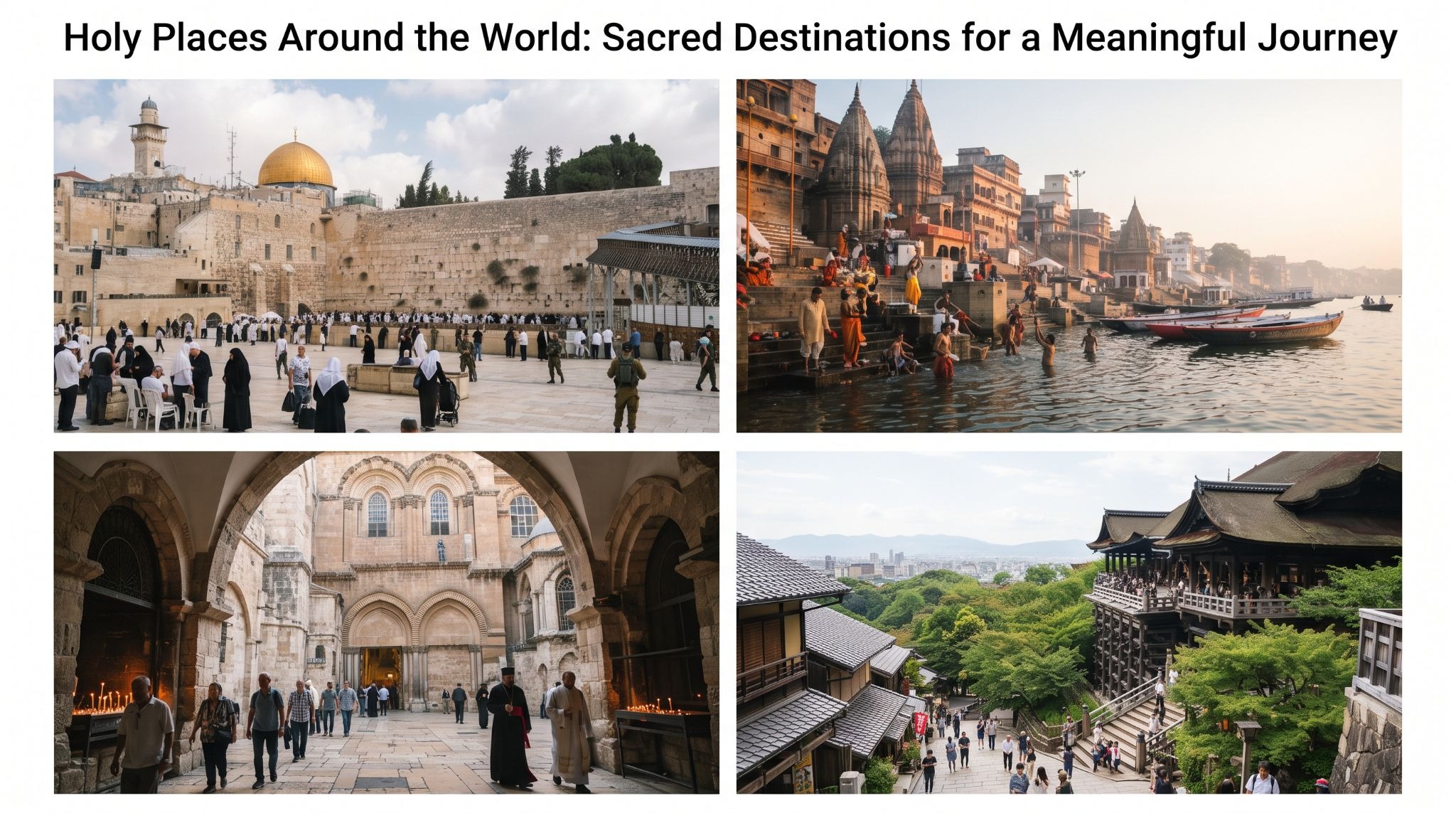
Holy Places have drawn travelers for centuries, not only because of their religious importance but also because they reveal the history, traditions and values of the communities that protect them. From ancient temples and grand mosques to peaceful monasteries and historic churches, these destinations offer experiences that can feel very different from ordinary sightseeing. A visit may involve prayer, quiet reflection, remarkable architecture or simply an opportunity to understand a culture through its sacred spaces.
Traveling to Holy Places also requires a different mindset. These are living places of worship rather than attractions created solely for visitors. Customs can vary widely, including dress expectations, photography restrictions, visiting hours and appropriate behavior. With thoughtful planning and genuine respect, a journey to a sacred destination can become one of the most memorable ways to experience a place and its people.
Why Holy Places Matter to Travelers
Sacred destinations provide a window into beliefs that have shaped civilizations for generations. Their importance may come from religious events, revered figures, ancient traditions, architectural achievements or their role in the daily lives of local communities.
For travelers, the appeal goes beyond religion. Historic sacred buildings often preserve art, sculpture, manuscripts, calligraphy and construction techniques that tell stories about the societies that created them. Some are surrounded by old neighborhoods, markets, rivers or mountain landscapes that add another dimension to the journey.
The most rewarding visits usually happen when travelers take time to understand the significance of a site rather than treating it simply as a photo opportunity.
Famous Holy Places Across Different Faiths
The world’s sacred landscape is remarkably diverse. Different religions have developed important pilgrimage centers and places of worship across Asia, Europe, Africa and the Middle East.
| Holy place | Location | Religious tradition | Notable feature |
| Mecca | Saudi Arabia | Islam | Home of the Kaaba and central destination of the Hajj pilgrimage |
| Jerusalem | Israel and Palestine | Judaism, Christianity and Islam | Historic sacred city with major sites important to all three faiths |
| Varanasi | India | Hinduism | Ancient city on the Ganges associated with Hindu pilgrimage |
| Vatican City | Vatican City | Christianity | Center of the Roman Catholic Church and home of St. Peter’s Basilica |
| Bodh Gaya | India | Buddhism | Site associated with the Buddha’s enlightenment |
| Amritsar | India | Sikhism | Home of the Golden Temple, one of Sikhism’s most important sites |
These destinations differ greatly in appearance and tradition, yet they share an important characteristic. Each remains connected to living religious communities and practices.
Holy Places and Their Historical Importance
Many sacred destinations have histories stretching back hundreds or even thousands of years. Their stories are often closely connected with the development of cities, kingdoms, trade routes and religious movements.
Jerusalem, for example, has extraordinary significance in Judaism, Christianity and Islam. Varanasi has long been associated with Hindu religious life along the Ganges. Bodh Gaya is central to Buddhist tradition because of its association with Siddhartha Gautama’s enlightenment.
Historic importance does not always mean that a building has remained unchanged. Sacred sites have frequently been rebuilt, expanded or restored over time. Their present appearance can therefore reflect several periods of history rather than one particular era.
Architecture as Part of the Experience
Architecture can make a visit especially memorable. Domes, towers, courtyards, shrines, prayer halls, gardens and intricate decorative work often communicate religious ideas through visual design.
Travelers interested in history should consider joining an official tour or using information provided at the site. Understanding why a structure was built can make its details far more meaningful.
Holy Places Worth Visiting for Culture and Architecture

A journey to a sacred destination can also become a cultural experience. The surrounding streets often contain traditional food, handicrafts, historic homes and local markets.
The Golden Temple in Amritsar is known for its distinctive setting and Sikh tradition of hospitality. The Vatican offers remarkable Renaissance and Baroque art alongside its religious significance. Kyoto in Japan contains numerous Buddhist temples and Shinto shrines, many of which are integrated into historic neighborhoods and gardens.
| Destination | What travelers can explore nearby | Best suited for |
| Amritsar | Historic city areas, Punjabi cuisine and local markets | Culture and architecture |
| Vatican City and Rome | Historic churches, museums and ancient Roman landmarks | Art and history |
| Varanasi | Riverfront ghats, traditional neighborhoods and cultural life | Spiritual and cultural travel |
| Kyoto | Traditional streets, gardens and historic religious buildings | Architecture and heritage |
| Jerusalem | Historic quarters and major religious landmarks | History and pilgrimage |
A respectful traveler can enjoy these cultural experiences without losing sight of the religious purpose of the destination.
Best Time to Visit Holy Places
The best time depends heavily on the destination, climate and purpose of the journey. Pilgrims may need to travel during specific religious periods, while leisure travelers can sometimes choose quieter seasons.
Weather is another important consideration. Outdoor sacred complexes can be uncomfortable during extreme heat, while mountain destinations may experience cold or difficult conditions during winter.
Major religious festivals can create both opportunities and challenges. They may offer an extraordinary chance to witness living traditions, but they can also bring large crowds and limited accommodation.
| Travel priority | Suggested approach |
| Comfortable sightseeing | Choose a season with moderate local weather |
| Religious pilgrimage | Follow the dates and requirements of the relevant tradition |
| Festivals and ceremonies | Research dates well in advance and expect crowds |
| Quiet exploration | Consider less busy periods where access is permitted |
| Photography | Check site-specific rules before visiting |
Always confirm current conditions and access arrangements before traveling because religious sites may change visiting policies for ceremonies or special circumstances.
How to Visit Holy Places Respectfully
Respect is essential when visiting any active place of worship. Clothing should generally be modest unless the destination clearly states otherwise. Some sites may require visitors to cover their shoulders or legs, remove footwear or follow other local customs.
Photography deserves particular attention. A beautiful interior does not automatically mean photography is permitted. Some places restrict cameras entirely while others prohibit photography in specific areas.
Visitors should also avoid interrupting prayers or ceremonies. Speaking quietly, following instructions from staff and observing local customs can make the experience more comfortable for everyone.
Simple Etiquette to Remember
- Dress according to local religious expectations.
- Follow instructions about footwear and head coverings.
- Ask before photographing people.
- Observe photography restrictions.
- Keep voices low during worship.
- Do not touch sacred objects unless invited.
- Give worshippers priority in prayer areas.
These simple habits demonstrate consideration and help preserve the peaceful character of sacred spaces.
Holy Places and the Experience of Pilgrimage
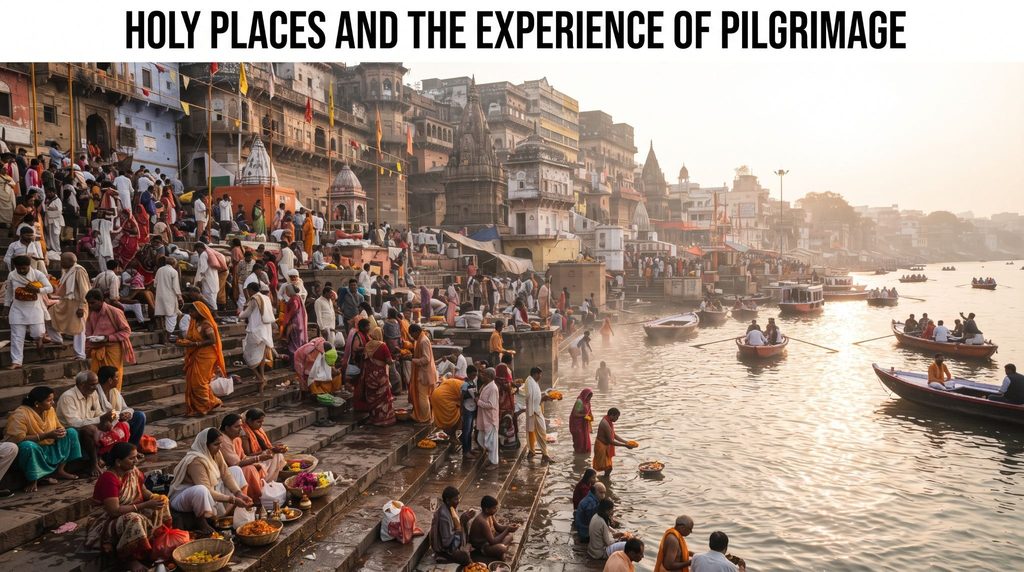
Pilgrimage is different from ordinary tourism because the journey itself can have religious meaning. For many people, reaching a sacred destination is part of a long personal or spiritual tradition.
Pilgrimage routes can also reveal how geography and faith have influenced one another. Travelers may encounter historic roads, rivers, mountain paths and towns that developed around religious journeys.
Even visitors who are not undertaking a formal pilgrimage can learn from this tradition. Walking through an old religious district slowly, observing daily rituals and listening to local stories can provide a deeper understanding than rushing between landmarks.
Planning Travel to Holy Places
Good preparation can prevent many common problems. Begin by checking entry requirements, local laws and official information from the destination or religious institution. Accommodation should be booked early when a major festival or pilgrimage period is expected.
Transportation also deserves attention. Some sacred destinations are located in major cities with extensive public transport, while others require additional road or rail travel.
| Planning area | What to check before departure |
| Entry requirements | Passport, visa and destination-specific regulations |
| Accommodation | Availability, location and cancellation conditions |
| Transport | Airports, trains, buses and local transport options |
| Dress | Religious and cultural expectations |
| Site access | Visiting arrangements, closures and restricted areas |
| Health and comfort | Weather, walking requirements and personal necessities |
Keep your itinerary flexible when possible. Religious ceremonies, crowds and local conditions can affect how long a visit takes.
Nearby Experiences Around Holy Places
Sacred destinations rarely exist in isolation. A visit can often be combined with museums, historic neighborhoods, natural landscapes or local food experiences.
The key is to choose nearby experiences that complement the purpose of the trip rather than turning a meaningful visit into a rushed checklist.
What Makes Holy Places Memorable
The strongest memories from sacred travel are not always the grandest buildings. Sometimes they come from small details such as the sound of prayers, the atmosphere of an old courtyard, a quiet moment beside a shrine or a conversation with someone who explains the meaning of a local tradition.
These experiences encourage travelers to slow down. Instead of asking only what there is to see, it is worth asking why a place matters and how people continue to connect with it.
That approach creates a more thoughtful form of travel. It allows architecture, history, faith and everyday life to become part of one experience.
FAQs
What should I wear when visiting a sacred destination?
Modest clothing is generally the safest choice. Specific requirements vary, so check the official guidance for the site before visiting.
Can nonbelievers visit religious sites?
Many sacred destinations welcome respectful visitors regardless of their personal beliefs, although some places have restrictions or access rules that should be checked in advance.
Is photography allowed at religious sites?
Rules vary considerably. Some locations allow photography in certain areas while others restrict or prohibit it. Always follow posted instructions and staff guidance.
Should I visit during a religious festival?
A festival can provide a fascinating opportunity to experience living traditions, but crowds may be much larger. Research the dates and practical arrangements before deciding.
How can I make a sacred travel experience more meaningful?
Learn about the site’s history and traditions beforehand, allow enough time for the visit and approach the destination with patience and respect rather than treating it only as a sightseeing stop.
Conclusion
A journey to a sacred destination can offer far more than impressive buildings or famous photographs. These places connect travelers with centuries of history, living traditions and communities whose beliefs continue to shape everyday life. Whether you visit as a pilgrim, a history enthusiast or a curious traveler, approaching the experience with preparation and respect makes the journey richer. The most meaningful sacred travel is not about seeing as many sites as possible. It is about taking the time to understand why a place matters.
Read More: Historic Temples: Ancient Wonders, Sacred Traditions, and Timeless Journeys

I am a travel enthusiast who loves exploring India’s beautiful destinations, culture, history, food, and hidden places. Through my travel website, I aim to help travelers discover amazing places in India and plan memorable trips with useful travel information and tips.