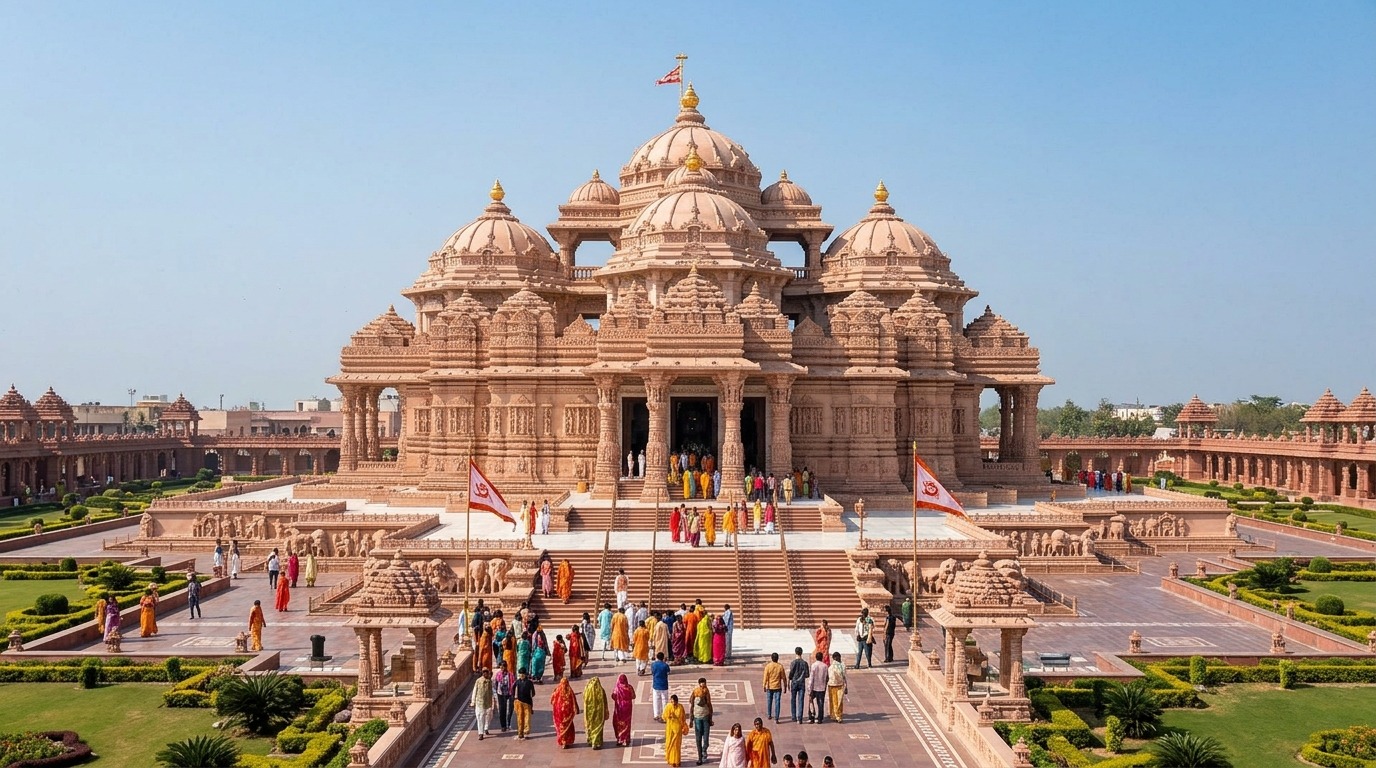
Ayodhya Temple has become one of the most important pilgrimage destinations in India, drawing visitors who come for faith, history, architecture and the atmosphere of an ancient city on the banks of the Saryu. At the heart of the pilgrimage is the Shri Ram Janmabhoomi Mandir, where devotees come for darshan of Ram Lalla. But Ayodhya is much more than one temple. Its ghats, old shrines, lanes, markets and evening rituals create a destination that is best experienced slowly rather than as a quick stop.
For travellers planning an Ayodhya visit, the most useful approach is to think of the city as a complete pilgrimage circuit. The Ram Janmabhoomi complex is the central attraction, while Hanuman Garhi, Kanak Bhawan, Saryu Ghats and other sacred places add context to the city’s religious traditions. The practical side matters too: visitor arrangements, darshan passes, security procedures and timings can change, especially during major festivals. This guide brings together the history, architecture, places to visit, travel planning and useful tips you need before visiting Ayodhya Temple.
Ayodhya Temple and the Story of Ram Janmabhoomi
Ayodhya occupies a special place in Hindu tradition as the birthplace associated with Lord Rama. The city is closely connected with the Ramayana and has been an important pilgrimage centre for generations.
The Shri Ram Janmabhoomi Mandir stands at the site traditionally revered as Ram Janmabhoomi. The present temple is part of a much larger pilgrimage landscape that includes ancient temples, ghats and religious institutions spread throughout Ayodhya.
The modern temple’s development followed a long and complex legal and historical process. The Supreme Court of India delivered its judgment concerning the Ayodhya title dispute in November 2019, after which the Shri Ram Janmabhoomi Teerth Kshetra Trust was established to oversee the construction and management of the temple.
The Pran Pratishtha ceremony for Ram Lalla took place on 22 January 2024, marking a major moment in the temple’s modern history.
For visitors, however, the significance of the site is not limited to recent events. Ayodhya’s importance as a sacred city is much older, and exploring its other temples and riverfront helps put the Ram Janmabhoomi pilgrimage into a wider cultural context.
Shri Ram Janmabhoomi Mandir Architecture
The new temple is designed in the traditional Nagara style of North Indian temple architecture. Its sandstone construction, carved pillars, sculptural details and towering shikhara give it a distinctly monumental appearance.
The architecture is intended to communicate both grandeur and devotion. Instead of treating the building simply as a modern attraction, it is useful to look at the temple as part of a continuing Indian tradition of sacred architecture.
The main temple is only one part of the larger complex. The surrounding development includes additional shrines and facilities designed to accommodate pilgrims and support religious activities.
The Main Temple
The principal shrine houses Ram Lalla, the child form of Lord Rama. Devotees enter the temple complex through a controlled process before proceeding towards the area designated for darshan.
Because the temple remains a functioning place of worship rather than simply a heritage monument, the visitor experience is shaped by religious practices and security arrangements.
Carved Details and Symbolism
Take time to notice the stone carving rather than focusing only on the scale of the structure. Pillars, panels and architectural elements carry religious and artistic symbolism.
For visitors interested in architecture, this is one of the more rewarding aspects of an Ayodhya Temple visit. The building can be appreciated not only as a pilgrimage destination but also as an example of contemporary craftsmanship rooted in traditional forms.
Ayodhya Temple Darshan: What Visitors Should Know
Darshan is the central purpose of a visit for many pilgrims. Unlike visiting a museum or monument, the experience is shaped by temple discipline, crowd management and religious customs.
Current arrangements have included General Darshan and Sugam Darshan passes. In April 2026, the Shri Ram Janmabhoomi Teerth Kshetra Trust introduced these two categories to facilitate devotees, with the General Darshan arrangement covering Ram Lalla and several other parts of the complex, while Sugam Darshan provides a different access arrangement.
The exact procedure can change, so travellers should verify the latest instructions before setting out.
| Visitor Need | What to Keep in Mind |
| General darshan | Follow the current official entry procedure |
| Sugam Darshan | Check current availability and booking rules |
| Aarti | Special access arrangements may apply |
| Security | Expect controlled entry and screening |
| Belongings | Check the latest rules for permitted items |
| Festivals | Expect larger crowds and possible schedule changes |
Avoid buying unofficial “VIP” arrangements from strangers. If a special pass or booking is required, use the temple trust’s official system and verify the details before paying anyone.
Ayodhya Temple Timings and Current Visitor Arrangements
Temple timings are one of the areas where outdated online information can cause problems. Different websites continue to display schedules from earlier periods, while the trust can revise darshan and aarti arrangements.
For example, current 2026 reporting describes General and Sugam Darshan arrangements introduced by the trust, while earlier schedules published online show different opening and closing windows.
For that reason, do not plan your entire Ayodhya trip around an old timing table copied from a travel website.
Check the official Shri Ram Janmabhoomi Teerth Kshetra information for your travel date, particularly if you want to attend an aarti or visit during a major festival.
This is especially important for visitors travelling long distances. A small change in a temple schedule can affect transport, hotel check-in and the rest of your sightseeing plan.
Best Time to Visit Ayodhya Temple
The cooler months are generally more comfortable for exploring Ayodhya, especially because a pilgrimage often involves walking between temples, ghats and markets.
Winter can be a particularly pleasant period for sightseeing, while summer afternoons can be tiring. The monsoon brings a different atmosphere to the city, but outdoor plans may need more flexibility.
| Season | General Conditions | Travel Approach |
| Winter | Cooler and comfortable | Excellent for walking and sightseeing |
| Spring | Temperatures gradually rise | Plan outdoor visits earlier |
| Summer | Hot afternoons | Start early and take regular breaks |
| Monsoon | Rain and humidity possible | Keep flexible outdoor plans |
| Festival periods | Large pilgrim crowds | Book accommodation early and allow extra time |
There is also a difference between the best weather and the most atmospheric religious experience. Festival periods can be extremely meaningful for pilgrims, but they are also much busier.
If your priority is a calmer visit, consider travelling outside the busiest festival dates.
How Many Days Are Enough for Ayodhya?
A short visit can cover the principal temple and a few major shrines, but two days gives you more breathing room.
With one full day, you can concentrate on Ram Janmabhoomi, Hanuman Garhi, Kanak Bhawan and the Saryu riverfront.
With two days, you can slow the pace, explore additional temples, return to the ghats in the evening and spend more time experiencing the old parts of the city.
| Trip Length | What You Can Cover |
| One day | Ram Janmabhoomi, Hanuman Garhi, Kanak Bhawan and Saryu Ghats |
| Two days | Main pilgrimage circuit plus additional temples and relaxed riverfront time |
| Three days or more | Deeper exploration of Ayodhya and nearby pilgrimage destinations |
For a first visit, two days is a comfortable starting point if your schedule allows it.
Hanuman Garhi
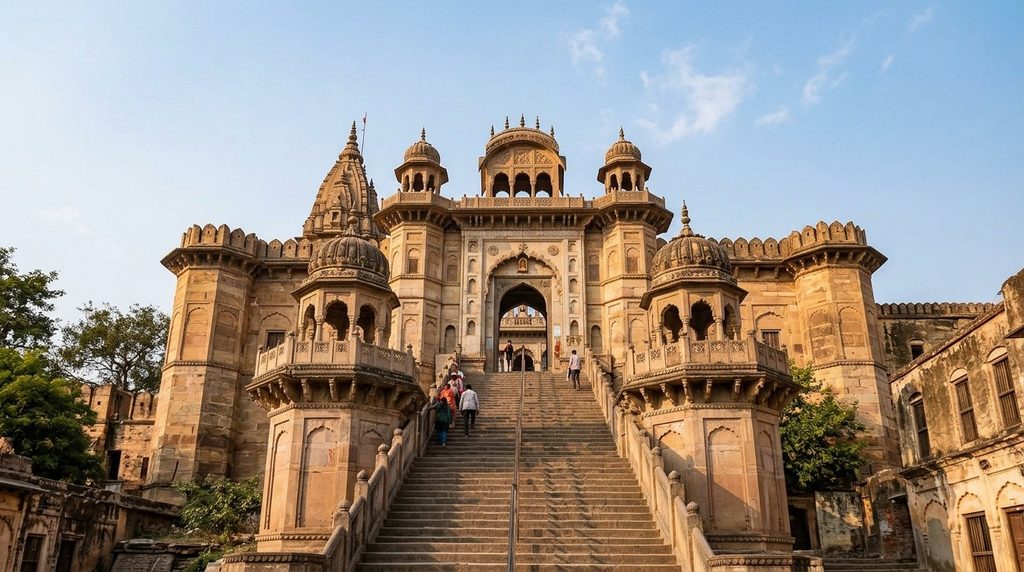
Hanuman Garhi is one of the most important temples to include in an Ayodhya pilgrimage.
The temple is dedicated to Hanuman and is traditionally associated with the belief that Hanuman stayed here while protecting Ayodhya. Its elevated position and distinctive approach make it easy to recognise.
A visit to Hanuman Garhi also works naturally with Ram Janmabhoomi because of their proximity within the central pilgrimage area.
Expect steps and crowds, particularly during busy religious periods. Comfortable footwear and a little patience are useful.
Kanak Bhawan
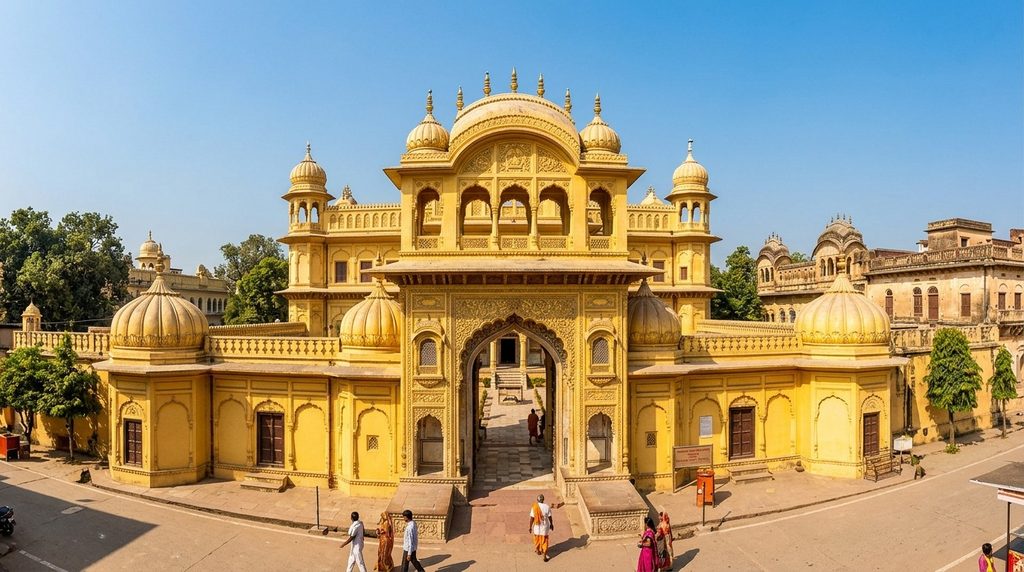
Kanak Bhawan is another significant temple in Ayodhya and is especially associated with Lord Rama and Goddess Sita.
The temple is known for its colourful interiors and images of Rama and Sita. Compared with the monumental scale of the new Ram Mandir, Kanak Bhawan offers a different kind of experience—more intimate and decorative.
Including it in your itinerary helps show that Ayodhya’s religious heritage cannot be understood through the Ram Janmabhoomi complex alone.
Saryu River and Ayodhya Ghats
The Saryu is central to Ayodhya’s spiritual identity. The riverfront provides a slower contrast to the busy temple areas.
Ram Ki Pauri is among the best-known riverfront areas, with a series of ghats and steps leading towards the river. In the evening, the atmosphere changes as lamps, prayers and gatherings bring the waterfront to life.
If you have time, visit the riverfront at more than one time of day. Morning and evening offer very different moods.
Saryu Aarti
The evening aarti on the riverfront is an important part of the Ayodhya experience for many visitors.
Rather than treating it as another item to tick off a sightseeing list, arrive with enough time to find a comfortable place and observe the ceremony respectfully.
Crowds can be significant during festivals and special occasions, so allow extra time for movement.
Ram Ki Pauri
Ram Ki Pauri is a prominent series of ghats along the Saryu and one of the most recognisable public spaces in Ayodhya.
The ghats are particularly atmospheric around sunrise and sunset. They also provide a chance to step away from the more concentrated crowds around the main temple complex.
For photographers, the riverfront offers opportunities to capture Ayodhya’s architecture, devotional activity and evening lights. Be respectful when photographing people engaged in prayer.
Dasharath Bhawan
Dasharath Bhawan is associated with King Dasharatha, the father of Lord Rama in the Ramayana tradition.
The temple complex is smaller and more intimate than the major Ram Janmabhoomi development. Its importance comes from its place in Ayodhya’s sacred geography and its connection with the Ramayana.
Adding smaller temples like this to your itinerary gives the journey more depth. Instead of seeing Ayodhya only through its largest landmarks, you begin to understand how religious stories are woven into the city’s streets.
Nageshwar Nath Temple
Nageshwar Nath Temple is another important shrine in Ayodhya and is traditionally associated with Lord Shiva.
The temple is connected with the wider religious history of the city and is often included in Ayodhya pilgrimage itineraries.
For travellers interested in Hindu traditions, visiting both Vaishnav and Shaiv temples helps show the broader spiritual character of Ayodhya.
Other Places to Visit in Ayodhya
The city contains many temples, ghats and religious sites beyond the most famous landmarks.
Depending on your available time, you can explore places associated with the Ramayana tradition, visit additional temples and spend time around the riverfront.
A useful approach is to group attractions by area rather than crossing the city repeatedly. This saves time and leaves more room for walking and unplanned discoveries.
| Place | Why Visit |
| Shri Ram Janmabhoomi Mandir | Main pilgrimage destination |
| Hanuman Garhi | Important Hanuman temple |
| Kanak Bhawan | Rama-Sita temple with distinctive interiors |
| Ram Ki Pauri | Major Saryu riverfront |
| Saryu Ghats | Evening atmosphere and religious rituals |
| Dasharath Bhawan | Traditional pilgrimage stop |
| Nageshwar Nath Temple | Important Shiva shrine |
How to Reach Ayodhya
Ayodhya has become considerably easier to reach as the city has developed its modern transport infrastructure.
The city is served by rail, road and air connections. The official Uttar Pradesh temple information system lists Maryada Purushottam Shri Ram International Airport among the city’s access points and gives a distance of about 10 km from the temple, while the railway information lists Faizabad Junction at about 4 km.
Distances and transport arrangements can change as the city’s infrastructure develops, so it is sensible to confirm your onward transport before travelling.
By Air
Maryada Purushottam Shri Ram International Airport is the main airport serving Ayodhya.
Flight schedules vary by season and airline, so check current services before finalising your itinerary.
By Train
Rail is one of the most practical options for many pilgrims travelling from other Indian cities.
Ayodhya Dham railway facilities have been developed significantly alongside the city’s pilgrimage infrastructure. Check your ticket carefully because train stations and train services can be listed under different names associated with Ayodhya and the surrounding area.
By Road
Ayodhya is connected by road with major cities in Uttar Pradesh and neighbouring states. Buses, taxis and private vehicles are commonly used by pilgrims.
If you are driving during a major festival, allow considerably more time than a normal day because traffic restrictions and large pedestrian crowds can affect movement.
Getting Around Ayodhya
The most convenient way to explore Ayodhya depends on your itinerary.
For nearby temples, walking can be practical and gives you a much better sense of the old city. For attractions farther apart, local transport or a taxi may save time.
The key is not to underestimate walking. A pilgrimage day can involve considerable time on your feet, particularly if you visit several temples and the riverfront.
Wear comfortable footwear and carry water, especially outside the cooler months.
What to Wear at Ayodhya Temple
There is no need to make temple visits complicated, but respectful clothing is appropriate.
Choose comfortable clothes that are suitable for a religious environment and practical for walking. Depending on the specific temple, footwear may need to be removed before entering.
The most important thing is to follow the instructions provided at the entrance rather than assuming that every temple has identical rules.
What Not to Carry Inside the Temple
Security arrangements at major religious sites can be strict.
Rules concerning mobile phones, cameras, bags, food, flowers and other belongings can change, so check the latest instructions before leaving your hotel.
Older information online has sometimes stated that phones and other personal belongings must be left outside the temple complex. Because arrangements can change, it is safer to confirm the current rules rather than relying on a travel article written several years ago.
If lockers are provided, use the authorised facility rather than handing valuables to an unofficial person.
Ayodhya Temple Travel Costs
The cost of an Ayodhya trip depends much more on your transport, hotel and food choices than on the main temple visit itself.
Do not assume that every special-looking darshan service advertised online is official. Current reporting says the Shri Ram Janmabhoomi Trust’s General and Sugam Darshan arrangements are part of the temple’s organised visitor system.
For budgeting, consider these categories:
| Expense | What to Budget For |
| Travel to Ayodhya | Train, flight, bus or private vehicle |
| Accommodation | Hotel, guesthouse or pilgrimage stay |
| Local transport | Auto-rickshaws, taxis or other local travel |
| Food | Meals and refreshments |
| Temple-related costs | Follow official arrangements; avoid unofficial paid claims |
| Shopping | Optional religious items, handicrafts and souvenirs |
Exact prices vary widely, so it is better to check current rates close to your travel date.
Where to Stay in Ayodhya
Accommodation choices have expanded with the city’s growing pilgrimage traffic.
For a temple-focused trip, staying within or close to the main pilgrimage areas can reduce local travel time. If you prefer quieter surroundings or more conventional hotel facilities, look farther from the busiest temple streets.
When choosing a hotel, consider more than the room itself. Check the distance to your main temple visits, transport availability, check-in times and whether the property can handle your arrival during busy pilgrimage periods.
During major festivals, accommodation can become much harder to find. Booking early is therefore sensible.
Food to Try in Ayodhya
Food is part of the travel experience, even on a pilgrimage.
Ayodhya has a strong vegetarian food culture, with simple North Indian meals, snacks, sweets and drinks available around the city.
You will find everything from quick local snacks to more substantial vegetarian meals. Near major temples, you may also encounter prasad and traditional offerings associated with religious institutions.
Choose clean, busy food establishments and drink safe water, particularly if you are not accustomed to travelling in hot weather.
Ayodhya Temple and Responsible Pilgrimage
A respectful approach makes a noticeable difference in a crowded pilgrimage city.
Avoid littering around temples and ghats. Follow queue systems, do not block pathways for photographs and respect people who are praying.
The Saryu riverfront also deserves care. Do not leave plastic or other waste behind, and follow local instructions around the ghats.
Pilgrimage tourism brings opportunities to local shops, restaurants, guides, transport providers and accommodation businesses. Spending thoughtfully with local businesses can help ensure that tourism benefits the wider community.
A Comfortable Ayodhya Itinerary
Trying to see everything in a few hours usually makes the experience more tiring than meaningful.
A relaxed two-day plan can work well for first-time visitors.
| Day | Suggested Plan |
| Day One | Shri Ram Janmabhoomi Mandir, Hanuman Garhi, Kanak Bhawan and nearby pilgrimage sites |
| Day One Evening | Saryu Ghats and Ram Ki Pauri |
| Day Two Morning | Dasharath Bhawan, Nageshwar Nath Temple and additional temples |
| Day Two Afternoon | Local markets, relaxed sightseeing and rest |
| Day Two Evening | Return to the Saryu riverfront or revisit a preferred temple area |
If you are travelling primarily for darshan, keep the schedule flexible. The temple visit itself may take longer than expected because of crowds and security procedures.
Ayodhya During Festivals
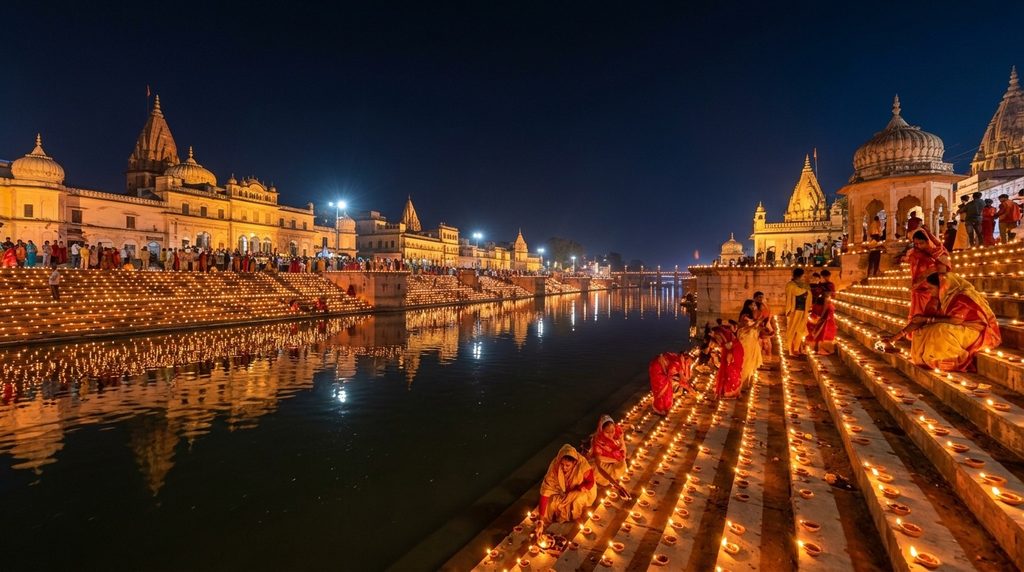
Festivals can transform the city.
Ram Navami is especially significant because it celebrates the birth of Lord Rama. Diwali is also deeply connected with Ayodhya’s Ramayana traditions and attracts large numbers of visitors.
Festival travel can be memorable, but it requires more planning. Accommodation should be arranged early, transport can take longer and popular temples and riverfront areas may become extremely crowded.
If you are travelling with older family members or young children, consider whether you would prefer a quieter period.
How to Have a Peaceful Ayodhya Visit
A pilgrimage does not need to be rushed.
Start your mornings early when possible. Keep the number of major attractions realistic. Leave gaps between temple visits instead of filling every hour.
Spend some time by the Saryu rather than moving constantly between landmarks. Walk through the older parts of the city. Notice the smaller shrines and everyday life around the pilgrimage areas.
Ayodhya becomes much easier to appreciate when you allow space for the city itself rather than treating it simply as a list of temples.
Why Ayodhya Temple Is More Than a Single Landmark
The phrase Ayodhya Temple is often used to refer specifically to the Ram Mandir, but a visit to Ayodhya is broader than the main temple.
The city contains a network of sacred places connected by stories, traditions and pilgrimage routes. Hanuman Garhi, Kanak Bhawan, the Saryu Ghats, Ram Ki Pauri and smaller shrines all contribute to the character of the destination.
The new Ram Janmabhoomi Mandir has given Ayodhya a major new architectural landmark, but the city’s appeal comes from the combination of new and old.
That is why a thoughtful itinerary should include time beyond the main complex.
FAQs
What is the main Ayodhya Temple?
The main temple associated with the current Ayodhya pilgrimage is the Shri Ram Janmabhoomi Mandir, dedicated to Lord Rama. It stands at the site traditionally revered as Ram Janmabhoomi, the birthplace of Lord Rama.
Is entry to Ayodhya Temple free?
Darshan arrangements are managed by the Shri Ram Janmabhoomi Teerth Kshetra Trust, and current reporting indicates that General and Sugam Darshan passes are part of the organised visitor system. Because procedures can change, visitors should verify the latest official information before travelling and be cautious of anyone selling unofficial “VIP” access.
What are the Ayodhya Temple darshan timings?
Darshan timings can change according to temple management, religious events and festivals. Current 2026 arrangements have differed from older schedules published online, so travellers should check the latest official timetable for their visit rather than relying on an old article.
Which temples should I visit in Ayodhya besides Ram Mandir?
Hanuman Garhi and Kanak Bhawan are two of the most useful additions to a first Ayodhya pilgrimage. You can also visit Dasharath Bhawan, Nageshwar Nath Temple, Ram Ki Pauri and the Saryu Ghats depending on the time available.
How many days are enough for an Ayodhya Temple trip?
One full day can cover the main temple and several important nearby shrines, but two days are more comfortable for a first visit. A two-day itinerary gives you time for Ram Janmabhoomi, Hanuman Garhi, Kanak Bhawan, the Saryu riverfront and additional temples without making the trip feel rushed.
Conclusion
An Ayodhya Temple visit is about much more than seeing a newly built landmark. The Shri Ram Janmabhoomi Mandir is the centrepiece, but the deeper experience comes from understanding Ayodhya as a living pilgrimage city—one shaped by the Ramayana tradition, centuries of worship, the Saryu River and countless temples woven into its streets.
Plan your visit with patience. Check current darshan arrangements before travelling, allow extra time for security and crowds, and explore beyond the main temple whenever your schedule permits. From Hanuman Garhi and Kanak Bhawan to Ram Ki Pauri and the evening Saryu riverfront, Ayodhya reveals itself gradually. That slower approach makes the journey more meaningful and gives you a fuller understanding of why this city holds such an important place in India’s religious and cultural landscape.
Read More; Marine Drive Mumbai: Complete Travel Guide to the Queen’s Necklace

I am a travel enthusiast who loves exploring India’s beautiful destinations, culture, history, food, and hidden places. Through my travel website, I aim to help travelers discover amazing places in India and plan memorable trips with useful travel information and tips.