Arunachalam Temple rises at the heart of Tiruvannamalai, where towering gopurams, ancient stonework, sacred traditions, and the imposing Arunachala Hill create one of Tamil Nadu’s most memorable cultural landscapes. Officially known as Arulmigu Annamalaiyar Temple, it is one of the Pancha Bhoota Sthalas associated with Lord Shiva and the element of fire. The temple complex covers about 25 acres and contains more than 1,000 sculptures, around 450 stone inscriptions, more than 100 sannidhis, and monumental architectural features that reveal centuries of South Indian craftsmanship. (Tiruvannamalai)
A visit to Arunachalam Temple is therefore much more than ticking a famous landmark off a travel list. The experience unfolds through enormous gateways, pillared halls, sacred courtyards, devotional rituals, busy streets, and the constant presence of Arunachala Hill behind the town. The famous Girivalam route around the hill adds another dimension, allowing visitors to experience Tiruvannamalai as a living pilgrimage destination rather than simply a historic site. Whether you are drawn by architecture, history, spirituality, photography, or cultural exploration, this is a place worth experiencing slowly.
Why Arunachalam Temple Deserves a Visit
A Living Heritage Landmark
Arunachalam Temple stands apart from many historic monuments because it remains an active center of worship. Its heritage is not confined to stone walls or museum displays; it continues through daily rituals, festivals, pilgrimages, and generations of local tradition.
The result is an atmosphere that feels genuinely alive. You may arrive expecting impressive architecture but leave remembering the sounds, movement, colors, lamps, flowers, and quiet devotional moments that surround it.
The Temple and Hill Are One Experience
The identity of Tiruvannamalai cannot be separated from Arunachala Hill. The temple sits at its foot, while the hill forms the natural and spiritual backdrop to the entire town.
This relationship gives the destination its special character. The architecture draws your attention first, but the mountain continually reminds you that the sacred landscape extends far beyond the temple walls.
History of Arunachalam Temple
Ancient Foundations
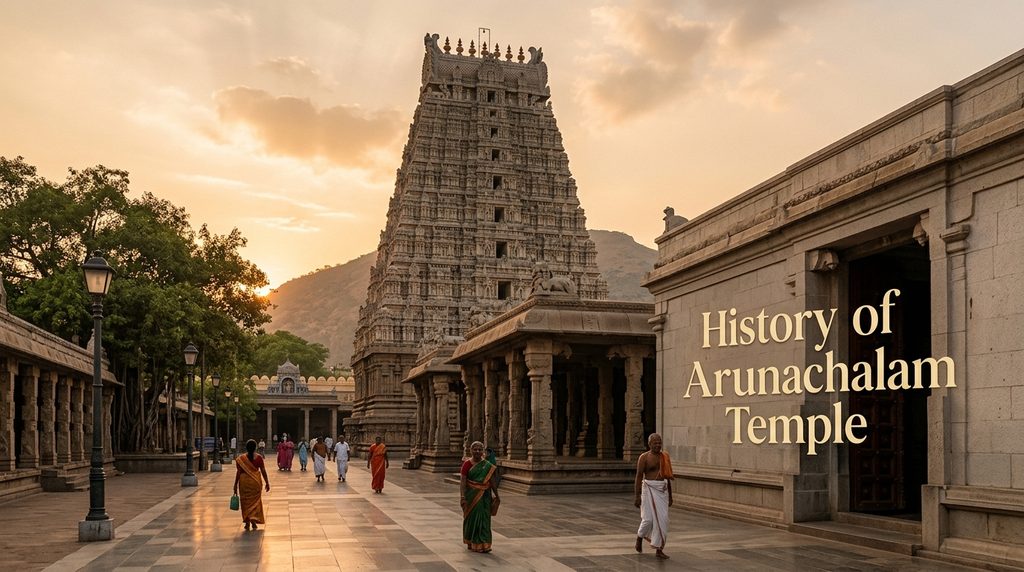
The present temple complex represents centuries of development rather than the work of one ruler or one period. The Tiruvannamalai district administration describes the temple as being around 1,100 years old, with contributions from the Cholas, Pandyas, Sambuvarayars, Hoysalas, Vijayanagara rulers, Nayaks, and later patrons.
This long history can be read through the inscriptions and architectural layers found throughout the complex. More than 450 stone inscriptions are recorded by the district administration, making the temple an important source for understanding the region’s religious, political, and social history. (Tiruvannamalai)
Vijayanagara Influence
The Vijayanagara period left a particularly strong mark on the temple’s monumental character. Large halls, sculptural details, walls, and gateway architecture reflect the ambition of South Indian temple building during this era.
The eastern Rajagopuram is traditionally associated with Krishnadevaraya and rises about 217 feet. The district administration identifies it as the second-tallest gopuram in Tamil Nadu. (Tiruvannamalai)
The Sacred Meaning of Arunachala
Shiva and the Fire Element
Arunachalam Temple is associated with Lord Shiva as fire, or Agni. In the sacred tradition of Tiruvannamalai, Arunachala represents the divine fire that transcends ordinary human understanding.
This symbolism is central to the identity of the temple and explains why fire and light play such an important role in its major religious celebrations.
The Meaning of the Hill
Arunachala is not viewed by devotees simply as a mountain. It is a sacred presence and an important object of devotion in its own right.
The district administration notes that the hill rises to about 2,669 feet, or 800 metres, and that the route around it measures approximately 14 kilometres. (Tiruvannamalai)
Exploring the Temple Architecture
The Monumental Gopurams
The first impression of Arunachalam Temple is its extraordinary scale. Towering gopurams dominate the skyline, while layers of sculptural decoration turn the gateways into enormous visual statements.
The eastern Rajagopuram is particularly striking. Standing beneath it gives you a sense of the engineering, craftsmanship, and religious ambition that shaped the temple over centuries.
Thousand-Pillared Hall and Stone Details
The temple complex includes a famous thousand-pillared hall, numerous shrines, sacred tanks, sculptures, paintings, and expansive circumambulatory spaces. The district administration lists these features among the major architectural highlights of the complex. (Tiruvannamalai)
Rather than rushing through the temple, look closely at the pillars and carved surfaces. Small details often reward visitors more than the largest structures.
Girivalam Around Arunachala Hill
What Is Girivalam?
Girivalam is the traditional circumambulation of Arunachala Hill. The complete route is about 14 kilometres and becomes especially busy on full-moon days and major festival occasions. The district administration reports that hundreds of thousands of devotees can gather for the pilgrimage on these important days. (Tiruvannamalai)
For devotees, Girivalam is an act of worship. For culturally curious travelers, it provides a deeper way to understand the relationship between the hill, temple, town, and local traditions.
The Eight Sacred Lingams
Eight important Lingams are associated with the Girivalam route, each connected with a direction. They are traditionally known as Indra, Agni, Yama, Niruthi, Varuna, Vayu, Kubera, and Esanya Lingams. (Tiruvannamalai)
| Sacred Lingam | Traditional Direction |
| Indra Lingam | East |
| Agni Lingam | Southeast |
| Yama Lingam | South |
| Niruthi Lingam | Southwest |
| Varuna Lingam | West |
| Vayu Lingam | Northwest |
| Kubera Lingam | North |
| Esanya Lingam | Northeast |
The eight stops give the pilgrimage route a distinctive spiritual structure and help visitors understand why walking around Arunachala is such an important tradition.
Karthigai Deepam at Arunachalam Temple
The Festival of the Sacred Flame
Karthigai Deepam is the most spectacular festival associated with Tiruvannamalai. Celebrated during the Tamil month of Karthigai, it reaches its dramatic climax when the Mahadeepam is lit on Arunachala Hill.
The district administration describes the festival as a major annual event, with huge crowds gathering for the celebration and Girivalam. The flame can be seen from many kilometres around the mountain.
Visiting During the Festival
The festival offers an unforgettable cultural experience, but it is not the easiest time for a relaxed visit. Accommodation, roads, temple areas, and pilgrimage routes become extremely crowded.
If you want to attend Karthigai Deepam, plan well ahead and expect a slower pace. If peaceful exploration matters more to you, choose dates outside the biggest festival periods.
Best Time to Visit Arunachalam Temple
Cooler Travel Season
The months from November through February are generally more comfortable for exploring Tiruvannamalai, particularly if you plan to spend considerable time outdoors.
However, this period also overlaps with important religious celebrations, so comfortable temperatures do not necessarily mean smaller crowds.
Full-Moon and Festival Days
Full-moon days are particularly significant for Girivalam. The official district tourism information warns that enormous numbers of devotees gather during full moons and major festivals. (Tiruvannamalai)
For a calmer experience, an ordinary weekday away from major celebrations may be a better choice.
Arunachalam Temple Timings and Visitor Etiquette
Check the Latest Schedule
Temple timings can vary because of festivals, special rituals, and religious observances. The district administration provides official temple information and identifies the temple’s current administrative contact details, so checking official information shortly before your visit is sensible. (Tiruvannamalai)
Allow some flexibility in your itinerary rather than treating the temple like an attraction with a fixed sightseeing window.
Dress Respectfully
Arunachalam Temple is an active place of worship, so modest clothing and respectful behavior are important. Follow instructions concerning footwear, photography, queues, and restricted areas.
The best approach is simple: observe what local worshippers do, follow posted rules, and avoid disrupting prayers or ceremonies.
How to Reach Arunachalam Temple
By Road
Tiruvannamalai is connected by road with major towns and cities in Tamil Nadu. Buses, taxis, and private vehicles are practical options for reaching the town.
Road travel is also useful if you are creating a wider Tamil Nadu itinerary and want to combine Tiruvannamalai with other destinations.
By Train
Tiruvannamalai has a railway station, offering another option for travelers arriving from connected cities. Because train schedules and routes can change, check the current timetable before booking.
By Air
Travelers arriving from distant parts of India can generally use Chennai as a major gateway before continuing to Tiruvannamalai by road or rail.
The final journey takes time, so avoid creating an overly tight connection between your flight and onward travel.
Places to Explore Near Arunachalam Temple

Arunachala Hill
Arunachala Hill is the natural centerpiece of Tiruvannamalai. Its presence changes the character of the town and makes the temple setting particularly distinctive.
Even without completing the entire Girivalam route, taking time to view the hill from different parts of town can add depth to your visit.
Ramana Maharshi Ashram
Tiruvannamalai has a strong connection with the teachings and legacy of Ramana Maharshi. His ashram is an important destination for visitors interested in meditation, philosophy, and spiritual traditions.
It can complement a temple visit by offering another perspective on the town’s long-standing contemplative culture.
Local Streets and Markets
Some of the most memorable experiences happen away from formal attractions. Around the temple you will find flower sellers, small shops, food stalls, devotional items, and everyday scenes that reveal how closely local life remains connected with pilgrimage.
Take time to walk rather than simply passing through.
Where to Stay in Tiruvannamalai
Near the Temple
Staying close to Arunachalam Temple can be convenient if you want easy access to early-morning visits, evening walks, and the central streets.
The area offers different types of accommodation, from simple guesthouses and pilgrim-oriented stays to more comfortable hotels.
During Festivals
Accommodation can become difficult to find during Karthigai Deepam, full-moon periods, and other major events.
If your travel dates coincide with a major festival, reserve accommodation well in advance and expect higher demand and heavier traffic.
Food and Local Experiences
South Indian Flavors
Tiruvannamalai is a good place to enjoy familiar South Indian vegetarian food. Idli, dosa, vada, pongal, sambar, rice meals, and regional snacks are easy choices for travelers.
A simple local breakfast or traditional meal can be particularly satisfying after exploring the temple or spending time walking through the town.
Slow Travel in Tiruvannamalai
The town rewards travelers who resist the urge to hurry. Sit for a while, watch the streets, observe the changing light on Arunachala Hill, and allow the rhythm of local life to become part of your journey.
These quieter moments often become more memorable than a long list of attractions.
Practical Tips for Visiting Arunachalam Temple
What to Carry
Carry drinking water, sun protection, comfortable clothing, and only the essentials you need inside the temple area. If you plan to walk around Arunachala, prepare for a substantial amount of walking.
During warmer weather, start outdoor activities early and allow yourself enough breaks.
What to Avoid
Avoid visiting major pilgrimage areas with an unnecessarily tight schedule. Crowds can change quickly, particularly during full moons and festivals.
Also avoid treating religious ceremonies as photo opportunities. Respectful observation will make the experience more comfortable for both you and local worshippers.
| Travel Factor | Recommended Approach |
| Ideal comfortable season | November to February |
| Full-moon days | Expect very large crowds |
| Girivalam distance | About 14 km |
| Temple clothing | Modest and comfortable |
| Festival travel | Book accommodation early |
| Photography | Follow posted restrictions |
| Outdoor walking | Carry water and sun protection |
| Itinerary | Keep plenty of flexibility |
Why Arunachalam Temple Is More Than a Tourist Attraction
Arunachalam Temple brings together history, architecture, religion, landscape, and living culture with unusual intensity. Its enormous gopurams tell one story, its inscriptions tell another, while the rituals and pilgrims continuing around them reveal a tradition that remains active today. The temple’s scale is impressive, but its real character comes from the relationship between the built environment and Arunachala Hill.
That is what makes Tiruvannamalai memorable. You can study the architecture, walk the Girivalam route, explore local streets, attend a festival, or simply sit quietly and watch the hill change under the evening light. Each experience reveals another layer of the destination.
FAQs:
What is Arunachalam Temple famous for?
Arunachalam Temple is famous for its Lord Shiva tradition, association with the fire element, monumental Dravidian architecture, Arunachala Hill, Girivalam, and Karthigai Deepam festival. (Tiruvannamalai)
Where is Arunachalam Temple located?
Arunachalam Temple, also known as Annamalaiyar Temple, is located in Tiruvannamalai, Tamil Nadu, at the foot of sacred Arunachala Hill. (Tiruvannamalai)
How long is the Girivalam route?
The Girivalam route around Arunachala Hill is approximately 14 kilometres long. Full-moon and festival days can attract exceptionally large crowds. (Tiruvannamalai)
When is Karthigai Deepam celebrated at Arunachalam Temple?
Karthigai Deepam is celebrated during the Tamil month of Karthigai, generally around November or December, with the famous Mahadeepam lit on Arunachala Hill. (Tiruvannamalai)
How much time should you spend at Arunachalam Temple?
A few hours can cover the main temple experience, but staying longer in Tiruvannamalai is worthwhile if you want to explore Arunachala Hill, Girivalam, local markets, and the town’s spiritual heritage.
Conclusion
Arunachalam Temple is not simply an impressive monument in Tamil Nadu; it is the beating heart of a historic pilgrimage town shaped by faith, architecture, landscape, and centuries of tradition. Its towering gopurams, vast courtyards, detailed sculptures, ancient inscriptions, and sacred connection with Arunachala Hill make it one of the most compelling cultural destinations in South India. (Tiruvannamalai)
The best way to experience Arunachalam Temple is to give it time. Look beyond the grand entrance, notice the details in the stonework, observe the living rituals respectfully, explore the streets around the temple, and understand the meaning of the sacred hill. Whether you visit during an ordinary day or witness the extraordinary energy of Karthigai Deepam, Tiruvannamalai has a way of turning a simple temple visit into a deeper travel experience.
Read more:Arunachalam Temple Distance: Are You Closer Than You Think?

I am a travel enthusiast who loves exploring India’s beautiful destinations, culture, history, food, and hidden places. Through my travel website, I aim to help travelers discover amazing places in India and plan memorable trips with useful travel information and tips.