If you’re thinking about New Zealand travel, October might just be your golden ticket. Spring has sprung in the Southern Hemisphere, and Aotearoa is practically glowing with possibility. I’ve spent enough time exploring these islands to know that October hits that perfect sweet spot: nature’s at her best, the weather plays nicely, and you’re not fighting massive crowds. Let me break down exactly why October should be at the top of your travel list.
Spring Is in Full Bloom
October marks the official start of spring in New Zealand, and honestly, there’s nothing quite like it. After months of winter, the country bursts into color. Native wildflowers carpet the meadows, particularly the golden tussocks and purple lupines that paint the landscape. In places like Coromandel Peninsula and the South Island’s Fiordland, the transformation is stunning.
The native birds also return in force. You’ll hear more birdcalls, see more wildlife activity, and the overall energy of the country shifts. Even the air feels fresher, less heavy than winter months. If you’re someone who travels for natural beauty and Instagram-worthy moments, October delivers without the saturation of peak summer.
The longer daylight hours are another massive perk. By October, you’re getting around 13 hours of daylight. This means more time exploring, more flexibility with your itinerary, and those golden-hour photography opportunities that make every sunset feel significant.
Weather Is Genuinely Pleasant
Here’s the truth about New Zealand weather: it’s moody. But October is one of the few months when it’s consistently cooperative. You’re looking at average temperatures ranging from 10 to 17 degrees Celsius (50 to 63 Fahrenheit), depending on where you are.
The North Island tends to be slightly warmer, with places like Auckland and the Bay of Islands seeing temperatures closer to 18 degrees. The South Island is cooler, but still entirely manageable. You’ll need layers, though. This is the golden rule of October in New Zealand: bring a good rain jacket and some mid-weight layers. The weather can shift from sunny to rainy in hours, but these aren’t the brutal storms you’d face in other seasons.
Rainfall exists, sure, but it’s not like the heavier downpours of winter. Most days you’ll get a mix of sun and clouds, perfect for trekking and exploring without either melting or freezing.

Fewer Tourists, Better Experiences
September and October fall into that lovely pre-peak season window. The summer holidays (December through February) are absolute madness. You’ll queue for everything, pay premium prices, and share every scenic spot with what feels like every tourist on Earth.
October? It’s different. Local tour guides have actual availability. Popular hiking trails aren’t packed with thousands of people. The Milford Track still requires booking, but you’re not dealing with weeks-long wait lists. Accommodation prices haven’t surged yet. You might find a stunning Airbnb on the Coromandel Peninsula for a fraction of what it costs in January.
I’ve done popular hikes in both October and December. The October experience was genuinely better. The trails were uncrowded, the views were unobstructed, and you actually got to have a conversation with other hikers rather than just shuffling along in a human chain. Your guide can spend more time explaining the flora, fauna, and Maori history without rushing through groups.
Plus, restaurants are more relaxed about walk-ins. You don’t need to book weeks ahead. Rental car prices are lower. Tour operators actually have energy instead of exhausted expressions. These might sound like small things, but they genuinely transform your travel experience.
Adventure Sports Season Kicks Off
October is when adventure tourism really opens up. The season hasn’t peaked, but it’s officially begun. Jet boating, bungee jumping, skydiving, white-water rafting, and paragliding are all in full swing.
The Shotover Jet in Queenstown is running at full capacity. The Kawarau Bridge bungy is accessible without insane wait times. Tandem skydiving companies have better weather windows and more available slots. If extreme sports are your thing, October gives you access without the summer overcrowding.
The rivers are running well from spring snowmelt in the mountains, making for excellent white-water rafting conditions. Water temperatures are cold but manageable. Paragliding conditions are often exceptional in October, with thermals developing nicely as the season progresses.
Even if you’re not an adrenaline junkie, water activities like kayaking and paddleboarding become more enjoyable. The lakes are stunning, the air is crisp, and you’re not battling hundreds of other people for the best vantage points.
Hiking Conditions Are Nearly Perfect
The hiking in New Zealand is world-class, and October offers some of the best conditions of the year. I mean this seriously: spring hiking here rivals anything you’ll find in the Alps or Rockies.
The ground has firmed up from winter, so trails aren’t boggy. Snow has melted enough to clear the paths, but higher elevations might still have patches if you’re doing alpine routes. The temperature is cool enough that you won’t overheat on strenuous climbs, but warm enough to be comfortable.
The Tongariro Alpine Crossing is stunning in October. The Routeburn Track is accessible and beautiful. Even the Milford Track, which is operationally limited, is at its most manageable in October. Tramping (that’s hiking, in New Zealand speak) in the Nelson Lakes, Arthur’s Pass, and throughout Fiordland is genuinely world-class.
Visibility is generally excellent. The spring sun at lower angles creates incredible lighting for mountain photography. Native beech forests are fresh and vibrant. If you’re planning a tramping trip, October should be seriously considered.

Wine Harvest and Local Food Season
October also marks the beginning of wine harvest season in Marlborough and Central Otago. This is huge for food and wine enthusiasts. Vineyard visits become more engaging because you might actually catch harvest activities happening.
The Marlborough Wine Festival happens in February, but October is when the serious work starts. Wine trails are less crowded in October than in peak summer. You can do tastings at your own pace, chat with winemakers who aren’t completely overwhelmed, and actually enjoy the experience.
Local produce is also coming into season. Berries, stone fruits, and fresh vegetables start appearing in markets and restaurants. Farm-to-table dining takes on real meaning when the ingredients are literally from October harvests.
Wellington and Auckland’s food scenes are particularly vibrant in spring. New restaurants are opening, and chefs are excited about seasonal ingredients. Food tours through these cities become more interesting when you’re tasting ingredients at their peak.
Accommodation Still Feels Affordable
This ties back to the crowd factor, but it’s worth highlighting separately. Hotel and lodge prices in October are remarkably reasonable compared to the December through February peak season.
I’ve seen the same Queenstown lodge cost roughly 40-50% less in October than in January. Backpackers and budget accommodations have availability without feeling desperate. Mid-range and luxury options still have availability and haven’t inflated prices yet.
For a couple or small family, this means your accommodation budget goes further. You might be able to afford that stunning lakeside lodge or luxury eco-lodgement that would be completely off the table in summer months.
If you’re planning an extended trip, the financial difference between October and December can be genuinely substantial. Same quality accommodations, vastly different prices. It’s worth seriously factoring into your travel planning.
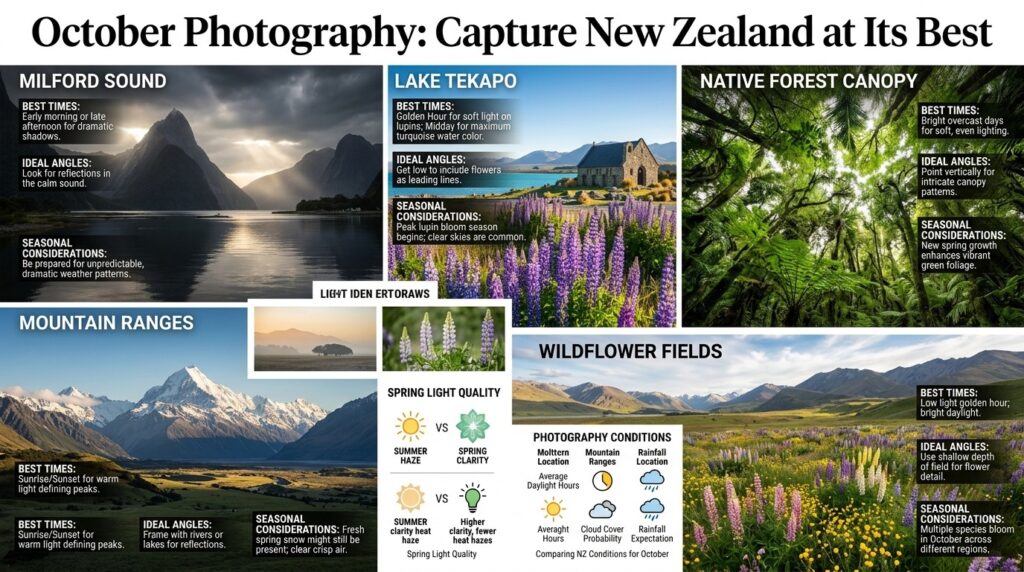
Perfect Photography Opportunities
The combination of spring light, fresh landscapes, and fewer people creates ideal photography conditions. Professional photographers actually prefer New Zealand in October to peak summer.
The light quality is exceptional. Spring sun at lower angles creates dramatic shadows and golden tones. The sky often has that crisp blue that makes landscapes pop in photos. Fresh growth means vibrant greens and wildflower colors that photograph beautifully.
Milford Sound is less crowded for photography. Lake Tekapo has clearer views without the summer haze. The Southern Alps are snow-capped but accessible. Glow worm caves have fewer people, making for better photography. Even urban photography in Auckland or Wellington improves with fewer tourists cluttering your shots.
If you’re serious about photography, October offers a genuine advantage. The conditions are objectively better, and the reduced crowds mean you can take your time framing shots.
Planning Your New Zealand October Travel Itinerary
You’re probably wondering how to actually structure a New Zealand October trip. The beauty is flexibility. You could do a full month and barely scratch the surface, or hit the highlights in two weeks.
Most first-time visitors spend at least a week on each island. A solid three-week itinerary would give you time to experience both without feeling rushed. Consider basing yourself in hubs like Queenstown, Wanaka, or Christchurch in the South Island, and Auckland or Wellington in the North.
October is ideal for combining active pursuits with relaxation. You could easily structure days around hiking, adventure sports, or wine touring, with rest days for exploring towns and enjoying local food. The weather and daylight hours make this kind of varied itinerary actually manageable.
The Reality Check
I won’t pretend October is absolutely perfect. Some regions can still be cool in the mornings. You might encounter rain on any given day. Certain high-altitude areas can still have snow. Some remote access roads might not be fully cleared.
But compared to every other month? October offers the best combination of weather reliability, affordability, natural beauty, and accessibility. It’s the month where New Zealand feels genuinely welcoming, not overwhelming or inhospitable.
FAQs
Is October the best time to visit New Zealand?
October ranks among the best months for New Zealand travel. Spring weather is pleasant, crowds are manageable, prices are reasonable, and natural scenery is at its peak. The only potential drawback is that the absolute best hiking conditions might be slightly better in November or December, but October is genuinely excellent.
What should I pack for New Zealand October travel?
Pack layers. Bring a quality rain jacket, mid-weight sweaters, and both short and long sleeves. Comfortable hiking boots are essential. Sunscreen is important as spring sun can be deceptive. A hat and sunglasses are helpful. You’ll likely wear different combinations daily as the weather shifts.
Is October safe for New Zealand travel?
New Zealand is consistently one of the world’s safest travel destinations. October carries no unique safety concerns. Standard travel precautions apply: stay aware in urban centers, don’t leave valuables in cars, and follow local guidance on hiking trails. Crime rates are low across the country.
Can I do the Great Walks in October?
Most Great Walks are available in October, though some have restricted access or booking challenges. The Milford Track operates year-round but books months ahead. The Routeburn Track, Tongariro Alpine Crossing, and Kepler Track are fully accessible in October with excellent conditions. Rees-Dart and other alpine walks are passable but might have snow at higher elevations.
How long should I spend in New Zealand for October travel?
A minimum of two weeks allows reasonable coverage of one island plus a few days on the other. Three weeks gives you a genuinely well-rounded experience. A month lets you slow down and really explore without rushing. Most travelers find one month optimal, but two weeks produces satisfying memories and covers key highlights.
CONCLUSION
October genuinely delivers what most travelers dream about: world-class experiences without the chaos or inflated prices of peak season. You get spring’s natural beauty, hiking conditions that rival anything you’ll find elsewhere, and enough daylight to actually make the most of every day.
The combination of favorable weather, manageable crowds, adventure opportunities, and genuine affordability makes October stand out. Whether you’re an adrenaline seeker, nature photographer, wine enthusiast, or someone simply wanting authentic travel experiences, October checks every box.
New Zealand in October isn’t just about visiting a beautiful country. It’s about timing your trip perfectly so that every element aligns: nature’s rebirth, comfortable conditions, and the genuine kindness of locals who aren’t completely overwhelmed with tourists. Pack your layers, book your tramping permit, and prepare for one of the most rewarding travel experiences of your life.
October in New Zealand isn’t hype. It’s honest-to-goodness travel magic at the right time of year.
Read More: Travel to Croatia in August: Complete Guide for the Perfect Summer Vacation