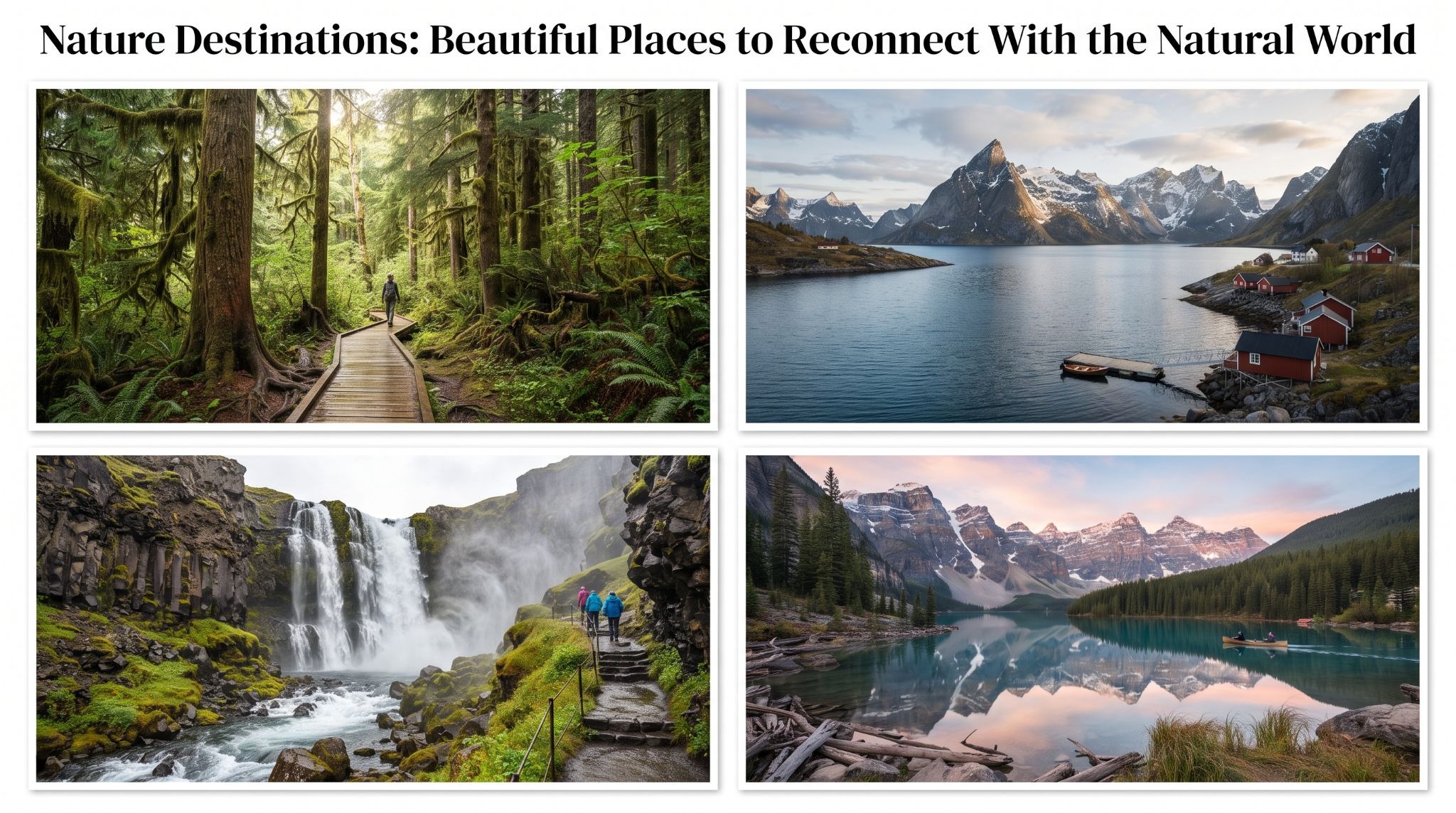
Nature has a remarkable way of slowing life down. A quiet forest trail, a mountain covered in morning mist, a clear lake reflecting the sky, or waves breaking along an untouched coastline can offer a kind of peace that busy cities rarely provide. The best nature destinations are not simply beautiful places to photograph. They are places where landscapes, wildlife, climate, and local culture come together to create memorable travel experiences.
From dramatic mountain ranges and ancient forests to waterfalls, deserts, islands, and national parks, the world offers endless opportunities for travelers who want to spend more time outdoors. Whether you prefer challenging hikes or peaceful scenic escapes, choosing the right natural getaway can make a trip feel refreshing, meaningful, and deeply memorable.
Why Nature Destinations Are Worth Visiting
Nature destinations offer experiences that are difficult to recreate elsewhere. They encourage travelers to walk more slowly, observe their surroundings, and appreciate landscapes shaped over centuries or even millions of years.
Many natural areas also provide opportunities for hiking, wildlife watching, camping, photography, swimming, and other outdoor activities. At the same time, quieter destinations can be equally rewarding for travelers who simply want fresh air and beautiful scenery.
A visit to a natural area can also create a stronger understanding of conservation. National parks, protected forests, marine reserves, and wildlife sanctuaries often protect fragile ecosystems that depend on responsible tourism.
Best Types of Nature Destinations for Different Travelers
The ideal natural escape depends largely on what you enjoy doing. Some travelers want high mountain viewpoints, while others prefer tropical beaches or peaceful woodland trails.
| Type of destination | Best for | Typical experiences |
| Mountains | Hikers and adventure travelers | Trekking, scenic drives, climbing and photography |
| Forests | Peaceful outdoor escapes | Walking, birdwatching and wildlife observation |
| Beaches and islands | Relaxation and water activities | Swimming, snorkeling and coastal walks |
| National parks | Diverse travel experiences | Hiking, wildlife viewing and scenic exploration |
| Lakes and rivers | Slow travel and recreation | Boating, fishing and lakeside relaxation |
Choosing a destination that matches your travel style makes planning easier and helps you enjoy the experience without feeling rushed.
Best Time to Visit Nature Destinations
The best time to visit depends on the climate and landscape you want to experience. Mountain areas can change dramatically between seasons, while tropical regions may have distinct dry and rainy periods.
Spring is often attractive for mild weather, fresh greenery, and blooming landscapes. Summer can provide easier access to higher elevations and outdoor activities, although popular destinations may become crowded. Autumn is valued for cooler temperatures and changing foliage in many parts of the world. Winter can be ideal for snowy landscapes and quieter travel, but weather conditions may limit access to certain areas.
| Season | What travelers can expect | Good for |
| Spring | Green landscapes and seasonal flowers | Walking and scenic travel |
| Summer | Longer days and broad outdoor access | Hiking and mountain trips |
| Autumn | Cooler conditions and changing colors | Photography and road trips |
| Winter | Snowy scenery or quieter destinations | Winter landscapes and peaceful escapes |
Before traveling, it is always wise to check local weather conditions and official information for protected areas. Seasonal access can change because of rainfall, snow, storms, or conservation requirements.
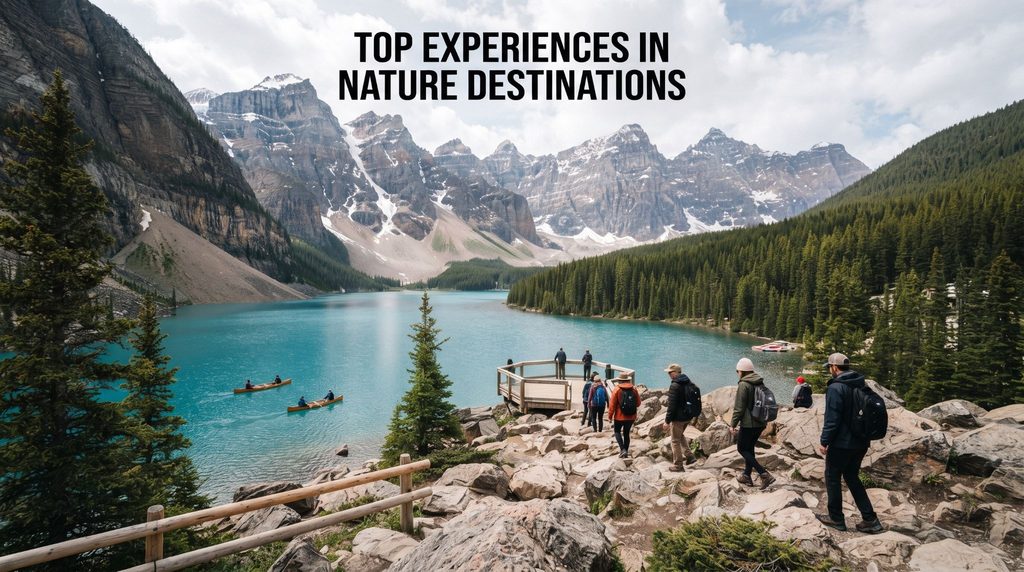
Top Experiences in Nature Destinations
Hiking Through Scenic Landscapes
Hiking is one of the best ways to experience natural surroundings at a slower pace. Trails can lead through forests, valleys, coastlines, grasslands, and mountain areas that are impossible to appreciate fully from a vehicle.
Choose a route that matches your fitness level and experience. Carry enough water, suitable clothing, and navigation tools where needed. In remote areas, travelers should also understand local safety guidance before beginning a hike.
Watching Wildlife Responsibly
Wildlife encounters can become the most memorable part of a nature-focused trip. Birds, marine animals, mammals, and smaller species can often be observed in their natural habitats.
The best approach is to watch quietly and maintain a respectful distance. Feeding wildlife or attempting to get unusually close can disturb animals and create risks for both visitors and the ecosystem.
Enjoying Scenic Water Experiences
Lakes, rivers, waterfalls, and coastlines offer a different perspective on nature. Depending on the destination, travelers may enjoy kayaking, boating, swimming, or simply relaxing beside the water.
Conditions can change quickly around natural bodies of water, particularly near rivers and coastlines. Local safety guidance should always take priority over planned activities.
How to Plan a Trip to Nature Destinations
Good planning can make an outdoor journey safer and more enjoyable. Unlike city travel, natural areas may have limited transport options, accommodation, food services, or mobile connectivity.
Research the destination before departure and identify the nearest towns or visitor centers. For popular protected areas, check whether advance reservations or permits are required.
Pack according to the environment rather than simply the destination’s general weather forecast. Mountain temperatures can change quickly, while tropical areas may require protection from rain, sun, and insects.
A useful approach is to keep your plans flexible. Weather and natural conditions are part of the experience, and changing your route when conditions become unsafe is often the best decision.
Transportation Options for Nature Destinations
Reaching natural areas can require more planning than visiting major cities. Some destinations are connected by airports and public transport, while others are easiest to explore by car or through guided tours.
| Travel option | Best suited for | Planning consideration |
| Rental car | Remote parks and scenic regions | Check road and parking conditions |
| Public transport | Popular protected areas | Confirm schedules and seasonal service |
| Guided tours | Remote or unfamiliar locations | Review the itinerary and activity level |
| Walking or cycling | Smaller natural areas | Consider weather and route difficulty |
For remote regions, always confirm transport arrangements before arrival. Services may operate less frequently than in urban areas.
Responsible Travel in Nature Destinations
Natural landscapes can be vulnerable to overcrowding and careless visitor behavior. Responsible travel helps protect the places that make these journeys worthwhile.
Stay on designated trails where possible, especially in fragile environments. Take all litter with you and avoid disturbing plants or wildlife. Respect local rules regarding camping, fires, swimming, and photography.
Supporting local communities can also make travel more sustainable. Choosing locally operated accommodation, guides, and restaurants can help ensure that tourism brings benefits to people living near natural attractions.
Local Culture Around Nature Destinations
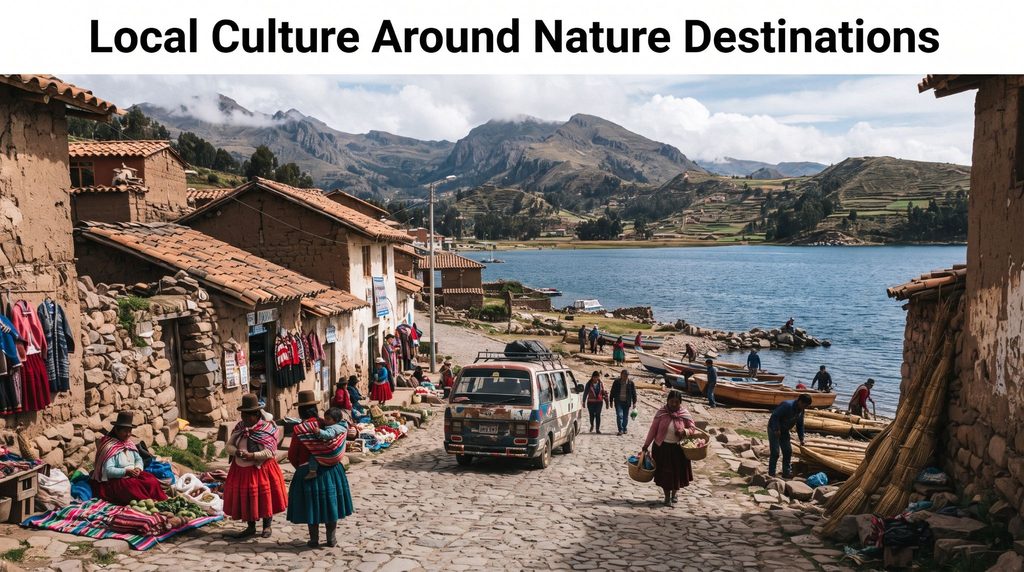
Some of the most interesting natural regions are closely connected with local traditions and communities. Mountains, forests, rivers, and coastlines may have cultural importance that visitors should understand and respect.
Travelers can learn more by visiting local museums, speaking with guides, trying regional food, and exploring nearby towns rather than focusing only on the landscape. This adds depth to the journey and creates a more complete understanding of the destination.
When visiting culturally significant natural areas, follow local guidance and avoid treating sacred or protected locations as simple photo opportunities.
Photography Tips for Nature Destinations
Photography can help preserve memories, but the best images usually come from patience rather than rushing between viewpoints.
Early morning and late afternoon often provide softer natural light. Weather can also add atmosphere, with mist, clouds, and changing skies creating more interesting scenes than clear conditions alone.
Avoid stepping into restricted areas for photographs. A beautiful image is never worth damaging vegetation or disturbing wildlife. Sometimes the strongest travel memories are also the moments when the camera stays in your bag.
Practical Tips for Visiting Nature Destinations
A few simple habits can make outdoor travel much easier:
- Check weather conditions before major activities.
- Wear clothing suitable for changing temperatures.
- Carry sufficient drinking water.
- Keep a charged phone but do not rely on signal in remote areas.
- Tell someone about your plans before visiting isolated locations.
- Follow official guidance from park authorities and local experts.
- Leave natural areas as you found them whenever possible.
The goal is not to control every part of the trip. Nature travel is often most enjoyable when there is room for unexpected views, changing weather, and quiet moments away from crowded schedules.
FAQs
What should I pack for a trip focused on natural landscapes?
Pack according to the environment and planned activities. Comfortable walking shoes, weather-appropriate clothing, water, sun protection, and basic navigation tools are useful for many outdoor trips.
Are national parks suitable for first-time outdoor travelers?
Yes. Many parks offer easy trails, visitor centers, scenic viewpoints, and guided activities. Beginners should choose routes that match their fitness and experience.
How can travelers avoid harming wildlife?
Observe animals from a safe distance, avoid feeding them, stay quiet, and follow guidance provided by local authorities or professional guides.
Is it better to travel independently or join a guided tour?
Independent travel offers flexibility, while guided tours can be helpful in unfamiliar or remote environments. The best choice depends on the destination and your outdoor experience.
What makes a natural getaway more sustainable?
Travel responsibly, reduce waste, respect protected areas, follow local rules, and support businesses that benefit nearby communities.
Conclusion
The world’s natural landscapes offer far more than attractive views. They provide space to explore, rest, learn, and reconnect with environments that often feel distant from everyday life. The most rewarding trips are not necessarily those with the busiest itineraries, but those that allow enough time to notice the details around you.
Choose places that match your interests, prepare carefully, respect local communities and ecosystems, and stay open to the unexpected. When approached thoughtfully, a journey into nature can become both an unforgettable travel experience and a reminder of why these remarkable landscapes deserve protection.
Read More: Natural Places: Beautiful Destinations for Nature Lovers Around the World

I am a travel enthusiast who loves exploring India’s beautiful destinations, culture, history, food, and hidden places. Through my travel website, I aim to help travelers discover amazing places in India and plan memorable trips with useful travel information and tips.