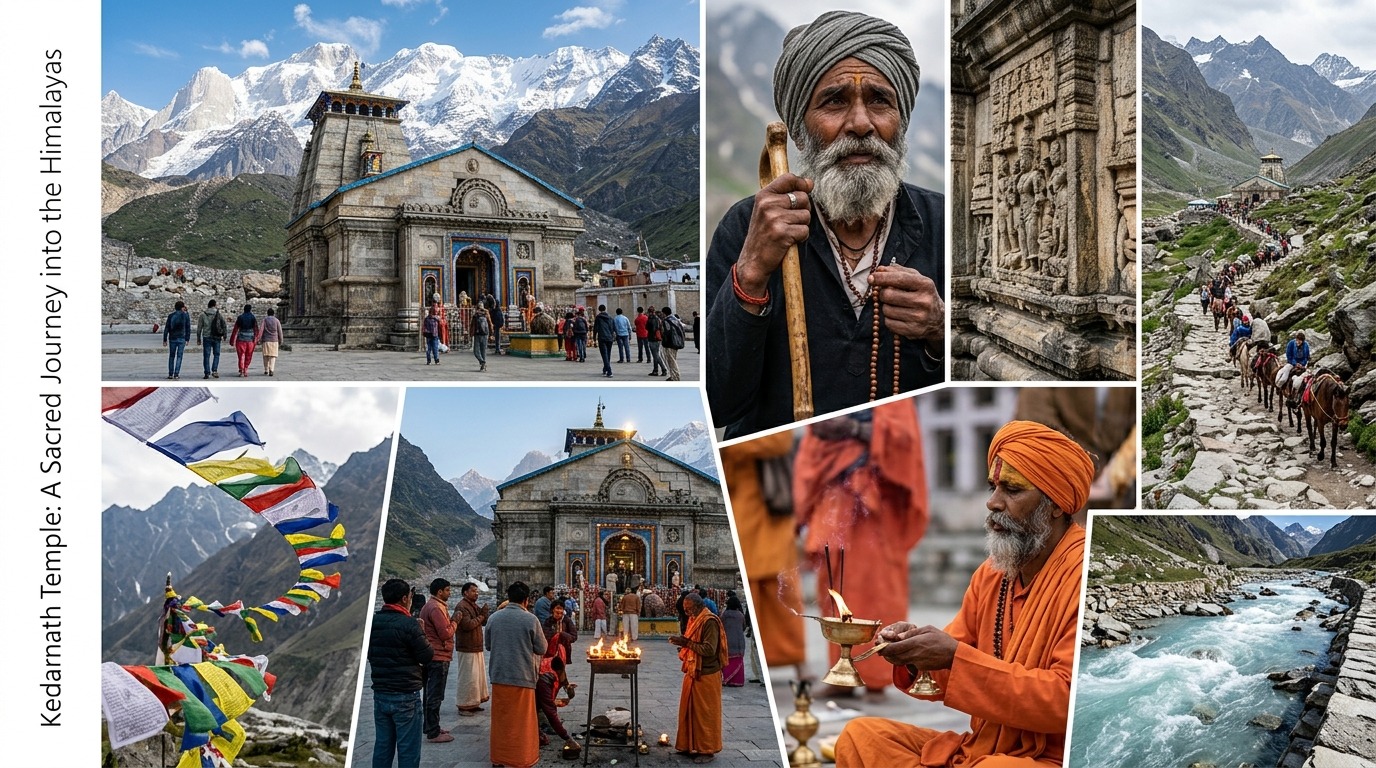
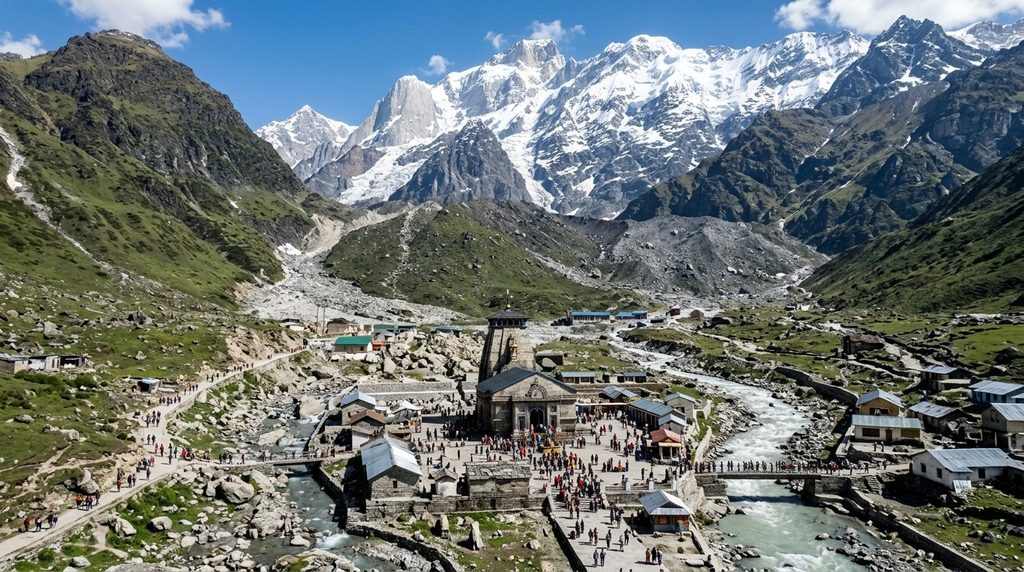
High in the Garhwal Himalayas, a stone shrine stands surrounded by some of Uttarakhand’s most dramatic mountain scenery. The pilgrimage to Kedarnath combines devotion with a demanding journey through a high-altitude landscape, making the destination meaningful long before visitors reach the temple itself.
The shrine is dedicated to Lord Shiva and is regarded as one of the twelve Jyotirlingas. Its setting near the Mandakini River, with towering Himalayan peaks rising behind the town, gives the pilgrimage a distinctive sense of place. For travelers planning the journey, understanding the route, seasonal conditions, registration requirements, and nearby sacred sites is just as important as knowing the temple’s religious significance.
Why Kedarnath Holds Such Importance
Kedarnath is one of the most revered Shiva pilgrimage sites in India and forms part of the Char Dham tradition of Uttarakhand. The shrine also occupies a central position in the Panch Kedar circuit, a group of five temples associated with different manifestations of Lord Shiva.
Its remote Himalayan location adds to the character of the pilgrimage. Reaching the sanctuary requires travelers to leave the road at Gaurikund and continue toward the high mountain settlement, making the physical journey an important part of the experience.
The Story Associated With Lord Shiva
Hindu tradition connects the shrine with the Pandavas of the Mahabharata. According to the traditional account, the Pandavas sought Lord Shiva after the war, but Shiva avoided them by taking the form of a bull. He eventually disappeared into the ground, with his hump remaining visible at Kedarnath.
The same tradition links the other manifestations of Shiva with Tungnath, Rudranath, Madhyamaheshwar, and Kalpeshwar. Together, these five shrines form the Panch Kedar pilgrimage circuit.
The Stone Architecture of the Shrine
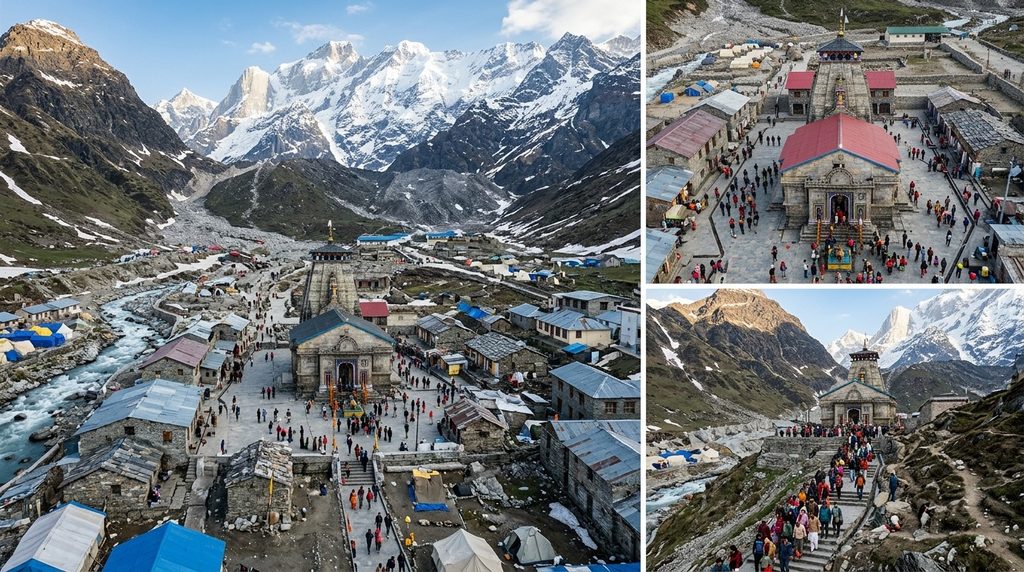
The temple is notable for its large, evenly shaped grey stone slabs. Its relatively simple exterior contrasts with the grandeur of the mountains surrounding it, while the structure’s substantial stone construction reflects the challenging environment in which the shrine stands.
A large Nandi statue stands outside the entrance. Inside, the conical rock formation worshipped as Shiva’s Sadashiva form is the principal sacred manifestation.

The Sacred Form Worshipped Inside
The central object of worship is a naturally shaped conical rock regarded as the hump of Shiva in the traditional story. Devotees perform prayers and offerings to this manifestation during the pilgrimage season.
For visitors, this is an important reminder that the shrine is first and foremost a place of worship. The experience is therefore best approached respectfully, especially during busy periods when pilgrims may be waiting for darshan.
The Journey Begins at Gaurikund
Gaurikund is the traditional roadhead for the pilgrimage. Uttarakhand Tourism identifies it as the starting point of the route toward the shrine and notes its association with Goddess Gauri and a hot-water spring.
The walking distance is described differently across official tourism resources, with current route information varying as the path and access arrangements change. Travelers should therefore check the latest official route information before beginning the journey rather than relying on an old fixed distance.
| Journey Stage | Practical Information |
| Main road journey | Continue toward Gaurikund by road |
| Trek starting point | Gaurikund |
| Main route | Uphill Himalayan trail toward the shrine |
| Approximate altitude at destination | About 3,584 metres |
| Planning priority | Check current route and registration information before travel |
What the Himalayan Trail Is Like
The route is a mountain pilgrimage rather than an ordinary sightseeing walk. Uttarakhand Tourism describes the trail as medium to steep, passing through mountain scenery, forests, waterfalls, and the surrounding Kedarnath Wildlife Sanctuary.
Conditions can change with weather and local authorities’ arrangements. Travelers should allow sufficient time, carry appropriate clothing and water, and avoid treating the route as a race. At high altitude, moving at a comfortable pace is especially important.
Registration and Travel Planning
Pilgrims should complete the required registration before beginning their journey. The Shri Badarinath Kedarnath Temple Committee currently directs travelers toward the official Uttarakhand registration portal and notes that pilgrimage formalities can change over time.
| Planning Item | What Travelers Should Know |
| Yatra registration | Complete the current official registration process before travel |
| Puja bookings | Advance registration is required for listed puja services |
| Route conditions | Check current government and temple information |
| Weather | Prepare for rapidly changing Himalayan conditions |
| Documents | Keep required identification and registration details accessible |
Because arrangements can change during the pilgrimage season, checking official information shortly before departure is more reliable than depending entirely on older articles or social-media posts.
Best Time to Visit
The shrine operates seasonally because heavy winter snowfall makes the high-altitude settlement inaccessible. The official temple committee explains that the shrine generally closes around the beginning of Kartik and reopens during Vaishakh, with the symbolic form of the deity worshipped at Ukhimath during the winter period.
For most travelers, the main pilgrimage season offers the practical opportunity to visit. Late spring and early summer can provide more comfortable conditions for the mountain journey, while the post-monsoon period can also be appealing when travel conditions permit.
Weather remains an important consideration throughout the season. Always check current forecasts, route notices, and official pilgrimage advisories before setting out.
Bhairavnath Temple and the Mountain Views
Bhairavnath Temple sits roughly 500 metres from the main shrine and is traditionally regarded as a guardian of the sacred town during the winter closure. Uttarakhand Tourism highlights the short uphill route and the broad views available from the area.
The visit adds another dimension to a Kedarnath itinerary. Rather than viewing the main shrine in isolation, travelers can use the surrounding landscape to understand the geographical setting of the pilgrimage.
Ukhimath and the Winter Tradition
Ukhimath has a special connection with the seasonal cycle of the pilgrimage. The Omkareshwar Temple there serves as the winter seat associated with Kedarnath, where worship continues after the high-altitude shrine closes for the colder months.
This tradition helps explain why the pilgrimage is not simply suspended during winter. Instead, the worship associated with the deity continues at a lower and more accessible Himalayan location.
Kedarnath Wildlife Sanctuary
The surrounding landscape is part of the Kedarnath Wildlife Sanctuary, a large protected area extending across the Himalayan region. Uttarakhand Tourism notes that the sanctuary is associated with species including the Himalayan musk deer and contains numerous temples within its wider landscape.
The natural setting is one of the strongest features of the journey. Mountain forests, streams, waterfalls, and high peaks create a constantly changing backdrop as travelers move toward the shrine.
What Travelers Should Expect
The pilgrimage can be physically demanding, particularly because of the altitude and the uphill terrain. Travelers should plan realistically rather than assuming that the journey will feel like a normal walk.
It is sensible to allow extra time for rest and unexpected delays. Weather, crowd conditions, route management, and personal pace can all affect the journey. Visitors should also follow instructions from local authorities and pilgrimage officials, particularly when conditions become difficult.
Reaching the Pilgrimage Route
The nearest airport listed by Uttarakhand Tourism is Jolly Grant Airport near Dehradun, while Rishikesh is identified as the nearest railway station. Road travel continues toward Gaurikund, where the motorable route ends and the mountain journey begins.
Travelers can therefore build the pilgrimage around Dehradun, Rishikesh, Haridwar, or other Uttarakhand destinations depending on their wider itinerary.
The Meaning of a Himalayan Pilgrimage
What makes the journey memorable is the way physical landscape and religious tradition overlap. The high mountains are not merely scenery surrounding the shrine; they shape the pace, preparation, atmosphere, and character of the pilgrimage.
For a first-time visitor, the most rewarding approach is to leave room for the journey itself. The road to Gaurikund, the mountain trail, the surrounding peaks, the sacred sites, and the final arrival all form part of one continuous experience.
Conclusion
A pilgrimage to this remote Himalayan shrine demands more preparation than a typical temple visit, but that effort is part of what gives the journey its distinctive character. The stone architecture, ancient traditions, dramatic peaks, and seasonal worship create an experience that cannot be separated from its mountain setting.
Plan carefully, verify current registration and route information, respect the demands of high altitude, and allow enough time to travel without rushing. With the right preparation, the journey can become as meaningful as the moment of reaching the sacred shrine itself.
FAQs
Where is Kedarnath located?
Kedarnath is in Uttarakhand’s Rudraprayag district in the Garhwal Himalayas, at an elevation of roughly 3,584 metres.
How do pilgrims reach the shrine?
The traditional road journey ends at Gaurikund, from where pilgrims continue along the mountain route toward the shrine. Uttarakhand Tourism identifies Gaurikund as the starting point of the trek.
Why is the shrine important to devotees of Lord Shiva?
It is regarded as one of the twelve Jyotirlingas and is also one of the five Panch Kedar temples. The shrine is dedicated to Lord Shiva and is associated with an important Himalayan pilgrimage tradition.
Can travelers visit during winter?
The high-altitude shrine generally closes during the winter because of heavy snowfall. During this period, worship associated with the deity continues at Ukhimath.
What should visitors check before starting the pilgrimage?
Travelers should verify current registration requirements, route conditions, weather information, and temple arrangements before departure. Official pilgrimage information can change during the season, so current government and temple sources should be checked.
Read More:Ram Mandir: Discover Ayodhya’s Sacred Landmark

I am a travel enthusiast who loves exploring India’s beautiful destinations, culture, history, food, and hidden places. Through my travel website, I aim to help travelers discover amazing places in India and plan memorable trips with useful travel information and tips.