The Diwali Festival is one of the most important and widely celebrated festivals in India. Known around the world as the Festival of Lights, Diwali brings families, friends, and communities together in a joyful celebration filled with diyas, prayers, sweets, decorations, and traditional customs. For millions of people, however, Diwali is much more than a beautiful festival of lights. It carries a powerful message about hope, renewal, positivity, and the victory of good over evil.
Celebrated over five days, the Diwali Festival has deep religious, cultural, and social importance. Different regions and communities connect the festival with different stories and traditions, but the central message remains similar: light defeats darkness, knowledge overcomes ignorance, and goodness ultimately triumphs over evil.
Why Is Diwali India’s Most Important Holiday?
Diwali is often considered one of India’s biggest and most significant celebrations because of its deep connection with religion, family, prosperity, and cultural traditions. Preparations begin days or even weeks before the main celebration.
Homes are cleaned, decorated, and illuminated with diyas and lights. Families buy new clothes, prepare traditional food, exchange gifts, and gather for prayers. On the main day, many Hindu families perform Lakshmi Puja and pray for prosperity, happiness, and well-being.
The festival also has a strong emotional meaning. It is a time when people reconnect with loved ones, forgive past differences, and begin a new chapter with hope and positivity.
The Meaning Behind the Festival of Lights
The word Diwali comes from Deepavali, which is commonly understood as a row or series of lights. Diyas and lamps are among the most recognizable symbols of the festival.
These lights represent much more than decoration. They symbolize the removal of darkness and negativity from life. The message of the Diwali Festival encourages people to move toward goodness, wisdom, hope, and inner light.
Homes, streets, temples, and public spaces are decorated with lamps and colorful lights. As darkness falls, the glowing diyas create one of the most memorable sights of the year.
This symbolism explains why Diwali continues to have such a universal appeal. Its message is simple but powerful: even in difficult times, light and hope can overcome darkness.
Diwali and the Victory of Good Over Evil
One of the most important meanings of Diwali is the celebration of good over evil. In North India, the festival is closely associated with the return of Lord Rama to Ayodhya after 14 years of exile and his victory over Ravana.
According to tradition, people welcomed Lord Rama, Sita, and Lakshmana by lighting rows of lamps. This story became closely connected with the celebration of light overcoming darkness and righteousness defeating evil.
However, the story behind Diwali is not exactly the same everywhere in India. In some parts of southern India, the celebration is linked with Lord Krishna’s victory over the demon Narakasura. Other regions have their own traditions and stories.
Despite these differences, the central idea remains the same. The Diwali Festival reminds people that truth, courage, kindness, and righteousness are stronger than negativity and injustice.
The Five Days of Diwali
The Diwali Festival is traditionally celebrated over five days, with each day having its own customs and importance.
Day 1: Dhanteras
The first day is known as Dhanteras. It is associated with prosperity and good fortune. Many families clean their homes and purchase items such as utensils, jewelry, or other valuables as part of the traditional celebrations.
Dhanteras marks the beginning of the festive period and brings a feeling of excitement as homes and markets prepare for the days ahead.
Day 2: Naraka Chaturdashi or Chhoti Diwali
The second day is often called Naraka Chaturdashi or Chhoti Diwali. In many traditions, it is connected with the defeat of the demon Narakasura.
People continue decorating their homes and preparing for the main Diwali celebration. Diyas, rangoli, festive food, and family gatherings are common parts of the day.
Day 3: Lakshmi Puja and Main Diwali Celebration
The third day is the main day of Diwali. Families light diyas and decorate their homes with lamps, candles, flowers, and colorful designs.
Lakshmi Puja is an important tradition on this day. Many Hindu families worship Goddess Lakshmi and Lord Ganesha and pray for prosperity, wisdom, and happiness.
Families also share sweets and gifts, visit relatives, and spend time together. This day represents the heart of the Diwali Festival, combining religious devotion with joy and togetherness.
Day 4: Govardhan Puja
The fourth day is associated with Govardhan Puja in many Hindu traditions. It is connected with the story of Lord Krishna and Govardhan Hill.
In some regions, this day is also connected with new beginnings, family celebrations, and regional customs. Traditions can vary across India, making Diwali a festival with many different cultural expressions.
Day 5: Bhai Dooj
The final day is known as Bhai Dooj. It celebrates the special relationship between brothers and sisters.
Families come together to perform traditional rituals, share food, and exchange gifts. The day brings the five-day celebration to a warm and meaningful conclusion.
How People Celebrate Diwali
The Diwali Festival is celebrated in many beautiful ways across India. Although customs vary by region and family, several traditions are commonly associated with the festival.
Cleaning and Decorating Homes
Before Diwali, people clean and decorate their homes. This tradition is often seen as a way to welcome positivity and begin anew.
Entrances may be decorated with flowers, torans, rangoli, and diyas. The bright decorations create a festive atmosphere that can be felt across neighborhoods and cities.
Lighting Diyas
Lighting diyas is one of the most important Diwali traditions. Small oil lamps are placed inside and outside homes, creating a warm and beautiful glow.
The diya represents hope, knowledge, and the victory of light over darkness.
Rangoli Designs
Colorful rangoli designs are created at entrances and courtyards. These artistic patterns may be made using colored powders, flowers, rice, or other decorative materials.
Rangoli adds beauty to Diwali celebrations and is also associated with welcoming happiness and prosperity.
Sweets and Gifts
Food is another important part of the Diwali Festival. Families prepare and share traditional sweets and snacks with relatives, friends, and neighbors.
Gift-giving is also common and helps strengthen relationships. The simple act of sharing sweets and spending time together reflects the festival’s spirit of generosity and connection.
The Importance of Lakshmi Puja
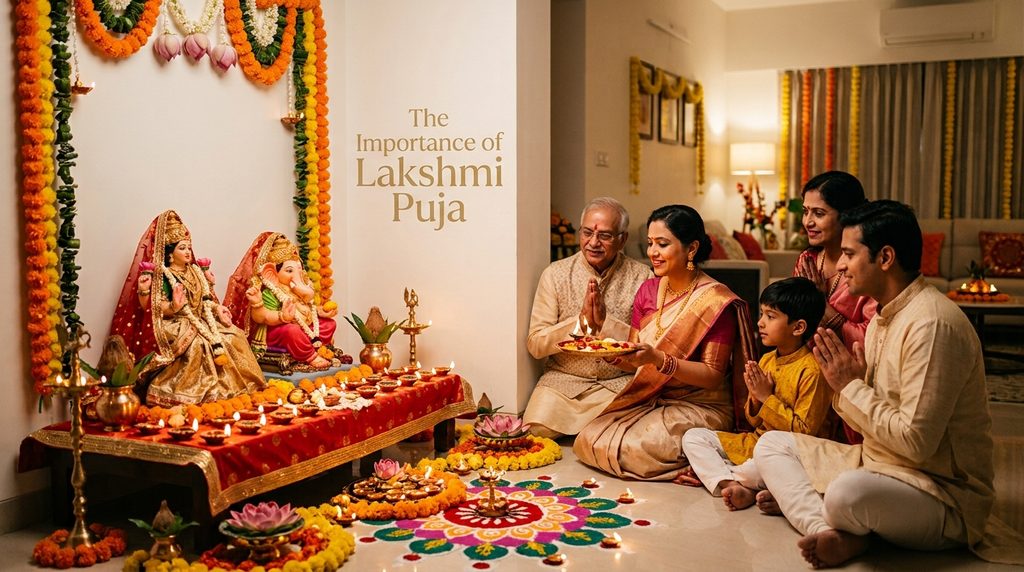
Lakshmi Puja is one of the most important religious traditions during Diwali. Goddess Lakshmi is associated with wealth, prosperity, and good fortune, while Lord Ganesha is worshipped for wisdom and the removal of obstacles.
Families prepare their homes and gather for prayers. Diyas are lit, offerings are made, and people seek blessings for a prosperous and peaceful future.
For many families, this ritual is an opportunity to pause and reflect on gratitude, responsibility, and the hope for a better year ahead.
Diwali Celebrations Across India
One of the most fascinating aspects of Diwali is that it is celebrated differently across India.
In North India, the story of Lord Rama’s return to Ayodhya is especially important. In southern India, many celebrations are connected with Lord Krishna’s victory over Narakasura. Other regions have their own customs, rituals, foods, and traditions.
Cities also develop their own festive atmosphere. Markets become busy, homes shine with lights, and temples hold special prayers and celebrations.
This diversity makes the Diwali Festival more than a single event. It is a collection of traditions connected by a shared message of light, hope, and goodness.
Diwali Beyond Hindu Traditions
Although Diwali has deep roots in Hindu traditions, it is also important to other religious communities.
For Jains, Diwali is associated with Lord Mahavira’s nirvana. Sikhs observe the period alongside Bandi Chhor Divas, commemorating the release of Guru Hargobind. Some Buddhist communities also observe related Diwali traditions.
These different observances show how the festival has developed a broad cultural importance while maintaining its central themes of freedom, enlightenment, hope, and the triumph of goodness.
Diwali as a Global Celebration
Today, the Diwali Festival is celebrated far beyond India. Indian communities around the world organize family gatherings, cultural programs, temple events, and public celebrations.
The festival’s global popularity reflects the movement of Indian culture across different countries and generations. People from different backgrounds are increasingly becoming familiar with Diwali’s traditions, food, decorations, and message.
At its heart, Diwali remains a celebration of connection. Whether it is observed in a family home, a temple, or a large public event, the festival brings people together through shared joy and tradition.
How to Celebrate Diwali in a Meaningful Way
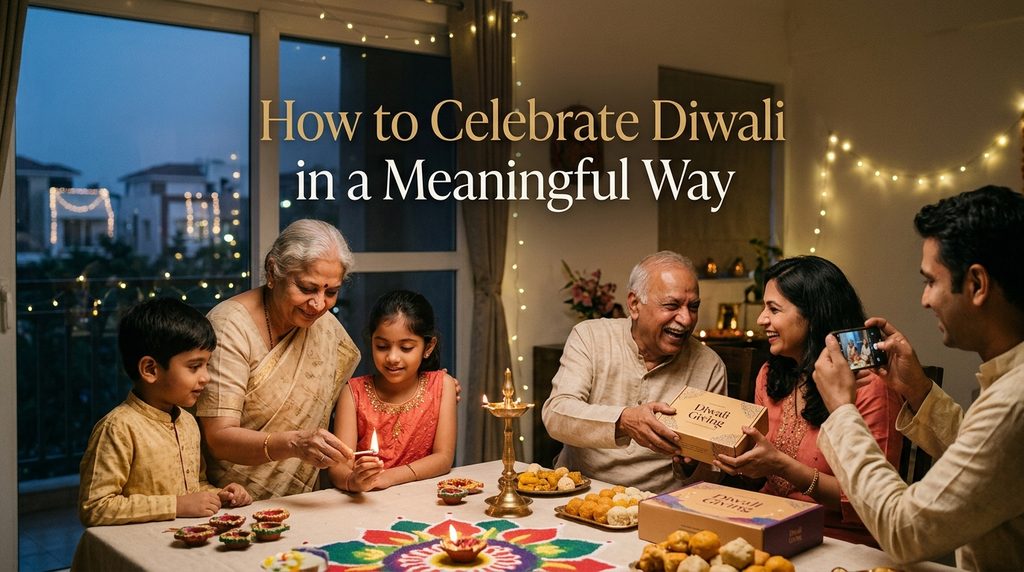
Diwali can be a time not only for celebration but also for reflection.
You can make the festival more meaningful by spending time with family, helping people in need, sharing food, and practicing kindness. Many people are also choosing more environmentally responsible ways to celebrate.
A thoughtful Diwali celebration can include traditional diyas, reusable decorations, mindful gift-giving, and reduced use of polluting fireworks. The goal is to protect the environment while preserving the joy and cultural beauty of the festival.
The real message of Diwali is not about how many lights decorate a home. It is about bringing more kindness, hope, and positivity into the lives of others.
Why Diwali Still Matters Today
The message of Diwali remains relevant in modern life. People continue to face challenges, uncertainty, and negativity, making the festival’s symbolism especially meaningful.
Diwali reminds us that darkness does not last forever. It encourages people to choose hope over fear, kindness over hatred, and goodness over wrongdoing.
In a fast-moving world, the festival also creates an opportunity to slow down and reconnect with family and tradition. For many people, lighting a simple diya is a reminder that even a small light can make a difference.
That is why the Diwali Festival continues to be one of India’s most meaningful celebrations.
FAQs
Why is Diwali celebrated?
Diwali is celebrated for different religious and regional reasons. One of the best-known traditions marks Lord Rama’s return to Ayodhya after defeating Ravana. The festival broadly symbolizes the victory of light over darkness and good over evil.
How many days is the Diwali Festival celebrated?
Diwali is traditionally celebrated over five days. The celebrations commonly include Dhanteras, Naraka Chaturdashi, the main Diwali or Lakshmi Puja day, Govardhan Puja, and Bhai Dooj, although regional traditions may vary.
What is the main message of Diwali?
The main message of Diwali is the triumph of light over darkness, knowledge over ignorance, and good over evil. It is also a celebration of hope, renewal, prosperity, and togetherness.
Conclusion
The Diwali Festival is much more than India’s Festival of Lights. It is a celebration of faith, family, tradition, and the timeless belief that goodness can overcome evil.
From the lighting of diyas and colorful rangoli to Lakshmi Puja, family gatherings, sweets, and gifts, every part of Diwali adds to its special meaning. The festival is celebrated in different ways across India and around the world, yet its central message remains universal.
Diwali teaches us to bring more light into our homes, relationships, and lives. As families gather and diyas shine in the darkness, the festival continues to remind millions of people that hope, kindness, and goodness will always have the power to overcome darkness.
Read More: Arunachalesvara Temple: History, Timings, Significance and Complete Visitor Guide

I am a travel enthusiast who loves exploring India’s beautiful destinations, culture, history, food, and hidden places. Through my travel website, I aim to help travelers discover amazing places in India and plan memorable trips with useful travel information and tips.