Picture jagged pink-and-gray peaks piercing a bright blue sky. Picture a turquoise lake so clear you can see straight to the bottom. Picture a trail that winds past wildflower meadows before dropping you at a cozy mountain hut serving fresh strudel. This isn’t a fantasy. This is a normal Tuesday in the Dolomites Italy.
Tucked into the northeastern corner of Italy, the Dolomites are one of the most jaw-dropping mountain ranges on Earth. UNESCO agrees the range earned World Heritage status in 2009 for its unique rock formations and dramatic scenery. Yet many American travelers still overlook this region in favor of the more famous Amalfi Coast or Tuscany. That’s a mistake, and this guide will show you why.
Whether you’re a hardcore hiker chasing your next big trail, a photographer hunting the perfect sunrise shot, or a family looking for a scenic summer escape, the Dolomites Italy delivers. In this guide, you’ll get everything you need: the best time to go, where to stay, what to pack, how much it costs, and mistakes to avoid. Let’s dive in.
What Are the Dolomites?
The Dolomites are a mountain range located in northeastern Italy, spanning the provinces of Trentino, South Tyrol, and Belluno. They form part of the Southern Limestone Alps and stretch across roughly 3,000 square miles.
What makes them different from other mountains? The rock itself. Dolomites are made of a mineral called dolomite, which gives the peaks their signature pale, almost pink glow, especially at sunrise and sunset. Locals call this glow “enrosadira,” which means “turning pink” in the Ladin language.
The region also has a fascinating mix of cultures. You’ll hear Italian, German, and Ladin (an ancient Rhaeto-Romance language) spoken within a few miles of each other. This blend shows up in the food, architecture, and local traditions, making the Dolomites feel unlike anywhere else in Italy.
Where Are the Dolomites Located?
The Dolomites sit in northeastern Italy, close to the Austrian border. The closest major cities are:
- Venice – about 2.5 hours by car
- Innsbruck, Austria – about 2 hours by car
- Verona – about 2.5 hours by car
- Bolzano – the regional capital, right in the heart of the Dolomites
Best Time to Visit the Dolomites Italy
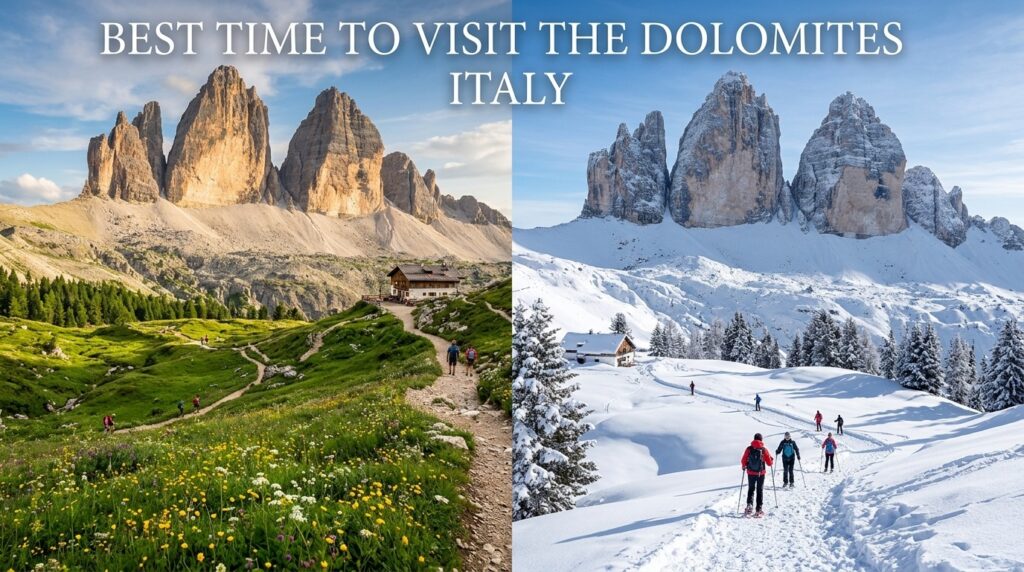
Timing your trip right can make or break your Dolomites experience. Here’s a season-by-season breakdown.
Summer (June–September): Best for Hiking
This is peak season, and for good reason. Trails are snow-free, mountain huts (called rifugios) are open, and daylight lasts until nearly 9 p.m. July and August are the busiest and warmest months, while June and September offer thinner crowds and cooler temperatures.
Winter (December–March): Best for Skiing
The Dolomites are home to the Dolomiti Superski area, one of the largest ski networks in the world, with over 1,200 kilometers of connected slopes. December through March offers reliable snow, charming Christmas markets, and cozy mountain lodges.
Spring and Late Fall: Best for Budget Travel
Many hotels, cable cars, and restaurants close between mid-April and late May, and again between mid-October and early December. This is considered the “shoulder season,” and while some things are closed, you’ll find lower prices and fewer tourists if you plan carefully.
Quick Comparison: Dolomites by Season
| Season | Weather | Best For | Crowd Level | Price Level |
| Summer (Jun–Sep) | Mild, 60–75°F | Hiking, biking | High | High |
| Winter (Dec–Mar) | Cold, snowy | Skiing, snowboarding | High | High |
| Spring (Apr–May) | Cool, unpredictable | Budget travel | Low | Low |
| Fall (Oct–Nov) | Crisp, colorful foliage | Photography, quiet trails | Low | Low |
How to Get to the Dolomites Italy
By Air
The nearest major airports are:
- Venice Marco Polo Airport (VCE) – best overall option, roughly 2.5 hours to most Dolomites towns
- Innsbruck Airport (INN) in Austria – closer to the northern Dolomites
- Verona Airport (VRN) – good option if combining with a Lake Garda trip
By Train and Car Rental
There’s no major train line running directly into the heart of the Dolomites, so most visitors fly into Venice or Verona, then rent a car. You can take a train to Bolzano or Bressanone and rent a car from there if you’d rather avoid highway driving.
Getting Around Once You’re There
A rental car gives you the most freedom, especially for reaching trailheads early before parking lots fill up. If you’d rather not drive on mountain roads, South Tyrol’s public bus network connects most towns and is surprisingly reliable.
Expert Tip: Book your rental car with an automatic transmission in advance. Manuals are the norm in Italy, and automatics sell out fast during summer.
Top Things to Do in the Dolomites Italy
1. Hike to Tre Cime di Lavaredo
This is the single most iconic hike in the Dolomites. The loop trail around these three distinctive peaks takes about 3 hours and requires no technical climbing skills, just decent fitness.
2. Visit Lake Braies (Lago di Braies)
Often called the “Pearl of the Dolomites,” this emerald-green lake is one of the most photographed spots in Italy. Arrive before 8 a.m. to beat the crowds and get parking.
3. Ride the Seceda Cable Car
Seceda offers one of the most dramatic mountain panoramas in the Alps. A quick cable car ride from Ortisei takes you to jagged ridgelines that look almost otherworldly.
4. Explore the Alpe di Siusi (Seiser Alm)
This is the largest high-altitude alpine meadow in Europe. In summer, it’s covered in wildflowers, with the Sassolungo peak looming in the background.
5. Drive the Great Dolomites Road
This scenic route connects Bolzano to Cortina d’Ampezzo, passing through some of the most stunning mountain passes in Europe, including Passo Pordoi and Passo Falzarego.
6. Try Via Ferrata Climbing
For adventure seekers, via ferrata routes let you climb steep rock faces using fixed cables and ladders. No technical climbing experience is required, but a head for heights helps.
7. Visit Cortina d’Ampezzo
Known as the “Queen of the Dolomites,” this charming town hosted the 1956 Winter Olympics and will co-host the 2026 Winter Olympics. It’s packed with boutique shops, cafés, and postcard-worthy views.
Where to Stay in the Dolomites Italy
Choosing the right base town matters more than you’d think, since the Dolomites are spread across a huge area.
Best Towns to Base Yourself
| Town | Best For | Vibe | Avg. Hotel Price/Night |
| Cortina d’Ampezzo | Luxury travelers, skiing | Upscale, glamorous | $250–$500 |
| Ortisei | Families, hikers | Charming, central | $150–$300 |
| Alta Badia | Foodies, skiing | Quiet, scenic | $180–$350 |
| San Candido | Budget travelers | Small, peaceful | $100–$200 |
| Bolzano | City lovers, day trips | Urban, walkable | $120–$250 |
Types of Accommodation
- Rifugios (mountain huts): Basic but unforgettable, often only reachable by hiking. Great for multi-day trekking.
- Alpine hotels: Range from cozy family-run inns to five-star wellness resorts with mountain-view spas.
- Vacation apartments: A budget-friendly option, especially for families or longer stays.
Expert Tip: Book rifugios at least 2–3 months ahead for summer weekends. They fill up fast, especially along popular routes like the Alta Via 1.
Best Hikes in the Dolomites Italy
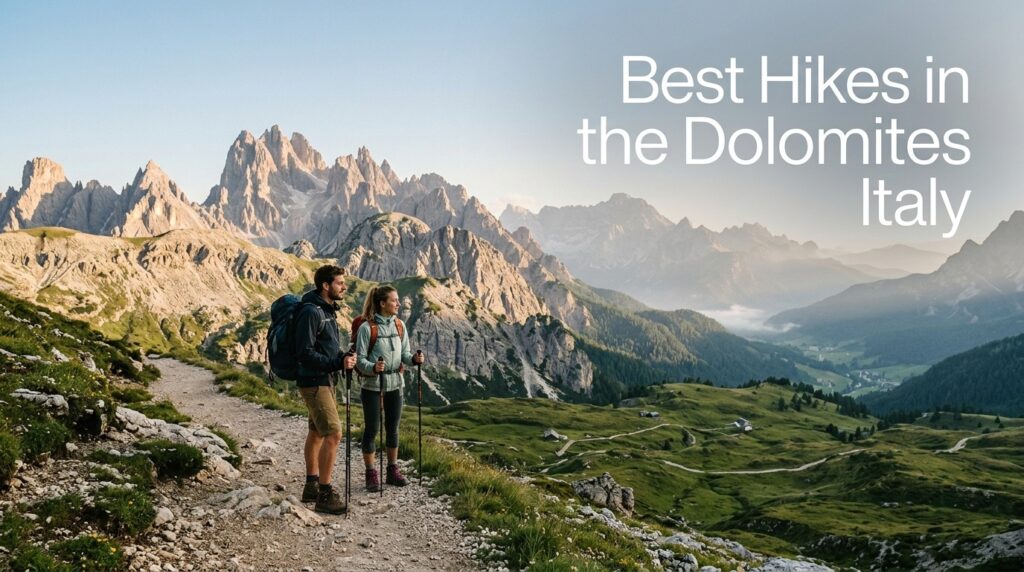
Hiking is the number one reason most people visit. Here’s a breakdown by difficulty level.
Easy Hikes (Good for Families)
- Lake Braies Loop – 1.5 hours, flat, stroller-friendly in parts
- Alpe di Siusi Meadows – multiple easy loop trails with mountain views
Moderate Hikes
- Tre Cime di Lavaredo Loop – 3 hours, some elevation gain
- Seceda Ridgeline Walk – 2–3 hours, cable car access
Challenging Hikes
- Alta Via 1 – a multi-day trek across the entire range, 7–10 days
- Via Ferrata delle Trincee – requires climbing gear and experience
Hiking Difficulty Comparison Table
| Trail | Distance | Difficulty | Time Needed | Cable Car Needed? |
| Lake Braies Loop | 2.1 miles | Easy | 1–1.5 hrs | No |
| Alpe di Siusi Loops | 2–6 miles | Easy–Moderate | 1–4 hrs | Optional |
| Tre Cime Loop | 6.2 miles | Moderate | 3 hrs | No |
| Seceda Ridgeline | 3–5 miles | Moderate | 2–3 hrs | Yes |
| Alta Via 1 | ~75 miles | Difficult | 7–10 days | Varies |
What to Pack for the Dolomites Italy
- Sturdy waterproof hiking boots (broken in, not new)
- Layered clothing — mountain weather changes fast
- A lightweight rain jacket, even in summer
- Sunscreen and sunglasses (UV is stronger at altitude)
- A reusable water bottle (many trails have fresh spring fountains)
- A basic first aid kit for day hikes
- Cash — many rifugios don’t accept cards
Packing Checklist for a Dolomites Trip
- [ ] Waterproof hiking boots
- [ ] Moisture-wicking layers
- [ ] Rain jacket
- [ ] Daypack (20–30L)
- [ ] Trekking poles
- [ ] Portable phone charger
- [ ] Offline maps downloaded
- [ ] Euro cash for mountain huts
- [ ] Travel insurance documents
- [ ] Reusable water bottle
How Much Does a Trip to the Dolomites Cost?
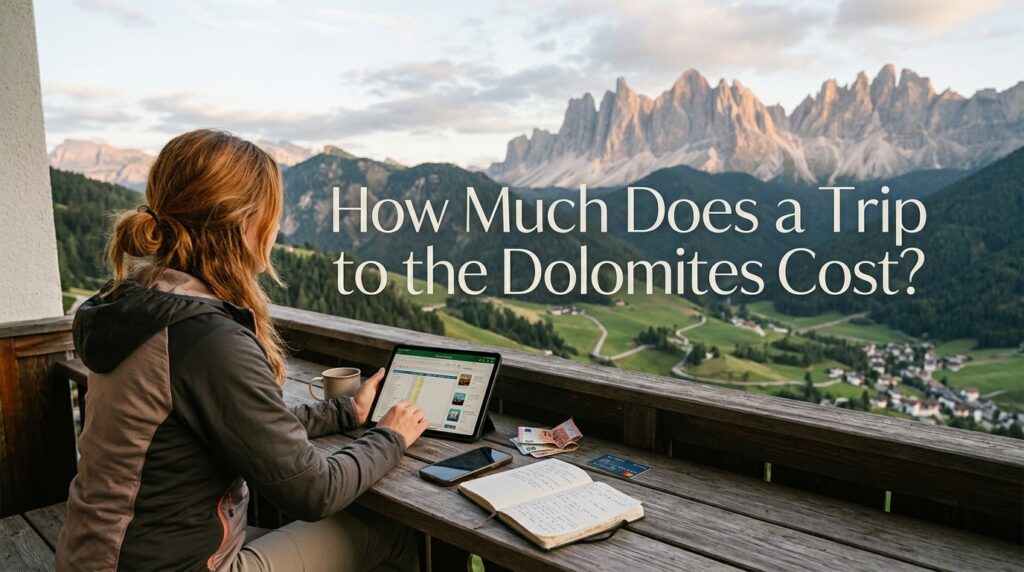
Here’s a realistic daily budget breakdown for a trip to the Dolomites Italy, based on average 2026 prices.
| Expense | Budget Traveler | Mid-Range Traveler | Luxury Traveler |
| Accommodation | $80–$120/night | $150–$300/night | $350+/night |
| Food | $30–$50/day | $60–$90/day | $100+/day |
| Transportation | $40–$60/day (car rental) | $60–$80/day | $100+/day |
| Activities (cable cars, guides) | $20–$40/day | $50–$80/day | $100+/day |
| Total per day | $170–$270 | $320–$550 | $650+ |
Dolomites Italy: Pros and Cons
| Pros | Cons |
| Stunning, unique scenery unlike anywhere else | Can get expensive during peak summer season |
| Excellent hiking trails for all skill levels | Limited public transportation in remote areas |
| Fewer crowds than Rome or the Amalfi Coast | Weather can change quickly in the mountains |
| Great food culture blending Italian and Austrian influences | Some rifugios book out months in advance |
| Good for both summer and winter travel | Driving mountain roads can be intimidating for beginners |
Common Mistakes to Avoid in the Dolomites Italy
- Underestimating the driving time. Distances look short on a map, but mountain roads with hairpin turns take much longer than expected.
- Not booking cable cars or parking in advance. Popular spots like Lake Braies now require timed entry reservations in summer.
- Packing like it’s a beach vacation. Even in July, temperatures at higher elevations can drop below 50°F.
- Skipping travel insurance. Hiking injuries and mountain rescues are not cheap without coverage.
- Trying to see too much in too little time. The Dolomites are huge pick 2–3 base towns instead of trying to cover the whole region in a few days.
- Ignoring trail difficulty ratings. Some “easy” looking trails involve steep drop-offs and exposed sections.
Expert Tips for Visiting the Dolomites Italy
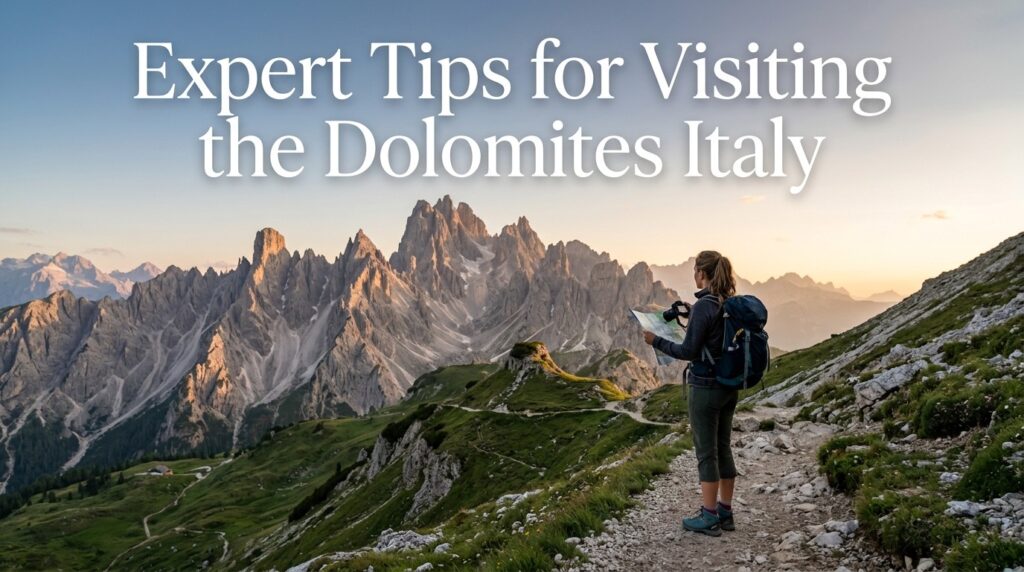
- Start hikes early. Trailhead parking lots for popular spots like Tre Crime and Lake Braies fill up by 8 a.m. in summer.
- Learn a few Ladin or German phrases. In some valleys, Italian isn’t the first language locals speak.
- Download offline maps. Cell service is spotty in many mountain valleys.
- Eat at rifugios, not just restaurants in town. Mountain hut food is often fresher and cheaper than you’d expect.
- Buy a Dolomiti Superski or South Tyrol Guest Pass if visiting multiple lift areas. It can save significant money over individual tickets.
- Watch the enrosadira. Set aside one evening to watch the sunset alpenglow it’s one of the most memorable sights in the region.
FAQs
What country are the Dolomites in?
The Dolomites are located in northeastern Italy, spanning the regions of Trentino, South Tyrol, and Veneto.
What is the best month to visit the Dolomites?
July and August offer the warmest weather and longest days, but June and September offer fewer crowds with still-favorable hiking conditions.
How many days do you need in the Dolomites?
Most travelers should plan for at least 5 to 7 days to comfortably explore the top hiking trails, lakes, and towns without rushing.
Are the Dolomites expensive to visit?
The Dolomites can be pricier than other parts of Italy during peak summer and winter seasons, but budget travelers can still visit affordably by choosing smaller towns and traveling in shoulder season.
Do you need a car to visit the Dolomites?
A rental car is highly recommended since public transportation is limited in more remote valleys, though buses do connect major towns.
Is hiking in the Dolomites hard?
Hiking difficulty ranges widely, from easy, flat lakeside walks to multi-day treks requiring climbing gear. There’s something for every fitness level.
What language do people speak in the Dolomites?
Italian, German, and Ladin are all commonly spoken, depending on the specific valley you’re visiting.
Can you visit the Dolomites in winter?
Yes, winter is peak ski season, with over 1,200 kilometers of connected slopes across the Dolomiti Superski network.
What is the closest airport to the Dolomites?
Venice Marco Polo Airport is the most convenient option for most travelers, roughly a 2.5-hour drive to the heart of the Dolomites.
Are the Dolomites part of the Alps?
Yes, the Dolomites are a mountain range within the Southern Limestone Alps, known for their distinct pale, dolomite rock formations.
Conclusion: Start Planning Your Dolomites Italy Adventure
The Dolomites Italy aren’t just another mountain range, they’re one of the most visually stunning landscapes on the planet, and they’re far more accessible than most American travelers realize. Whether you’re chasing sunrise views over Tre Cime, dipping your toes in Lake Braies, or carving down fresh powder in Cortina, this region rewards every kind of traveler.
Start with a base town, pick two or three unmissable hikes, and build your trip around the season that fits your travel style. The Dolomites have a way of turning first-time visitors into lifelong repeat travelers and once you see those pink peaks glowing at sunset, you’ll understand exactly why.
Read More: Matera Italy Travel Guide 2026: Best Things to Do & Travel Tips

I am a travel enthusiast who loves exploring India’s beautiful destinations, culture, history, food, and hidden places. Through my travel website, I aim to help travelers discover amazing places in India and plan memorable trips with useful travel information and tips.