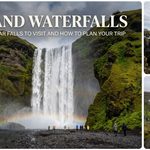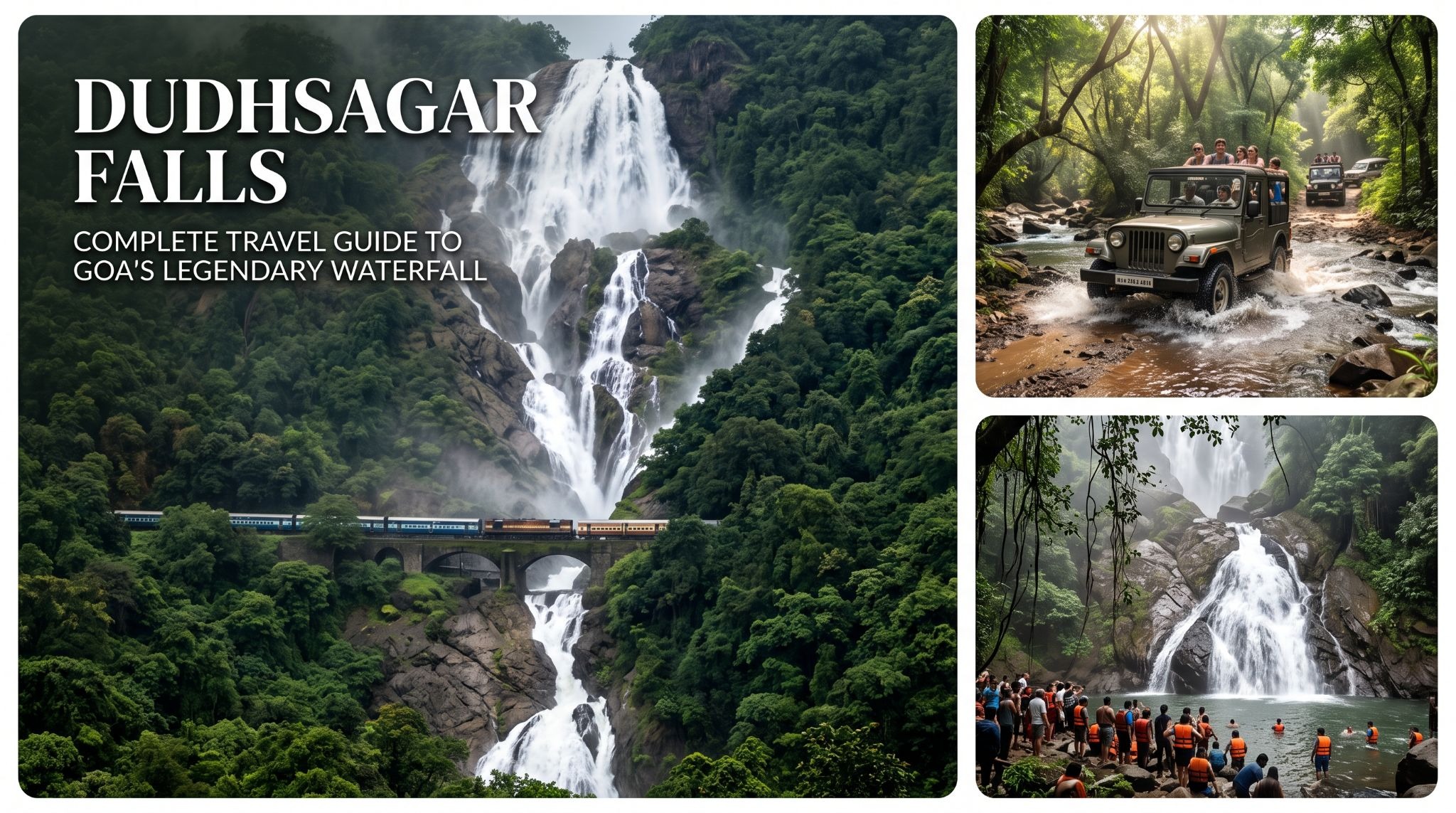
Dudhsagar Falls is one of those places that makes Goa feel completely different from its beach-and-nightlife reputation. Deep in the Western Ghats near the Goa–Karnataka border, enormous curtains of white water tumble down a forested mountainside, surrounded by the protected landscapes of Bhagwan Mahavir Wildlife Sanctuary and Mollem. The waterfall is especially dramatic during the rainy season, when the Mandovi River swells and the cascade takes on the milky appearance that inspired its name.
Getting there is part of the experience. Depending on the season and current access arrangements, visitors may reach the waterfall area by an authorised forest-road jeep excursion or by a permitted trekking route. The journey takes you away from Goa’s developed coastal belt and into dense Western Ghats forest, where the waterfall is only one part of a much larger natural landscape. This guide covers the best time to visit, how access works, what to expect on the trail, photography opportunities, nearby attractions, practical safety advice and how to plan a worthwhile day around Dudhsagar Falls.
Why Dudhsagar Falls Is Worth Visiting
The appeal of Dudhsagar is not simply its height or the volume of water. It is the setting.
The waterfall drops through a heavily forested section of the Western Ghats, creating several visible tiers as the water descends the dark rock face. From the viewing area, the contrast between white water, deep-green forest and rugged stone is what gives the scene its unmistakable character. Goa’s Forest Department describes Dudhsagar as the highest and largest waterfall in the state, cascading down about 306 metres.
The surrounding protected area adds another dimension. Bhagwan Mahavir Wildlife Sanctuary and Bhagwan Mahavir National Park together form Goa’s largest contiguous protected wildlife landscape, supporting evergreen and semi-evergreen forests along with mammals, birds and butterflies.
For travelers who have already spent time around Goa’s beaches, Dudhsagar provides a completely different side of the state: quieter, wetter, greener and much more closely connected to the Western Ghats.
What Makes the Waterfall So Special
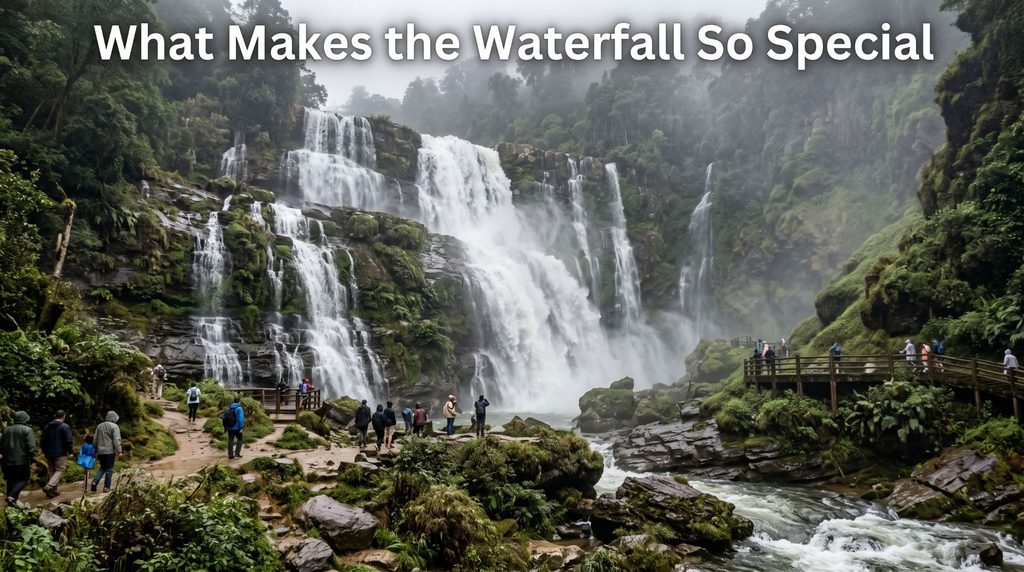
Dudhsagar means “sea of milk,” a name inspired by the waterfall’s white, foaming appearance as it pours down the mountainside. The effect becomes particularly striking when the river is carrying a strong monsoon flow.
The waterfall is also visually distinctive because of the railway infrastructure that crosses the landscape. A railway bridge can be seen partway up the falls, adding a strong human-made element to an otherwise wild scene.
It is worth remembering that the waterfall is not an isolated viewpoint beside a normal road. It sits within a protected forest environment. That is why access is regulated and why conditions can change with weather, river levels, forest management decisions and seasonal closures.
| What to experience | Why it stands out | Best suited to |
| Main waterfall viewpoint | Powerful cascade framed by Western Ghats forest | First-time visitors and photographers |
| Forest journey | Dense vegetation and rugged terrain | Nature lovers |
| Trekking route | More active way to experience the landscape | Hikers and adventure travelers |
| Jeep excursion | Practical access through the forest route | Families and travelers with limited hiking time |
| Surrounding protected area | Wildlife, birds, butterflies and forest scenery | Nature enthusiasts |
Best Time to Visit Dudhsagar Falls
Timing matters more here than it does for many Goa attractions.
The monsoon, generally from June through September, transforms the eastern part of Goa into a much greener landscape, and Dudhsagar becomes particularly powerful during the rainy season. Goa Tourism specifically highlights Dudhsagar during the monsoon because of its heavy white-water flow.
However, the strongest waterfall conditions do not automatically mean the easiest visit. Heavy rain can make forest routes slippery and affect access. The protected area may also operate under seasonal restrictions.
For a more practical trip, check the current Forest Department and authorised trekking or visitor information immediately before traveling. Do not assume that a route that operated during one monsoon will necessarily operate in exactly the same way the following year.
| Season | Waterfall character | Travel considerations |
| June–September | Usually the most dramatic monsoon flow | Very wet conditions; access can be weather-dependent |
| October | Green landscape with changing post-monsoon conditions | Check current access arrangements |
| November–February | Generally more comfortable for outdoor travel | Water flow may be less dramatic than in peak monsoon |
| March–May | Hotter and drier conditions | Less attractive if your priority is maximum waterfall volume |
How to Reach Dudhsagar Falls
Dudhsagar is associated with Collem, also spelled Kulem, in eastern Goa. The Forest Department currently describes the waterfall as being about 10 km from Collem.
For most visitors, the practical approach is to first reach the Collem area and then use whatever authorised access option is operating for the date of travel.
The forest-road route is not an ordinary self-drive excursion. The Goa Forest Department’s management plan describes access through a jeep route from the Collem side to the waterfall parking area, followed by a walk to the falls.
Trekking is another option when an authorised trekking programme or route is operating. An official Goa Tourism Development Corporation trekking portal states that trekkers are assigned nature guides at the Collem office and must follow Forest Department rules.
By Road
Collem is the most useful base for the waterfall excursion. Travelers staying elsewhere in Goa can arrange a taxi or drive toward the Collem/Mollem area, then follow the current visitor procedure for the protected area.
By Rail
The railway line is an important landmark in photographs of Dudhsagar, but the railway track should not be treated as a walking route to the waterfall. Forest Department instructions explicitly prohibit entry to the waterfall from the railway track.
| Starting point | Practical approach |
| Panaji | Travel toward eastern Goa and continue to the Collem/Mollem area |
| South Goa | Collem is generally the convenient base for the excursion |
| North Goa | Allow substantially more time for the road journey to eastern Goa |
| By train | Reach an appropriate railway station for the wider Goa journey, then arrange onward transport to Collem |
| Collem/Kulem | Main access area for authorised waterfall excursions and trekking |
The Jeep Journey Through the Forest
For travelers who do not want a demanding trek, the authorised jeep route is often the most practical way to experience Dudhsagar.
The journey is more adventurous than a conventional sightseeing transfer. The forest road passes through the protected landscape, and the final approach involves uneven terrain before the waterfall area. The Forest Department’s current management plan identifies a jeep route of roughly 12 km from the Collem check post to the waterfall parking area.
Do not judge the excursion only by the time spent looking at the waterfall. The forest drive is part of the experience, particularly for travelers interested in landscapes rather than simply ticking off a landmark.
Access arrangements can change, so travelers should use the authorised local system operating at the time of their visit rather than arranging an informal vehicle.
Trekking to Dudhsagar Falls
Trekking offers a more immersive way to experience the area, but it should not be confused with casually walking along the railway line.
Authorised trekking programmes operate under Forest Department rules, and the official trekking registration information requires visitors to carry photo identification, follow the nature guide’s instructions and avoid littering or alcohol.
The route can involve wet, slippery and uneven conditions, particularly around the rainy season. Good footwear matters far more than fashionable travel clothes here.
A trek is best for travelers who enjoy the journey as much as the destination. If you are traveling with very young children, older relatives or anyone uncomfortable on uneven ground, check the current route conditions before choosing this option.
Things to Do Around the Falls
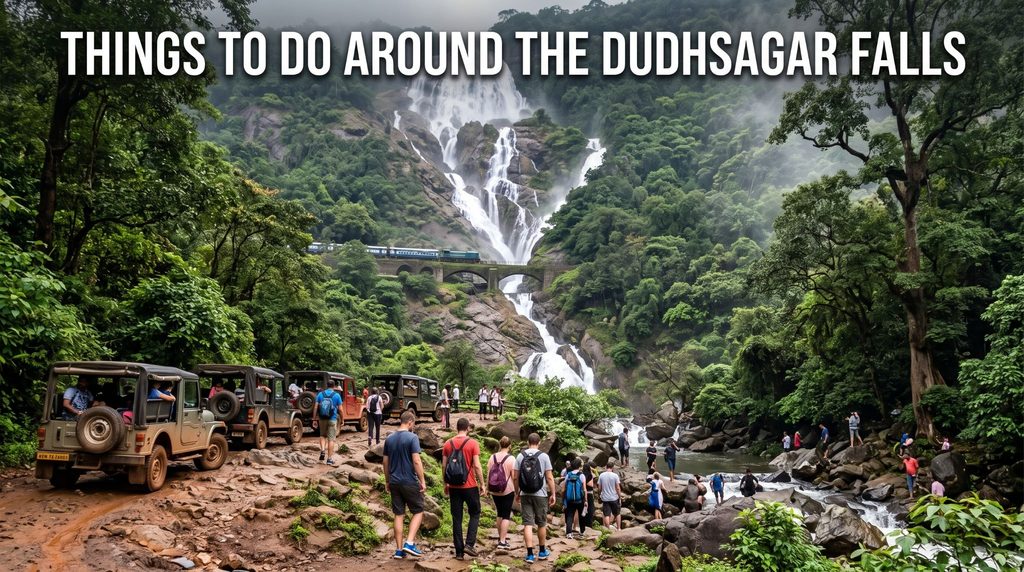
The main attraction is obvious, but there is more to the experience than standing in front of the cascade for a few photographs.
Watch the Water From the Viewpoint
Give yourself time to simply observe the waterfall. From a distance, the water appears almost continuous; closer views reveal separate cascades, rock formations and changing textures.
Explore the Forest Landscape
The surrounding sanctuary is rich in biodiversity. The Forest Department lists animals such as gaur, sambar, barking deer, sloth bear, leopard and tiger among the wildlife associated with the protected area, along with many birds and butterflies.
That does not mean visitors should expect to encounter large animals. Wildlife sightings are unpredictable, and the better approach is to appreciate the habitat without disturbing it.
Look Beyond the Main Cascade
The waterfall is part of a wider natural area that includes Devil’s Canyon and other forest attractions. Devil’s Canyon is a rugged rock formation associated with turbulent water movement and is listed by the Forest Department among the sanctuary’s notable places to see.
Photography at Dudhsagar Falls
Dudhsagar is one of Goa’s strongest locations for landscape photography, particularly when the waterfall is flowing heavily.
A wide-angle composition works well for showing the entire relationship between the waterfall and the surrounding forest. For a more intimate photograph, concentrate on one section of the cascade and use the dark rock and vegetation as a frame.
Monsoon photography requires a little patience. Mist, rain and overcast skies can make the scene atmospheric, but they can also flatten contrast and make lenses difficult to keep dry.
Useful habits include:
- Carry a waterproof phone or camera pouch.
- Bring a microfiber cloth for spray and rain.
- Use a simple lens hood if your camera has one.
- Photograph people from a safe distance rather than asking them to stand near unstable edges.
- Avoid climbing rocks simply to find a more dramatic composition.
- Keep your equipment secure during the forest journey.
The best photograph is not worth stepping beyond a marked or safe area, especially beside a powerful waterfall.
Nearby Places to Add to Your Trip
Dudhsagar works particularly well as part of a wider eastern Goa itinerary because several nature and heritage attractions lie within the same broad region.
Mollem National Park
The protected landscape around Dudhsagar forms part of the larger Bhagwan Mahavir protected area. The forest is valuable not only for the waterfall but also for its biodiversity and Western Ghats ecosystem.
Tambdi Surla Temple
The ancient Mahadev Temple at Tambdi Surla is another notable attraction in the region. Incredible India identifies it as a 12th-century temple with distinctive stonework, making it a natural companion to a waterfall-focused trip.
Devil’s Canyon
This rugged formation is associated with the Dudhsagar river and is listed by Goa’s Forest Department as one of the sanctuary’s attractions.
Rather than trying to cram every attraction into one rushed day, choose two or three that fit your route and the current operating conditions.
Where to Stay and What to Eat
You do not need to stay directly beside the waterfall. Collem, Mollem and other parts of eastern or southern Goa can be more practical depending on the rest of your itinerary.
The Forest Department lists accommodation facilities at Mollem, including forest and eco-tourism options, although availability and rates should be confirmed directly before planning around them.
For a wider selection of accommodation, many travelers prefer staying elsewhere in Goa and treating Dudhsagar as a day excursion.
Food options immediately around a forest excursion should not be treated like Goa’s beach districts, where restaurants and cafés are plentiful. Carry sufficient drinking water and a practical snack for the journey while following current protected-area rules on what can be taken inside.
Goan food is a worthwhile part of the wider trip. If your itinerary includes villages or towns after Dudhsagar, look for local dishes such as fish curry rice, xacuti, cafreal or vegetarian Goan preparations rather than expecting a large tourist restaurant scene at the waterfall itself.
Important Travel and Safety Tips
Dudhsagar rewards preparation. A few simple decisions can make the difference between an enjoyable nature outing and an uncomfortable one.
- Check access before leaving. Forest routes, trekking operations and seasonal permissions can change.
- Use authorised access. Do not attempt to enter from the railway track; this is specifically prohibited.
- Wear shoes with reliable grip. Wet rocks and muddy forest paths can be hazardous.
- Carry a rain layer during the monsoon. Even when the sky looks clear, conditions can change quickly.
- Follow sanctuary rules. Plastic restrictions and other environmental rules apply in the protected area.
- Do not feed wildlife. The forest is a habitat, not a zoo.
- Avoid alcohol. It is prohibited inside the national park under Forest Department instructions.
- Keep valuables to a minimum. Trekking conditions can be wet and demanding.
- Allow extra time. A Dudhsagar excursion is not something to squeeze between two tightly scheduled attractions.
- Respect closures. If officials restrict access because of weather or safety conditions, do not attempt an unofficial alternative.
A Practical Dudhsagar Falls Day Plan
A good itinerary leaves room for the journey rather than treating the waterfall as a quick photo stop.
Start early from your accommodation and travel toward Collem. Once there, follow the current authorised process for either the forest jeep excursion or trekking route. The forest journey itself deserves attention, so avoid spending the entire ride looking at your phone.
At the waterfall, take time to explore the designated area, photograph the cascade and enjoy the surrounding landscape without rushing. Depending on the operating schedule and your chosen route, you can then return toward Collem and continue to another nearby attraction such as Tambdi Surla or Mollem.
For travelers with more time, an overnight stay around the Mollem area can make the trip feel less like a long excursion from the coast and more like a Western Ghats experience.
| Suggested duration | Best approach |
| Half day | Dudhsagar-focused excursion if operating times and transport allow |
| Full day | Dudhsagar plus one nearby attraction such as Tambdi Surla |
| 1 night | Stay around the Mollem/Collem region and explore the forest area at a slower pace |
| 2 days | Combine Dudhsagar with several eastern Goa nature and heritage stops |
FAQs
Is Dudhsagar Falls open throughout the year?
Not necessarily. Access to the waterfall and its forest routes can be affected by monsoon conditions, protected-area management and seasonal decisions. Always verify the current operating status before traveling.
Can you walk along the railway track to Dudhsagar Falls?
No. Entry to the waterfall from the railway track is prohibited under Forest Department instructions. Use an authorised visitor or trekking route instead.
Is Dudhsagar Falls suitable for families?
It can be, particularly when an authorised vehicle excursion is operating, but the terrain and weather still require care. Families with young children or older travelers should check current access conditions before choosing a trek.
How long should I spend at Dudhsagar Falls?
A full day is the safest planning assumption when traveling from another part of Goa because the journey to Collem, forest access and return all take time. Travelers staying nearby can build a more relaxed itinerary around the waterfall.
What should I carry for a Dudhsagar trip?
Bring comfortable shoes with good grip, drinking water, a rain layer, sun protection, a small waterproof bag and identification if required for your chosen trekking programme. Pack lightly and follow the protected area’s current rules.
Conclusion
Dudhsagar Falls is most rewarding when you treat it as a journey into Goa’s Western Ghats rather than simply another sightseeing stop. The waterfall is spectacular, but the forest, rugged terrain, changing weather and protected landscape are what give the experience its character.
Choose your season carefully, confirm the current access arrangements, allow plenty of time and resist the temptation to turn the visit into a race for the perfect photograph. Whether you arrive through an authorised forest excursion or an organised trek, Dudhsagar offers a memorable glimpse of a much wilder side of Goa—one that exists far beyond the coastline.
Read More: Dreamland Beach: A Practical Guide to Bali’s Dramatic Surf Coast

I am a travel enthusiast who loves exploring India’s beautiful destinations, culture, history, food, and hidden places. Through my travel website, I aim to help travelers discover amazing places in India and plan memorable trips with useful travel information and tips.