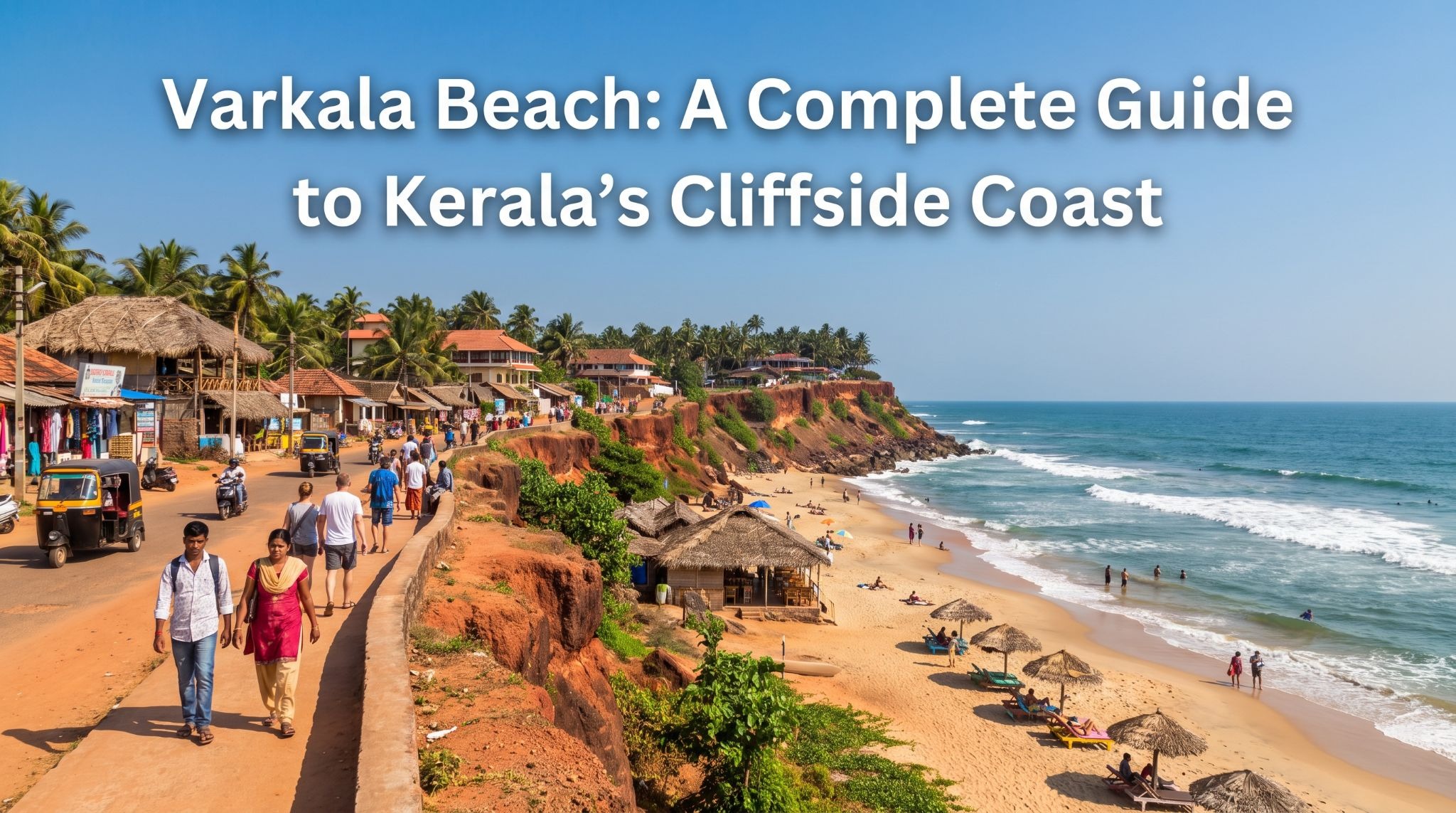
Varkala Beach is one of those rare coastal destinations where the landscape does much of the talking. Instead of meeting the Arabian Sea on a completely flat shoreline, you arrive at a coast framed by dramatic laterite cliffs, with the beach stretching below and the sea opening out toward the horizon. The result is a setting that feels distinctly different from many of Kerala’s other beach destinations.
Yet Varkala is more than a place for a few hours beside the water. The area brings together the Papanasam shore, the historic Janardhana Swamy Temple, the spiritual centre of Sivagiri, cliffside cafés, wellness experiences, water activities and slow coastal walks. Whether you want a relaxed beach break, a cultural stop or several days of unhurried exploration, Varkala gives you plenty of ways to shape the experience around your own pace.
Why Varkala Beach Is Worth Visiting
The defining feature of Varkala is the meeting of cliff and coast. Kerala’s shoreline is often associated with beaches, lagoons and backwaters, but Varkala stands apart because of its striking cliff formation beside the Arabian Sea. The cliffs are recognized as a National Geological Monument, making the landscape interesting from both a scenic and geological perspective.
For travelers, however, the appeal is not simply geological. The cliff-top area creates a natural viewpoint over the beach, while the surrounding streets bring together restaurants, small shops, wellness centres and places to stay. Down below, Papanasam Beach adds another layer of meaning because of its religious association and connection with the nearby Janardhana Swamy Temple.
It is this combination—nature, spirituality, food, relaxation and a relatively compact tourist area—that makes Varkala particularly easy to enjoy without filling every hour of a holiday with scheduled activities.
Varkala Beach and the Famous Red Cliffs
The cliffs are arguably Varkala’s most recognizable feature. Their laterite and sedimentary formations rise above the coastline and create the elevated views that have become synonymous with the destination.
A landscape shaped by geology
The geological story behind the cliffs is surprisingly substantial. UNESCO’s Tentative List describes the Varkala area as an important geological and geomorphological site, highlighting sedimentary formations associated with the Warkalli Formation and the long coastal escarpment.
You do not need to be a geology enthusiast to appreciate them. Walk along the cliff-top paths and the layers become part of the scenery: earthy rock below, green vegetation around the edges, and the Arabian Sea beyond. Natural springs and other geological features have also contributed to Varkala’s distinctive character.
The best way to appreciate the cliffs is slowly. Rather than treating them as something to photograph once and leave, use the elevated paths as part of your exploration of the area.
Papanasam Beach: The Spiritual Side of the Coast
Papanasam Beach is the name commonly associated with Varkala’s principal beach area. The name carries religious significance, with local Hindu tradition associating its waters with purification. The nearby Janardhana Swamy Temple reinforces the spiritual importance of this stretch of coast.
That spiritual identity gives the beach a different atmosphere from a purely recreational seaside resort. Visitors may come for the sea and sunset, while pilgrims arrive for religious observances connected with the temple and the sacred shore.
The practical side is equally important: sea conditions can change, and waves may be strong at times. Anyone planning to swim should check local conditions rather than assuming that a beautiful-looking sea is automatically safe.
| Varkala experience | Best suited to | What makes it special |
| Papanasam Beach | Beach lovers, couples, relaxed travelers | Sacred coastline, sea views and sunsets |
| Cliff walk | Photographers, walkers, first-time visitors | Elevated views over the Arabian Sea |
| Janardhana Swamy Temple | Culture and heritage travelers | Long religious history and traditional architecture |
| Sivagiri | Spiritual and cultural travelers | Connection with Sree Narayana Guru |
| Cliffside cafés | Slow travelers and food lovers | Sea-facing atmosphere and relaxed evenings |
Janardhana Swamy Temple and Varkala’s Heritage
A visit to Varkala feels incomplete if you only see the beach. The Janardhana Swamy Temple provides a direct connection between the coastal landscape and the town’s long religious history.
The temple is dedicated to Lord Vishnu in the form of Janardhana Swamy and is regarded by Kerala Tourism as one of the ancient temples of the region. An inscription dating to 1252 CE is recorded on the temple premises, while the temple itself has a much older religious history.
Its architecture is worth noticing rather than simply treating the temple as a quick sightseeing stop. The circular sanctum, copper-covered conical roof, wooden ceiling carvings and traditional details offer a glimpse into Kerala’s temple architecture.
Visitors should also remember that this is an active place of worship. Dress and behaviour should be respectful, and access to particular areas may depend on temple rules in force at the time of your visit.
Sivagiri Mutt and the Legacy of Sree Narayana Guru
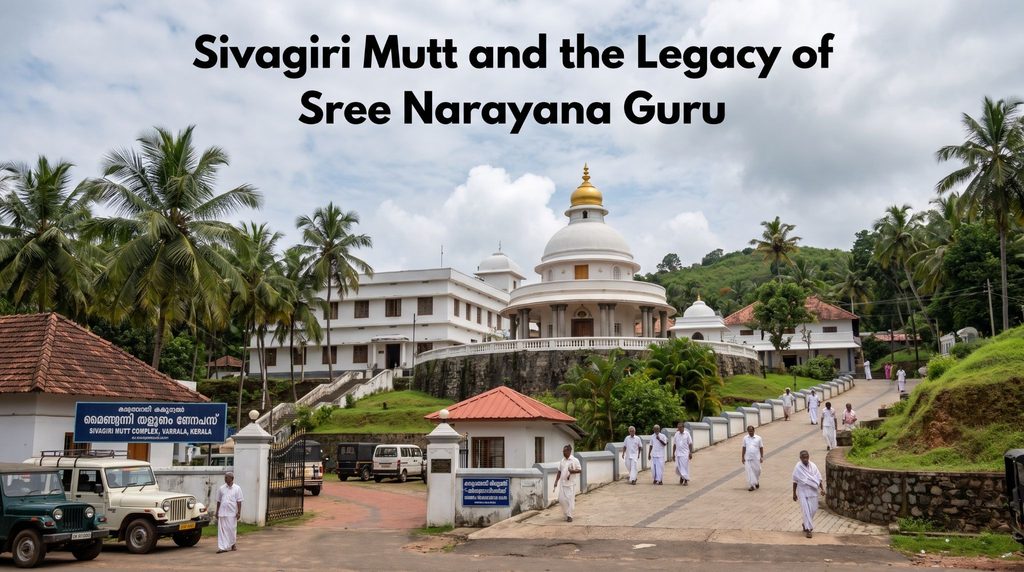
About a short trip from Varkala town, Sivagiri Mutt introduces another important side of the destination. The site is closely associated with Sree Narayana Guru, the social reformer and spiritual figure whose work had a major influence on Kerala’s social history.
The mutt sits on an elevated area and includes the Guru’s samadhi as well as the Sharada temple. Kerala Tourism notes that Sree Narayana Guru established his headquarters at Sivagiri in 1904, and the site later developed into an important centre connected with his educational, philosophical and social work.
Why include Sivagiri in a beach trip?
Because it changes the pace of the journey.
After spending time beside the sea, Sivagiri offers a quieter cultural experience. It is particularly worthwhile for travelers interested in Kerala beyond its landscapes—its social reform movements, spiritual traditions and modern history.
If your trip falls around major pilgrimage periods, expect the area to feel considerably busier than it does during an ordinary visit.
Things to Do Around Varkala Beach
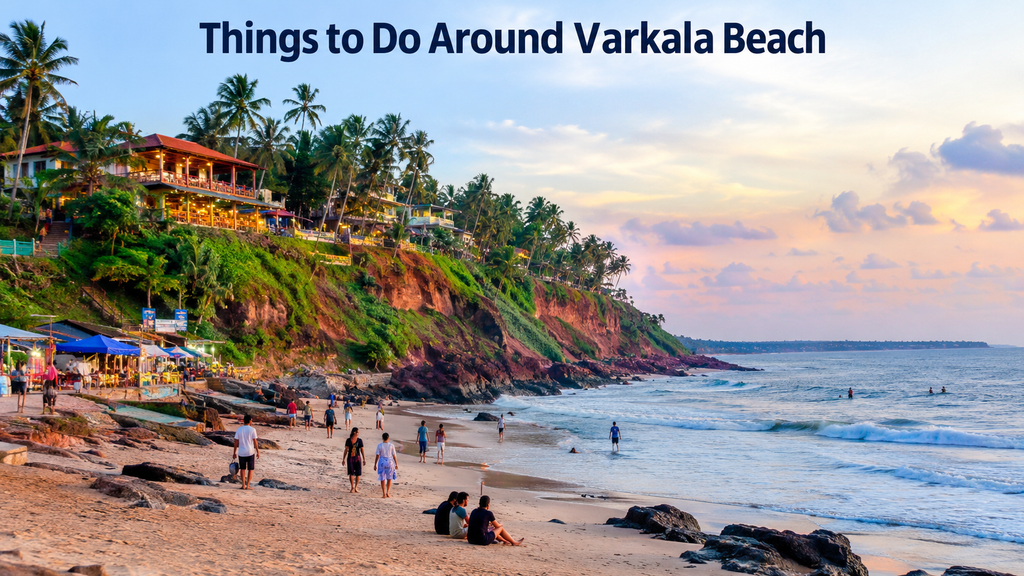
Varkala works particularly well for travelers who enjoy choosing activities according to their mood rather than following a strict sightseeing schedule.
Walk the cliff at a relaxed pace
The cliff-top area is the natural starting point. Walk without rushing, stop at viewpoints, browse the small shops and take time to watch the coastline from above.
Spend time by the sea
Swimming, relaxing on the beach and watching the changing light are simple activities, but they are central to the Varkala experience. Always consider the day’s sea conditions before entering the water.
Try water activities
Varkala has developed into a destination for activities including surfing, stand-up paddleboarding, parasailing and paragliding. Availability depends on weather, sea conditions and local operators.
Make room for a slower afternoon
One of the easiest mistakes in Varkala is trying to turn the trip into a checklist. Leave an afternoon open for a long meal, a wellness treatment, reading, walking or simply watching the sea from the cliff.
Food, Cafés and the Evening Atmosphere
Food is part of the experience in Varkala rather than something you squeeze between attractions. Around the cliff area, travelers will find a variety of cafés and restaurants serving Indian, Kerala and international-style food, with seafood featuring prominently in the coastal dining scene.
Local Kerala dishes are worth seeking out if you want something beyond familiar tourist menus. Fresh seafood, coconut-based preparations, rice dishes and regional curries provide a stronger sense of place than simply ordering the same food you might eat anywhere else.
The evening is particularly suited to unhurried dining. Rather than choosing a restaurant solely because it has the best view, look for places that suit the kind of meal you want—quick and casual, a long dinner, or something lighter after a day outdoors.
The Best Time to Visit Varkala Beach
Varkala can be visited in different seasons, but the experience changes noticeably with weather conditions. The cooler, drier months are generally more comfortable for combining beach time, walking and sightseeing, while the monsoon brings a very different coastal atmosphere.
| Travel period | What to expect | Best for |
| November–February | Generally pleasant conditions for outdoor exploration | Beach holidays, sightseeing and walking |
| March–May | Hotter conditions, especially during the day | Travelers comfortable with heat and slower schedules |
| June–September | Monsoon influence, wetter weather and rougher sea conditions | Rainy-season scenery and quieter travel |
| October | Transitional period with changing weather | Flexible itineraries and fewer fixed outdoor plans |
Weather can vary from year to year, so check a current forecast before planning beach or water-based activities.
How to Reach Varkala
Varkala is well connected within Kerala and is practical to combine with other destinations in the state.
By train
Varkala Sivagiri railway station is the main rail access point for the town. Kerala Tourism places the station only a few kilometres from the beach area, making rail travel a convenient choice for many visitors.
By air
The nearest major airport is Thiruvananthapuram International Airport. From the airport, travelers can continue to Varkala by road or arrange onward transport according to their itinerary. The exact road journey can vary with traffic and route.
By road
Varkala can also be reached by bus, taxi or private vehicle. Road travel makes more sense if you are combining Varkala with several stops along Kerala’s southern coast.
| Transport option | Best for | Planning note |
| Train | Most independent travelers | Convenient connection to Varkala town |
| Airport + road transfer | International and long-distance travelers | Allow extra time for the road journey |
| Bus | Budget travelers | Useful for regional connections |
| Taxi/private car | Families or multi-stop trips | More flexible for nearby sightseeing |
Where to Stay in Varkala
The best area depends on what you want from the trip.
Staying near the cliff is convenient if your priority is restaurants, cafés, shopping and easy access to the main viewpoint area. It also makes evening walks particularly simple.
Those looking for a quieter stay may prefer accommodation farther from the busiest cliff-side stretches. If your main purpose is wellness or a longer, slower holiday, choosing accommodation with space and facilities you genuinely expect to use can be more valuable than being directly beside the busiest tourist area.
Families should consider practical access, including how easily everyone can move between accommodation, beach and restaurants. Couples may prefer a quieter property where the setting itself becomes part of the holiday.
A Simple Two-Day Varkala Itinerary
Two days is enough to experience the main character of Varkala without making the trip feel rushed.
Day One: Coast and Cliff
Begin with the beach before the hottest part of the day. Spend some time around Papanasam, then move back toward the cliff for lunch and an easy afternoon.
Later, walk along the cliff as the temperature becomes more comfortable. Leave the evening open for dinner and sunset views.
Day Two: Heritage and a Slower Afternoon
Start with Janardhana Swamy Temple, allowing enough time to appreciate its setting and cultural importance. Continue toward Sivagiri if its spiritual and historical significance interests you.
Return toward the coast for a relaxed meal and an unplanned afternoon. If weather and local conditions allow, this can be the time for a water activity or simply another long stretch beside the sea.
Photography: What to Look For
Varkala is particularly rewarding for photographers because its strongest visual elements occur in one compact area.
The obvious subjects are the cliffs, beach and Arabian Sea, but the more interesting photographs often come from contrasts: the warm tones of the cliff against blue water, people moving along the paths, fishing activity, temple details, cafés overlooking the coast and changing light around sunset.
Early morning can provide softer light and fewer people, while late afternoon creates longer shadows across the landscape. For beach photography, always be careful with equipment around sand, saltwater and sudden weather changes.
Nearby Places to Add to Your Trip
Varkala is also useful as part of a wider Kerala itinerary. The town’s location in southern Kerala makes it possible to combine a beach stay with cultural, spiritual and urban destinations.
Thiruvananthapuram is the obvious larger-city addition, particularly for travelers arriving by air or continuing through Kerala. Kollam is another coastal destination worth considering for travelers interested in a different side of Kerala’s waterways and landscapes.
The right combination depends on your available time. If you have only a few days, staying focused on Varkala can be more rewarding than spending hours moving between too many destinations.
Practical Tips for a Better Varkala Trip
A little preparation can make the experience noticeably easier.
- Check sea conditions before swimming or booking water activities.
- Carry comfortable footwear because the cliff area and beach require different kinds of walking.
- Keep sun protection with you, particularly during the hotter months.
- Respect temple customs and local religious practices.
- Allow extra time for road travel when conditions are busy.
- Avoid treating the entire trip as a sightseeing checklist; some of Varkala’s appeal comes from having unplanned time.
- For water sports, use established operators and follow safety instructions.
- During monsoon periods, expect weather and sea conditions to affect outdoor plans.
The biggest practical tip is simple: give Varkala enough time to breathe. A rushed overnight stop can show you the beach, but it may not give you much sense of why the destination has become so popular.
FAQs
Is Varkala Beach good for a first trip to Kerala?
Yes. Varkala is a particularly approachable introduction to Kerala because it combines a distinctive beach landscape with food, culture, spirituality and opportunities for relaxation in a relatively compact area.
Is swimming at Varkala Beach safe?
Swimming conditions vary. The sea can have strong waves, so visitors should check local conditions and follow safety advice rather than entering the water simply because others are swimming.
How many days are enough for Varkala?
Two full days can cover the main beach, cliff, temple and a visit to Sivagiri without rushing. Three or more days are better if you want to include wellness time, water activities or a slower beach holiday.
What is Varkala best known for?
Varkala is best known for its dramatic laterite cliffs beside the Arabian Sea, Papanasam Beach, its spiritual heritage and the combination of beach tourism with wellness, food and cultural experiences.
Can Varkala be visited during the monsoon?
Yes, but it is a different experience. Rain, rougher seas and changing weather can affect beach activities, so travelers should keep outdoor plans flexible and check current conditions before swimming or arranging water sports.
Conclusion
Varkala’s appeal comes from the way several very different experiences meet in one coastal setting. You can begin the morning beside a sacred beach, spend the afternoon walking above the Arabian Sea, explore an ancient temple, learn about Sree Narayana Guru’s legacy and finish the day with a relaxed meal overlooking the coast.
That combination gives Varkala a character that goes beyond the usual beach getaway. Come for the cliffs and sea, but leave room for the history, food, spirituality and slower moments in between. That is where the destination becomes more than a beautiful view—it becomes a place worth spending time in.
Read More: Radhanagar Beach: A Complete Guide to Andaman’s Iconic Beach Escape

I am a travel enthusiast who loves exploring India’s beautiful destinations, culture, history, food, and hidden places. Through my travel website, I aim to help travelers discover amazing places in India and plan memorable trips with useful travel information and tips.