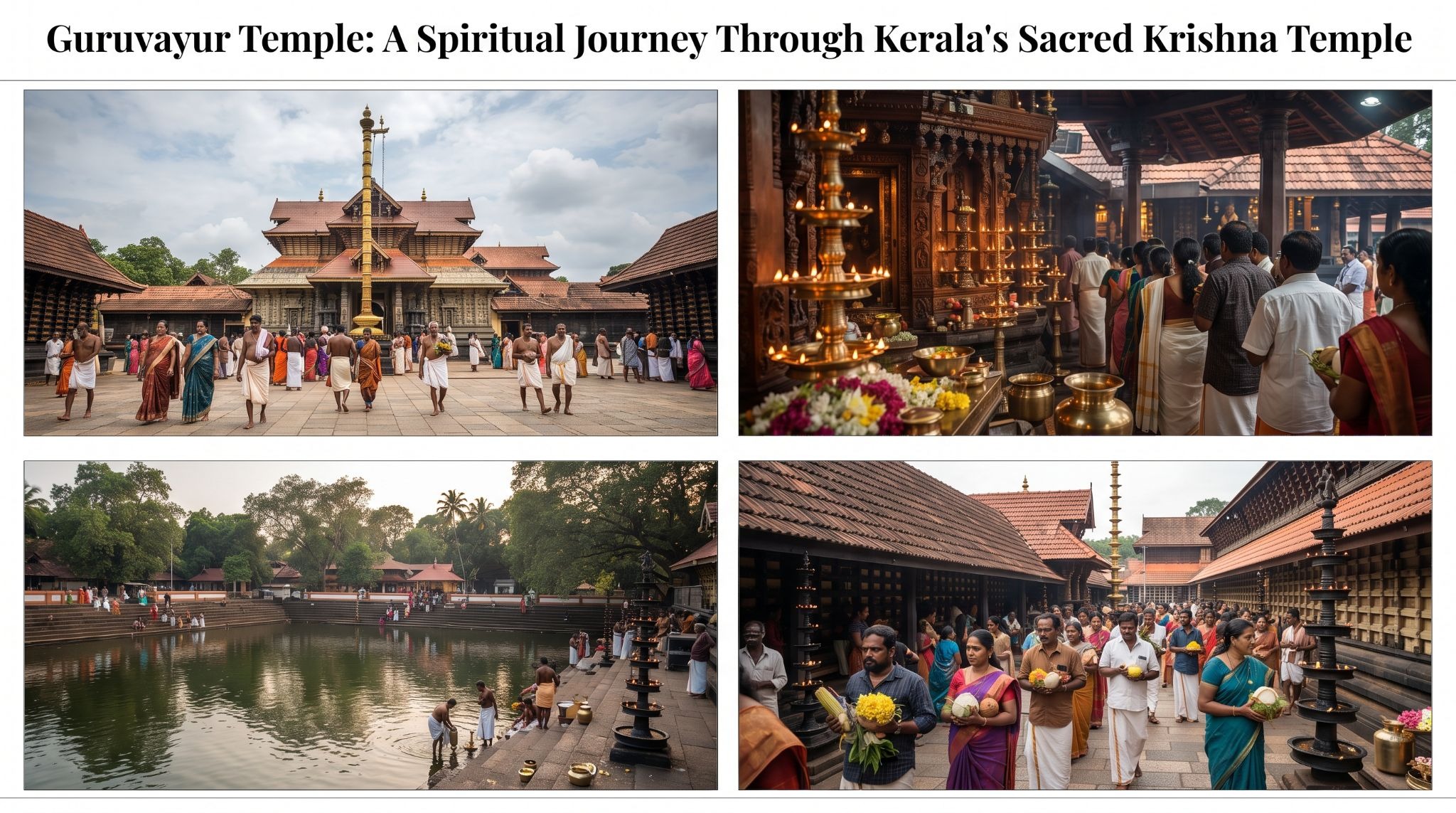
Guruvayur Temple is one of Kerala’s most revered pilgrimage destinations and a place where devotion, tradition, architecture and everyday life come together in a remarkably intimate way. Located in Guruvayur in Thrissur district, the temple is dedicated to Lord Krishna and is widely known as the Dwaraka of the South. For devotees, a visit is deeply spiritual. For travelers interested in Kerala’s culture, it offers an opportunity to experience centuries-old customs within a living temple town.
Approaching the temple, the atmosphere gradually changes. The streets around the shrine are filled with pilgrims, traditional shops and the quiet rhythm of temple life. Inside the complex, Kerala-style architecture, illuminated Deepastambams and the imposing golden Dwajasthamba create a distinctive setting. Whether you arrive for worship, cultural exploration or simply to understand an important part of Kerala’s heritage, the experience rewards patience and respectful attention.
Guruvayur Temple History and Religious Importance
The history of Guruvayur Temple combines documented references with deeply rooted religious traditions. Kerala Tourism notes that the central shrine is believed to have been reconstructed in 1638. The temple’s traditional Kerala architecture reflects the character of the region, while its reputation as a major Krishna pilgrimage centre has attracted devotees for generations.
Religious traditions describe the deity as an ancient form of Lord Krishna and connect the shrine with Dwaraka. These stories are an important part of the temple’s spiritual identity, although legendary claims about its extreme antiquity should not be treated as established historical fact. Kerala Tourism also notes references to Guruvayur in older literary sources and describes how the temple gained wider recognition through devotional traditions and literature.
A living tradition
What makes the shrine especially distinctive is that it is not simply a historical monument. Worship continues throughout the day, and rituals remain central to the life of the town. Visitors therefore encounter a functioning pilgrimage centre rather than a preserved architectural site.
Guruvayur Temple Architecture and Sacred Features
The temple is an excellent example of traditional Kerala temple architecture. It faces east and has major entrances on the eastern and western sides. The structures surrounding the sanctum include the Nalambalam, while the Deepastambams add a striking visual element when their lamps are illuminated.
One of the most recognizable features is the golden Dwajasthamba or flagstaff. Kerala Tourism describes it as approximately 70 feet high. The eastern Deepastambam is about 24 feet tall and contains thirteen circular receptacles for lamps. Together, these features give the temple complex a memorable appearance, particularly during traditional evening rituals.
The sanctum contains the principal image of Lord Krishna. Other shrines within the temple complex include those associated with Ganapathy, Lord Ayyappa and Edathedathu Kavil Bhagavathy.
Guruvayur Temple Rituals and Cultural Experiences

A visit is best understood through the rituals and traditions that shape temple life. One notable offering is Thulabharam. During this ritual, a devotee is weighed against offerings such as bananas, sugar, jaggery or coconuts, according to the chosen offering.
The temple is also associated with weddings and important religious occasions. Its cultural significance extends beyond individual worship because the surrounding town has developed around the needs of pilgrims and visitors.
Festivals at Guruvayur Temple
Several important celebrations take place during the year. The annual temple festival is traditionally held around February and March. Guruvayur Ekadasi, Ashtami Rohini and Vaishakam are among the other significant occasions associated with the shrine.
The Aanayottam or elephant race is particularly distinctive. Kerala Tourism describes it as an event associated with the beginning of the annual Guruvayur festival. It has a long traditional story connected with elephants coming to Guruvayur for the festival.
| Festival or tradition | What visitors may experience |
| Annual temple festival | Traditional rituals and celebrations around the shrine |
| Guruvayur Ekadasi | An important devotional occasion with special observances |
| Ashtami Rohini | A celebration associated with Lord Krishna |
| Aanayottam | Traditional elephant race linked with the temple festival |
| Thulabharam | Devotional offering involving a large weighing scale |
Best Time to Visit Guruvayur Temple
Guruvayur can be visited throughout the year, but the ideal time depends on what you want from the trip. If your priority is a calmer pilgrimage experience, it is sensible to avoid major festival periods when crowds can become especially heavy. If you want to witness major traditions and festive activity, visiting around an important celebration can provide a much livelier experience.
Kerala’s tropical climate means weather also matters. The cooler months generally offer more comfortable conditions for exploring the surrounding town, while the monsoon season can bring substantial rainfall.
| Travel period | What to expect |
| October to February | Generally more comfortable for sightseeing and pilgrimage |
| February to March | Festival atmosphere and major temple celebrations |
| June to September | Monsoon weather with frequent rainfall |
| Major festival days | Greater crowds and a more intense devotional atmosphere |
Whatever season you choose, check current temple information before traveling because rituals, access arrangements and crowd conditions can vary.
Guruvayur Temple Timings and Visitor Guidelines
Kerala Tourism currently lists the temple as open from 3:00 AM to 12:30 PM and again from 4:30 PM to 9:15 PM. Since temple schedules can change for special rituals or festivals, travelers should verify the latest information before making a tightly planned visit.
The temple is a place of worship first, so visitors should dress modestly and behave respectfully. Entry into the temple is restricted to Hindus according to Kerala Tourism. Travelers who are not eligible for entry can still explore the temple town and experience its surrounding cultural atmosphere.
Photography and other visitor rules may also be subject to temple regulations. It is better to follow instructions from temple authorities rather than treating the complex like an ordinary tourist attraction.
How to Reach Guruvayur Temple
Guruvayur is well connected with other parts of Kerala by road and rail. The town has its own railway station, making train travel a practical option for pilgrims coming from other Kerala destinations. Kerala Tourism identifies Guruvayur railway station as the nearest station.
The nearest major airport is Cochin International Airport. Kerala Tourism gives the airport distance as approximately 87 kilometres on its destination page, although travel distance and journey time can vary depending on the route and traffic.
| Transport option | Practical information |
| Train | Guruvayur has its own railway station |
| Air | Cochin International Airport is the nearest major airport |
| Bus | Regular road connections serve Guruvayur and surrounding towns |
| Local travel | Auto-rickshaws, taxis and local transport are commonly used |
For visitors already traveling through Thrissur district, Guruvayur is particularly convenient to include in a wider Kerala itinerary.
Places to Visit Near Guruvayur Temple

The temple should not be viewed in isolation. Guruvayur is a temple town with several nearby cultural and religious attractions. The surrounding area offers opportunities to explore Kerala’s traditions, architecture and everyday life.
Punnathur Kotta is one of the best-known places associated with Guruvayur. It is connected with the temple’s elephant tradition and is often included in visits to the area. Kerala Tourism also describes Guruvayur as a gateway to a wider landscape of Kerala experiences, with cultural attractions and scenic destinations accessible from the town.
Thrissur is another useful addition to an itinerary. The district headquarters is around 30 kilometres from Guruvayur according to Kerala Tourism’s location information.
Planning a Comfortable Guruvayur Temple Visit
A little preparation can make the experience much smoother. Plan around the temple’s opening periods and allow additional time if you are traveling during a festival. Early starts can also make sense for visitors who want to experience the devotional atmosphere around the morning opening.
Keep your clothing appropriate for a place of worship and follow all instructions regarding entry and conduct. Avoid rushing through the experience. The surrounding streets, temple architecture and traditional activity are part of what makes Guruvayur memorable.
| Before your visit | Why it helps |
| Check current temple timings | Ritual schedules can affect access |
| Confirm entry rules | Temple access is subject to religious regulations |
| Dress modestly | Appropriate clothing shows respect |
| Allow extra time during festivals | Crowds can significantly increase |
| Plan transport in advance | Useful during busy pilgrimage periods |
| Carry only necessary belongings | Helps make the visit simpler and more comfortable |
Most importantly, approach the temple as a sacred place rather than simply another sightseeing stop. Respect for worshippers and local customs will make the visit more meaningful.
FAQs
Is Guruvayur Temple open every day?
The temple operates daily, with Kerala Tourism listing regular opening periods in the early morning and evening. Special occasions can affect the schedule, so checking current information before traveling is recommended.
Who can enter the temple?
According to Kerala Tourism, entry into the temple is restricted to Hindus. Visitors should respect this religious rule and follow instructions from temple authorities.
What is Thulabharam?
Thulabharam is a traditional offering in which a devotee is weighed against a selected offering such as bananas, sugar, jaggery or coconuts. The offering is then dedicated to the deity.
Which railway station is closest?
Guruvayur railway station is the nearest railway station to the temple. It provides a convenient option for travelers arriving by train.
What should visitors wear?
Visitors should choose modest and respectful clothing suitable for a Hindu place of worship. It is also wise to check current temple requirements before visiting because rules can be updated.
Conclusion
A visit to this sacred Krishna shrine is about more than seeing an impressive building. It is an encounter with a living tradition that continues to shape the identity of Guruvayur and an important part of Kerala’s religious culture. The architecture, rituals, festivals and atmosphere all tell a different part of the story.
For travelers, the best approach is simple: plan carefully, respect the temple’s traditions and give yourself enough time to experience the town beyond the main entrance. That combination turns a short pilgrimage stop into a deeper cultural journey through one of Kerala’s most significant destinations.
Read more:Padmanabhaswamy Temple: A Complete Guide to Kerala’s Sacred Landmark

I am a travel enthusiast who loves exploring India’s beautiful destinations, culture, history, food, and hidden places. Through my travel website, I aim to help travelers discover amazing places in India and plan memorable trips with useful travel information and tips.