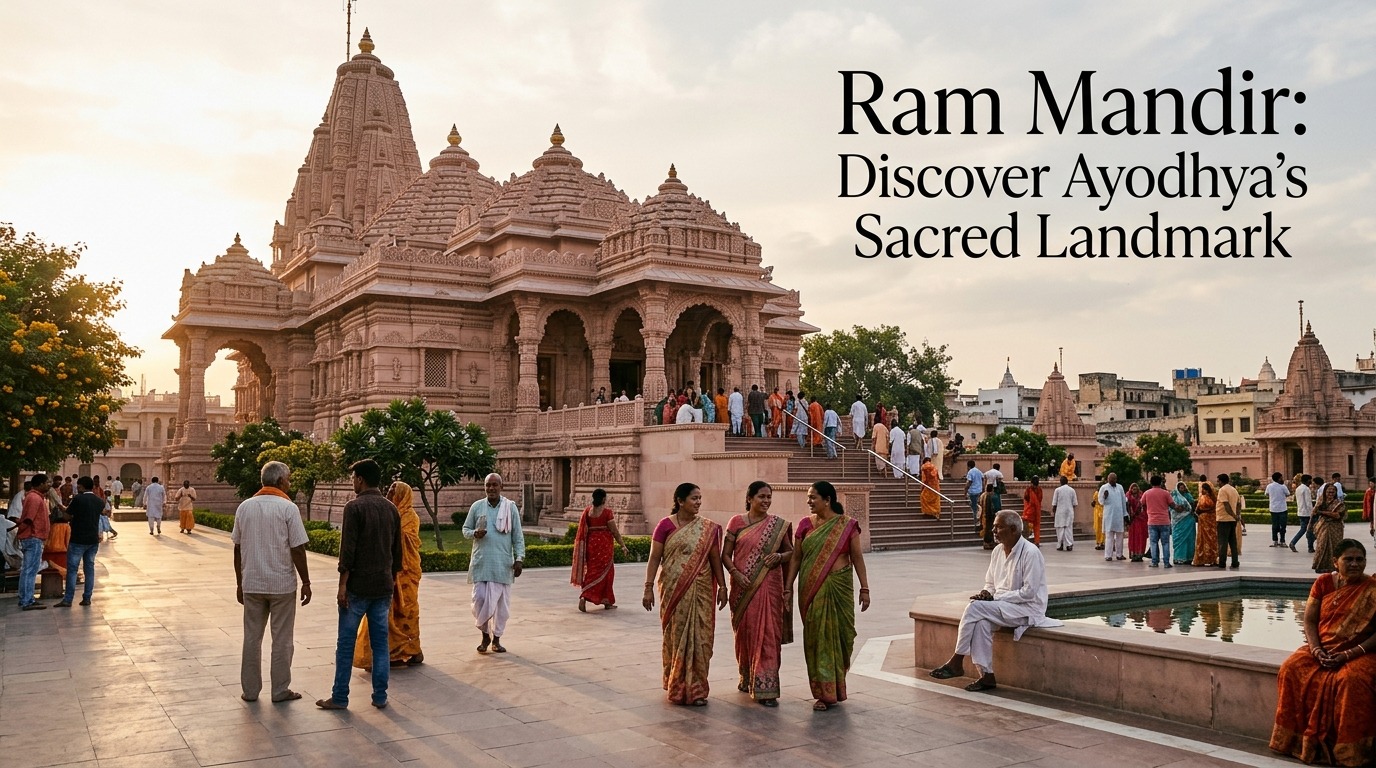
Ayodhya has long been associated with the life and legacy of Lord Rama, and the city has gained renewed attention as a major pilgrimage destination. At the heart of this spiritual landscape stands a monumental temple complex dedicated to Ram Lalla, drawing pilgrims and travelers who want to experience one of India’s most significant religious sites.
A visit here is about more than seeing an imposing structure. The scale of the architecture, the devotional atmosphere, the surrounding historic temples, and the banks of the Sarayu create a journey that connects contemporary Ayodhya with centuries of religious tradition. For first-time visitors, understanding the temple and the wider city makes the experience far more rewarding. (Incredible India)
The Spiritual Importance of Ayodhya
Ayodhya is traditionally revered as the birthplace of Lord Rama and holds an important place in Hindu pilgrimage. The city’s identity is deeply connected with the Ramayana and stories surrounding Rama’s life, making it one of India’s major sacred destinations. (Incredible India)
For devotees, the Janmabhoomi site represents a particularly meaningful destination. For other travelers, it offers an opportunity to understand how mythology, faith, architecture, and living traditions continue to shape an ancient city.
A Landmark Built in the Nagar Tradition
The new temple is constructed in stone and follows the Nagar architectural tradition. According to India’s official tourism portal, the complex is approximately 380 feet long, 250 feet wide, and 161 feet high. It incorporates hundreds of pillars and numerous doors, with carved architectural elements throughout the structure. (Incredible India)
The scale becomes easier to appreciate when viewed as part of the wider complex rather than as a single building. Its rising towers, stone surfaces, sculptural details, and carefully planned spaces give the site a monumental presence.
Inside the Main Temple Complex
The temple’s design gives visitors several details worth noticing rather than simply passing through the complex. The ground floor presents scenes associated with the life of Lord Rama, while the first floor is associated with Ram Darbar. (Incredible India)
The use of stone throughout the structure also gives the temple a distinctive visual character. Travelers interested in architecture should take time to observe the carving, proportions, entrances, pillars, and relationship between different parts of the complex.
Ram Lalla and the Central Shrine
The central religious focus is the image of Ram Lalla in the sanctum. India’s official tourism material describes the idol as 51 inches tall and identifies the stone used for it as Shaligram. (Incredible India)
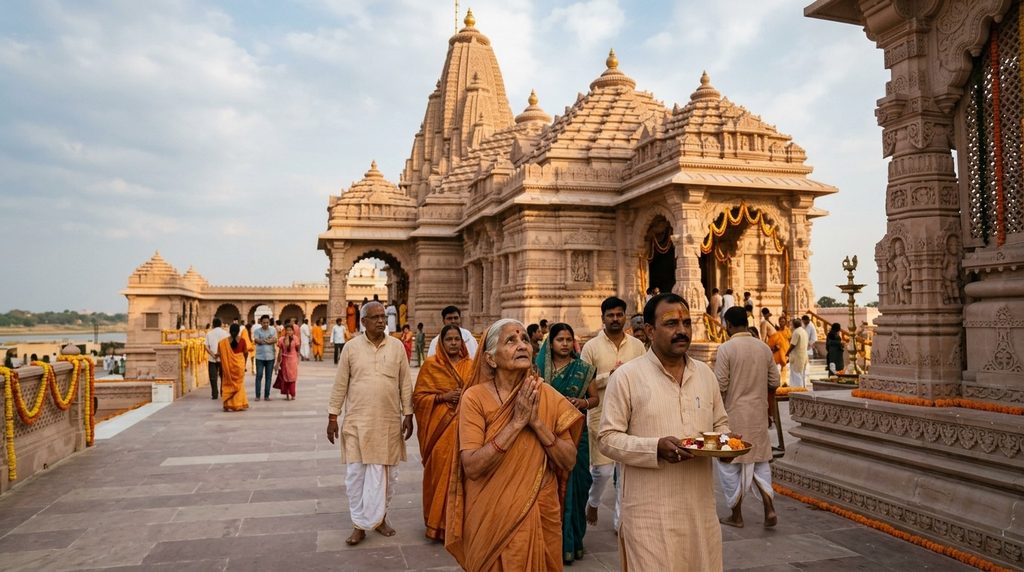
For pilgrims, darshan is the central purpose of visiting. The experience is therefore different from visiting a monument purely for its architecture: worshippers arrive with personal prayers and expectations, and the atmosphere inside the sacred area reflects that devotional purpose.
The Story Behind the Sacred Site
Ayodhya’s connection with Lord Rama is rooted in Hindu tradition and the Ramayana. According to religious belief, the city is his birthplace, and the Janmabhoomi area has consequently held profound significance for devotees. (Incredible India)
The present temple is therefore part of a much larger cultural story. Visitors who read about the Ramayana before arriving may find it easier to understand why particular figures, episodes, and symbols appear throughout Ayodhya’s religious landscape.
Visiting the Temple Respectfully
A pilgrimage site requires a different mindset from an ordinary tourist attraction. Visitors should dress appropriately, follow instructions from temple authorities, and remain considerate of people engaged in prayer.
Security arrangements and visitor procedures can change, so travelers should check official information close to their journey rather than relying on old travel guides. Photography or personal belongings may also be subject to restrictions in particular areas.
The most useful approach is to arrive with patience. Crowds, queues, religious ceremonies, and security checks can all affect the amount of time required.
Best Time to Visit
Ayodhya can be visited throughout the year, but the experience varies according to weather, religious occasions, and crowd levels.
The cooler months are generally more comfortable for walking between temples and exploring the city’s outdoor attractions. Major religious celebrations can bring a much more intense atmosphere, but they may also involve very large crowds and additional travel planning.
Ram Navami is especially significant because it celebrates the birth of Lord Rama. Official tourism information notes that the occasion brings devotees to Ayodhya for prayers, processions, and ceremonies. (Incredible India)
Diwali and Ayodhya’s Deepotsav are also important periods. The official tourism portal lists Deepotsav 2026 for November 6, 2026, with celebrations involving lamps, cultural performances, devotional ceremonies, and other events. (Incredible India)
How to Reach Ayodhya
Ayodhya is accessible by air and rail, making it increasingly convenient for pilgrims traveling from different parts of India. The official tourism portal lists Maharishi Valmiki International Airport and Ayodhya Junction among the city’s principal transport connections. (Incredible India)
Travelers may also consider Lucknow as an alternative arrival point depending on their wider itinerary. Road connections provide another option for those combining Ayodhya with other destinations in Uttar Pradesh.
Because transport schedules can change, check current train, flight, and local transport information before departure.
| Travel Option | Key Information |
| Air | Maharishi Valmiki International Airport serves Ayodhya |
| Rail | Ayodhya Junction is a major railway connection |
| Road | Ayodhya is connected to other cities in Uttar Pradesh |
| Local travel | Auto-rickshaws, taxis and other local options are available |
| Planning | Allow extra time during major religious celebrations |
Ram Ki Paidi and the Sarayu River
The Sarayu River adds another dimension to an Ayodhya pilgrimage. Ram Ki Paidi consists of a series of riverfront ghats where pilgrims gather, particularly around religious occasions and evening activities. (Incredible India)
The riverfront can be especially atmospheric after sunset, when the ghats are illuminated. Rather than rushing back after temple visits, travelers can set aside time to walk along the river and observe the devotional life of the city.
Hanuman Garhi and Kanak Bhawan
A visit to Ayodhya feels incomplete without exploring some of its other major temples. Hanuman Garhi is one of the city’s best-known shrines and is traditionally associated with Hanuman’s protective presence in Ayodhya. (Incredible India)
Kanak Bhawan offers a different architectural experience. Dedicated to Rama and Sita, the temple is known for its ornate interior and distinctive Bundela-style architecture. The present structure was renovated in the nineteenth century under Vrish Bhanu Kunwari. (Incredible India)
Combining these sites with the main pilgrimage complex gives visitors a broader understanding of Ayodhya’s religious heritage.
Exploring the Wider Sacred Landscape
Ayodhya contains numerous temples and riverfront sites beyond the central pilgrimage area. Nageshwarnath Temple, for example, is traditionally associated with Kush, the son of Lord Rama, while Ramkot Temple is another site connected with local traditions surrounding Rama. (Incredible India)
Guptar Ghat, along the Sarayu, is another notable destination. Religious tradition associates the site with the final chapter of Rama’s earthly life. (Incredible India)
These places are best explored at a relaxed pace. Instead of trying to check every attraction off a list, choose several sites that match your interests and allow time for the atmosphere of the old city itself.
Festivals That Transform Ayodhya
Religious festivals can dramatically change the character of the city. During Ram Navami, devotees gather for prayers, processions, and ceremonies connected with the birth of Lord Rama. The official tourism portal also highlights the Surya Tilak ceremony as a notable feature of the celebration. (Incredible India)
Deepotsav offers another striking experience. During the festival, earthen lamps illuminate the ghats, temples, and streets, while cultural programs and devotional events add to the atmosphere. (Incredible India)
Travelers visiting during major celebrations should plan well ahead and expect much heavier crowds than during ordinary periods.
A Simple Ayodhya Visit Plan
A well-planned trip does not need to be rushed. Begin with the main temple complex, then explore nearby shrines before setting aside time for the Sarayu riverfront.
| Part of Day | Suggested Focus |
| Morning | Main temple visit and nearby sacred sites |
| Late morning | Hanuman Garhi or Kanak Bhawan |
| Afternoon | Rest and explore additional temples |
| Evening | Ram Ki Paidi and Sarayu riverfront |
| Extra time | Guptar Ghat or other attractions outside the central area |
The exact pace will depend on queues, security procedures, weather, and the day’s religious activity. During major festivals, a flexible schedule is much more practical than trying to follow a strict timetable.
What Makes the Visit Meaningful
The strongest part of an Ayodhya journey is the combination of different experiences. The temple provides the central devotional focus, while the surrounding shrines, riverfront, old neighbourhoods, and festivals reveal the wider cultural setting.
Architecture enthusiasts can concentrate on stonework and design. Pilgrims may focus on darshan and worship. Travelers interested in history and culture can explore the city’s many temples and traditions. There is room for all these perspectives without reducing the destination to a single attraction.
Conclusion
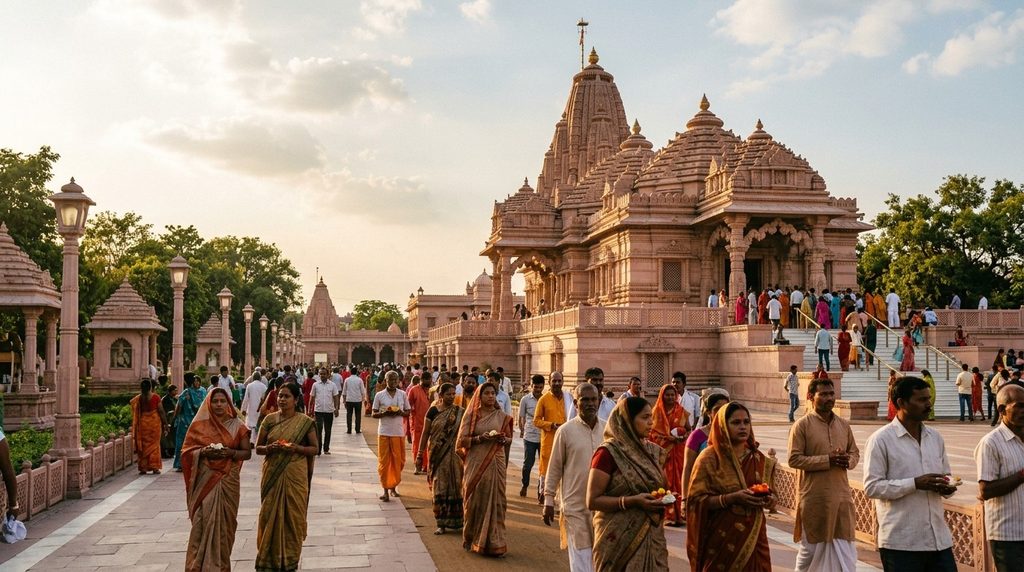
Ayodhya is a destination best experienced with patience and context. The monumental temple is undoubtedly the centrepiece, but the wider journey becomes more meaningful when paired with the city’s historic shrines, Sarayu ghats, traditional stories, and living devotional culture.
Plan around current visitor arrangements, allow plenty of time for security and queues, and explore beyond the main complex. A slower itinerary makes it easier to appreciate both the architectural scale of the temple and the character of the sacred city around it.
For travelers seeking a destination where faith, architecture, mythology, and contemporary pilgrimage meet in one place, Ayodhya offers an experience that extends well beyond a single temple visit.
FAQs
Where is the temple located?
The temple is located in Ayodhya, Uttar Pradesh, at the sacred Janmabhoomi site traditionally associated with the birthplace of Lord Rama. (Incredible India)
What is the architectural style of the temple?
The structure follows the Nagar architectural tradition and is built primarily from stone, with carved pillars, doors, towers, and other detailed elements. (Incredible India)
What other places should I visit in Ayodhya?
Hanuman Garhi, Kanak Bhawan, Ram Ki Paidi, Nageshwarnath Temple, Ramkot Temple, and Guptar Ghat are among the notable places that can be included in an Ayodhya itinerary. (Incredible India)
Is Ayodhya worth visiting during a major festival?
It can be a memorable experience because festivals bring exceptional devotional and cultural activity. However, travelers should expect significantly larger crowds and plan transport and accommodation well in advance.
How many days are enough for Ayodhya?
Two days can provide a comfortable introduction to the major pilgrimage sites and riverfront areas. A longer stay is useful if you want to explore additional temples, cultural attractions, and nearby destinations without rushing.
Read More:Kolkata Durga Puja: A Cultural Journey Through Bengal

I am a travel enthusiast who loves exploring India’s beautiful destinations, culture, history, food, and hidden places. Through my travel website, I aim to help travelers discover amazing places in India and plan memorable trips with useful travel information and tips.