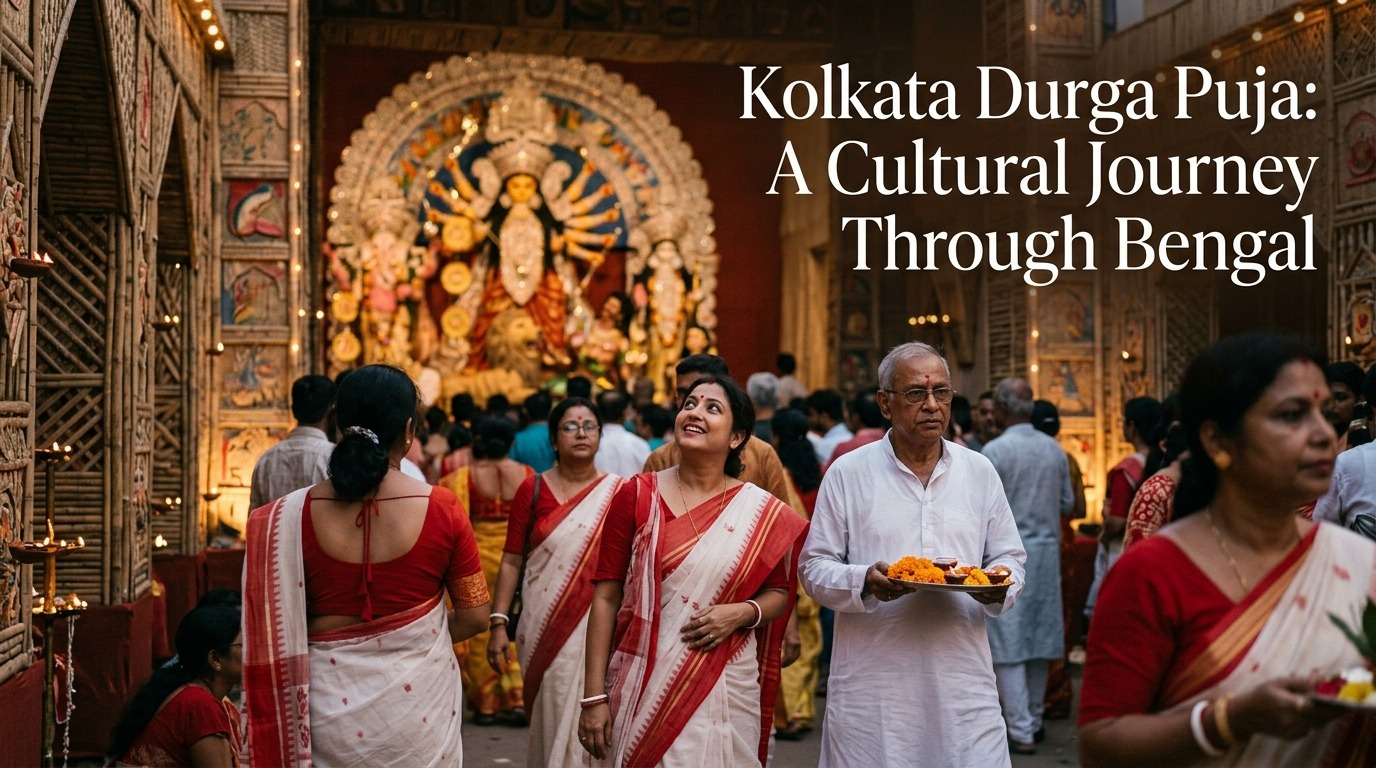
For several days each autumn, Kolkata changes its rhythm. Streets fill with illuminated gateways, neighbourhoods become gathering places, and temporary artistic installations draw visitors deep into different parts of the city. At the heart of it all is the worship of Goddess Durga, but the experience extends well beyond religious rituals into art, music, food, craftsmanship, and community life.
What makes the celebration especially compelling for travelers is its remarkable variety. A traditional household puja can feel intimate and ceremonial, while a large community pandal may resemble an ambitious piece of contemporary art. Exploring both sides offers a richer understanding of Kolkata, where devotion and creativity have long shared the same streets.
How the Celebration Became Part of Kolkata’s Identity
Durga worship has deep roots in Bengal, and Kolkata’s modern community celebrations developed through a long history of social and cultural participation. The festival became increasingly associated with neighbourhood organisations, artistic competition, and public celebration.
Today, pandals are constructed across the city, often reflecting elaborate themes. Some draw on classical Bengali traditions, while others reinterpret architecture, social ideas, history, or contemporary art. This variety is one reason visitors rarely experience the same festival twice.
What Happens During the Five Main Days
The central period is associated with Shashthi, Saptami, Ashtami, Navami, and Dashami. Each day has its own religious significance, ceremonies, and atmosphere.
Shashthi marks an important beginning to the public festivities. Saptami and Ashtami bring major worship and large gatherings, while Navami continues the devotional intensity. Dashami marks the farewell to the goddess and leads into immersion processions.
For visitors, understanding this sequence helps explain why the atmosphere changes as the festival progresses rather than remaining identical throughout.
| Day | General Significance | What Visitors May Notice |
| Shashthi | Formal beginning of the main festivities | Pandal openings and ceremonial activity |
| Saptami | Major day of worship | Crowds, rituals and cultural activity |
| Ashtami | One of the most important devotional days | Heavy visitor movement and major ceremonies |
| Navami | Continued worship before the farewell | Festive gatherings and evening visits |
| Dashami | Farewell and immersion | Processions and immersion-related celebrations |
Why the Pandals Are Worth Exploring
A pandal is much more than a temporary shelter for a Durga image. In Kolkata, some are carefully designed environments where architecture, sculpture, lighting, painting, textiles, and sound work together.
Neighbourhood committees often spend months preparing their installations. The result can range from a traditional structure inspired by Bengal’s heritage to an imaginative recreation of a famous building or an entirely original artistic concept.
The best way to appreciate this aspect is to explore different neighbourhoods instead of visiting only one famous location.

Traditional Baris and Community Pujas
Not every celebration is built around a competition-style pandal. Kolkata also has historic household ceremonies, often known as bonedi bari pujas, where families maintain traditions passed down through generations.
These celebrations can feel markedly different from large public installations. The settings are often older homes or courtyards, and the emphasis may be on family customs, rituals, and continuity rather than spectacular temporary design.
For travelers interested in cultural history, including one traditional household celebration alongside major public pandals can add useful perspective.
The Artistic Side of the Festival
One of the most distinctive features is the role of local artists and craftspeople. Creating the idol and surrounding environment involves specialists in clay modelling, painting, decoration, lighting, carpentry, textiles, and installation work.
Kumartuli, the historic potters’ quarter in north Kolkata, is particularly associated with idol-making. Visitors can see workshops where artisans prepare clay images for religious celebrations throughout the year, although workshop access and photography etiquette should always be respected.
Kumartuli and the Craft Behind the Idols
The relationship between Kolkata and clay idol-making is difficult to understand without seeing the craft process. Kumartuli’s narrow lanes contain numerous studios and workshops, many run by families with long connections to the trade.
The work begins well before the public festivities. Frameworks are constructed, clay is applied and shaped, and the figures are gradually finished with paint, clothing, ornaments, and expressive details.
A visit here is especially rewarding before the busiest festival days, when the neighbourhood provides a closer look at the craftsmanship behind the city’s grand public celebrations.
The Food Culture Around the Festivities
Food is woven naturally into the festival experience. Community celebrations may serve bhog, the food offered during worship, while restaurants and local eateries continue Kolkata’s broader culinary traditions.
Visitors can use the festival as an opportunity to explore Bengali dishes alongside their pandal visits. Traditional sweets, vegetarian offerings, rice-based meals, fish preparations, and street snacks all form part of Kolkata’s wider food landscape.
During peak evenings, popular areas can become extremely crowded, so eating at quieter times may make the experience more comfortable.
Music, Dhak and the Sound of the City
The soundscape is as memorable as the visual spectacle. Dhak drummers provide one of the defining musical elements, particularly during important rituals and processions.
The rhythmic drumming changes the atmosphere around a pandal almost immediately. Combined with conch shells, devotional music, announcements, and crowds, it creates a sound environment that is unmistakably associated with the celebration.
For photographers and first-time visitors, it is worth pausing occasionally instead of moving constantly between locations. Some of the most memorable moments are found in these small sensory details.
Best Time to Visit
The main celebration takes place during the Bengali month of Ashwin, generally falling around September or October in the Gregorian calendar. The exact dates shift each year according to the Hindu lunisolar calendar.
For travelers who want to see pandals at their liveliest, the central festival days offer the strongest atmosphere, but they also bring the largest crowds. Evenings are particularly popular because many installations are illuminated after dark.
If your priority is photography, walking comfort, or a slower look at the artwork, visiting selected locations outside the busiest hours can be more manageable. Weather can also be warm and humid around the season, so comfortable clothing, water, and sensible footwear are useful.
Planning a Pandal-Hopping Route
Trying to see everything in one evening is unrealistic. Kolkata has a huge number of celebrations spread across different neighbourhoods, and traffic or crowds can make short distances surprisingly time-consuming.
A better approach is to choose a few areas and explore them together. North Kolkata, central neighbourhoods, and southern parts of the city each offer different combinations of famous installations and local celebrations.
Public transport can be useful, but services and crowd conditions vary during the festival. Check current local transport information before setting out and leave extra time between stops.
| Planning Tip | Practical Approach |
| Number of stops | Choose a manageable group within one area |
| Best viewing period | Evenings are especially atmospheric but crowded |
| Footwear | Wear comfortable shoes for extended walking |
| Transport | Check current metro, bus and road conditions |
| Personal belongings | Keep valuables secure in dense crowds |
| Photography | Follow restrictions and avoid disrupting rituals |
Important Places to Experience
Several areas are particularly well known for their celebrations. North Kolkata is associated with old neighbourhood traditions and historic household pujas, while areas such as Kumartuli offer insight into idol craftsmanship.
Southern Kolkata is known for numerous large community celebrations, many of which are recognised for innovative themes and artistic presentation. Ballygunge and nearby neighbourhoods also offer a mixture of traditional and contemporary celebrations.
Rather than treating famous locations as a checklist, travelers can select a few well-known sites and leave room for smaller neighbourhood pandals encountered along the way.
What Travelers Should Know Before Visiting
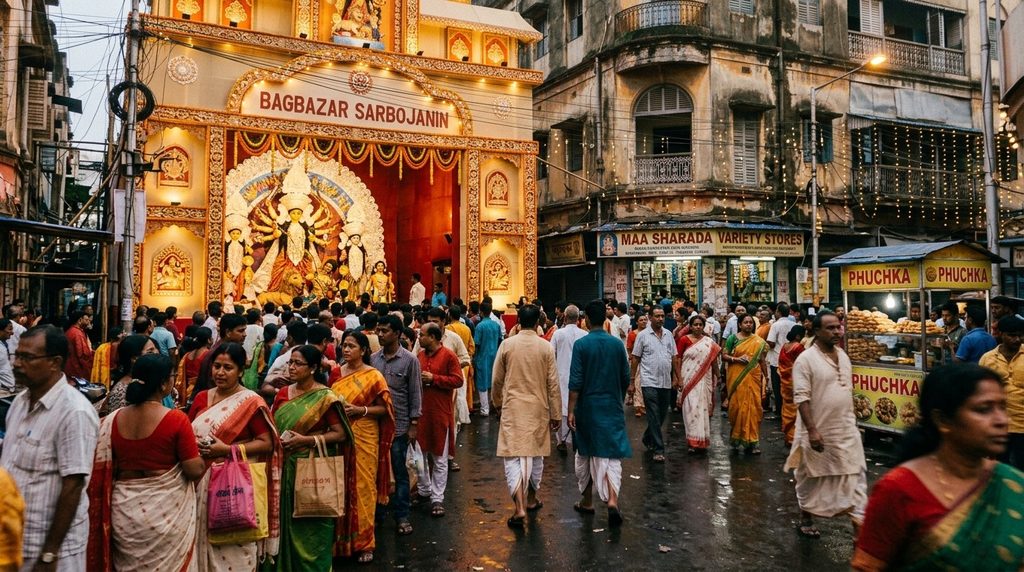
The festival is a religious celebration first and a cultural spectacle second. Visitors should dress respectfully, follow instructions at pandals, and remain considerate during rituals.
Crowds can become dense, especially around major installations. Keep an eye on personal belongings, stay aware of meeting points if traveling with others, and avoid blocking entrances or ceremonial spaces while taking photographs.
Some installations may have queues or controlled entry. Conditions can change from one location to another, so flexibility is more useful than trying to follow a rigid schedule.
The Emotional Finale on Dashami
The final day has a different mood from the excitement of the earlier celebrations. After days of worship and community gatherings, devotees prepare to bid farewell to the goddess.
Immersion processions become an important part of the day, with idols carried toward designated water bodies accompanied by music, crowds, and ceremony. The atmosphere can be energetic, but there is also a clear sense of departure.
For visitors, Dashami provides an important reminder that the temporary nature of the festival is part of its meaning. The elaborate pandals disappear, the idols are immersed, and Kolkata gradually returns to its everyday rhythm.
Conclusion
The real strength of Kolkata’s autumn festival lies in its layers. It is a religious observance, a showcase for Bengal’s craftsmanship, a major public art event, a family tradition, and a period when neighbourhoods become unusually open and communal.
A rewarding visit does not require seeing dozens of pandals. Choose a few distinctive areas, make time for traditional celebrations as well as contemporary installations, visit Kumartuli if your schedule allows, and leave enough space to simply experience the city.
For travelers, the festival offers something rare: a chance to see Kolkata not as a static destination, but as a city actively expressing its history, creativity, faith, and community spirit.
FAQs
When is the festival celebrated in Kolkata?
The main celebration usually takes place around September or October, with the exact dates changing annually according to the Hindu calendar.
Are Kolkata’s pandals open to tourists?
Yes. Many public community pandals welcome visitors, although entry arrangements, queues, and photography rules can vary between locations.
What is Kumartuli famous for?
Kumartuli is a historic area of Kolkata known for its clay idol-making workshops and artisans. It provides an opportunity to learn about the craftsmanship behind many festival idols.
Is it possible to visit multiple pandals in one day?
Yes, but planning by neighbourhood is advisable. Kolkata’s crowds and traffic can make traveling between distant areas time-consuming, particularly during peak evening hours.
What should visitors wear during the celebrations?
Comfortable, respectful clothing is appropriate. Since exploring often involves substantial walking and standing, practical footwear is also recommended.
Read More:Kashi Vishwanath Travel Guide: History, Darshan, Timings, and Travel Tips

I am a travel enthusiast who loves exploring India’s beautiful destinations, culture, history, food, and hidden places. Through my travel website, I aim to help travelers discover amazing places in India and plan memorable trips with useful travel information and tips.