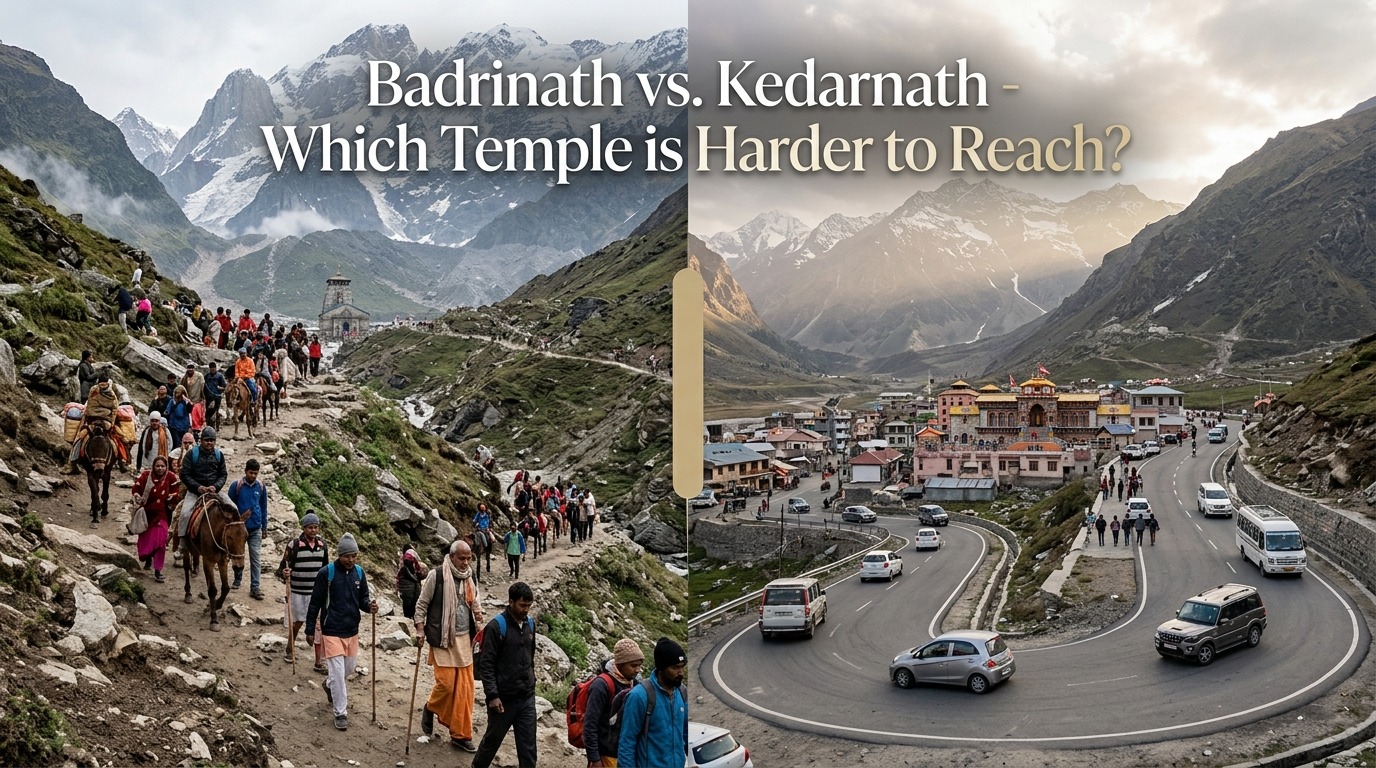
Badrinath vs. Kedarnath is a common comparison for pilgrims planning a Char Dham Yatra in Uttarakhand. Both temples are located high in the Himalayas and are among India’s most important pilgrimage destinations. However, the experience of reaching the two shrines is very different.
The biggest difference is simple: Badrinath can be reached by a motorable road, while Kedarnath requires a trek from Gaurikund. The official Uttarakhand pilgrimage portal currently lists the Kedarnath trek as about 16 km, with walking generally taking around 6–8 hours. Helicopter services are also available from places such as Phata, Sirsi, and Guptkashi, subject to weather and operations.
So, which temple is harder to reach? For most pilgrims, Kedarnath is clearly the more physically demanding journey. But altitude, weather, road conditions, fitness, and your preferred travel style can all affect the experience.
Location and Altitude
Both Kedarnath and Badrinath are situated in the Himalayan region of Uttarakhand, but their exact elevations differ.
- Kedarnath is located at roughly 3,583 metres (11,755 feet) above sea level.
- Badrinath is situated at approximately 3,133 metres (10,275 feet).
The official Shri Badarinath Kedarnath Temple Committee lists Kedarnath at around 3,581 metres, while its information for Badrinath gives an elevation of 3,133 metres.
This difference matters because higher altitude can mean colder temperatures, thinner air, and greater physical strain. However, altitude alone does not make Kedarnath harder. The main challenge is the long uphill trek from Gaurikund.
For travelers who are not accustomed to mountain conditions, it is important to walk slowly, take regular breaks, stay hydrated, and pay attention to how the body feels.
Connectivity by Road
When it comes to road access, Badrinath is much easier to reach.
Badrinath is connected to major parts of Uttarakhand by motorable roads. Buses, taxis, and private vehicles can travel to the Badrinath temple town, although mountain roads can still be tiring and travel times can change because of traffic, weather, or road conditions. The official temple committee confirms that Badrinath is connected by road with major destinations in Uttarakhand.
Kedarnath is different. Vehicles can travel only as far as the roadhead around Gaurikund. From there, pilgrims continue towards Kedarnath on foot or use approved alternatives such as ponies, palkis, or helicopter services from designated nearby helipads.
The current Uttarakhand pilgrimage portal describes the journey as a road trip to Gaurikund followed by a 16-km trek to Kedarnath.
This single difference makes Kedarnath the harder temple to reach for most visitors.
The Trek to Kedarnath
The trek is the main reason Kedarnath is harder to reach than Badrinath.
The current route from Gaurikund to Kedarnath is around 16 km. Uttarakhand Tourism describes the trail as a medium-to-steep route through the mountain landscape.
For a reasonably fit person, walking the full distance can take several hours. The official pilgrimage portal estimates approximately 6–8 hours for the uphill journey, although the actual time depends on fitness, weather, crowd levels, breaks, and walking speed.
The route can be physically demanding because you are gaining altitude while walking uphill for a long period. Rain, cold temperatures, crowds, and changing mountain weather can make the experience more challenging.
Pilgrims who do not want to walk the entire route may have other options. Pony and palki services are available, while helicopter services operate from designated locations such as Phata, Sirsi, and Guptkashi. Helicopter operations depend on weather and availability.
If you choose to trek, good walking shoes, light luggage, water, weather protection, and a steady pace can make a big difference.
Reaching Badrinath – A Smooth Ride
Compared with Kedarnath, reaching Badrinath is considerably easier from a physical point of view.
The road goes directly to the Badrinath temple town, so visitors do not have to complete a long uphill trek before reaching the shrine. The official temple committee confirms that Badrinath is well connected by motorable roads from major destinations in Uttarakhand.
This makes Badrinath a more convenient option for families, older travelers, and people who may find a long mountain trek difficult.
However, “easier” does not mean the journey is completely effortless. The drive through the Himalayas can be long, winding, and tiring. Road conditions and traffic can also affect the travel time.
The advantage is that most of the journey can be completed by vehicle, followed by a much shorter walk around the temple area.
Spiritual Journey vs Physical Journey
The comparison between Badrinath and Kedarnath should not be based only on physical difficulty. Both temples have enormous religious importance.
Badrinath Temple is dedicated to Lord Vishnu, while Kedarnath Temple is dedicated to Lord Shiva. Both are part of the revered Char Dham pilgrimage of Uttarakhand.
For many devotees, the difficult journey to Kedarnath is itself an important part of the pilgrimage. Walking through the mountains, dealing with physical tiredness, and finally reaching the temple can create a strong emotional and spiritual experience.
Badrinath offers a different kind of journey. Since the temple is accessible by road, pilgrims can focus more on darshan and the surrounding religious and natural attractions without having to complete a long trek.
Therefore, the “better” temple depends on what you want from your pilgrimage.
Badrinath vs. Kedarnath: Which Is Harder?
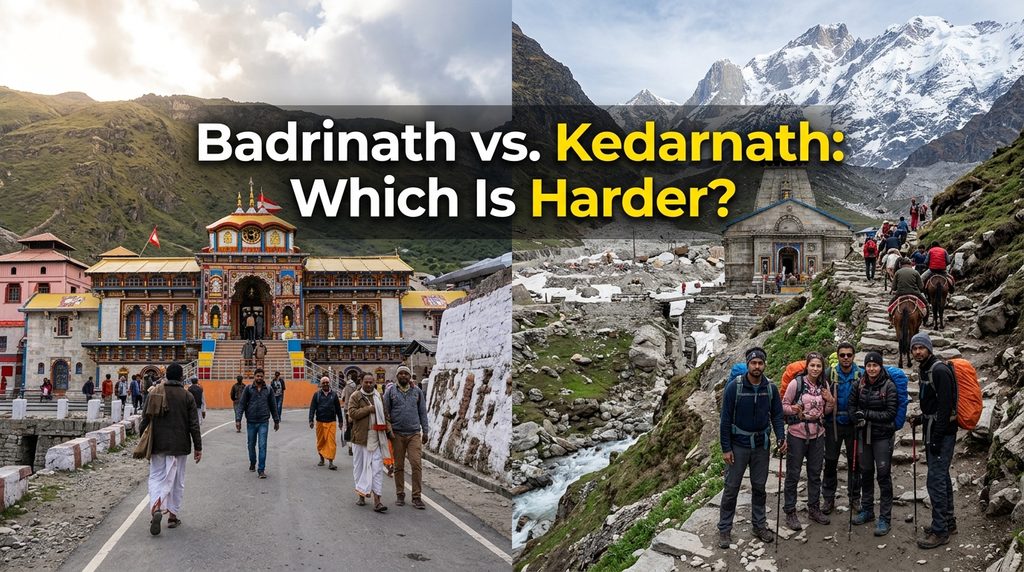
If the question is specifically about physical difficulty and accessibility, Kedarnath is the harder temple to reach.
| Factor | Kedarnath | Badrinath |
| Road access | Road ends at Gaurikund | Motorable road reaches Badrinath |
| Trek required | Around 16 km from Gaurikund | No long trek required |
| Altitude | Around 3,583 m | Around 3,133 m |
| Physical effort | High | Moderate |
| Helicopter option | Available from designated locations | Road access makes it less necessary |
| Suitable for seniors | More challenging | Generally easier |
| Main challenge | Long uphill trek and altitude | Long mountain road journey |
| Overall accessibility | Difficult | Easier |
The official Uttarakhand pilgrimage portal confirms the 16-km Gaurikund-to-Kedarnath trek and the availability of pony, palki, and helicopter options.
So, if you are choosing purely on ease of access, Badrinath wins.
Which Temple Is Better for Families and Seniors?
For families traveling with young children or older adults, Badrinath is generally the more convenient choice because there is no long uphill trek from a roadhead.
Kedarnath can still be visited by senior citizens and people who cannot walk the complete route, but it requires more planning. Pony, palki, and helicopter options can reduce the physical effort, but weather, availability, and operating conditions should be considered.
Anyone with an existing medical condition should discuss high-altitude travel and strenuous activity with a qualified medical professional before planning the journey.
Families should also avoid rushing. Mountain travel can take longer than expected, and weather conditions can change quickly.
Which Journey Offers the Better Experience?
There is no single answer because the two journeys offer different experiences.
If you enjoy mountain trekking, physical challenges, dramatic Himalayan scenery, and a pilgrimage that demands more effort, Kedarnath may feel more rewarding.
If you prefer road travel, easier access, family-friendly pilgrimage, and less physical strain, Badrinath may be the better choice.
Many travelers also visit both because they are important stops on the Char Dham route. Experiencing both temples allows pilgrims to enjoy two very different Himalayan pilgrimage journeys.
FAQs
Which is harder to reach, Kedarnath or Badrinath?
Kedarnath is harder to reach for most pilgrims because the road ends at Gaurikund and the remaining journey requires an approximately 16-km trek. Badrinath is connected directly by motorable roads.
How long is the Kedarnath trek?
The current Uttarakhand pilgrimage information lists the trek from Gaurikund to Kedarnath at about 16 km. Walking the route generally takes around 6–8 hours, depending on fitness, pace, weather, and breaks.
Can I reach Kedarnath without walking?
Yes. Depending on current availability and weather, pilgrims can use pony or palki services, while helicopter services operate from designated locations such as Phata, Sirsi, and Guptkashi.
Is Badrinath easier for senior citizens?
Generally, yes. Badrinath is more accessible because the temple town is connected by road, so senior travelers do not have to complete the long Kedarnath trek. However, the mountain drive and altitude can still be tiring.
Which is higher, Kedarnath or Badrinath?
Kedarnath is higher. Official temple information places Kedarnath at roughly 3,581–3,583 metres, while Badrinath is around 3,133 metres above sea level.
Conclusion
The Badrinath vs. Kedarnath comparison becomes much clearer when you look at how you actually reach each temple. Badrinath has the advantage of direct road connectivity, making it easier for families, senior citizens, and travelers who want a less physically demanding pilgrimage.
Kedarnath, on the other hand, requires a much greater physical effort because pilgrims normally travel by road to Gaurikund and then continue for about 16 km to the shrine. The altitude, uphill terrain, weather, and length of the trek make it the more challenging journey.
In short: Badrinath is easier to reach, while Kedarnath offers the more physically demanding pilgrimage experience. The right choice ultimately depends on your fitness, travel preferences, available time, and the kind of spiritual journey you are looking for.
Read More: Mata Vaishno Devi Temple & Yatra Info Katra, Jammu & Kashmir

I am a travel enthusiast who loves exploring India’s beautiful destinations, culture, history, food, and hidden places. Through my travel website, I aim to help travelers discover amazing places in India and plan memorable trips with useful travel information and tips.