Tirupati Temple is one of India’s most revered pilgrimage destinations, drawing devotees to the hilltop shrine of Lord Sri Venkateswara at Tirumala. Although commonly called Tirupati Temple, the principal shrine is actually located in Tirumala, while Tirupati is the city below that serves as the main gateway for pilgrims. The temple’s immense spiritual importance, centuries-old traditions, and distinctive hill setting make a visit far more meaningful than an ordinary sightseeing trip.
For travelers, visiting Tirupati Temple is as much about understanding the pilgrimage as seeing the architecture. From planning darshan and following traditional customs to exploring sacred sites around Tirumala and Tirupati, there are several details worth knowing before arriving. This guide brings those elements together so visitors can approach the journey with greater confidence, respect, and appreciation.
Why Tirupati Temple Holds Such Importance
The temple is dedicated to Lord Sri Venkateswara, also known as Srinivasa, Balaji, and Venkatachalapati. According to the sacred traditions associated with Tirumala, Lord Venkateswara chose the seven hills as his abode, giving the landscape a profound religious identity.
The shrine is administered by Tirumala Tirupati Devasthanams (TTD), which manages temple worship, pilgrim facilities, accommodation, darshan systems, and numerous related religious and charitable activities. The scale of this organization reflects the enormous importance of Tirumala as a pilgrimage centre.
The Story and Heritage Behind the Shrine
Tirumala’s religious history is deeply connected with the traditions surrounding Lord Venkateswara. TTD describes the main temple as having a long-standing sacred association with the deity, while generations of devotees and rulers contributed to the development of the temple complex.
The temple complex itself covers about 16.2 acres, and its history is reflected through its entrances, structures, ritual spaces, and longstanding customs. Rather than being a monument preserved only for its historical value, the shrine remains a living centre of worship where daily rituals continue according to established traditions.
Understanding the Tirumala Temple Complex
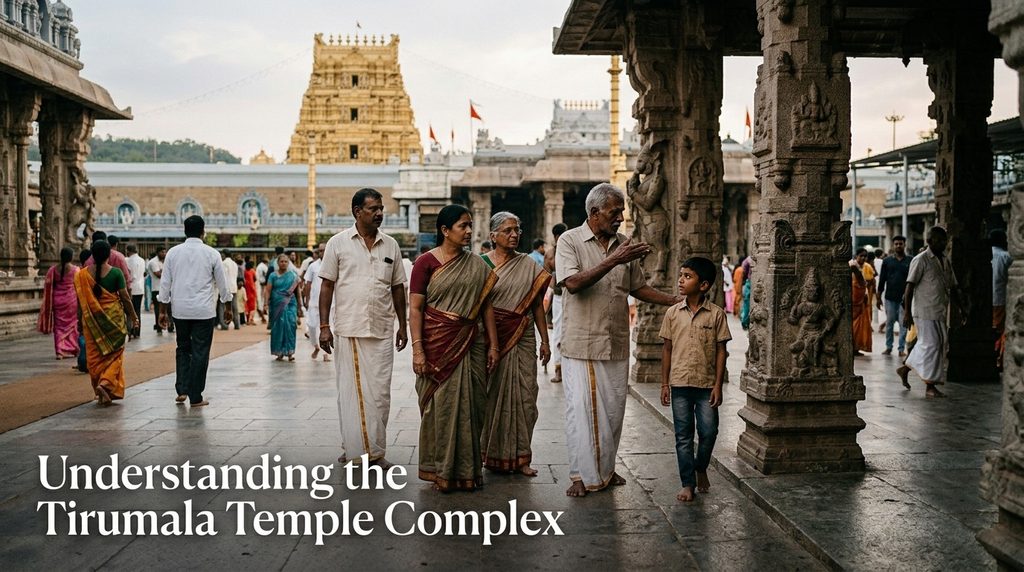
The principal shrine forms the spiritual heart of Tirumala, but the wider sacred landscape contains several important places connected with the pilgrimage.
Among them is the Sri Bhu Varaha Swamy Temple beside Swami Pushkarini. According to the traditional temple account, Lord Srinivasa received the land of Tirumala from Varahaswami and agreed that devotees should first offer worship there before proceeding to Sri Venkateswara.
This tradition helps explain why a Tirumala visit is not simply a single temple stop. The surrounding shrines, sacred water bodies, and pilgrimage customs form part of a larger religious experience.
Architecture and Sacred Atmosphere
The architecture of Tirupati Temple reflects the accumulated work of generations rather than a single historical period. Grand entrances, mandapas, gold-covered elements, carved stone details, and carefully maintained ritual spaces contribute to its distinctive appearance.
Yet architecture is only one part of the experience. The sounds of devotional chants, the movement of pilgrims through the temple complex, traditional ceremonies, and the disciplined rhythm of worship give Tirumala its particular atmosphere.
For a first-time visitor, it is worth slowing down and appreciating these details rather than treating the temple as a conventional tourist attraction.
Darshan and Temple Visit Planning
Darshan is the central purpose of most pilgrimages to Tirumala, and TTD provides different systems and categories for devotees. These can include Sarva Darshan and Special Entry Darshan, along with various seva opportunities. Availability and procedures can change, so travelers should check the official TTD information before making plans.
TTD’s published schedules also show that temple rituals and darshan operate within a structured daily cycle, with early-morning sevas followed by other rituals and darshan periods. Exact schedules can vary by day, so visitors should rely on the current official schedule rather than an old travel article.
| Planning Point | What Travelers Should Know |
| Main shrine | Sri Venkateswara Swamy Temple, Tirumala |
| Main pilgrimage city | Tirupati |
| Temple authority | Tirumala Tirupati Devasthanams (TTD) |
| Darshan | Different darshan categories are available |
| Advance planning | Recommended, particularly for popular periods |
| Daily schedule | Changes according to rituals and the day’s program |
Dress Code and Temple Etiquette
Respectful clothing is an important part of the Tirumala pilgrimage. TTD specifies traditional dress requirements for certain categories of darshan and seva. Its published guidance states that men may wear a dhoti or pyjamas with an upper cloth, while women may wear a saree, half-saree with blouse, or churidar with pyjama and upper cloth.
Visitors should also follow the temple’s rules concerning cleanliness, queues, footwear, offerings, photography restrictions where applicable, and general conduct. TTD specifically advises pilgrims to respect established customs and wait for their turn during darshan.
Festivals That Bring Tirumala to Life
Tirumala observes an extensive calendar of religious festivals throughout the year. Among the best-known celebrations is the annual Brahmotsavam, a nine-day festival that includes processions and vahana sevas and attracts very large numbers of devotees.
Other significant observances include Vaikuntha Ekadasi, Rathasapthami, Teppotsavam, Padmavathi Parinayam, and several annual and periodical sevas. Because festival schedules and access arrangements can change, visitors planning a festival-focused pilgrimage should consult TTD’s current announcements before traveling.
Sacred Places Around Tirumala
A pilgrimage to Tirupati can extend beyond the main shrine. Tirumala itself contains sacred locations such as Sri Bhu Varaha Swamy Temple and Bedi Anjaneya Swamy Temple, while Tirupati city has several historic temples administered by TTD.
One notable destination in the city is Sri Govindaraja Swamy Temple, which TTD describes as one of the important ancient temples in Tirupati. The temple was consecrated by the Sri Vaishnava saint Ramanujacharya in 1130 AD and remains an important part of the city’s religious landscape.
How to Reach Tirupati and Tirumala
Tirupati functions as the principal access point for the Tirumala pilgrimage. Travelers generally reach Tirupati first and then continue toward Tirumala using the available road and pilgrimage transport arrangements.
Because transport services, road procedures, and pilgrim facilities can change, it is sensible to check the latest information from TTD before setting out. TTD also operates pilgrim-oriented services within Tirumala, making it easier to move around the hilltop pilgrimage area.
| Travel Stage | Practical Approach |
| Arrive in Tirupati | Use the city as the main base or gateway |
| Continue to Tirumala | Follow current TTD transport and road arrangements |
| Temple visit | Keep darshan or seva arrangements accessible |
| Local exploration | Allow additional time for nearby sacred sites |
| Return journey | Plan around darshan and transport schedules |
What to Know Before Your Pilgrimage
A little preparation can make the experience considerably smoother. Keep identification and booking information organized, allow extra time for queues, and avoid planning a tightly packed sightseeing schedule around darshan.
TTD advises pilgrims to book travel and accommodation in advance and warns visitors against approaching unauthorized touts for accommodation or darshan.
The most useful mindset is patience. Tirumala is a major pilgrimage centre, and the experience can involve waiting, walking, security procedures, and large groups of devotees. Treating these as part of the pilgrimage rather than inconveniences can make the journey more rewarding.
Best Time to Visit
The best time to visit Tirupati Temple depends on whether your priority is comfortable weather, a particular festival, or a quieter pilgrimage experience.
For travelers primarily interested in weather and general sightseeing, the cooler months are generally more comfortable than the hottest part of the year. However, religious festivals and special observances can significantly affect crowd levels, so travelers seeking a quieter visit should check the TTD calendar before selecting dates.
Those specifically interested in experiencing major celebrations such as Brahmotsavam should expect a much more energetic pilgrimage environment and potentially heavier visitor demand. TTD identifies Brahmotsavam as one of Tirumala’s major annual religious festivals.
Rather than choosing dates solely by season, check the current TTD schedule, festival announcements, darshan availability, and accommodation information together before confirming your trip.
A More Meaningful Way to Experience Tirupati Temple

The most memorable Tirupati pilgrimage is rarely about rushing from one checkpoint to another. Give yourself time to understand the traditions, observe the temple’s rhythm, visit the surrounding sacred places, and appreciate the significance of the journey itself.
Whether you arrive as a devoted pilgrim or as a traveler interested in India’s living religious heritage, Tirupati Temple offers an experience shaped by faith, history, architecture, ritual, and community. Careful planning allows you to focus less on logistics and more on the atmosphere that has drawn generations of devotees to Tirumala.
Conclusion:
Tirupati Temple represents far more than an iconic religious landmark. Its enduring traditions, sacred landscape, remarkable architecture, and immense pilgrimage culture make Tirumala one of India’s most distinctive spiritual destinations. From the main shrine of Lord Venkateswara to the surrounding temples and festivals, every part of the journey reveals another layer of its heritage.
A successful visit begins with practical preparation but becomes meaningful through patience and respect. By checking current TTD arrangements, following temple customs, choosing your travel period thoughtfully, and allowing enough time for the pilgrimage, you can experience Tirupati Temple with a deeper understanding of the place and its traditions.
FAQs:
Where is Tirupati Temple located?
The main Sri Venkateswara Swamy Temple is located at Tirumala, in the hills above Tirupati city in Andhra Pradesh. Tirupati serves as the principal gateway for pilgrims traveling to the hilltop shrine.
What is Tirupati Temple famous for?
Tirupati Temple is renowned for its worship of Lord Sri Venkateswara and for being one of India’s major pilgrimage centres. Its long religious traditions, elaborate rituals, festivals, and large-scale pilgrim facilities contribute to its importance.
Do I need to plan Tirupati Temple darshan in advance?
Advance planning is advisable, particularly during busy pilgrimage periods. TTD provides different darshan and seva systems, and availability or procedures can change, so travelers should check the current official TTD information before visiting.
What should I wear when visiting Tirupati Temple?
Visitors should dress respectfully and follow TTD’s applicable dress-code requirements. For specified darshan and seva categories, TTD prescribes traditional Indian clothing for men and women.
What are the major festivals at Tirupati Temple?
Brahmotsavam is among the most important annual festivals at Tirumala. Other major religious observances include Vaikuntha Ekadasi, Rathasapthami, Teppotsavam, and several annual sevas. Festival schedules should be checked with TTD because arrangements can vary.
Read More:Arunachalesvara Temple: History, Timings, Significance and Complete Visitor Guide

I am a travel enthusiast who loves exploring India’s beautiful destinations, culture, history, food, and hidden places. Through my travel website, I aim to help travelers discover amazing places in India and plan memorable trips with useful travel information and tips.