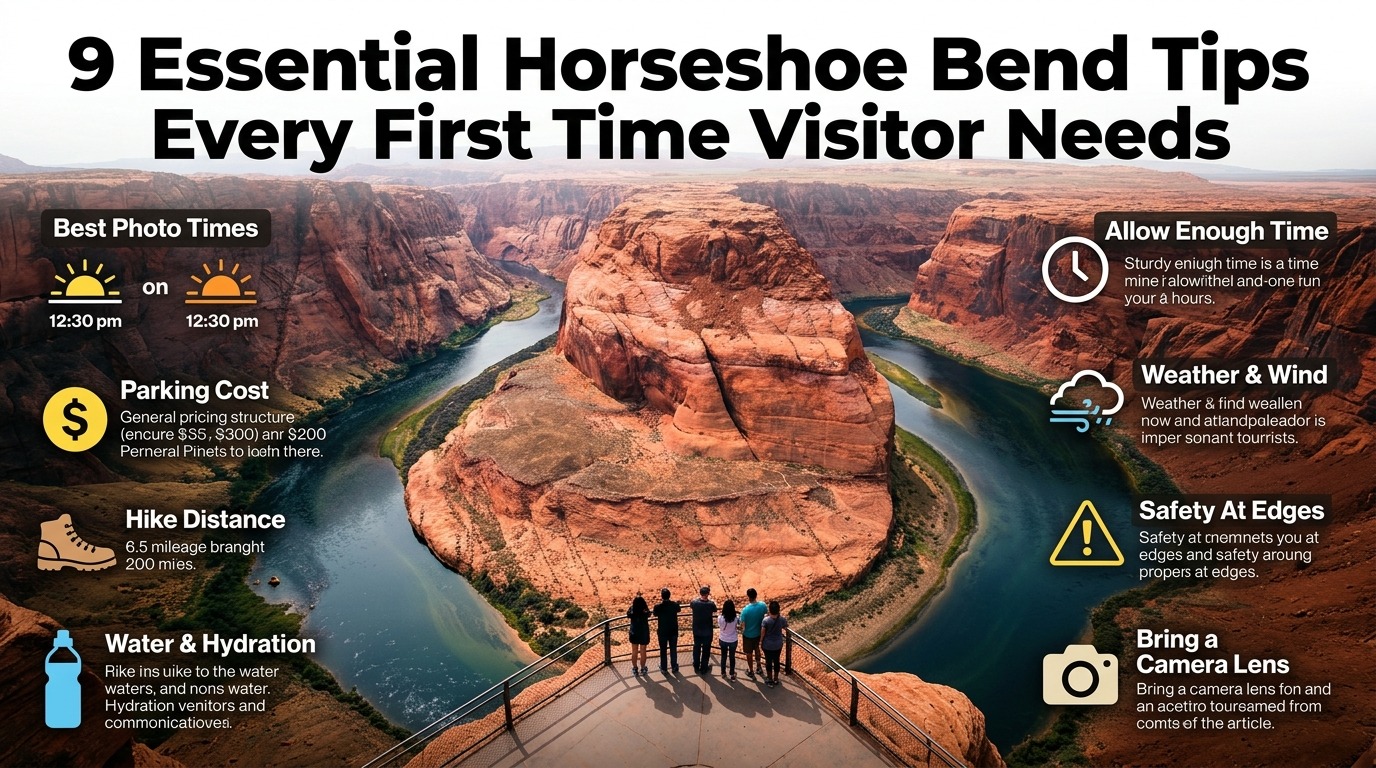
If you have seen one photo of a river bending around a giant slab of red rock like a natural amphitheater, there is a good chance it was Horseshoe Bend. This spot near Page, Arizona pulls in visitors from every corner of the world, and for good reason. The view from the rim genuinely stops people mid-sentence. But showing up without a plan can turn a bucket list moment into a rushed, overheated scramble back to the car.
This guide walks through what actually matters before you go: when to arrive, what the parking situation looks like, how tough the walk really is, and how to get a photo that does the place justice.
What Makes Horseshoe Bend So Photogenic
The Colorado River carved this near perfect U-shape over millions of years, cutting through Navajo sandstone until it left behind a 270 degree bend that drops roughly 1,000 feet straight down to the water. Standing at the rim, you are looking at a formation that took geologic patience most of us can barely imagine.
The site sits within Glen Canyon National Recreation Area, just a few miles from Lake Powell and Antelope Canyon, which is why so many visitors combine all three into one desert road trip.
Why It Became So Popular
Social media gets a lot of the credit here. A single wide-angle shot of the canyon can look almost unreal, and that image has been shared, reposted, and pinned enough times that Horseshoe Bend now attracts around two million visitors a year. That popularity is a mixed blessing. The view is worth every bit of hype, but the parking lot can fill up fast, especially in the cooler shoulder seasons when everyone wants to avoid the summer heat.
A Quick Geography Check
Horseshoe Bend sits just south of Page, Arizona, right off Highway 89. If you are driving up from Flagstaff, expect roughly two hours on the road. Coming from Sedona or the Grand Canyon’s South Rim, plan for closer to three hours depending on traffic and stops.
Planning Your Visit: Fees, Hours, and Parking
Here is something that trips people up: Horseshoe Bend itself has no entrance fee. What you are actually paying for is parking, and that fee is collected by the City of Page, not the National Park Service.
Current parking rates:
- Cars and RVs: $10
- Motorcycles: $5
- Commercial and tour buses: priced by vehicle size
One important detail: national park passes, including the America the Beautiful annual pass, do not work here since the lot is a city-managed facility rather than a federal one. Bring a card or some cash, since fee stations can switch to cash only during major holidays.
The gate opens at sunrise and stops letting new visitors in at sunset, every single day of the year, holidays included. You can stay past sunset to finish your visit, but plan to bring a headlamp or phone flashlight for the walk back if you linger for the after-glow colors.
Best Time of Day to Go
- Sunrise: fewer people, softer light, and the river below stays shadow-free longer
- Midday: easiest time to find parking, but harsh light washes out photos
- Sunset: the classic postcard lighting, also the busiest window of the day
Best Time of Year to Go
Spring and fall hit the sweet spot. Temperatures stay comfortable, crowds thin out compared to summer, and the light tends to be softer overall. Summer visits are doable, but the heat at Horseshoe Bend can be brutal, with temperatures regularly climbing into the 90s and very little shade along the trail. Winter brings cooler, sometimes cold conditions, so dress in layers since you will likely warm up on the walk but cool down fast standing at the exposed rim.
The Hike: What to Actually Expect
The walk from the parking lot to the overlook covers about 0.6 miles one way, which usually takes 15 to 20 minutes depending on your pace. It sounds short on paper, but a few things make it tougher than expected:
- There is very little shade for most of the route
- The trail includes a gradual uphill stretch before it levels out
- Sand and loose gravel can slow down your footing
A paved, ABA-compliant section was added in 2018, running from the north end of the parking lot to a fenced overlook, which makes the site far more accessible for strollers, wheelchairs, and anyone who prefers a barrier-free view.
Bring more water than you think you need. Even a short walk in direct desert sun adds up quickly, and there are no water refill stations along the trail itself.
How to Photograph Horseshoe Bend the Right Way
If photography is the main reason you are making the trip, a few small choices make a big difference in the final shot.
Gear that helps:
- A wide-angle lens captures the full sweep of the bend
- A tripod steadies your shot during golden hour or blue hour
- A polarizing filter cuts glare off the water and deepens the sky
Composition tips:
- Include a person near the rim for scale, since the canyon is genuinely hard to judge without one
- Shoot slightly off-center rather than dead-on for a more dynamic frame
- Try both horizontal and vertical orientations since the U-shape works well either way
Stay well back from the unprotected edges. The sandstone can be slicker than it looks, there is no guardrail along most of the rim, and the drop is over 1,000 feet. No photo is worth that risk.
Safety, Etiquette, and Practical Extras
A few details that do not always make it into the highlight reel but matter once you are actually there:
- Drones are not permitted at the site
- Dogs are welcome but must stay leashed, and owners should bring water for pets too
- Restrooms are available at the parking area
- Cell signal can be spotty, so download offline maps ahead of time
- Weekdays are noticeably quieter than weekends if your schedule allows flexibility
Combining Horseshoe Bend With Nearby Attractions

Since the drive out here takes some effort, most visitors pair it with other stops in the area. Antelope Canyon, famous for its narrow, light-beamed slot canyons, sits just minutes away and usually requires a guided tour booked in advance. Lake Powell offers boating, kayaking, and house boat rentals if you want to extend the trip by a day or two. Some travelers also fold in a stop at Glen Canyon Dam, which sits right along the route into Page.
FAQs
Is there an entrance fee for Horseshoe Bend?
No, there is no entrance fee. Visitors only pay a parking fee, currently $10 for cars and RVs and $5 for motorcycles, collected by the City of Page.
How long is the walk to the Horseshoe Bend overlook?
The trail is about 0.6 miles one way from the parking lot, typically taking 15 to 20 minutes depending on pace and heat.
What is the best time of day to visit Horseshoe Bend?
Sunrise and sunset offer the best light and smaller crowds, while midday is easier for parking but produces harsher, flatter photos.
Are dogs allowed at Horseshoe Bend?
Yes, dogs are welcome as long as they stay leashed. Bring extra water for them since the trail has little shade.
Do national park passes work for Horseshoe Bend parking?
No. The lot is managed by the City of Page rather than the National Park Service, so federal passes like the America the Beautiful pass are not accepted.
Conclusion:
Horseshoe Bend rewards a little preparation. Knowing the parking cost ahead of time, timing your visit around sunrise or sunset, packing enough water for the walk, and respecting the unguarded edges will turn your visit into the kind of trip photo that actually matches the real experience. It is a short stop by desert road trip standards, but it leaves an impression that lasts a lot longer than the fifteen minute walk back to the car.
Read more:9 Stunning Blackwater Falls Tips for First Time Visitors

I am a travel enthusiast who loves exploring India’s beautiful destinations, culture, history, food, and hidden places. Through my travel website, I aim to help travelers discover amazing places in India and plan memorable trips with useful travel information and tips.