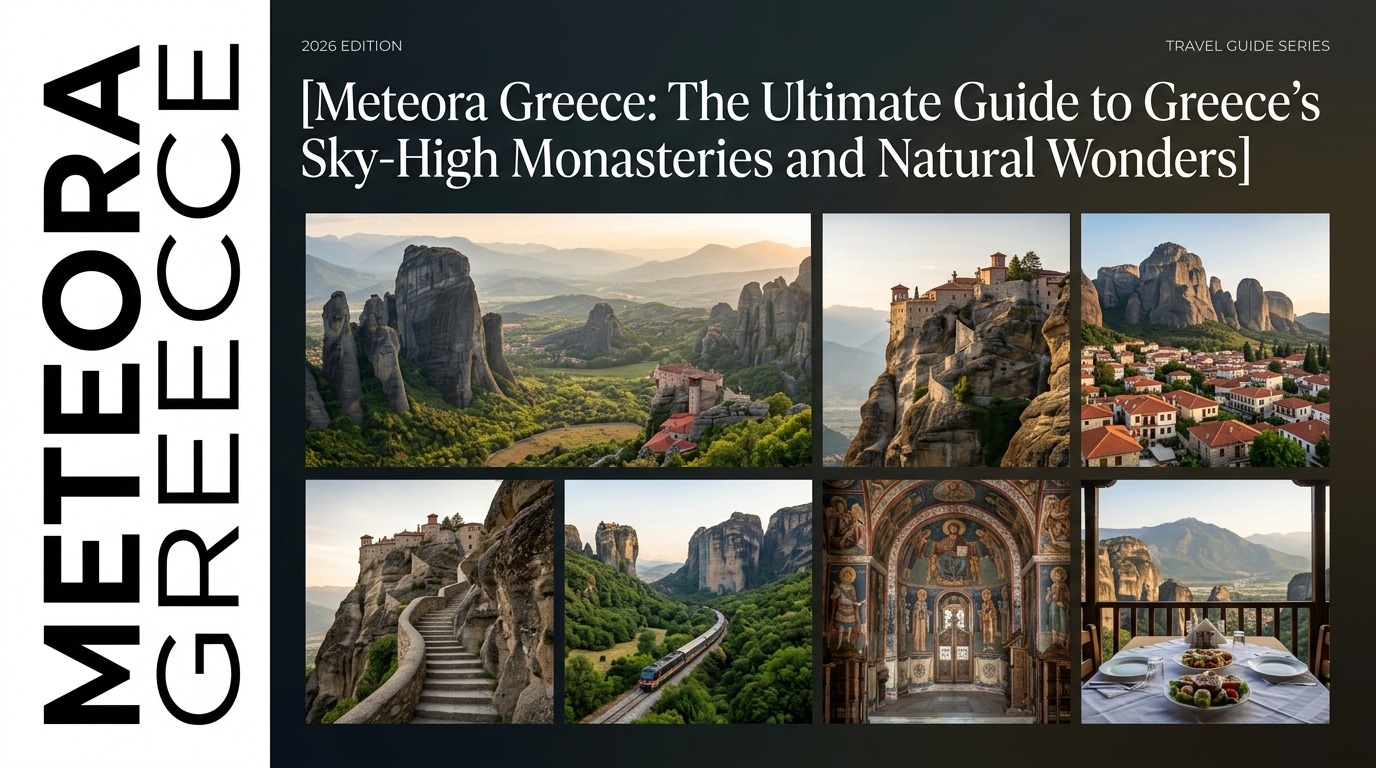
Some destinations impress travelers with beautiful beaches, while others captivate with historic landmarks. Meteora Greece does something far more extraordinary—it combines both natural wonder and human achievement in a way that feels almost impossible to believe. Rising dramatically from the plains of central Greece, giant stone pillars reach toward the sky, crowned by centuries-old monasteries that appear to float among the clouds. The first glimpse of Meteora often leaves visitors speechless, creating a sense of awe that few places in the world can match.
What makes Meteora Greece truly unforgettable is not only its stunning landscape but also the remarkable story behind it. For hundreds of years, monks sought solitude and spiritual connection by building monasteries atop these towering rock formations, creating one of Christianity’s most extraordinary religious communities. Today, Meteora attracts travelers, photographers, hikers, history enthusiasts, and pilgrims from around the world who come to witness a destination where nature, faith, and history exist in perfect harmony.
Where Is Meteora Greece Located?
Meteora Greece is located in the region of Thessaly in central Greece, near the town of Kalambaka. Positioned approximately 350 kilometers north of Athens and around 230 kilometers southwest of Thessaloniki, Meteora is one of the country’s most visited inland destinations.
The site consists of enormous sandstone rock pillars that rise dramatically above the surrounding landscape. These geological formations create one of the most unique natural settings in Europe.
Its central location makes Meteora accessible by train, bus, and car, allowing travelers to include it in broader Greek travel itineraries.
The Meaning Behind the Name Meteora
The name Meteora Greece comes from the Greek word “Meteora,” meaning “suspended in the air” or “hanging in the heavens.”
The name perfectly describes the appearance of the monasteries, which seem to hover above the earth on towering rock columns.
For centuries, visitors have associated Meteora with spirituality, mystery, and a sense of connection between heaven and earth.
Today, the name itself has become synonymous with one of the world’s most extraordinary cultural landscapes.
The Geological Formation of Meteora
The landscape of Meteora Greece was shaped over millions of years through a fascinating combination of geological processes.
Ancient River Deposits
Scientists believe that the area was once covered by a prehistoric sea. Over time, layers of sediment accumulated and eventually hardened into rock.
Natural Erosion
Wind, rain, earthquakes, and temperature changes gradually sculpted the sandstone formations into the towering pillars visible today.
Unique Rock Towers
Some rock formations rise more than 400 meters above the surrounding valley, creating an almost surreal environment.
A Geological Wonder
The unusual landscape is considered one of the most significant geological phenomena in Europe.
The dramatic scenery continues to fascinate both scientists and visitors alike.
The History of Meteora Greece
The history of Meteora Greece is deeply intertwined with spirituality and religious devotion.
Early Hermits
The first hermits arrived in the area during the ninth century, seeking isolation for prayer and contemplation.
Establishment of Monastic Communities
By the fourteenth century, monks began constructing monasteries atop the rock pillars for protection and solitude.
The Golden Age
At its peak, Meteora was home to approximately twenty-four monasteries.
Preservation Through Centuries
Despite wars, invasions, and changing political landscapes, several monasteries survived and remain active today.
The story of Meteora reflects centuries of faith, determination, and resilience.
Why Meteora Greece Is Famous Worldwide
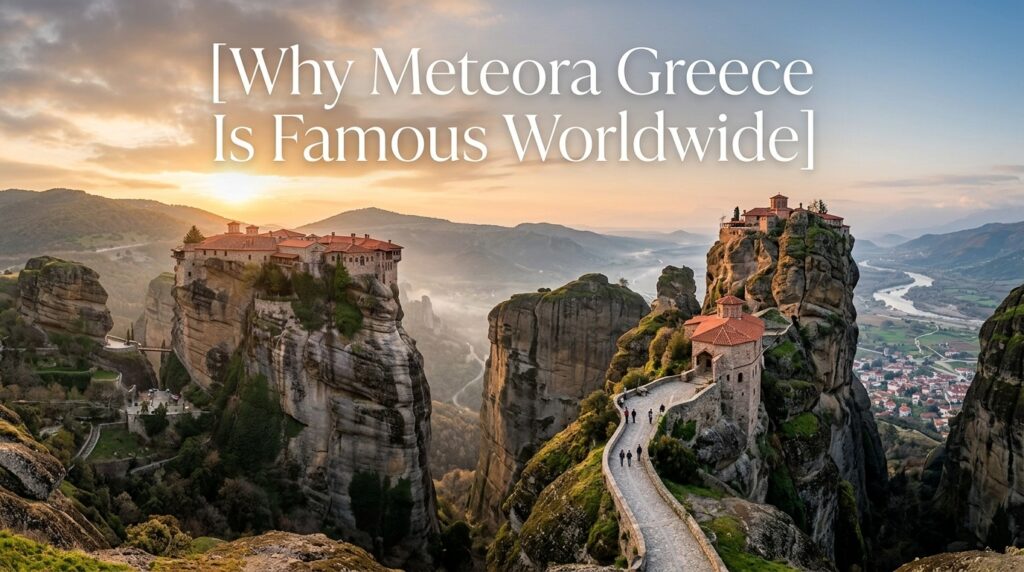
There are many reasons why Meteora Greece has become one of the world’s most celebrated destinations.
Extraordinary Landscapes
Few places on Earth offer scenery as dramatic and unique.
Ancient Monasteries
The monasteries represent remarkable architectural achievements.
UNESCO Recognition
Meteora is recognized as a UNESCO World Heritage Site.
Spiritual Importance
The site remains an active center of Orthodox Christian worship.
Photography Opportunities
Its landscapes attract photographers from across the globe.
These elements combine to create a destination unlike any other.
The Monasteries of Meteora Greece
The monasteries are undoubtedly the centerpiece of Meteora Greece.
Today, six active monasteries remain open to visitors.
Great Meteoron Monastery
The largest and oldest monastery in Meteora.
Varlaam Monastery
Known for its impressive architecture and religious artifacts.
Roussanou Monastery
One of the most picturesque monasteries perched atop a narrow rock pillar.
Holy Trinity Monastery
Famous for its dramatic location and breathtaking views.
St. Stephen’s Monastery
One of the most accessible monasteries for visitors.
St. Nicholas Anapausas Monastery
A smaller monastery featuring beautiful frescoes.
Each monastery offers unique insights into the spiritual and cultural history of the region.
UNESCO World Heritage Status
One of the greatest honors awarded to Meteora Greece is its designation as a UNESCO World Heritage Site.
Cultural Importance
The monasteries preserve centuries of religious traditions and artistic achievements.
Natural Significance
The geological formations are considered globally significant natural landmarks.
International Recognition
UNESCO status has helped protect Meteora for future generations.
Sustainable Tourism
Efforts continue to balance visitor access with conservation needs.
This recognition highlights Meteora’s exceptional global value.
The Spiritual Significance of Meteora
For many visitors, Meteora Greece is much more than a tourist attraction.
A Place of Reflection
The peaceful environment encourages contemplation and personal reflection.
Orthodox Christian Heritage
Meteora remains an important center for Eastern Orthodox Christianity.
Living Monastic Community
Several monasteries continue to function as active religious institutions.
Sacred Atmosphere
Many travelers describe a profound sense of tranquility while exploring the site.
The spiritual character of Meteora contributes significantly to its appeal.
Hiking and Outdoor Adventures in Meteora Greece
Beyond its monasteries, Meteora Greece offers exceptional opportunities for outdoor exploration.
Scenic Hiking Trails
Numerous paths connect monasteries, viewpoints, and surrounding villages.
Rock Climbing
The unique formations attract climbers from around the world.
Nature Walks
Visitors can enjoy peaceful walks through forests and valleys.
Photography Excursions
Sunrise and sunset hikes provide extraordinary photographic opportunities.
Outdoor enthusiasts often consider Meteora one of Greece’s finest adventure destinations.
The Best Viewpoints in Meteora Greece
One of the highlights of visiting Meteora Greece is discovering its spectacular viewpoints.
Sunset Viewpoint
The most popular location for evening photography.
Monastery Overlooks
Several elevated points provide panoramic views of the monasteries.
Kalambaka Hills
Offer impressive perspectives of the entire landscape.
Scenic Roadside Stops
Numerous viewpoints are accessible by car.
The constantly changing light conditions create unforgettable visual experiences throughout the day.
Photography Opportunities in Meteora Greece
Photographers regard Meteora Greece as one of Europe’s most rewarding destinations.
Sunrise Photography
Morning light creates dramatic shadows and vibrant colors.
Golden Hour Landscapes
The late afternoon sun enhances the textures of the rock formations.
Monastery Architecture
Historic buildings provide captivating subjects.
Seasonal Beauty
Each season offers distinct photographic opportunities.
Whether using professional equipment or a smartphone, visitors can capture stunning images.
Local Culture and Traditions
The surrounding communities contribute greatly to the experience of Meteora Greece.
Traditional Villages
Kalambaka and Kastraki preserve authentic Greek character.
Religious Celebrations
Local festivals reflect centuries-old traditions.
Artisan Craftsmanship
Visitors can discover locally produced souvenirs and handicrafts.
Warm Hospitality
The region is known for welcoming visitors with genuine friendliness.
Exploring local culture adds depth to any Meteora journey.
Best Time to Visit Meteora Greece
Choosing the right season can enhance a visit to Meteora Greece.
Spring
Blooming landscapes and mild temperatures create ideal conditions.
Summer
Long daylight hours allow extensive sightseeing.
Autumn
Colorful scenery and smaller crowds attract many travelers.
Winter
Snow occasionally transforms Meteora into a magical landscape.
Many visitors consider spring and autumn the most enjoyable times to visit.
Travel Tips for Visiting Meteora Greece
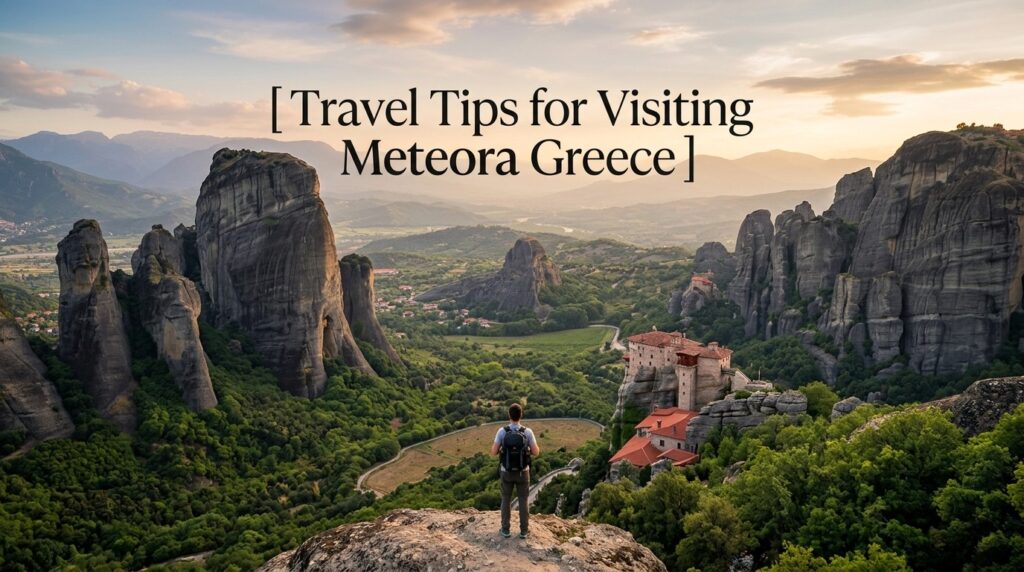
A few practical tips can help visitors make the most of their experience.
Wear Comfortable Shoes
Many attractions require walking and climbing steps.
Dress Respectfully
Appropriate clothing is required when entering monasteries.
Arrive Early
Popular sites can become crowded later in the day.
Carry Water
Exploring the area often involves extended outdoor activity.
Stay Overnight
Spending at least one night allows visitors to experience both sunrise and sunset.
Preparation can significantly improve the overall visit.
manity’s most remarkable achievements in harmony with nature.
FAQs
Why is Meteora Greece famous?
Meteora Greece is famous for its towering rock formations and ancient monasteries that appear suspended high above the ground, creating one of the world’s most unique cultural and natural landscapes.
How many monasteries can you visit in Meteora Greece?
Visitors can explore six active monasteries that remain open to the public, each offering unique architecture, history, and panoramic views.
How many days do you need in Meteora Greece?
Most travelers spend one to three days in Meteora Greece, allowing enough time to visit the monasteries, enjoy hiking trails, experience local culture, and witness both sunrise and sunset viewpoints.
Conclusion
Meteora Greece is one of those rare destinations that exceeds expectations no matter how many photographs or travel stories you encounter beforehand. The sight of ancient monasteries balanced atop towering rock formations creates an unforgettable impression that remains with visitors long after their journey ends. Combining breathtaking natural beauty, remarkable history, spiritual significance, and outdoor adventure, Meteora offers a travel experience unlike anywhere else in the world.
Whether you are drawn by its religious heritage, fascinated by its geology, inspired by its landscapes, or simply seeking one of Europe’s most extraordinary destinations, Meteora Greece delivers an experience that is both meaningful and memorable. It stands not only as one of Greece’s greatest treasures but also as one of hu.
Read more:Naxos Greece: The Complete Guide to the Cyclades’ Hidden Gem