High in the majestic Garhwal Himalayas of Uttarakhand, Kedarnath Temple stands as one of India’s most revered pilgrimage destinations. Surrounded by snow-covered peaks, dramatic mountain landscapes, and the peaceful Mandakini River valley, this ancient shrine offers an experience that goes far beyond ordinary sightseeing. For devotees, the journey is deeply spiritual; for travelers, it is an opportunity to experience breathtaking Himalayan scenery and the unique atmosphere of one of India’s most important sacred places.
A visit to Kedarnath Temple is also a journey of endurance and devotion. Reaching the temple requires careful planning because of the high altitude, mountain weather, seasonal accessibility, and demanding route. From deciding when to travel and arranging accommodation to understanding the trek and preparing for changing conditions, knowing what to expect can make the pilgrimage much smoother. With the right preparation, the journey can become one of the most meaningful experiences of a lifetime.
Why Kedarnath Temple Is So Important
The spiritual importance of Kedarnath Temple attracts pilgrims from across India and around the world. It is dedicated to Lord Shiva and is traditionally regarded as one of the twelve Jyotirlingas, making it an especially significant destination for Hindu devotees.
Religious Significance
The temple is also one of the major pilgrimage sites associated with the Char Dham and is part of the revered Uttarakhand pilgrimage circuit.
Spiritual Atmosphere
The combination of ancient traditions, mountain silence, devotional chants, and the surrounding Himalayan peaks creates an atmosphere that many visitors find deeply moving.
A Journey Beyond Sightseeing
For many pilgrims, reaching the temple is itself an important part of the experience. The physical effort of traveling through the mountains adds a sense of purpose and devotion to the visit.
History and Architecture of Kedarnath Temple
The history of Kedarnath Temple is closely connected with centuries-old Hindu traditions and Himalayan pilgrimage culture. Its remote location and enduring stone construction contribute to its distinctive character.
Ancient Stone Construction
The temple is built from large, heavy stone slabs and features a traditional Himalayan architectural style designed to withstand the demanding mountain environment.
Lord Shiva Shrine
Inside the temple, devotees worship the sacred Shiva lingam. The sanctum forms the spiritual center of the temple and attracts pilgrims throughout the pilgrimage season.
Legends and Traditions
Kedarnath is strongly associated with stories connected to the Pandavas and Lord Shiva. These traditional accounts form an important part of the site’s spiritual identity.
Best Time to Visit Kedarnath Temple
Choosing the right season is one of the most important decisions when planning a trip to Kedarnath Temple. The temple is located at high altitude, and access is heavily influenced by Himalayan weather.
Summer Pilgrimage Season
The pilgrimage season generally begins in spring after the temple reopens and continues through autumn. Summer can provide relatively favorable conditions for trekking compared with the colder months.
Monsoon Considerations
The monsoon season can bring heavy rainfall, slippery trails, landslides, and transportation disruptions in the Himalayan region. Travelers should carefully check current conditions before departure.
Autumn Travel
September and October can offer crisp mountain air and beautiful views, although temperatures become colder as winter approaches.
How to Reach Kedarnath Temple
Getting to Kedarnath Temple requires multiple stages because the shrine is located in a remote Himalayan region without direct road access.
Reach the Kedarnath Region
Many travelers first make their way toward destinations such as Haridwar, Rishikesh, or Dehradun before continuing by road toward the Kedarnath route.
Road Journey to Gaurikund
Gaurikund is traditionally the starting point for the main trek toward Kedarnath. Roads in the Himalayan region can be winding, so journeys may take longer than expected.
Trek from Gaurikund
The final journey requires traveling on foot along a mountain route. Pony services, palanquins, and other permitted transport options may also be available depending on current local arrangements.
Kedarnath Trek Route and What to Expect

The trek to Kedarnath Temple is one of the defining parts of the pilgrimage. The mountain route combines physical challenge with dramatic Himalayan scenery, but conditions can change quickly, so preparation is essential.
Starting the Trek
The traditional trek begins from Gaurikund. From there, pilgrims follow the designated mountain route toward Kedarnath. The journey involves sustained walking, elevation gain, and sections of uneven terrain.
How Difficult Is the Trek?
The trek can be physically demanding because of altitude, changing weather, and the length of the journey. Fitness levels vary greatly, so travelers should prepare with regular walking and endurance exercises before the trip.
Take Regular Breaks
Don’t rush toward the temple. Walk at a comfortable pace, drink water regularly, rest when needed, and pay attention to signs of altitude-related discomfort.
Alternative Travel Options
Depending on government regulations, weather, and local availability, pilgrims may have options such as ponies, palanquins, or helicopter services. Availability and operating conditions can change, so confirm arrangements before traveling.
Kedarnath Weather and Temperature Guide
Weather plays a major role in planning a journey to Kedarnath Temple. At high elevation, conditions can be significantly colder than in the lower Himalayan towns.
Summer Weather
The pilgrimage season’s earlier months can bring cool mornings, pleasant daytime conditions, and cold evenings. Snow may remain visible around higher mountain areas.
Monsoon Weather
Rain can make trails slippery and may cause travel interruptions. Landslides and road closures are possible in the wider Himalayan region during periods of heavy rainfall.
Autumn Weather
September and October can bring clearer skies and impressive mountain views, but temperatures can fall quickly after sunset.
Always Check Current Conditions
Weather in the mountains can change rapidly. Check official travel advisories, road updates, and local forecasts shortly before beginning your journey.
Accommodation Near Kedarnath Temple
Finding suitable accommodation is an important part of planning your Kedarnath Temple pilgrimage. Options vary depending on the location, season, and availability.
Accommodation in Kedarnath
Basic guesthouses, camps, lodges, and other pilgrim-oriented options may be available near the temple during the open season.
Staying Around Gaurikund
Some travelers prefer staying closer to the trek’s starting point, particularly if they want to begin walking early in the morning.
Book Ahead During Peak Season
Accommodation can become highly competitive during busy pilgrimage periods. Reserving as early as possible is wise, while always confirming the current operating status of your chosen property.
What to Pack for Kedarnath Temple
A carefully prepared bag can make the journey considerably more comfortable. Conditions around Kedarnath Temple can be cold, wet, and unpredictable even during the main pilgrimage season.
Essential Clothing
Pack warm layers, thermal clothing, a waterproof jacket, comfortable trekking trousers, woolen socks, gloves, and a warm hat.
Trekking Essentials
Comfortable waterproof walking shoes, a backpack, a reusable water bottle, sunglasses, sunscreen, and basic personal supplies are useful.
Health and Personal Items
Carry necessary personal medicines, basic first-aid supplies, toiletries, and any required medical documents.
Keep Your Bag Light
Avoid unnecessary items. A lighter backpack makes the mountain journey much easier, especially when walking for several hours.
Kedarnath Temple Registration and Travel Planning
Proper planning is essential for a comfortable journey to Kedarnath Temple, especially during the busy pilgrimage season. Registration, transportation, accommodation, and weather conditions should all be checked before leaving home.
Complete Required Registration
Pilgrims may need to complete the applicable registration process before visiting Kedarnath. Requirements and procedures can change, so check the latest information through official Uttarakhand government or pilgrimage authorities before traveling.
Plan Transportation Early
If you intend to use helicopter services or other organized transportation, make arrangements through authorized providers and confirm the latest schedules before departure.
Keep Important Documents Safe
Carry identification, booking confirmations, registration details, and other required documents in a waterproof pouch.
Food and Facilities on the Kedarnath Route
Travelers heading toward Kedarnath Temple can find basic food and essential services along parts of the pilgrimage route, although facilities become more limited as you move into higher and more remote areas.
Simple Vegetarian Food
Pilgrimage routes generally offer simple vegetarian meals, snacks, tea, and refreshments. Travelers should not expect the variety available in larger cities.
Carry Water and Snacks
Keep sufficient drinking water and a few lightweight snacks with you, particularly during the trek.
Use Facilities Responsibly
Follow local instructions, avoid littering, and respect the mountain environment. Keeping the route clean is especially important in this fragile Himalayan region.
Important Safety Tips for Kedarnath Temple
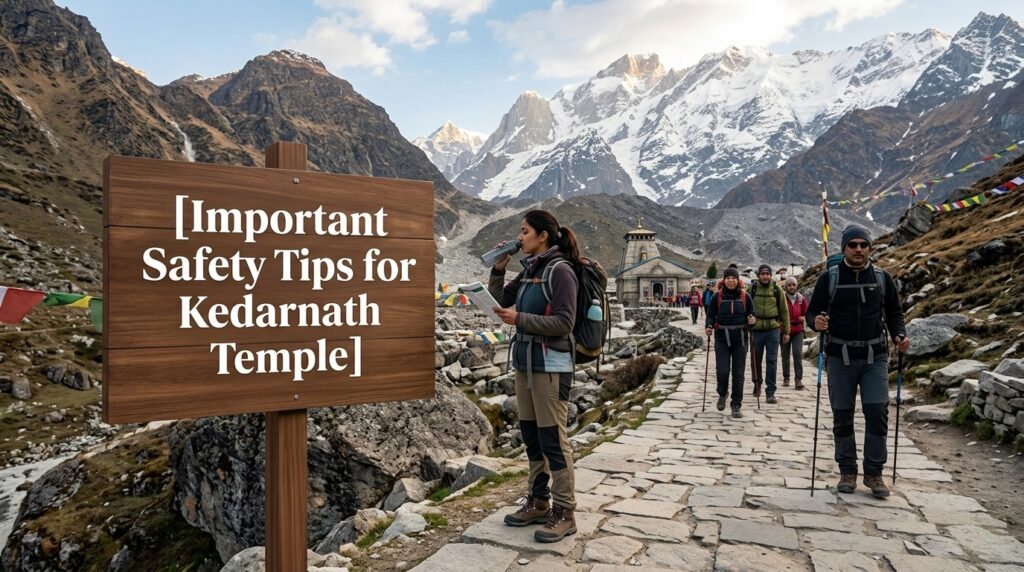
Safety should always be a priority when visiting Kedarnath Temple. High altitude, unpredictable weather, steep terrain, and changing road conditions can make the journey challenging.
Prepare Physically
Start preparing several weeks before your trip with walking, stair climbing, and moderate cardiovascular exercise. Build endurance gradually rather than attempting intense training immediately before departure.
Watch for Altitude Symptoms
Headache, unusual tiredness, dizziness, nausea, and shortness of breath can occur at high altitude. Take symptoms seriously, rest, and seek medical assistance if they become severe.
Follow Weather Advisories
Never ignore warnings about heavy rain, landslides, snowfall, or unsafe trekking conditions. Mountain conditions can deteriorate quickly.
Respect Local Rules
Follow instructions from authorities, temple staff, rescue teams, and local officials. Rules may change depending on weather and crowd conditions.
FAQs
What is the best time to visit Kedarnath Temple?
The best time is generally during the official pilgrimage season in late spring, summer, and early autumn. Check current opening dates and weather conditions before traveling.
How difficult is the Kedarnath Temple trek?
The trek can be challenging because of its length, steep sections, high altitude, and changing weather. Good physical preparation and a steady pace are important.
How can I reach Kedarnath Temple?
Travelers generally reach Gaurikund by road and continue toward Kedarnath using the designated trekking route. Authorized helicopter and other transport options may also operate depending on conditions.
What should I carry for a Kedarnath Temple trip?
Carry warm layers, waterproof clothing, sturdy walking shoes, personal medicines, water, snacks, sunscreen, identification, and essential travel documents.
Is registration required for Kedarnath?
Pilgrims may need to complete registration or obtain applicable permissions before traveling. Requirements can change, so verify the latest official instructions before your journey.
Conclusion:
A journey to Kedarnath Temple is much more than a trip to a remote mountain shrine. It combines devotion, Himalayan scenery, physical endurance, and a deep sense of connection with one of India’s most revered pilgrimage traditions. From preparing for the trek and changing weather to arranging accommodation and transportation, thoughtful planning can make the experience safer and more comfortable. Whether you travel for spiritual reasons, cultural discovery, or the breathtaking mountain environment, Kedarnath offers a memorable journey that stays with you long after you leave the Himalayas.
Read More:Maihar Devi Temple Darshan Timings, Ropeway Ticket Price & Booking Guide 2026

I am a travel enthusiast who loves exploring India’s beautiful destinations, culture, history, food, and hidden places. Through my travel website, I aim to help travelers discover amazing places in India and plan memorable trips with useful travel information and tips.