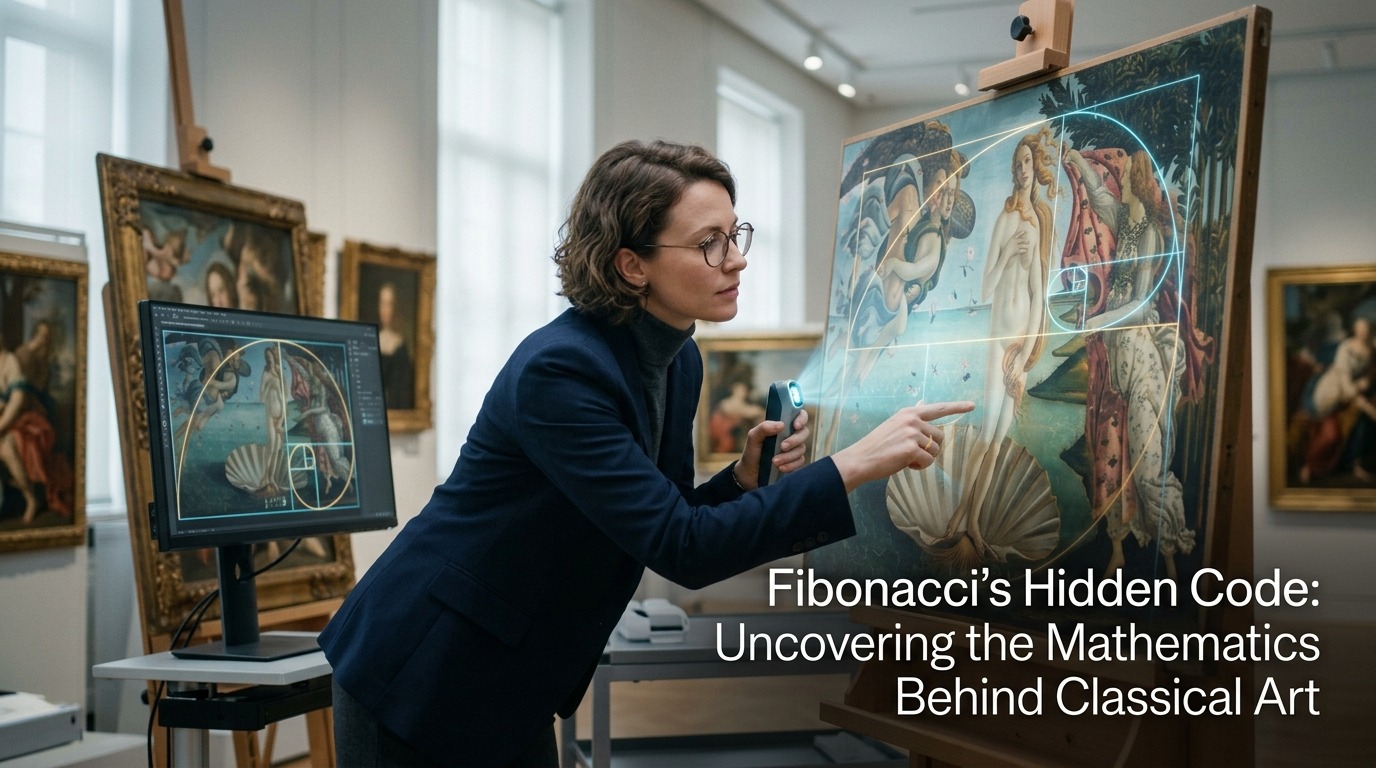
Why do some paintings instantly capture your attention while others feel ordinary? The answer often lies in balance, proportion, and composition. Fibonacci’s Hidden Code: Uncovering the Mathematics Behind Classical Art reveals how artists have used mathematical patterns to create timeless masterpieces that continue to inspire people around the world. From Renaissance paintings to magnificent buildings, these hidden patterns add a natural sense of beauty.
Understanding Fibonacci’s Hidden Code: Uncovering the Mathematics Behind Classical Art is not just for mathematicians or artists. It is valuable for students, designers, photographers, and anyone interested in creativity and personal growth. By learning these principles, you can develop a sharper eye for detail, appreciate classical art more deeply, and even apply these concepts to your own creative projects.
What Is Fibonacci’s Hidden Code: Uncovering the Mathematics Behind Classical Art?
Fibonacci’s Hidden Code: Uncovering the Mathematics Behind Classical Art refers to the relationship between the Fibonacci sequence, the Golden Ratio, and the composition of classical artworks. These mathematical ideas help explain why certain paintings, sculptures, and buildings appear naturally balanced and visually pleasing.
The Fibonacci sequence is a simple pattern of numbers in which each number is the sum of the two previous numbers:
0, 1, 1, 2, 3, 5, 8, 13, 21, 34, 55…
As the sequence continues, the ratio between two consecutive numbers approaches 1.618, which is called the Golden Ratio. This special proportion appears throughout nature and has inspired artists and architects for centuries.
How Does It Relate to Art?
Many classical artists carefully positioned important subjects according to Golden Ratio proportions. This helps guide the viewer’s eyes naturally through the artwork and creates a feeling of harmony.
For example, artists often use these proportions to:
- Place the main subject.
- Balance the background and foreground.
- Create smooth visual movement.
- Improve overall composition.
Key Concepts
| Concept | Meaning | Importance |
| Fibonacci Sequence | Number pattern based on addition | Foundation of natural growth patterns |
| Golden Ratio | Approximately 1.618 | Creates visual harmony |
| Golden Spiral | Spiral based on Fibonacci numbers | Guides the viewer’s eye |
| Composition | Arrangement of objects | Makes artwork balanced |
Why Fibonacci’s Hidden Code: Uncovering the Mathematics Behind Classical Art Matters
At first glance, mathematics and art may seem unrelated. However, they work together to create some of history’s greatest masterpieces. Mathematics provides structure, while artistic creativity brings emotion and imagination.
Learning about Fibonacci’s Hidden Code: Uncovering the Mathematics Behind Classical Art helps you recognize hidden design principles that most people overlook. Instead of simply admiring a painting, you begin to understand why it feels so balanced and attractive.
Why It Is Important
This knowledge helps you:
- Appreciate famous artworks more deeply.
- Improve your creative thinking.
- Develop better observation skills.
- Understand the relationship between science and art.
- Recognize beauty in everyday life.
These principles are not limited to museums. Today, designers, photographers, architects, and digital artists continue to use the same mathematical ideas in modern creative work.
Benefits of Fibonacci’s Hidden Code: Uncovering the Mathematics Behind Classical Art
Learning about Fibonacci mathematics offers more than historical knowledge. It develops creative thinking, logical reasoning, and a stronger appreciation for beauty.
Whether you are an artist, student, designer, or simply curious, understanding these concepts can improve the way you observe the world.
Main Benefits
| Benefit | How It Helps |
| Better Observation | Notice hidden patterns in art and nature |
| Improved Creativity | Design more balanced compositions |
| Critical Thinking | Analyze artwork more effectively |
| Greater Appreciation | Understand why masterpieces remain timeless |
| Cross-Disciplinary Learning | Connect mathematics, science, and art |
Personal Development Benefits
Studying these principles helps build valuable life skills such as:
- Attention to detail
- Creative confidence
- Patience
- Logical thinking
- Problem-solving
- Curiosity
These skills are useful not only in art but also in education, business, technology, and everyday decision-making.
History of Fibonacci Mathematics in Classical Art
To understand Fibonacci’s Hidden Code: Uncovering the Mathematics Behind Classical Art, it is important to look at its history. Although the sequence is named after Leonardo Fibonacci, the idea of mathematical beauty existed long before him.
Ancient Greek and Egyptian civilizations believed that proportion and symmetry represented perfection. Their buildings, sculptures, and monuments reflected carefully planned measurements that inspired later generations of artists.
Who Was Fibonacci?
Leonardo Fibonacci was an Italian mathematician who introduced the famous sequence to Europe through his book Liber Abaci in 1202. Although the sequence had been known earlier in India, Fibonacci’s work made it popular throughout Europe.
Over time, scholars noticed that this sequence was closely connected to the Golden Ratio, which became an important principle in art, architecture, and design.
The Renaissance Connection
During the Renaissance, artists believed mathematics could reveal the hidden order of the universe. They studied geometry, perspective, anatomy, and proportion to create realistic and balanced compositions.
Many Renaissance masterpieces continue to amaze viewers because they combine artistic talent with mathematical precision.
Historical Timeline
| Time Period | Key Development |
| Ancient Greece | Study of symmetry and proportion |
| Ancient Egypt | Use of balanced architectural measurements |
| 1202 | Fibonacci introduces his sequence in Europe |
| Renaissance | Artists apply mathematical principles to paintings and architecture |
| Modern Era | Designers use Fibonacci concepts in photography, branding, and digital media |
Famous Classical Artworks That Reflect Fibonacci Patterns
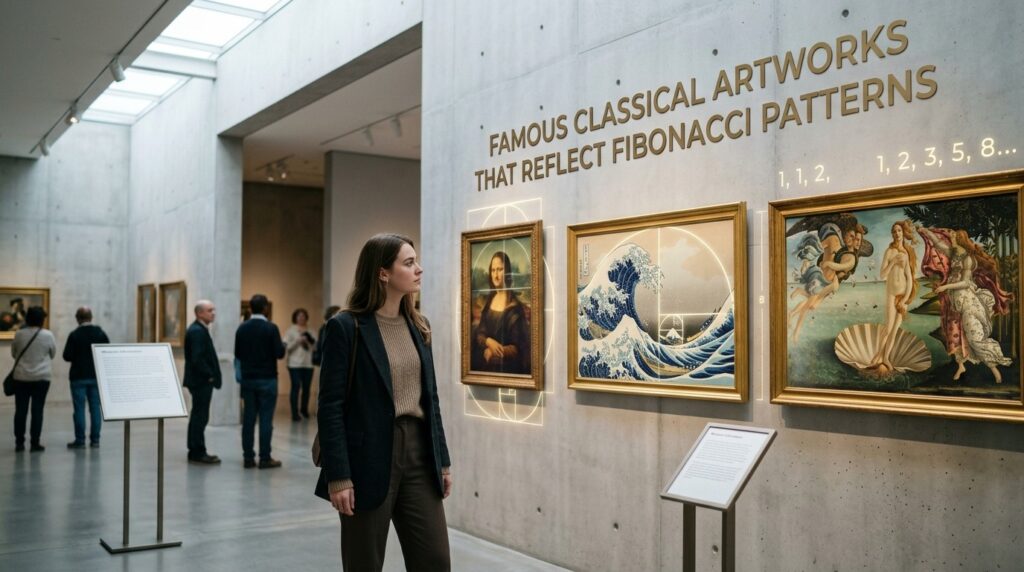
Many art historians believe that some of the world’s most celebrated masterpieces demonstrate proportions that closely resemble the Fibonacci sequence or the Golden Ratio. While there is ongoing debate about whether every artist intentionally used these mathematical principles, there is no doubt that balance and proportion played a major role in classical art.
When studying Fibonacci’s Hidden Code: Uncovering the Mathematics Behind Classical Art, it is important to understand that artists often sought harmony rather than strict mathematical accuracy. They wanted viewers to feel a natural sense of order and beauty.
Paintings That Show Mathematical Balance
Several famous paintings are frequently associated with Golden Ratio compositions. Artists carefully positioned important subjects so that the viewer’s eyes naturally move across the canvas.
Some well-known examples include:
- Mona Lisa by Leonardo da Vinci
- The Last Supper by Leonardo da Vinci
- The Birth of Venus by Sandro Botticelli
- The School of Athens by Raphael
These masterpieces demonstrate balanced spacing, carefully planned perspectives, and harmonious proportions that continue to impress audiences today.
Architecture Inspired by Mathematical Proportion
The influence of Fibonacci principles extends beyond paintings. Many historic buildings were designed with proportion in mind.
Examples include:
- The Parthenon in Greece
- Renaissance churches
- Classical palaces
- Historic cathedrals
Architects understood that well-balanced dimensions made structures feel stronger, more elegant, and visually satisfying.
Famous Examples and Their Features
| Artwork or Structure | Artist/Builder | Mathematical Feature |
| Mona Lisa | Leonardo da Vinci | Balanced facial proportions |
| The Last Supper | Leonardo da Vinci | Symmetrical composition |
| The Birth of Venus | Sandro Botticelli | Elegant placement of figures |
| The School of Athens | Raphael | Geometric perspective |
| The Parthenon | Ancient Greeks | Harmonious architectural proportions |
Although not every measurement perfectly matches the Fibonacci sequence, these works clearly demonstrate the importance of proportion in classical design.
Common Mistakes to Avoid
As interest in Fibonacci’s Hidden Code: Uncovering the Mathematics Behind Classical Art has grown, many misconceptions have also appeared. Understanding these mistakes helps you separate historical facts from popular myths.
One of the biggest errors is believing that every beautiful artwork was created using the Fibonacci sequence. Beauty comes from many artistic principles, including color, lighting, storytelling, emotion, and technique.
Mistake 1: Assuming Every Artwork Uses Fibonacci
Not every classical painting follows the Golden Ratio exactly.
Many artists relied on:
- Experience
- Observation
- Symmetry
- Perspective
- Personal style
Mathematics was only one of many tools they used.
Mistake 2: Ignoring Artistic Creativity
Some people focus so much on mathematical formulas that they forget art is also about imagination and emotion.
A successful masterpiece combines:
- Creativity
- Skill
- Composition
- Storytelling
- Technical knowledge
Numbers alone cannot create great art.
Mistake 3: Looking for Perfect Accuracy
The Golden Ratio is often used as a guide rather than an exact measurement. Small variations are completely normal.
Instead of searching for perfect calculations, pay attention to the overall balance of the composition.
Common Misconceptions
| Myth | Reality |
| Every masterpiece follows Fibonacci exactly | Many only show similar proportions |
| Mathematics creates beauty alone | Creativity is equally important |
| Only painters use these principles | Designers, architects, and photographers use them too |
| Fibonacci explains all art | It is only one element of composition |
Avoiding these misconceptions allows you to appreciate both the science and the creativity behind classical art.
Best Strategies for Understanding Fibonacci in Art
Learning about mathematical composition becomes much easier when you study artworks actively instead of simply reading about them.
Developing your observation skills takes practice, but anyone can learn to recognize balance and proportion.
Study Famous Masterpieces
Choose one famous painting at a time and carefully examine it.
Ask yourself:
- Where is the main subject?
- How does your eye move across the painting?
- Which objects attract attention first?
- Does the composition feel balanced?
This simple exercise trains your visual awareness.
Compare Different Artists
Looking at several artists side by side helps you understand how each used proportion differently.
Compare:
- Renaissance paintings
- Baroque masterpieces
- Classical sculptures
- Historic architecture
Notice both similarities and differences instead of expecting identical mathematical patterns.
Practice Sketching
You do not need to become a professional artist.
Simple sketching exercises help you understand:
- Balance
- Shape
- Spacing
- Perspective
- Composition
Even rough drawings improve your understanding of artistic structure.
Effective Learning Strategies
| Strategy | Benefit |
| Study museum collections | Learn from masterpieces |
| Read art history books | Understand historical context |
| Practice sketching | Improve observation skills |
| Compare artworks | Recognize different composition styles |
| Learn basic geometry | Better understand artistic proportions |
These strategies make learning enjoyable while strengthening both creative and analytical thinking.
Daily Habits to Train Your Eye for Mathematical Beauty
Like any skill, recognizing artistic patterns improves with regular practice. You do not need expensive equipment or formal art training to begin.
Small daily habits can gradually improve your ability to notice balance, symmetry, and proportion in both art and everyday life.
Observe Everyday Objects
Many natural and man-made objects display balanced proportions.
Spend a few minutes each day observing:
- Flowers
- Trees
- Buildings
- Shells
- Furniture
- Landscapes
Try to identify repeating shapes and balanced arrangements.
Visit Museums or Virtual Galleries
Museums provide excellent opportunities to study composition closely.
If visiting in person is difficult, many museums offer free virtual collections online where you can zoom into famous paintings and examine their details.
Practice Photography
Photography is one of the easiest ways to apply Fibonacci-inspired composition.
When taking pictures:
- Place your subject slightly off-center.
- Leave balanced negative space.
- Look for natural curves.
- Use leading lines.
- Experiment with framing.
Over time, these habits become automatic.
Keep an Observation Journal
Record interesting patterns you notice each day.
Include:
- Sketches
- Photos
- Notes
- Questions
- Ideas for future projects
This simple habit strengthens memory and encourages creative thinking.
Daily Practice Plan
| Daily Habit | Time Needed | Benefit |
| Observe nature | 10 minutes | Improve pattern recognition |
| Study one artwork | 15 minutes | Develop artistic appreciation |
| Practice sketching | 20 minutes | Understand composition |
| Take photographs | 15 minutes | Apply balance in real life |
| Write observations | 10 minutes | Build creative awareness |
By following these habits consistently, you’ll gain a deeper understanding of Fibonacci’s Hidden Code: Uncovering the Mathematics Behind Classical Art while also improving your creativity, observation skills, and appreciation for timeless design.
Expert Tips for Understanding Fibonacci’s Hidden Code in Classical Art
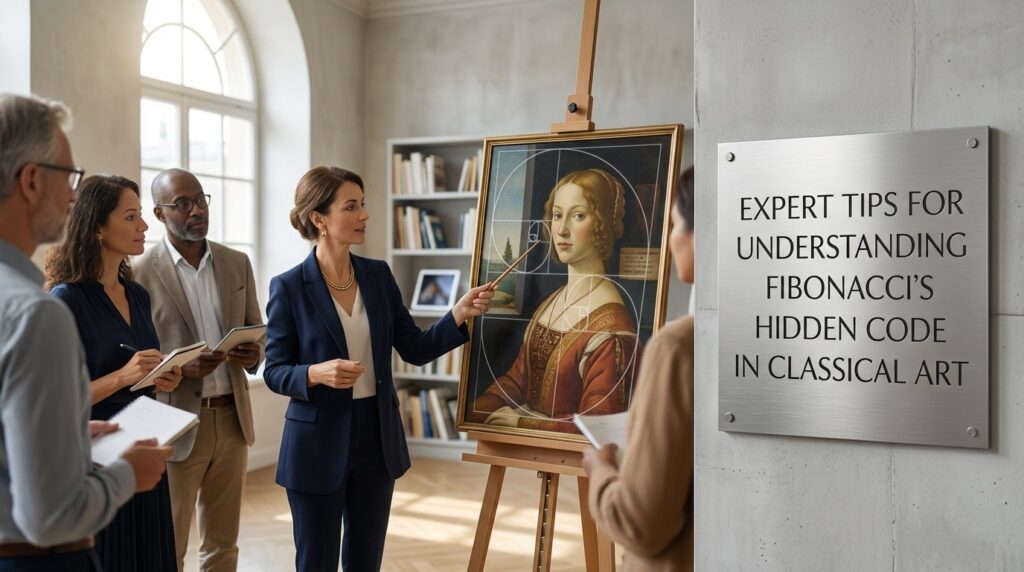
Mastering Fibonacci’s Hidden Code: Uncovering the Mathematics Behind Classical Art does not require advanced mathematical knowledge. Instead, it requires curiosity, observation, and regular practice. Experts recommend studying both mathematics and art together to fully understand how these subjects complement each other.
Whether you are a student, artist, photographer, or simply someone who enjoys learning, applying a few expert techniques can significantly improve your understanding of artistic composition.
Learn the Basics Before the Details
Start by understanding the Fibonacci sequence and the Golden Ratio before analyzing complex artworks. Once you know the basic concepts, it becomes much easier to recognize patterns in paintings and architecture.
Avoid trying to measure every object precisely. Instead, focus on how the overall composition feels balanced and harmonious.
Study Different Art Forms
Don’t limit yourself to paintings. Fibonacci-inspired proportions appear in many creative fields.
Explore examples in:
- Architecture
- Sculpture
- Photography
- Graphic design
- Interior design
- Landscape design
The more examples you study, the easier it becomes to identify recurring patterns.
Use Modern Learning Tools
Today’s technology makes learning much easier than ever before.
Helpful resources include:
- Museum virtual tours
- Educational documentaries
- Art history books
- Drawing tutorials
- Geometry visualization apps
Combining these resources gives you a well-rounded understanding of both mathematics and artistic design.
Expert Recommendations
| Expert Tip | Why It Helps |
| Study one artwork at a time | Prevents information overload |
| Learn basic geometry | Makes composition easier to understand |
| Practice sketching regularly | Improves observation skills |
| Compare different artists | Reveals unique composition styles |
| Observe nature daily | Strengthens pattern recognition |
Challenges and Solutions
Although learning about Fibonacci’s Hidden Code: Uncovering the Mathematics Behind Classical Art is fascinating, beginners often face a few common challenges. Fortunately, these obstacles can be overcome with patience and the right learning approach.
Understanding that art is not always based on exact mathematical formulas will help you enjoy the learning process without frustration.
Challenge 1: Mathematical Concepts Feel Difficult
Many people become nervous when they hear the word “mathematics.” However, the Fibonacci sequence is actually one of the simplest mathematical patterns to learn.
Solution:
Begin with the basic number sequence and gradually learn how it connects to the Golden Ratio through visual examples instead of complicated equations.
Challenge 2: Seeing Patterns Takes Practice
At first, it may be difficult to recognize balanced compositions in famous artworks.
Solution:
Study one painting at a time and compare it with simple diagrams showing the Golden Ratio. Over time, your observation skills will naturally improve.
Challenge 3: Believing Every Artwork Must Follow Fibonacci
Many beginners expect every masterpiece to perfectly match mathematical measurements.
Solution:
Remember that Fibonacci principles are often used as creative guidelines rather than strict rules. Great art combines mathematics, imagination, emotion, and technical skill.
Challenges and Their Solutions
| Challenge | Practical Solution |
| Mathematics seems confusing | Learn one concept at a time |
| Hard to identify patterns | Practice observing famous artworks |
| Too much information online | Use reliable educational sources |
| Expecting perfect measurements | Focus on overall visual harmony |
| Losing motivation | Practice regularly with simple examples |
Real-Life Examples of Fibonacci Principles
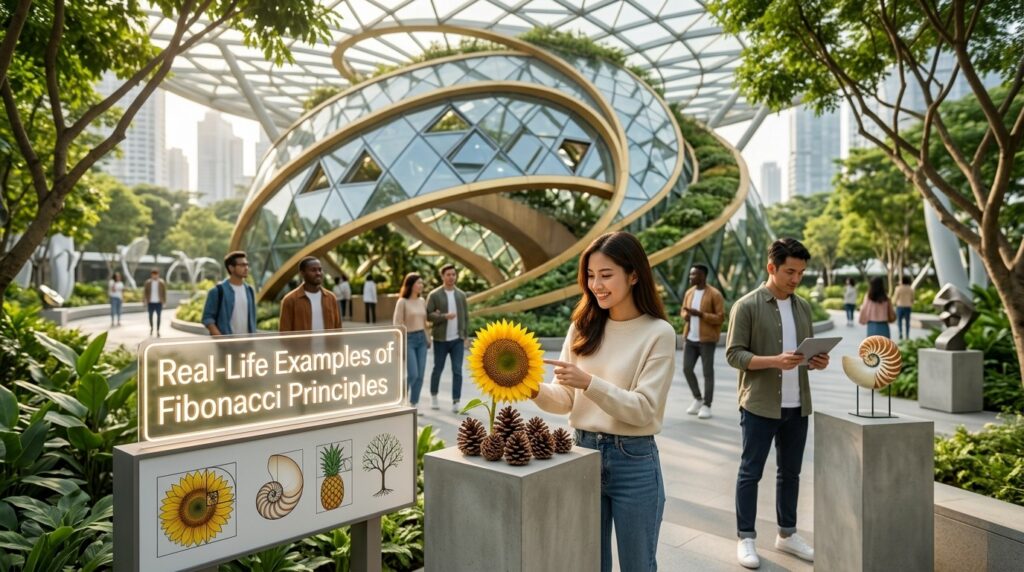
One of the best ways to understand Fibonacci’s Hidden Code: Uncovering the Mathematics Behind Classical Art is by observing how these principles appear in both historical masterpieces and everyday life.
Once you begin noticing these patterns, you’ll realize that mathematical beauty surrounds you almost everywhere.
Example 1: Photography
Professional photographers often place their main subject slightly off-center instead of directly in the middle of the frame. This creates a more balanced and visually interesting image.
Many photography composition guides are inspired by the same principles found in classical art.
Example 2: Logo Design
Many successful brands use balanced geometric shapes when creating their logos. While not every logo follows the Fibonacci sequence exactly, designers often use proportional spacing to make logos clean, memorable, and visually appealing.
Example 3: Interior Design
Interior designers carefully arrange furniture, lighting, and decorative elements to create comfortable and balanced spaces.
They consider:
- Room proportions
- Furniture placement
- Visual flow
- Symmetry
- Open space
These ideas reflect the same goal pursued by classical artists—creating harmony.
Example 4: Nature
Nature provides countless examples of Fibonacci patterns.
You can observe them in:
- Sunflowers
- Pinecones
- Ferns
- Seashells
- Spiral galaxies
- Hurricanes
These natural patterns have inspired artists for centuries.
Everyday Applications
| Field | How Fibonacci Principles Are Used |
| Photography | Balanced image composition |
| Graphic Design | Logo proportions and layouts |
| Architecture | Building dimensions and symmetry |
| Interior Design | Furniture arrangement |
| Nature Study | Understanding natural growth patterns |
Final Action Plan
Now that you understand Fibonacci’s Hidden Code: Uncovering the Mathematics Behind Classical Art, it’s time to apply what you’ve learned. Developing an eye for mathematical beauty takes practice, but small, consistent efforts can make a big difference.
Step-by-Step Action Plan
- Learn the Fibonacci sequence and Golden Ratio.
- Study one famous artwork each week.
- Observe natural patterns during daily walks.
- Practice simple sketching or photography.
- Compare different artistic styles.
- Read books on art history and composition.
- Visit museums or explore virtual galleries.
- Keep a journal of interesting patterns you discover.
Weekly Learning Plan
| Week | Goal |
| Week 1 | Understand the Fibonacci sequence |
| Week 2 | Learn the Golden Ratio |
| Week 3 | Analyze famous paintings |
| Week 4 | Practice photography and sketching |
| Week 5 | Study architecture and sculpture |
| Week 6 | Apply composition techniques in personal projects |
Following this action plan will help you build stronger observation skills, improve creativity, and deepen your appreciation for the connection between mathematics and art.
FAQs
What is the Fibonacci sequence in simple terms?
The Fibonacci sequence is a series of numbers where each number equals the sum of the two previous numbers.
It forms patterns that appear in mathematics, nature, and artistic design.
What is the Golden Ratio?
The Golden Ratio is a mathematical proportion of approximately 1.618.
It is widely associated with balance, harmony, and visually pleasing compositions.
Did all classical artists use Fibonacci principles?
No, not every artist intentionally used the Fibonacci sequence or Golden Ratio.
Many relied on general principles of balance, symmetry, and proportion instead.
How can beginners learn about Fibonacci in art?
Start by learning the basic sequence and studying famous artworks carefully.
Regular observation and simple sketching will gradually improve your understanding.
Why is Fibonacci important in modern design?
Its principles help designers create balanced layouts, attractive visuals, and natural compositions.
These ideas remain useful in photography, architecture, branding, and digital design.
Conclusion
Fibonacci’s Hidden Code: Uncovering the Mathematics Behind Classical Art reveals that mathematics and creativity are far more connected than many people realize. The Fibonacci sequence and the Golden Ratio have inspired artists, architects, and designers for centuries, helping them create works that feel balanced, harmonious, and timeless. By understanding these principles, you gain a new perspective on why certain paintings, sculptures, and buildings continue to captivate audiences around the world.
More importantly, learning about these mathematical patterns is not just an academic exercise it is a way to sharpen your observation skills, encourage creative thinking, and appreciate beauty in everyday life. Whether you are exploring famous masterpieces, taking photographs, or designing your own projects, the principles behind Fibonacci can help you create and recognize harmony with greater confidence. Keep observing, keep learning, and you’ll continue uncovering the fascinating relationship between numbers and art.
Read More: Matera Italy Travel Guide 2026: Best Things to Do & Travel Tips